The game I chose for this critical play is Portal, a puzzle-platform game developed by Valve Corporation and originally released on PC and Xbox 360 as part of The Orange Box. The game is aimed at players who enjoy puzzle-solving, experimentation, and narrative-focused gameplay. My main takeaway from Portal is that the mechanics of its puzzles directly shape the player’s emotional and immersive experience. Instead of simply acting as obstacles, the puzzles teach the player how the world works, create tension and curiosity, and make discovery feel rewarding.
The premise of the game is simple. You are trapped inside a laboratory and must complete a series of test chambers using a portal gun that creates linked portals. Most puzzles are separated into levels, with each one introducing a new variation of a mechanic. What stood out to me immediately was the atmosphere. The sterile laboratory setting, quiet sound design, and narrator all worked together extremely well. I actually felt like I was inside a scientific testing facility and had a constant sense of anxiety. The minimalist graphics help this feeling because every object in the room feels intentional and connected to the puzzle.
One of the strongest design choices in the game is the narrator. In some games, narration becomes overwhelming and interrupts gameplay, but Portal uses dialogue very carefully. The narrator speaks just enough to keep the player engaged without ruining immersion. The calm robotic voice also creates an unsettling contrast with the dangerous situations the player is put in. The puzzle mechanics contribute to this atmosphere because every chamber feels like an experiment being observed. Solving puzzles becomes part of the narrative experience rather than something separate from it.
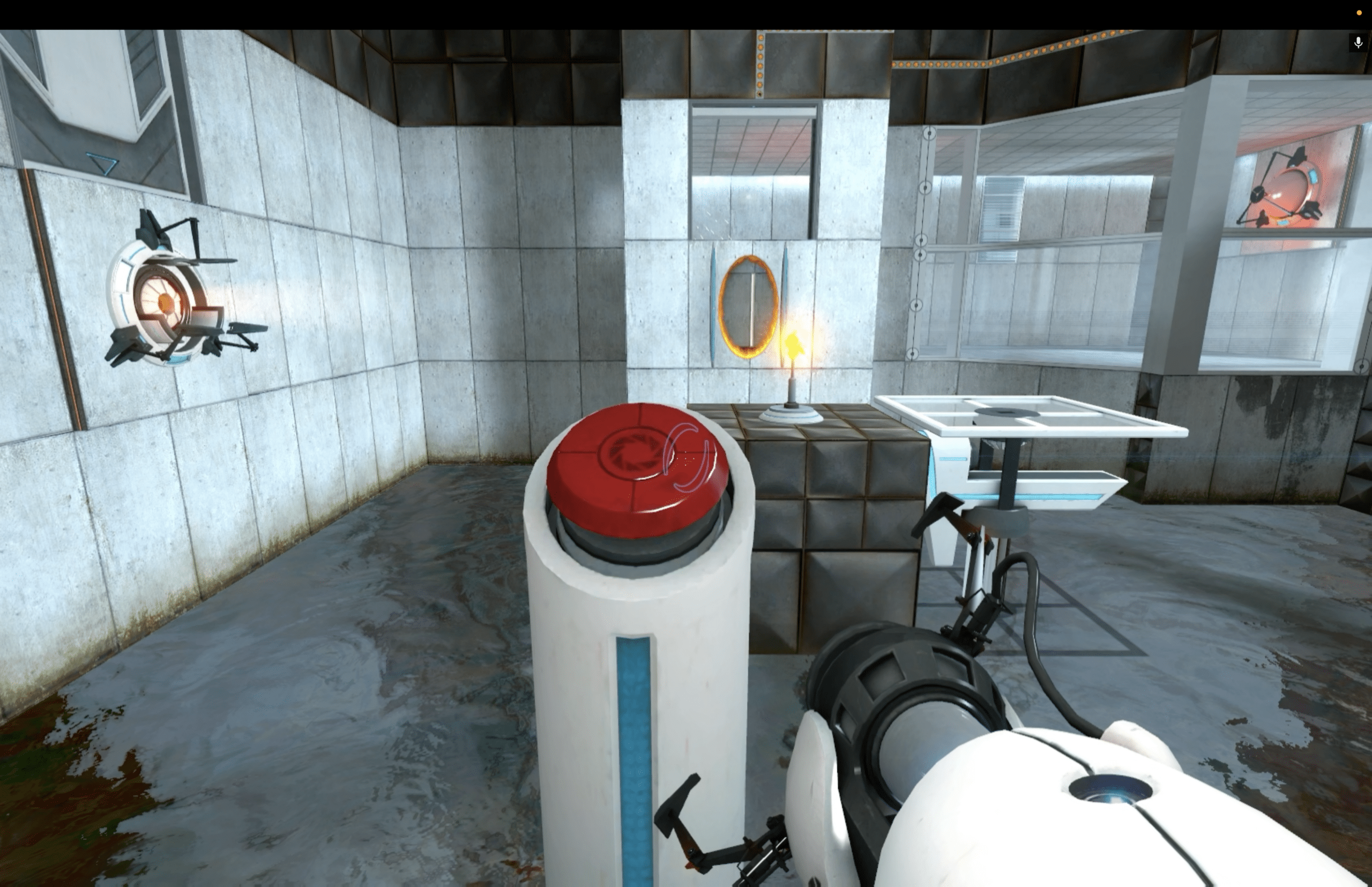
The game also does an excellent job of gradually progressing player knowledge. We talked in class about how games teach mechanics over time, and Portal is one of the clearest examples of this idea. A moment that stood out to me was when the game introduces momentum-based movement. At one point there is a huge gap separating you from the exit platform, and your jump is nowhere near long enough to cross it. The room is designed with a giant empty space underneath, encouraging experimentation with portals. Eventually, the player realizes that momentum carries through portals. Falling into one portal launches you out of the other with enough speed to cross the gap.
The game never directly tells you the solution beforehand. Instead, the environment teaches you how the mechanic works. Then, in the following level, the narrator reinforces the mechanic by explaining that “speedy thing goes in, speedy thing comes out.” Because the player learns the mechanic independently, solving the puzzle feels satisfying rather than scripted. The mechanics influence the experience by making the player feel intelligent and capable rather than simply following instructions.
This directly connects to the “Designing Puzzles” reading, which argues that good puzzles should feel natural to the environment and guide the player fairly rather than forcing them to “read the designer’s mind.” Portal succeeds at this because the puzzles emerge naturally from the testing chambers and mechanics already introduced earlier. The player is usually given enough information to figure things out independently, creating what the reading calls the “V-8 response,” where the player suddenly understands the solution and feels smart for discovering it.
The MDA framework also helps explain why the game works so well. Mechanically, the portals are simple: you place two linked openings and move through them. The dynamics emerge from experimentation with gravity, positioning, and momentum. Those interactions create aesthetics of discovery, tension, and accomplishment because the player feels like they are uncovering solutions on their own. The puzzle mechanics are not just there to block progress; they shape the entire emotional experience of the game.
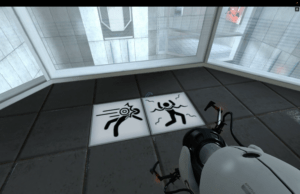
However, not every design element worked for me. Throughout the levels there are symbols and diagrams placed on the floors and walls that are supposed to function as hints or warnings. Instead of helping me understand the puzzles, they mostly confused me. I often could not tell what the symbols were trying to communicate or how they related to the room I was in. Rather than helping immersion, they distracted me because I kept trying to interpret them. I think the game could honestly remove the symbols because they felt unnecessary as I had no issues when I ignored them.