


Årsgång, translated as “year walk”, is an archaic Swedish divination said to bestow visions of the future to those who enter the forest at midnight and survive ghostly supernatural encounters. The indie game Year Walk, developed by Swedish game studio Simogo in 2013 for iOS, Windows, and Wii U, portrays a fictional account of this traditional ritual. I played this puzzle-based, mystery horror game at the stroke of midnight, from start to finish, accompanied by my friend with dyslexia. To deliver its chilling story that spans two subsequent endings, Year Walk crafts intentional limitations in its gameplay: limiting player exploration and interaction until the current puzzle is solved, and limiting access to the full story until the first fake end is achieved.
Year Walk reveals its narrative in a sequence of puzzles guided by limited player movement, permitting progress and additional object interactions only once the current puzzle is solved. In the main map of Year Walk, we are largely limited to left-right or forward-backward traversals across two-dimensional landscapes—the mechanic restricts freedom, but is linear and less confusing, allowing for immersion in the Narrative aesthetic rather than the Challenge of navigating the woods. The left and right ends of the pannable scene represent the formal element of boundaries in which the story takes place, serving the primary architecture function of constraint visually depicted by lower snow levels as opposed to areas with investigable paths.
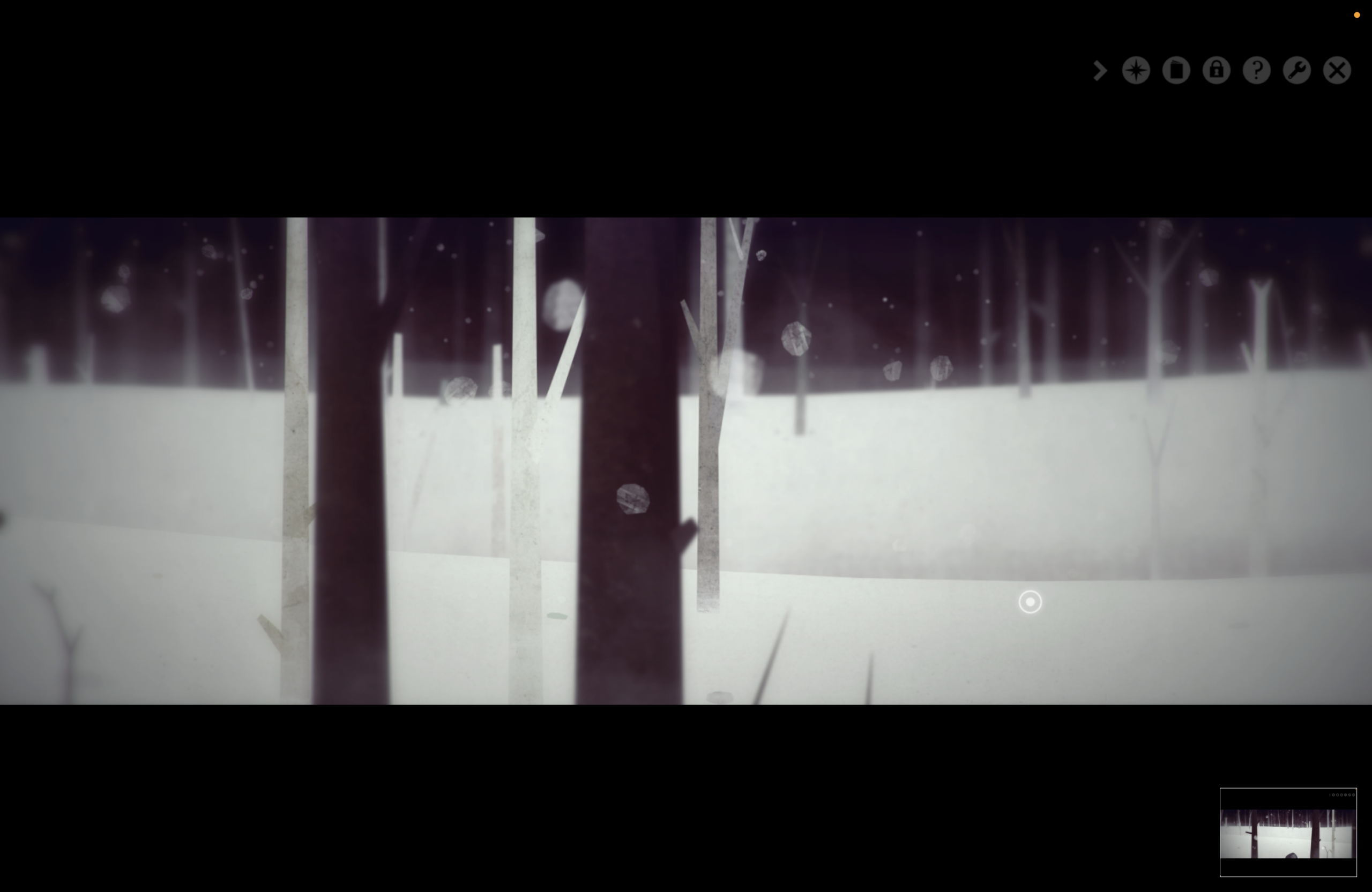
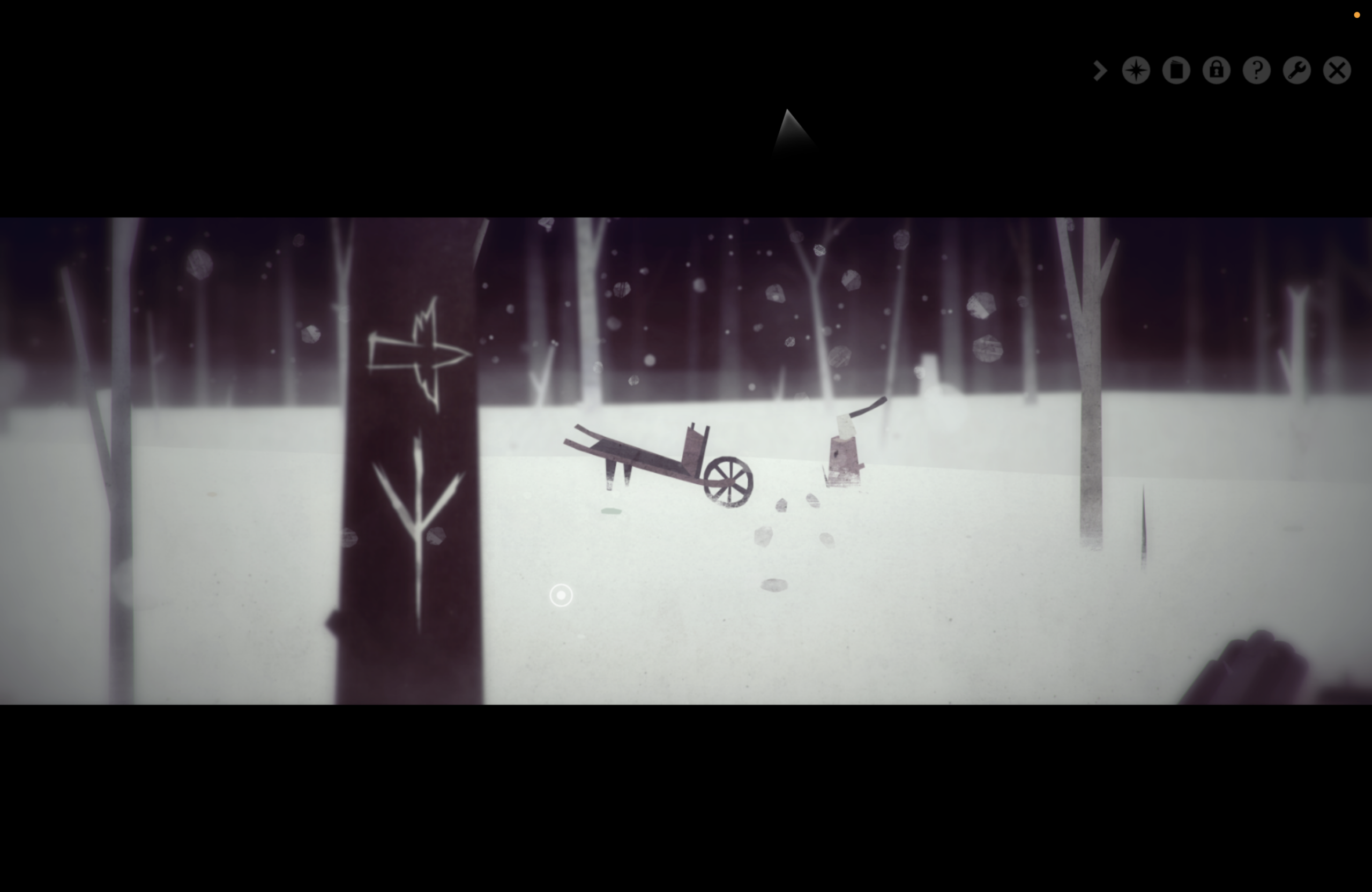
To indicate accessible areas, Year Walk effectively uses the visual design principle of contrast: placing dark objects with memorable silhouettes against the white snow, making it easier to distinguish different areas of the map with puzzle components. In the image above, the wheelbarrow and axe are strikingly noticeable, well-integrated into Year Walk’s world, and footsteps indicate a way forward. However, they are only non-interactable landmarks; the game limits player click-and-drag interaction only to current puzzle elements of the game, not allowing story branching based on variable behavior. For instance, the wheel in the mill is not interactable in the beginning of the game, but only movable when a dead baby spirit is stuck off screen, requiring the player to rotate the wheel to bring it down.
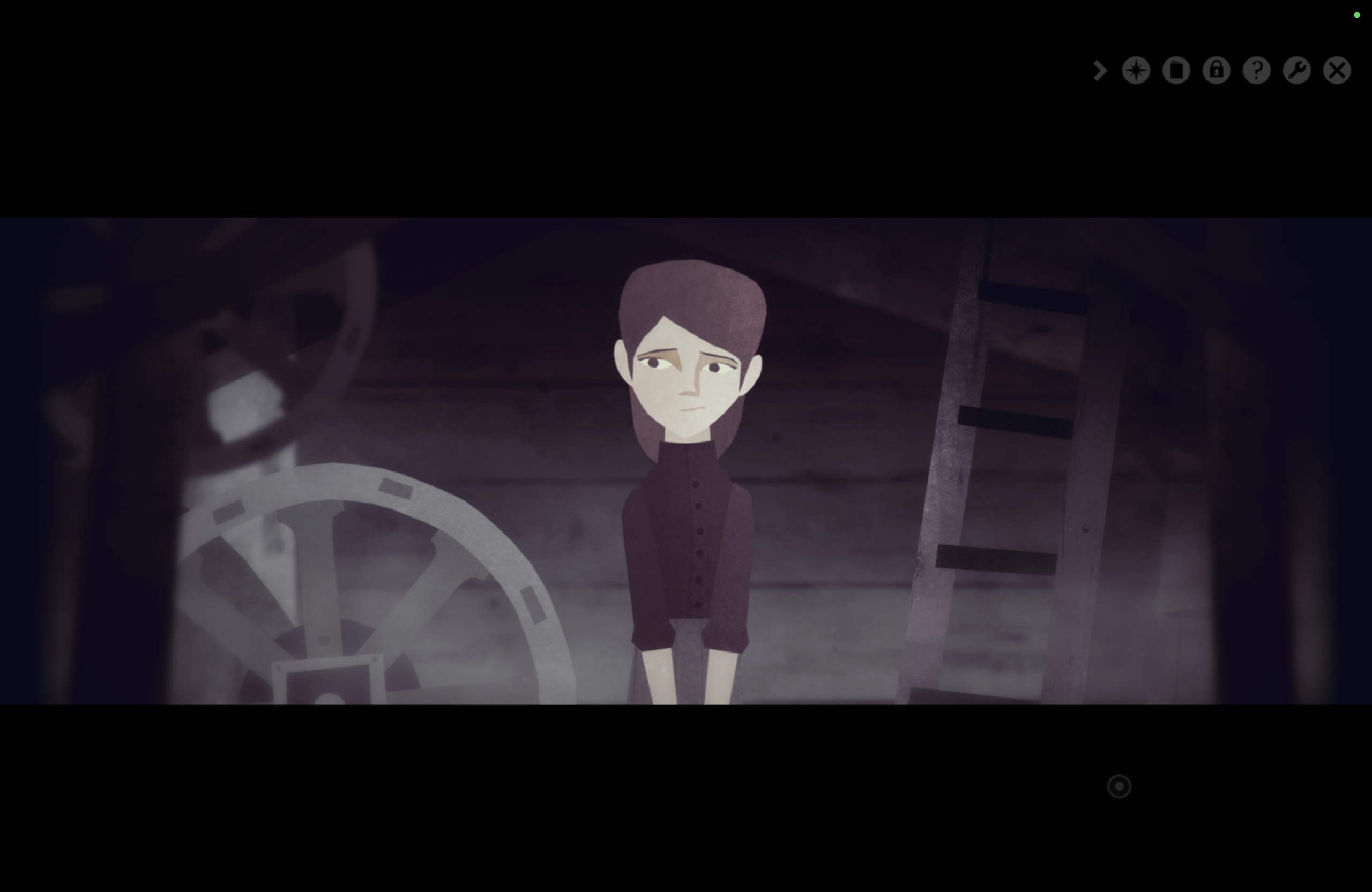
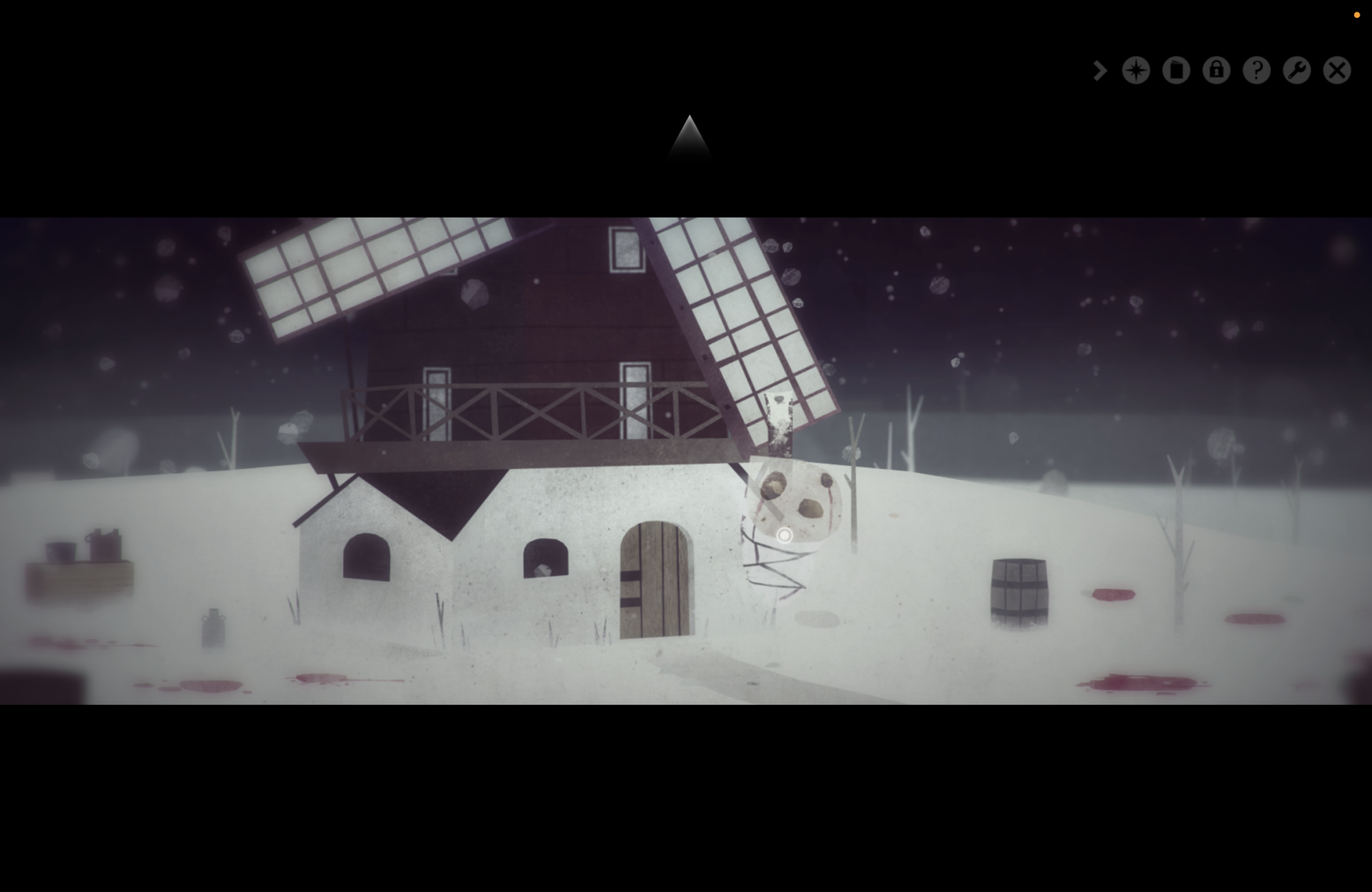
This mechanic that enforces tunnel vision on the current puzzle is central to the linear progression of Year Walk’s narrative, in the exact sequence curated for the player. As there is only one right way to proceed in the game, significantly limiting the range of player dynamics, the aesthetic shifts away from Expression to heavily emphasize Narrative. Year Walk’s limitation on possible player actions can be frustrating; when I was stuck on the Brook Horse encounter, I clicked on the floating horse head dozens of times, waited for one full minute—nothing happened.

I roamed around the entire map three times looking for something to react to my clicks—nothing happened. I eventually had to use a hint, which takes the player out of the story, but prevents a deadlock when all else fails—to learn that I had to drag the horse up out of the water. To improve player experience and understanding, I would make the horse bob upwards when clicked on, or include a simple, intuitive dragging interaction prior to this scene, neither of which the game did. Year Walk linearly unravels its story through imposed limitations that detract from player freedom in exploration and consistent environment interaction.
In addition to its physically-restricting mechanics, Year Walk enforces a hard limitation on the learnable story in the first playthrough, requiring another “walk” to be able to understand the entire lore of its world. Only after the player reaches the first fake end, secret letters appear on the map that enable us to “login” to a digital journal with a username and password. This introduces a new architecture that primarily functions as a space for exploration while playing on our familiarity of the internet: an entirely disparate, futuristic realm overlaid on the rustic folkorish space we had been exploring thus far. This is similar to Amenti, an Egyptian mythology horror game that also portrays two distinct timelines—of ancient ghosts and an archaeologist—existing in one space. In Amenti, there is also an embedded narrative in the form of increasingly deranged journal entries on scraps of paper scattered throughout the tombs, which enhances the sense of immersion within the same physical space. However, in Year Walk, the chronological disparity of the journal tab that hovers midair in front of the snowy woods is always jarring—a crafted sensation due to limitations that intentionally create a gap in player understanding. This generates a spark of Discovery, but possibly frustration from those who would have liked to uncover the full story if clever enough. The mechanic of requiring a predetermined first ending limits the player dynamic to only be one way; this makes Year Walk feel like a one-track storybook rather than creating our own experience that depends on our choices. The journal mechanic accentuates the narrative core that yearwalking allows the walker to transcend time and space, but it contributes to the story in a more direct way than I would have liked. The player is required to read through around 50 journal entries of text to learn the full story and solve the final puzzle, in addition to the encyclopedia with paragraphs of text shown below required to understand the supernatural creatures.
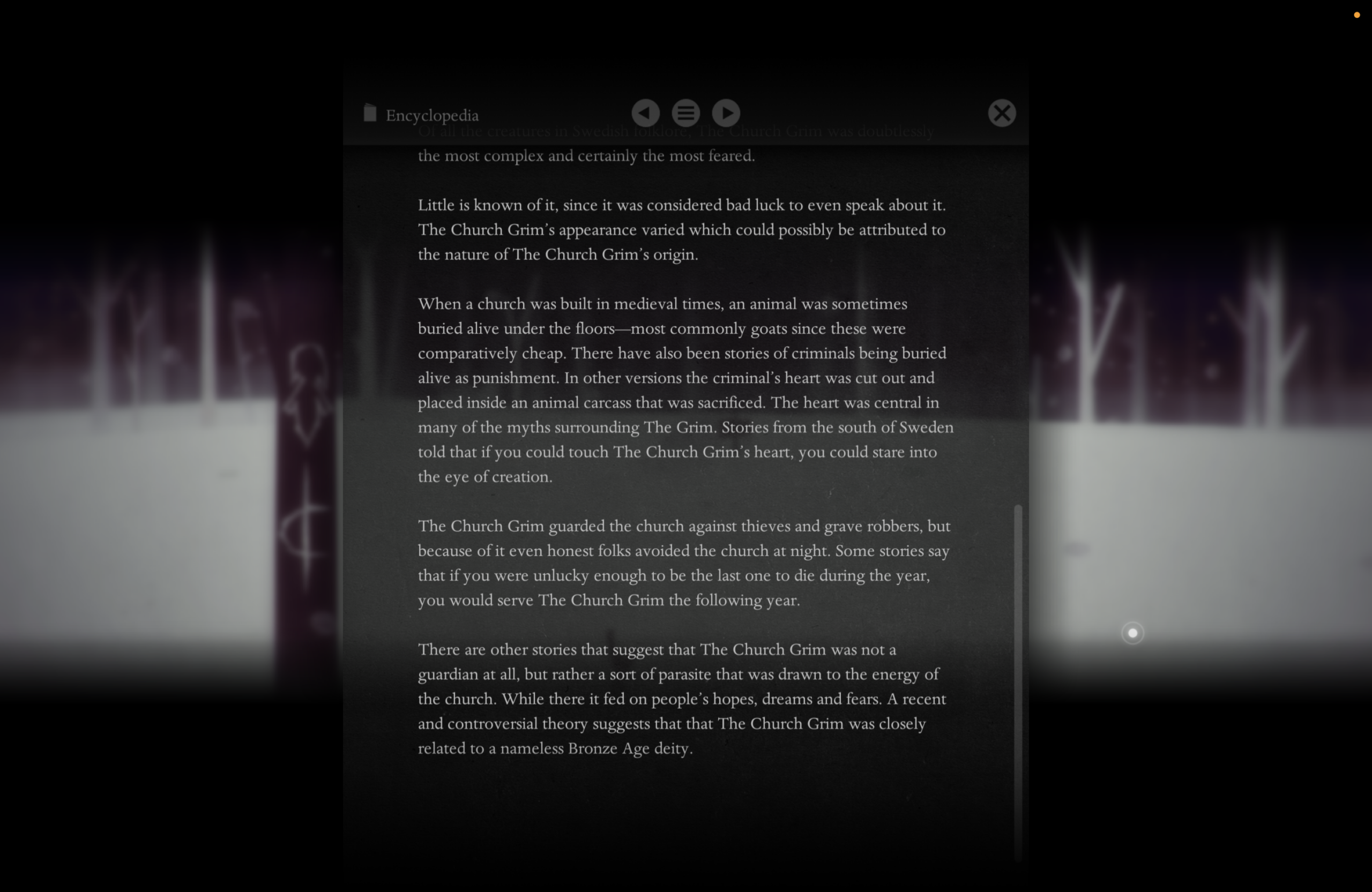
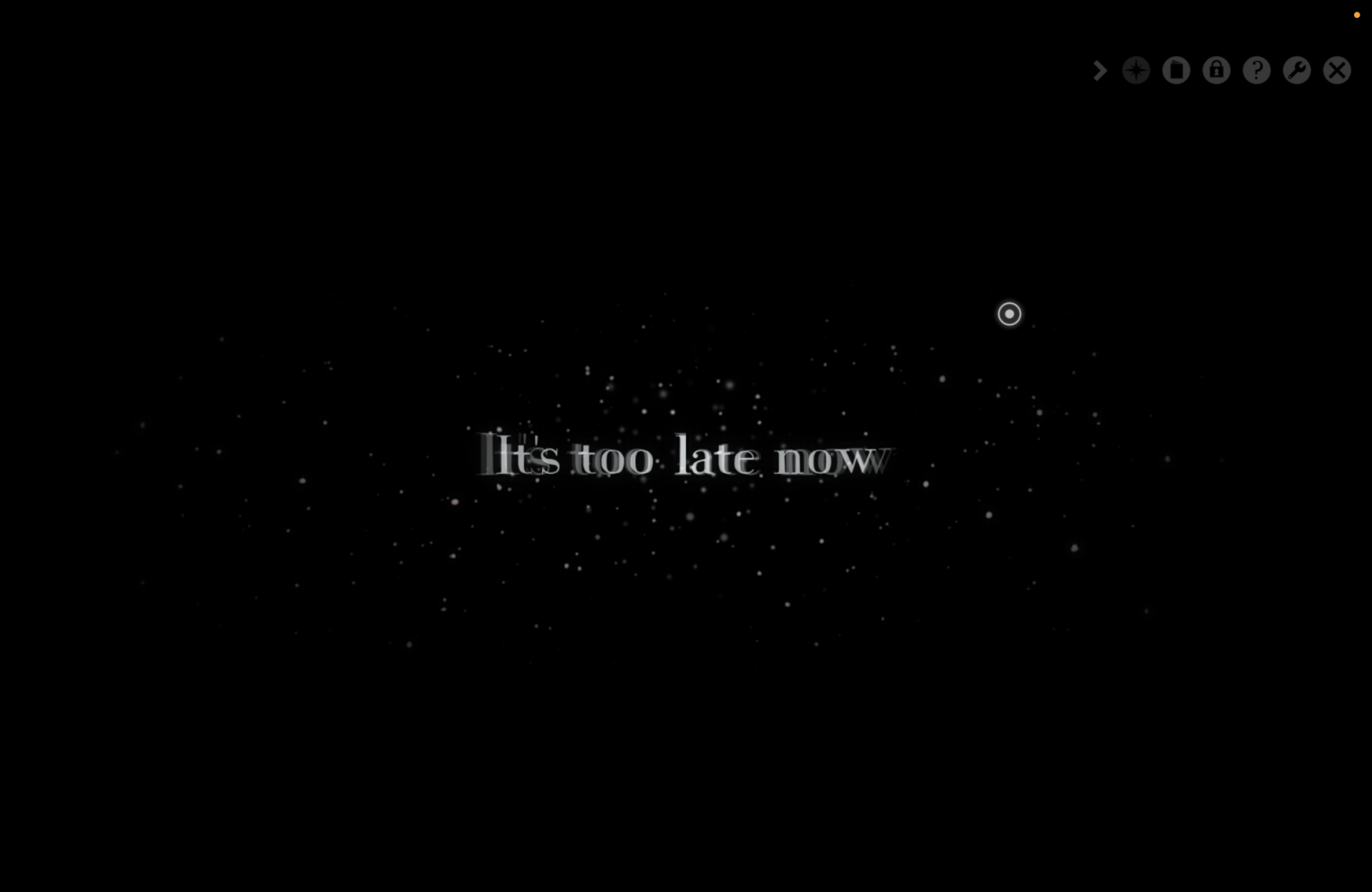
My dyslexic friend commented that he personally could read the text due to high contrast, white on black or vice versa, and it was good that the shaky, warped text that could have been more difficult to read was much bigger and bolder. However, I’d suggest accessibility features that could mitigate more extreme cases of dyslexia such as a pause button, which did not exist in Year Walk, or the ability for players to at least select and copy paragraph text to be able to listen to a transcription of it. Through immeasurable amounts of text, limitations on physical player actions, and locked story components, Year Walk presents a highly narrative-based puzzle game that offers a curated experience of a predetermined storyline.

