The game I picked is Rusty Lake: Roots. It is a puzzle adventure consisting of more than 33 levels (stories) where the player solves to gradually uncover the dark history of the Vanderboom family across three generations.
One of the game’s core mechanics is the family tree structure, which organizes stories and guides the player’s progress. It starts from a seed and grows as the player solves previous stories. Each node along the tree is a story of a moment in one of the characters’ lives. For nodes that split into multiple branches, players can choose their own order of playing. For example, they can go depth-first down a branch, which follows one character’s life to its end, or they can jump between branches (breadth-first) so that they can play the stories of multiple characters in chronological order. Each story contains a set of unique puzzles where players are required to explore the scene, look for clues and tools, piece things together to figure out how to use them, and solve the puzzles to unlock the next story.
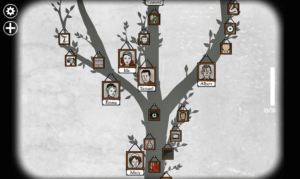
Together, these mechanics create a dynamic of self-directed investigation. Since the player controls the order of discovery and has to work through each puzzle to unlock the next story, they act like a detective assembling a case. They choose which branch to explore next, form thoughts about how the characters connect, and piece together the family history in their own way.
The aesthetics this creates are Discovery and Narrative. The process of searching for clues and solving puzzles to unlock new stories keeps the player curious and wanting to know more. And although the game is primarily about solving puzzles, each story uses them to string together a vivid and dramatic storyline, making the player emotionally invested in the characters and their fates.