

One game that I play frequently is Honkai: Star Rail (HSR), which is a gacha game with the main mechanic of turn-based combat. Character and enemy turn order is based on their speed stats, which can be manipulated by things like speed effects and action advances by both player and enemy actions. This leads to the dynamic of player’s deciding when to use certain basic attacks, skills, or ultimates to deal damage, affect the turn order, and/or buff allies.
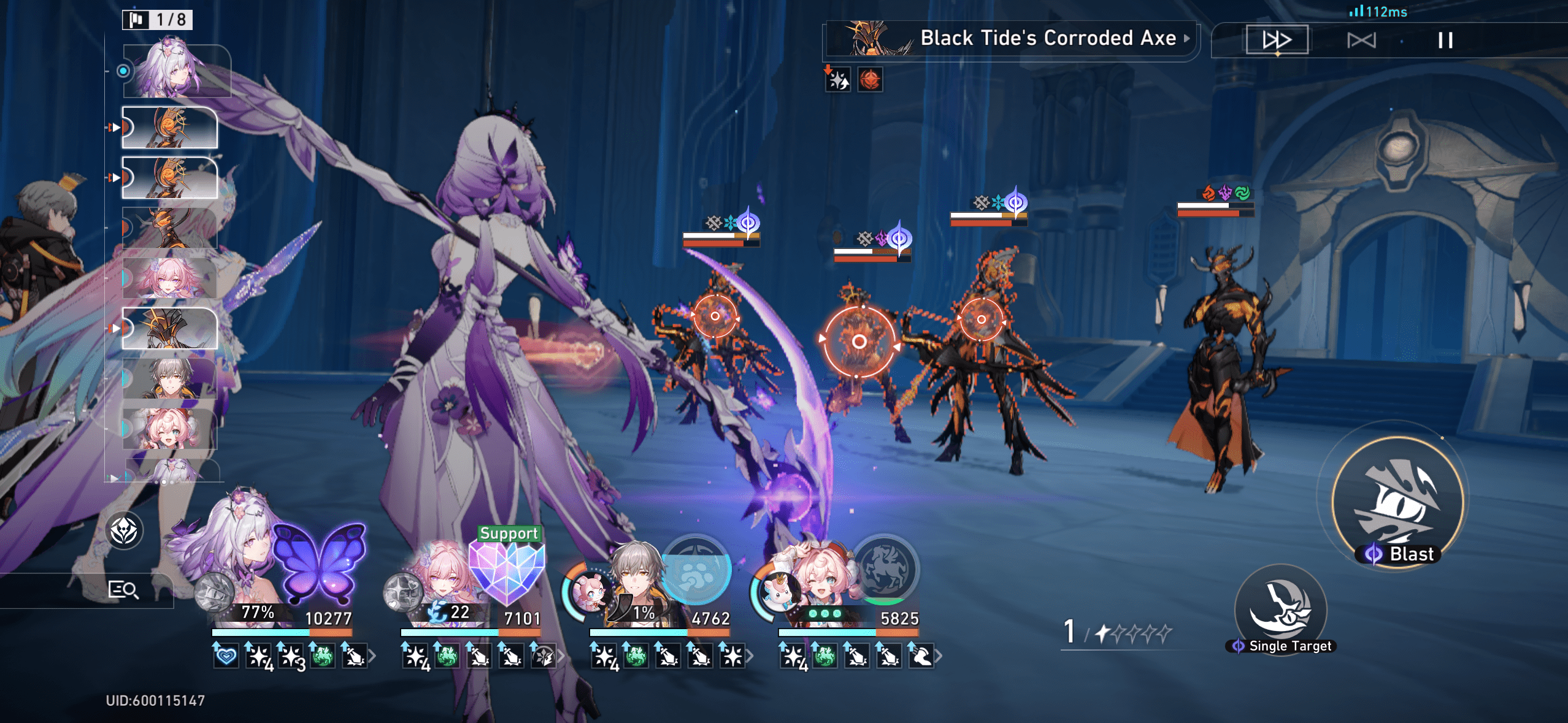
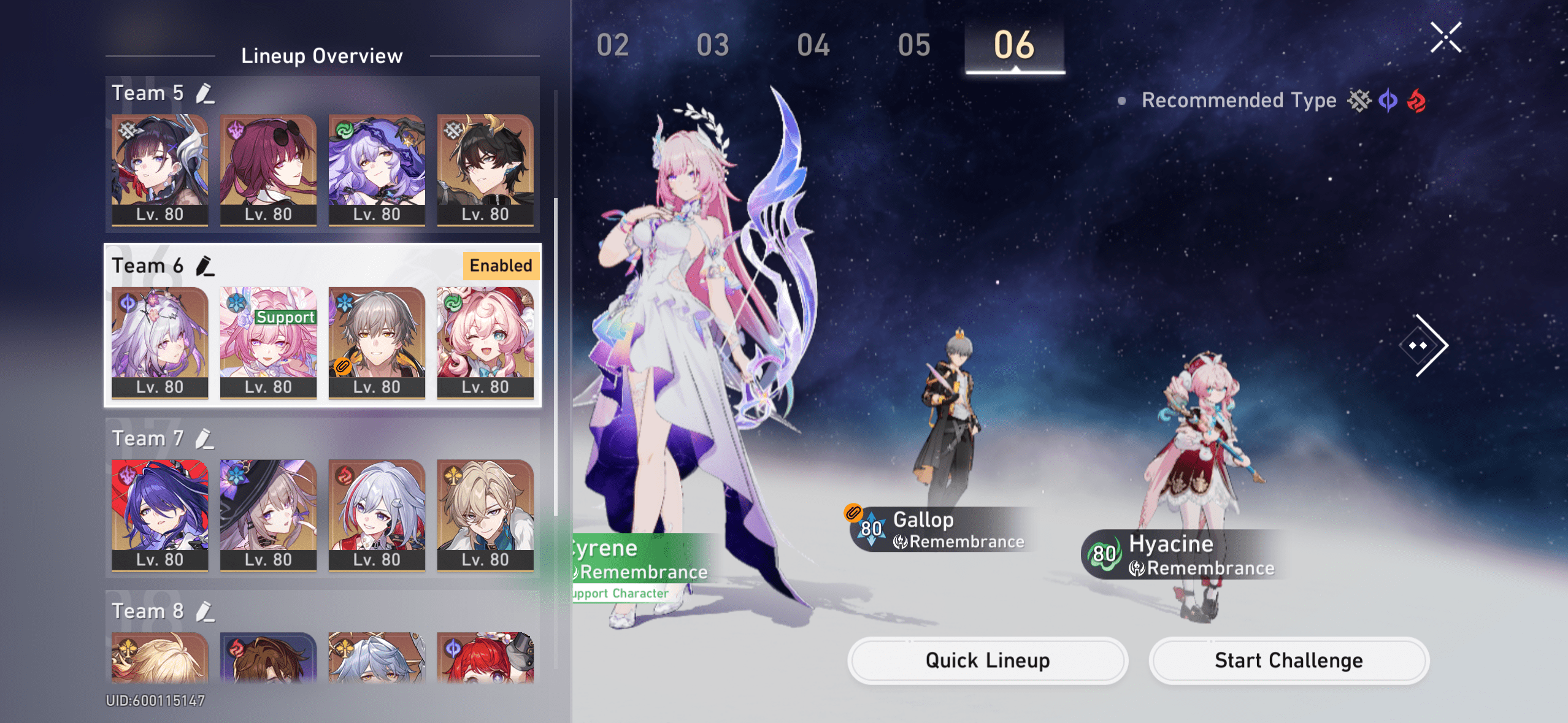
In the top photo, the turn order is displayed on the left side of the screen. Enemy portraits highlighted in white tell the player which enemies are going to be effected/attacked by the skill. The ability to affect turns, leads to players choosing certain team compositions that work well together and can advance each other to deal the most damage or complete the content faster. The game fulfills the aesthetics of challenge, discovery, and sensation. Players can precisely manipulate turn order to end-game content quickly, find new team compositions that synergize, and enjoy pleasing visual skill and ultimate animations.
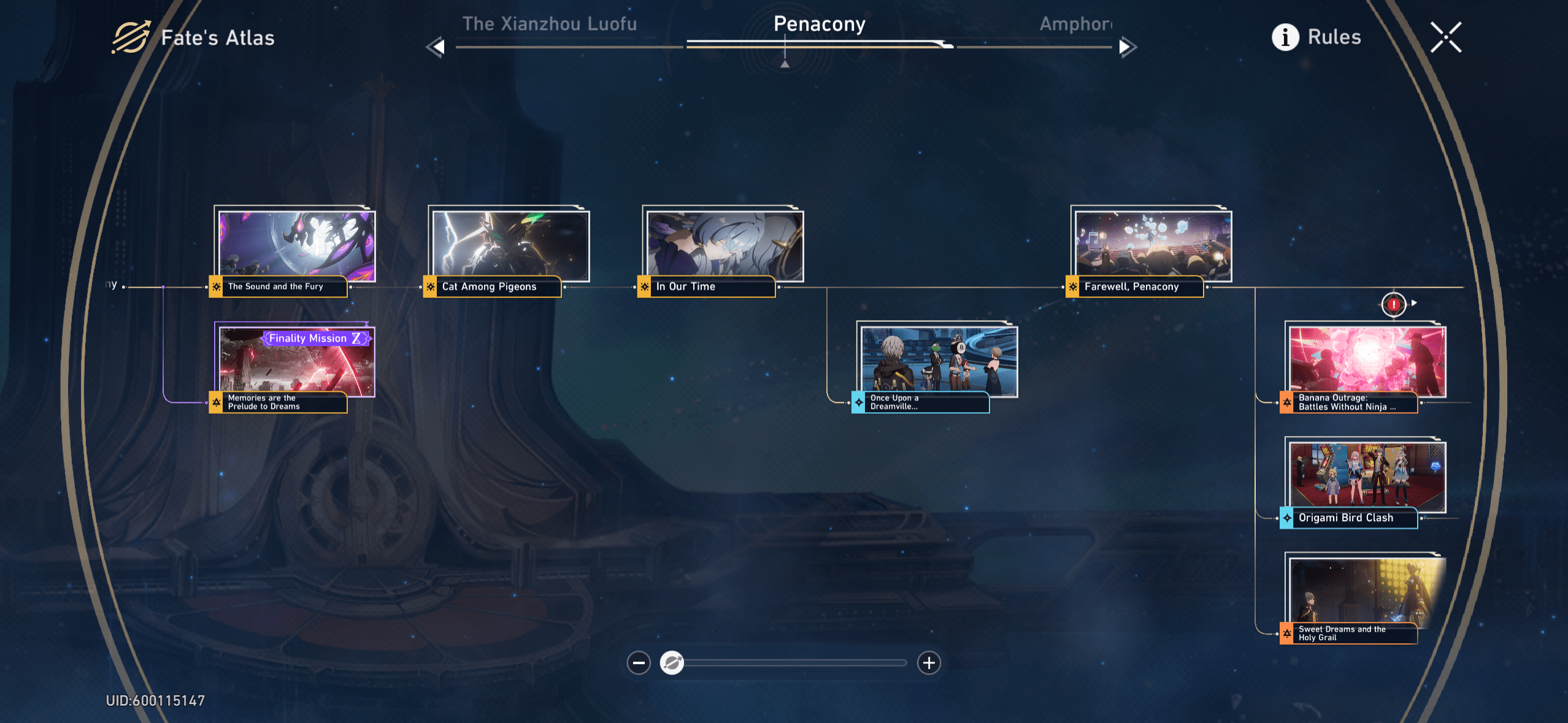
Another core mechanic of HSR is that there are main and side story quests that are released with every version update. This leads the dynamic of completing the story content in order to explore new worlds/areas and meeting new characters to learn about their backgrounds. The game takes place in space with characters with somewhat unexplained magical abilities, like summoning dragons, satisfying the fantasy aesthetic. Players play the game each version update to learn more about the wondrous adventures that the main character (the trailblazer) is having, satisfying the narrative/fantasy/discovery aesthetics. In the photo above, the quests for the planet called Penacony are shown chronologically to the player to establish the narrative timeline.

LOVE this!