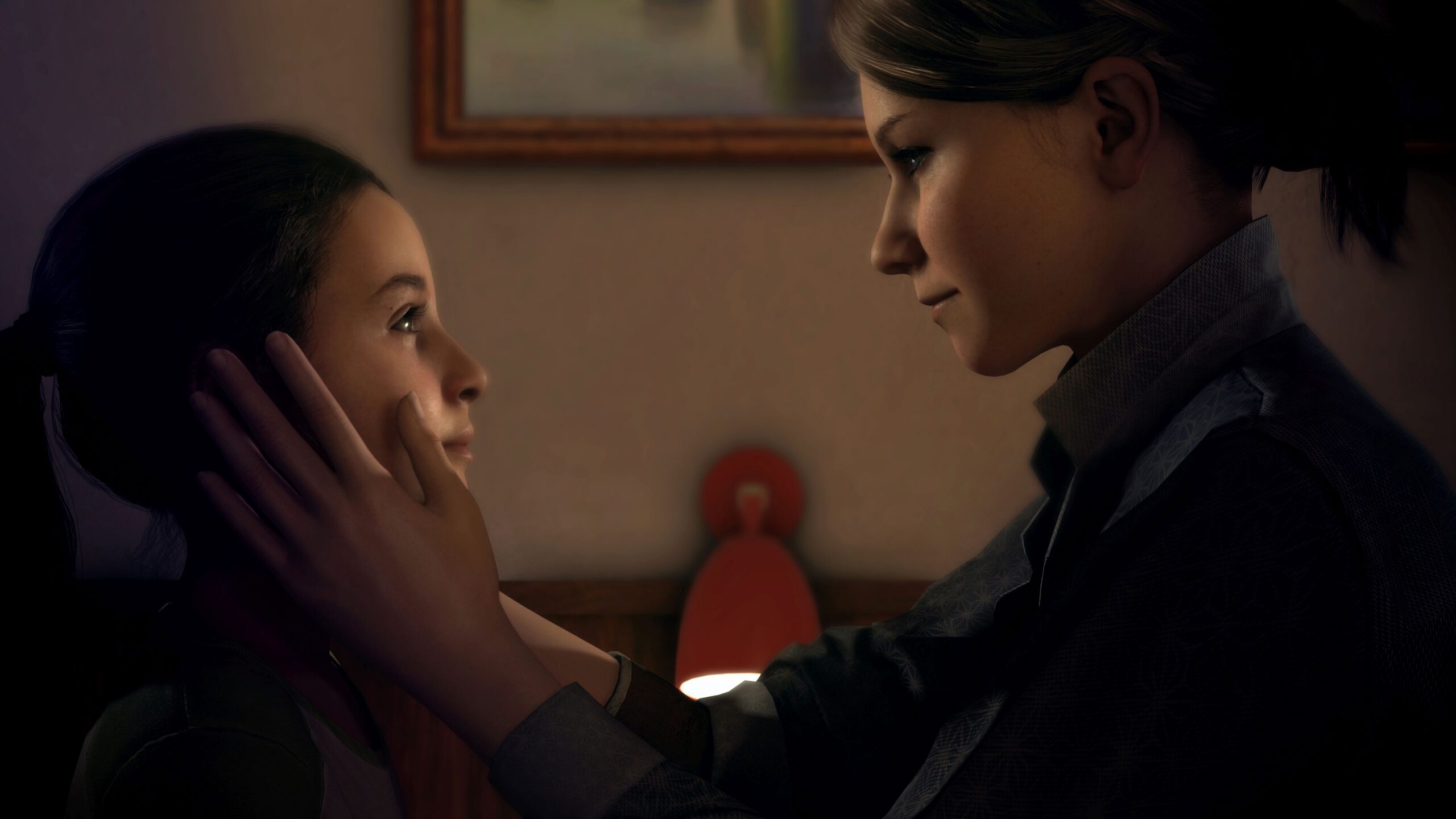
In Detroit: Become Human, the storyline that evoked the strongest feeling in me was the android Kara and the girl Alice’s journey. Throughout their escape, Kara steps into the role of a mother, protecting Alice, finding her food, telling her bedtime stories. As the player controlling Kara, I invested deeply in this relationship, believing Alice was a human child in need of care. The late-game revelation that Alice is actually an android hit me with genuine shock.
Two design choices made this moment so powerful.
First, perspective binding. The game anchors us firmly in Kara’s first-person viewpoint, creating strong identification. Mechanics like the affinity system reward choices that strengthen Kara and Alice’s bond, encouraging emotional investment. By the time the twist arrives, that investment creates a profound gap between expectation and reality.
Second, environmental storytelling. The game scatters clues about Alice’s true nature throughout earlier levels: a purchase receipt, a magazine ad for child androids. These details makes the turning point reasonable.
Some critics argue that making Alice an android undermines the story’s depth, claiming that a human child would better illustrate love’s capacity to cross species boundaries. I respectfully disagree. The twist forces a harder question: if I had known Alice was an android from the start, would I have cared for her any less? I wouldn’t. The game is fictional, but the love I felt was real. It made me realized that love is not a response to what someone is; it is a choice about who they are to us.