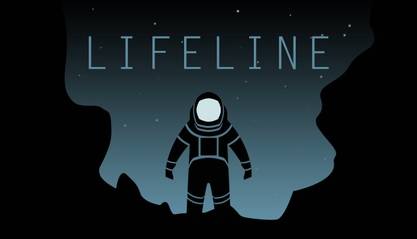
The game Lifeline evokes in me strong worry, anxiety, but also genuine care.
The game is about saving an astronaut named Taylor, whose spaceship crashed on an unknown planet. The interaction is very simple, the player receives text from him and replies by clicking one of the two responses to guide him.
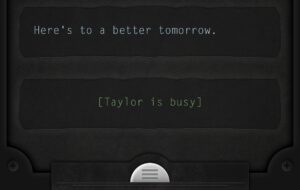
One fantastic design is that the game time flows the same as in real time. So when Taylor is replying, I just see 3 dots pulsing as in real messaging. He sends text paragraph by paragraph with pause time. When he does tasks (walking, sleeping…), I can only wait and see [Taylor is busy]. Such design makes me feel everything is actually happening and he is a real person needing my help. The game also sends text to appear on your phone as ‘notifications’ (which could mix with messages from your real friends), making it even closer to a real conversation.
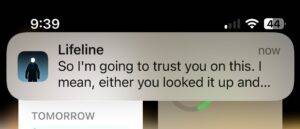
While I’m waiting, I would wonder how he is doing, worry about him, anxious about the unknown. When I could only wait, I am in the same position as him – uncertain and powerless. He would also ask me to search on Internet for him, which further engages me to build connection.
When Taylor dies, you can rewind a past decision, but the time you spent waiting outside of the game, the event that seems already happened, couldn’t be erased. All these immersive design deeply blurs the boundary between game and reality and evoke strong feelings in players.