When Setsuko dies in the Studio Ghibli movie a grave of the fireflies, I cursed the world and bawled my eyes out. Why? After all that suffering, all the pain of loss and struggle, did the young orphan not make it? The death of someone who has endured suffering and pain in the struggle to survive feels unjust, unfair, and upsetting. So when my character dies after making a treacherous journey through snowstorms and escaping stony monsters, all I can think is: WTF!

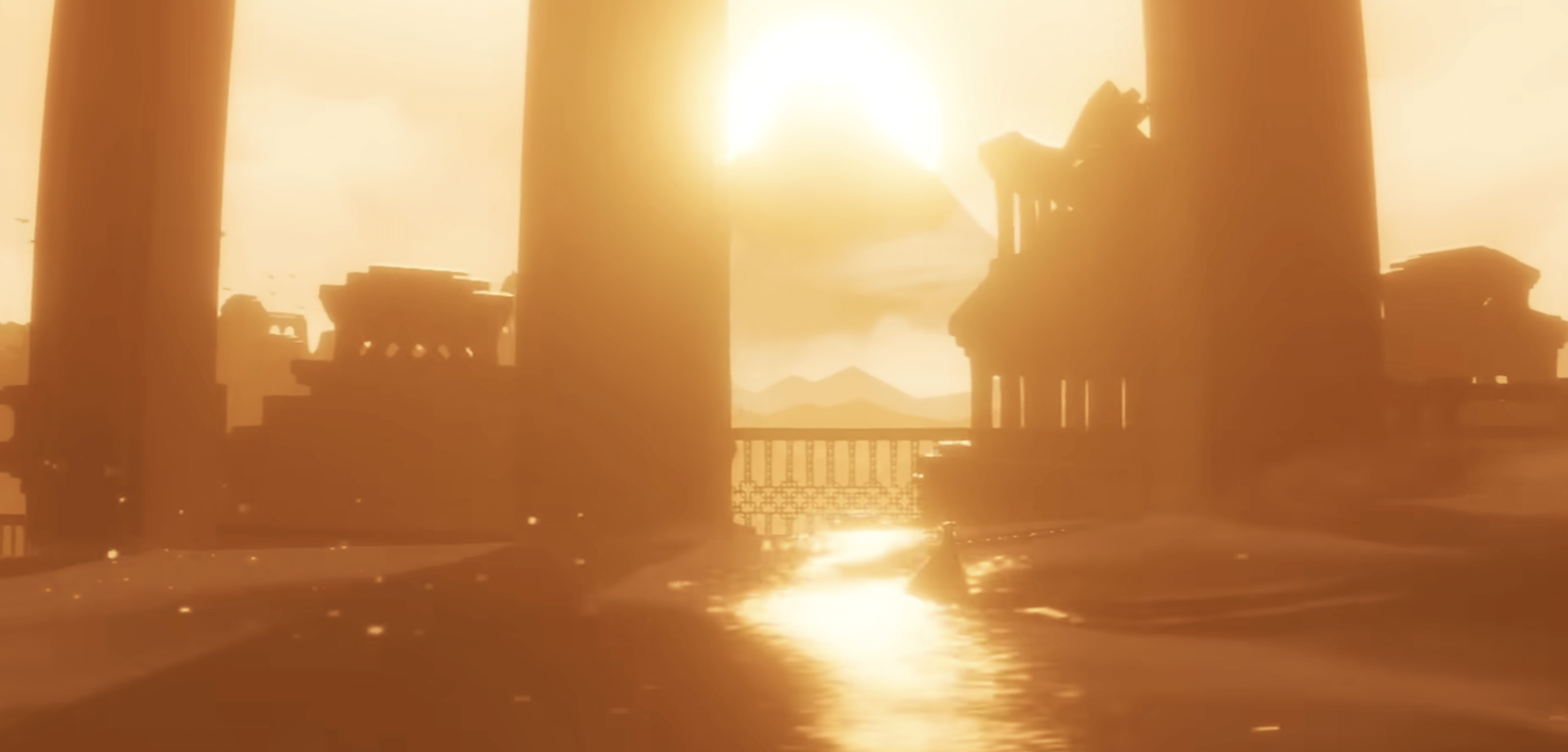
Let’s go back to the beginning. Journey. The title is Journey. I am a beautiful character with no name, no background story, no tasks, no arms, with a gorgeous red cloth and gold eyes. I know when I see the title and the mountain with a glowing peak that this is a game about exploration, with the goal of reaching the top of the mountain. And there I begin my journey.
With childlike wonder and whimsy I glide through golden sands and follow the beat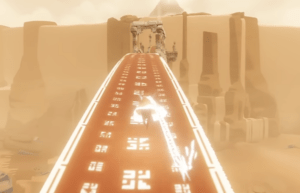 of the music – alive and pulsing. I see the tomb stones, littered all over like they are part of the game’s architecture, and at first I move past them, past the hundreds of dead strangers that lived before me and possibly tried to make this journey that I am making, and I think to myself – I have to get to the end, for me, for them, for all of us. I have to survive. I inherit the quest of strangers who walked before me that I had never met, just as John Green carried the weight of a burned child he met once for fifteen years without knowing if he survived.
I follow the carpets, dancing with them, amazed at the beauty of the golden sands. I see all the ruins around me but I don’t stop, I know my self-assigned goal, and I keep going and pushing ahead. My first signal 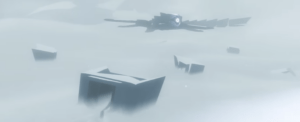 that this is a dangerous journey happens when I encounter the stony monsters. The music shifts to a heavy sadder tempo, and I am faced with the sudden realization that I am mortal, and that I could fail in reaching the top of the mountain. Quickly, I am nolonger just gliding through the game, sprinting in the air and riding the carpets. I am trying to survive without getting bitten.
 I make it just in time to the snowy mountains, and I am slowed down significantly by the snow storms, and the freezing cold, the music is sadder, I can see the light, and each step is heavy and hard but I push through. I push one step, one music note at a time, I can feel my body failing and just when I am too tired to keep going I collapse. I collapse and die in the cold, and for a minute I am in disbelief and reject the idea that I had come this far to die so close to the end.
Six ancestors appear and they lift me up, resurrect me and I fly to lit mountains and walk through the light a few minutes later. That is when I get the point of Journey – meaning comes through continuation, even when there is failure. What awaits at the other end of my death isn’t the end, but the dazzling mountain that was my goal all along.
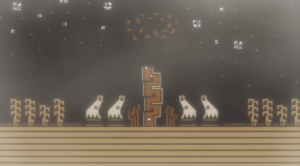 But is this continuation meaningful given that I did not consent to it? The answer to this question is YES. The symbols built at the end of each cut scene are proof that the journey I am making accumulates meaning beyond me as an individual. I don’t just continue on to reach the mountain top, I have a goal, a purpose, and that is to make that journey for all the ones that came before me who did not make it to the end. Those lying dead in the tombs without names I can recognize. So when the six white strangers lift me up, it is because I had been lifting up their stories, their quest, this far, and now they were doing the same.