


On paper, being a PhD student gives you far more flexibility. I can take courses across departments, follow intellectual curiosities, and justify almost anything. In practice, though, PhD students are constantly asked one quiet, terrifying question: How does this get you closer to your dissertation?
I have a technically defensible answer. I needed two “design” courses, and “design” is in the name of this course so it counts right? But if someone asked me directly how this class moved me toward my dissertation, the honest answer would probably be: No 🤷.
However, if the question is not “How did this class get me closer to a dissertation?” but “How did this class get me closer to the person I want to become?” then you may need to sit down for a while.
The class opened with a video of a dog and a polar bear playing. The lesson, as I understood it, was play is vital because it is how creatures learn, relate, survive, and sometimes avoid being eaten by polar bears. On a day-to-day basis, though, as a PhD student with an eleven-month-old and too many volunteer experiences on my CV, I was not yet convinced that play was important in my life.
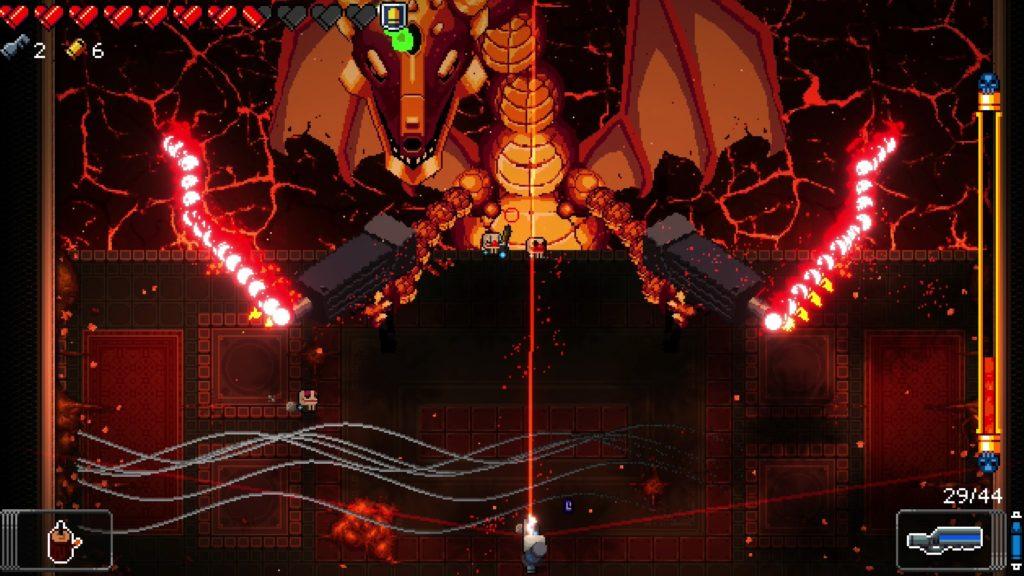
If I am being honest, one reason I took the class was that I was excited to have an excuse to play a board game once a week. I love board games, and I rarely have time for them. Sadly, the critical plays did not quite work out that way for me. I often ended up playing video games I did not love, partly because I was not very good at them. I started the class believing that video games, while not inherently bad, rob many people of many hours of their lives. The class didn’t fully changed that view, especially after hearing the hundreds of hours that our TAs have spent in some games. But it did make the view much more nuanced.
My new metaphor is this: games are like fruit.


Fruit is healthy. Fruit is delightful. Fruit makes life better. But fruit is also innately more enjoyable to eat than vegetables, and while almost every meal might be improved by the inclusion of fruit, we cannot replace all meals with fruit—despite what my eleven-month-old claims.
I still do not think children should be allowed to play video games all day. I still worry about some game loops, especially ones designed to keep players consuming long after the meaningful experience has ended. But I now believe that principles of play could improve almost every educational intervention I care about. The question is not whether play is good or bad. The question is what role a playful artifact serves in a person’s life, what it feels like to engage with it, and how it is implemented.
At one point, one of my teammates said they did not want any elements of educational technology in our game, in response to the possibility of including a guide who would take players through the experience. 🤫 What I did not tell them was that Puzzle One is straight out of the AP Computer Science Principles curriculum. It invites players to think about how encryption algorithms can be broken. In class, the Caesar Cipher often feels sufficient to students because it looks hard to break. But the reality is that the Caesar Cipher is extremely easy to break, and Puzzle One relied on exactly that weakness.
I would happily give students Puzzle One as a competition on the day I introduced encryption. It would be playful, but not decorative. It would not be chocolate sauce poured over 🥦 broccoli. It would use the structure of play to make students care about the problem before they were formally taught the vocabulary for it. Scott Kim defines a puzzle as something that is fun and has a right answer, and he argues that good puzzles often make something familiar feel strange or novel. That is what I think our puzzle did at its best. It took something that could have been presented as a lecture slide and turned it into an experience of curiosity, competition, and discovery.
This class helped me understand that “fun” is not one thing. The MDA framework gave me better language for this. Now I can see that Balatro, 7 Wonders Duel, Plants vs. Zombies, and a classroom encryption puzzle are not all offering the same kind of pleasure. Some create challenge. Some create discovery. Some create fellowship. Some create narrative. I learned that storytelling matters, even in systems that are not “about” story. Our space duck shall not be forgotten. He may not get me closer to a dissertation, but it taught me something about why people care enough to keep playing.
I may still not be able to finish Plants vs. 🧟 Zombies (I am even less capable than his mom) but I understand why its tutorial works. It lets the player build a mental model through interaction loops: try something, get feedback, revise, try again. Tutorials are not just instruction manuals but as invitations into a system. Maybe just maybe this will help me design invitations into real world systems (learning interventions).
My advisor might advise against any more adventures down this path because it is not obvious that designing playful encryption puzzles or thinking about 🍓strawberries as a theory of games is the straightest route to finishing a PhD but I hope I get the chance to take Designing Serious Games and push my thinking further. I am leaving Design for Play with a more complicated relationship to play itself. I still believe vegetables matter and we cannot live on fruit alone. But I also believe that meals without sweetness are harder to sustain.

Well, I hope you take 377G, and we’ll figure out how to connect it to your disseration. 😀 And my kiddo used to want to eat only fruit to the point where I called her a fruitarian!