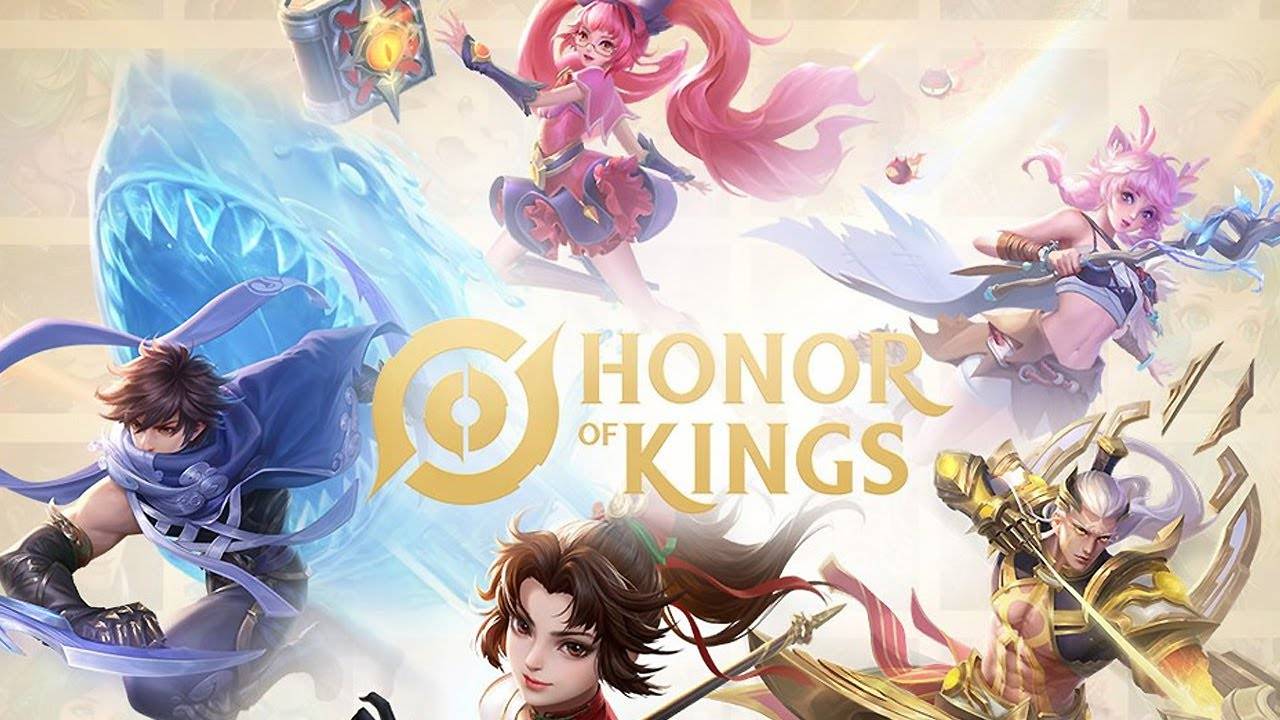
Honor of Kings (王者荣耀), developed by TiMi Studio Group and published by Tencent, is the most-played mobile MOBA on earth, a free, 5v5 phone game whose audience skews young and enormous. This game not supposed to be pay-to-win since the heroes are balanced and the skins are cosmetic. So it surprised me how quickly playing it started to feel like standing at a slot machine. The gambling isn’t in the matches. It’s in the store.
And here’s what surprised me most: the store tells you the odds. My argument is that this honesty is a costume. Honor of Kings discloses that its best skins drop at 0.1%, and then designs everything around that number to make sure you feel lucky and ignore it. Publishing the odds isn’t honesty here; it’s an alibi for a machine built to keep you wishing. A slot machine hides its math. Honor of Kings shows you the math and bets, correctly, that it won’t change what you do.
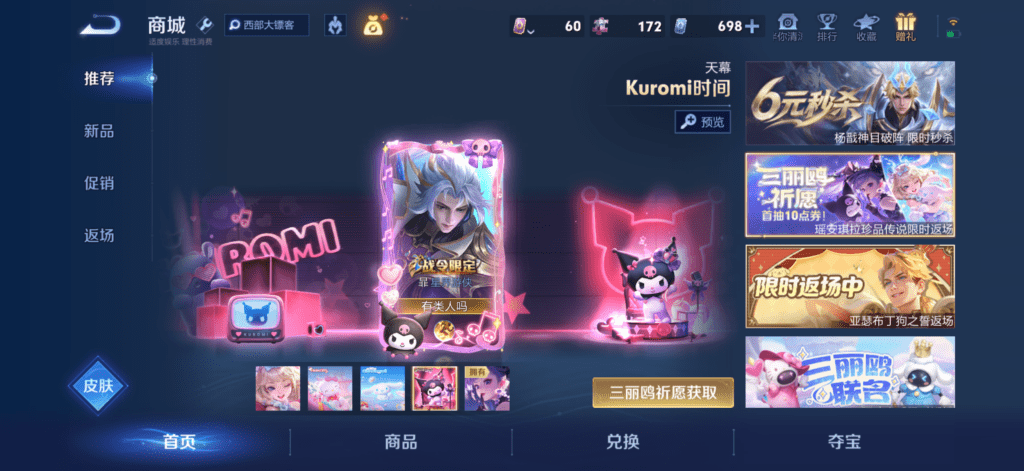
Before any money moves, the game manufactures the wanting. Everyone around me has skins, and the good ones are loud: particle effects, custom animations, a branded entrance. A hero with no skin reads instantly as a newbie. Nobody wants to be the plain one. This is where Honor of Kings is sneakier than a casino. A slot machine has to lure you in, but this game makes you arrive already wanting. The desire is social, and it’s installed before you ever open the draw.
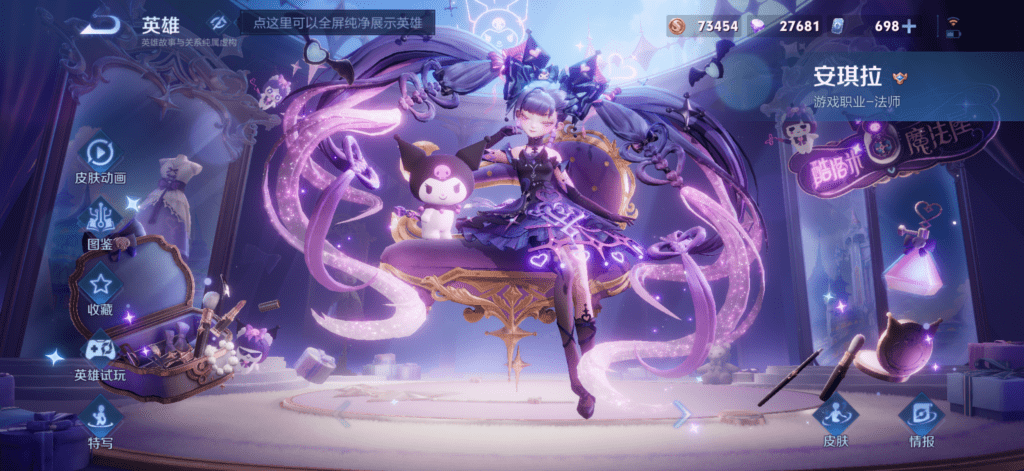
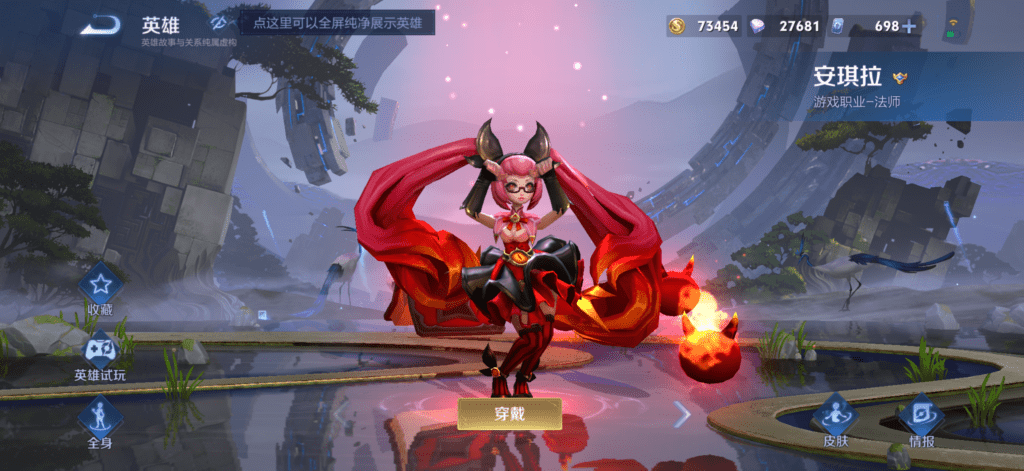
That wanting gets funneled into a 祈愿 (“wish”) draw. You turn real money into coupons, coupons into wish-coins, wish-coins into pulls. Each layer loosens the link between what you’re spending and actual cash; by the time you’re pulling you’ve stopped thinking in dollars and started thinking in coins. Natasha Dow Schüll, in Addiction by Design, calls this kind of abstraction the dematerializing of the bet, the money becomes a token, and the token becomes a feeling.
Then comes the screen I assumed would be hidden, and wasn’t.
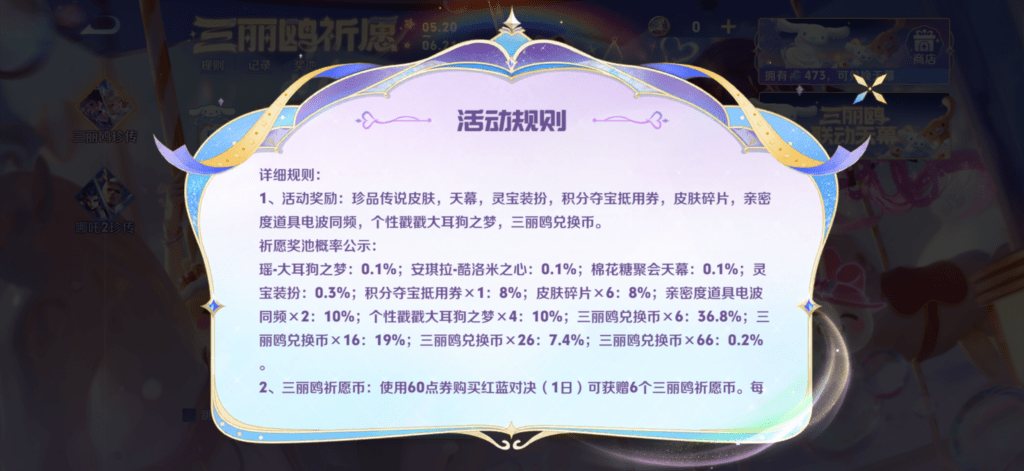
Honor of Kings publishes its odds. The skins I wanted were sitting right there at 0.1% each. I’d assumed the game obscured this, instead it discloses it openly. But that’s the trick. A flat “0.1%” doesn’t land in a human brain as “you will likely spend a fortune.” What players actually absorb is a rough sense of the average number of pulls it “usually” takes, and then quietly treat that average as a ceiling — I won’t be the unlucky one. But an average has a long tail of people who pay far past it, and nothing on this screen guarantees you anything. You can pull at 0.1% forever. The odds are visible; the distribution is what stays hidden, and the distribution is where the money is.
This is the same asymmetry Schüll finds in the slot machine, and it lines up almost exactly with the MDA framework. The designers operate at the level of mechanics. They set the 0.1%, the consolation tiers, the currency conversions, knowing precisely what the math returns across thousands of players. The player only ever lives in the aesthetics: the flicker of maybe this one. And because every losing pull still drops a little pile of event-tokens, it never feels like nothing, only “almost.” That’s the near-miss, the drip Schüll says holds people in the zone. The only way out is to walk away having paid real money for tokens you never wanted, so the sunk cost keeps arguing for one more wish.
Against an actual slot, the comparison cuts both ways. Honor of Kings is gentler in the obvious places: it’s free, the gambling is optional, and losing costs you a costume, not your rent. But it’s harsher in the quiet ones. A slot pays small wins on the way down; a no-ceiling skin wish pays you nothing you actually wanted until the very end. A slot doesn’t shame you for sitting out; this game builds the pressure to play into the lobby. And a slot is honestly a gambling machine, Honor of Kings is a cute, kid-friendly esport with the gambling tucked inside, within reach of the players least able to resist it.
So when is chance fair in a game? Chance itself isn’t the villain. Yahtzee is chance, and Yahtzee is fine. The line, for me, is whether the game is honest all the way down, not just on the rules screen. Chance is permissible when the player can act on what they’re told, and impermissible when the game discloses the odds but engineers everything else to make sure they won’t. Publishing “0.1%” isn’t honesty when everything around it, the Sanrio frame, the consolation drip, the manufactured shame of going skinless, the missing ceiling, the endless parade of new collabs, is built to make you feel lucky and keep you wishing. As the essay puts it, a live-service game is designed never to end; it wants your time and money indefinitely. Chance turns predatory at exactly the point it’s wired into that forever-machine: when the house tells you the odds, then arranges everything else so you’ll look right past them. That little “consume rationally” disclaimer isn’t a safeguard. It’s a confession.