Minecraft doesn’t need a traditional story to have something to say. Its message comes from what it teaches players to do over and over, gather, build, improve, move, and optimize. McLuhan helps explain why those mechanics matter, and Folding Ideas makes the mechanics harder to see as innocent or without consequences. The sandbox Minecraft fosters may feel like freedom, but it also quietly influences one to see the world in a certain way, where land becomes material and people or villagers without agency become part of the project.
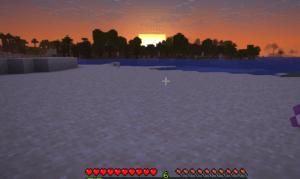
When I first started playing, I was honestly surprised by how beautiful Minecraft could feel. I spawned near water, sand, trees, and open sky, and for a second, I just wanted to look around. The sunset over the ocean felt peaceful, almost like the game was inviting me to wander rather than immediately accomplish something. But that feeling didn’t last long, because very quickly I learned that the world wasn’t just something to admire. It was something I needed to use and learn how to use.
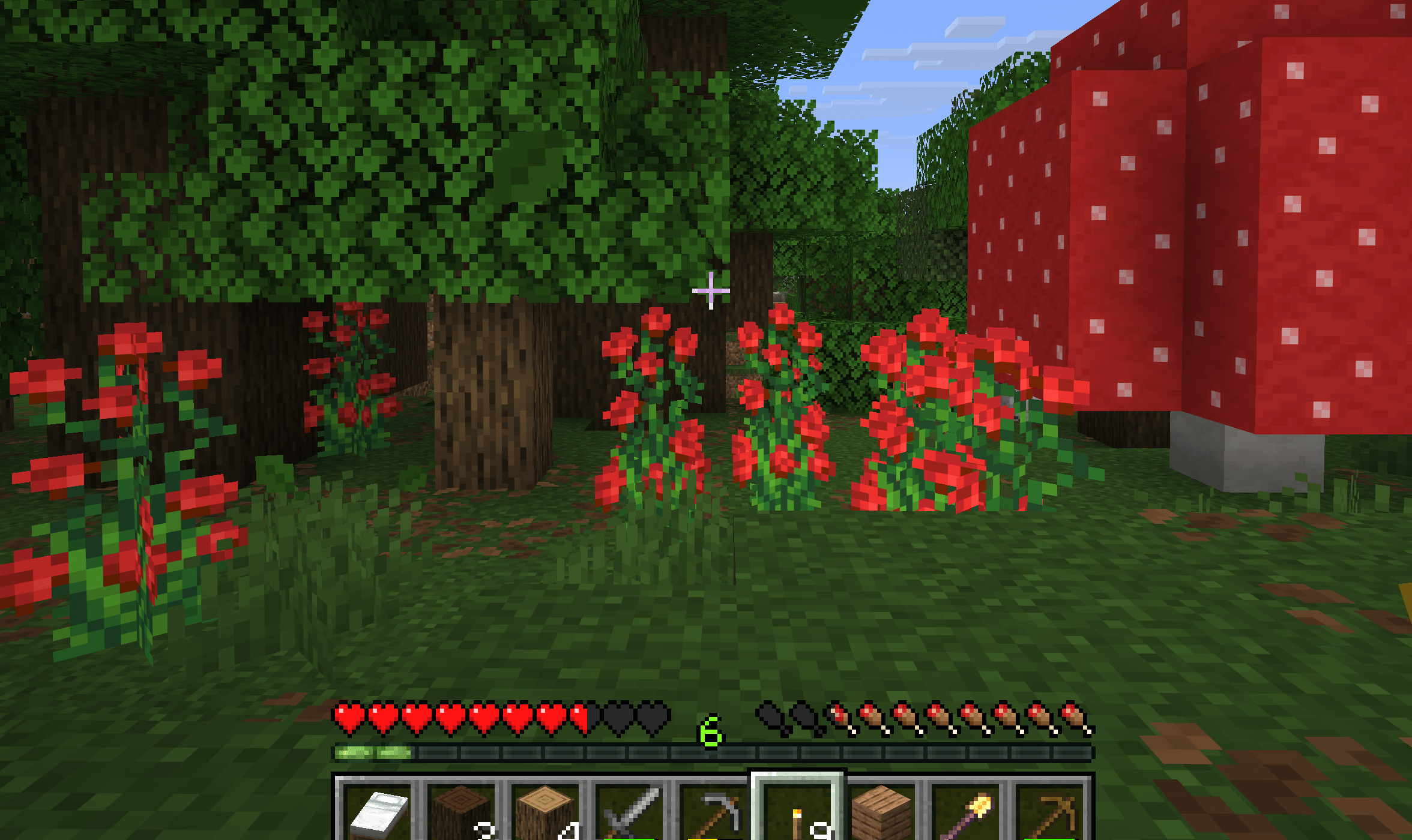
Throughout much of history, we’ve heard of human behaviors and habits of taking raw land and materials and leveraging them to progress, build, industrialize, and advance. Sometimes we believe that these patterns come from human nature, but in a game like Minecraft, it’s easy to see how there are habits that one begins to adopt because the game influences you into them. I killed animals for food. I chopped down trees. I mined stone and coal. I collected flowers, dirt, wood, copper, lapis, feathers, and random materials I didn’t even fully understand yet. I wasn’t necessarily trying to be destructive. I was trying to survive and learn. Still, it was strange how quickly the world became less of a landscape and more of an inventory.
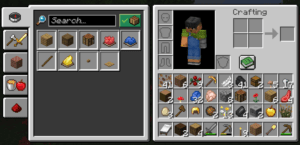
This is where McLuhan’s argument that “the medium is the message” becomes really helpful. For McLuhan, the meaning of a medium isn’t just its content, but “the change of scale or pace or pattern that it introduces into human affairs.” In Minecraft, the content might look like blocks, cows, trees, villagers, tools, and sunsets, but the pattern the game introduces is more important. The game teaches us to look at everything through possible use. A tree is shade, but it’s also potential wood. A sheep is cute, but it’s also food and wool. A cave is mysterious, but it’s also a place to extract minerals.
That doesn’t mean Minecraft’s secretly evil or that building is automatically wrong. In fact, part of what made the game fun was the feeling that I could slowly understand the world and make something of my own inside it. However, there’s a real learning curve. After only about an hour and a half, I didn’t feel like I had fully reached the deeper themes that more experienced players talk about, like large builds, automated farms, or fully developed villages. I was still figuring out how to craft basic items, how to fight off monsters, and what I was supposed to do next. But even in that short amount of time, I could feel the beginning of the loop where one collects, crafts, survives, organizes, and repeats. Minecraft’s freedom isn’t empty freedom, but rather shaped by systems.
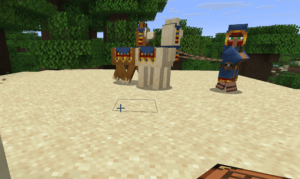
Folding Ideas pushes this even further by arguing that “game systems create metaphor.” This is especially clear in his example about villagers. In Minecraft, if a player wants to create a new village, the easiest method can become taking villagers from an existing one and moving them somewhere else. Folding Ideas points out that this isn’t necessarily intentional, but the system still creates an uncomfortable metaphor. The player has agency and the villagers don’t. The player decides where home should be, and villagers become part of that plan.
I felt this tension when I encountered villagers and traveling traders. They looked human enough to feel social, but mechanically they mostly seemed like systems for exchange. They had appearances, sounds, and roles, but I couldn’t really understand them as people with interior lives. They were part ofthe environment, but also separate from me. Folding Ideas describes this as a situation where “the group with agency (players) are delineated from the group without.” That line stuck with me because it explains why Minecraft’s sandbox isn’t neutral. The game gives me the ability to act on the world, but not everyone in the world gets to act back in the same way.
This is why the colonial reading of Minecraft is uncomfortable but useful. Folding Ideas says sandbox games often imagine land as a kind of empty frontier, where the player arrives and is encouraged to “improve” it by clearing, mining, building, and organizing. I felt that even in my beginner and limited demo experience. I didn’t know the whole world, its history, or its rules, but I still assumed that my job was to make it useful to me. I turned the world into tools before I understood it as a place.
So, can Minecraft be understood as a text even though it is a sandbox? I think yes, but not because it tells a traditional story. Minecraft’s a text because its mechanics teach a worldview. It says that freedom comes through transforming the world. It says progress looks like turning land into resources and resources into structures. It says creativity can feel beautiful, but it can also inherit older habits of extraction, control, and improvement. Maybe those habits are part of human nature, or maybe Minecraft simply reveals how easily systems can train us into historically bad habits and make them feel natural.