

Monument Valley is a fantastical and, dare I say, whimsical puzzle-based player-versus-architecture game developed by Ustwo Games and made for ages 4+. I believe it is suited for all age ranges, and is overall a non zero-sum, casual game with a low barrier to entry due to its subtle but effective introduction of mechanics that are intuitive to gamers and non-gamers alike, all chasing toward goals of solution and construction. It is released on many different platforms and consoles, including Steam, iOS, Android, PS4 and PS5, and the Nintendo Switch; I played it on my phone, which impacted my experience since I was swiping and navigating using my fingers. The mechanics of the puzzles in Monument Valley grant the player power over its architecture, amplifying the mystery and whimsy of the game while primarily enabling Ida to unlock her narrative.
This fickleness and unpredictability of puzzles in Monument Valley amplify the game’s theme of mystery and figuring out who Ida is, literally opening doors to understanding the story. The act of swiping to change the geometry of the level gives the player a third-person sense above Ida, as if they are guiding her through the Monument Valley and empowering her to return “home” and figure out her roots. The player is given the power to open doors, trap crows (Fig. 1) and guide Ida to this strange blue person interrogating her about “why she has returned”.
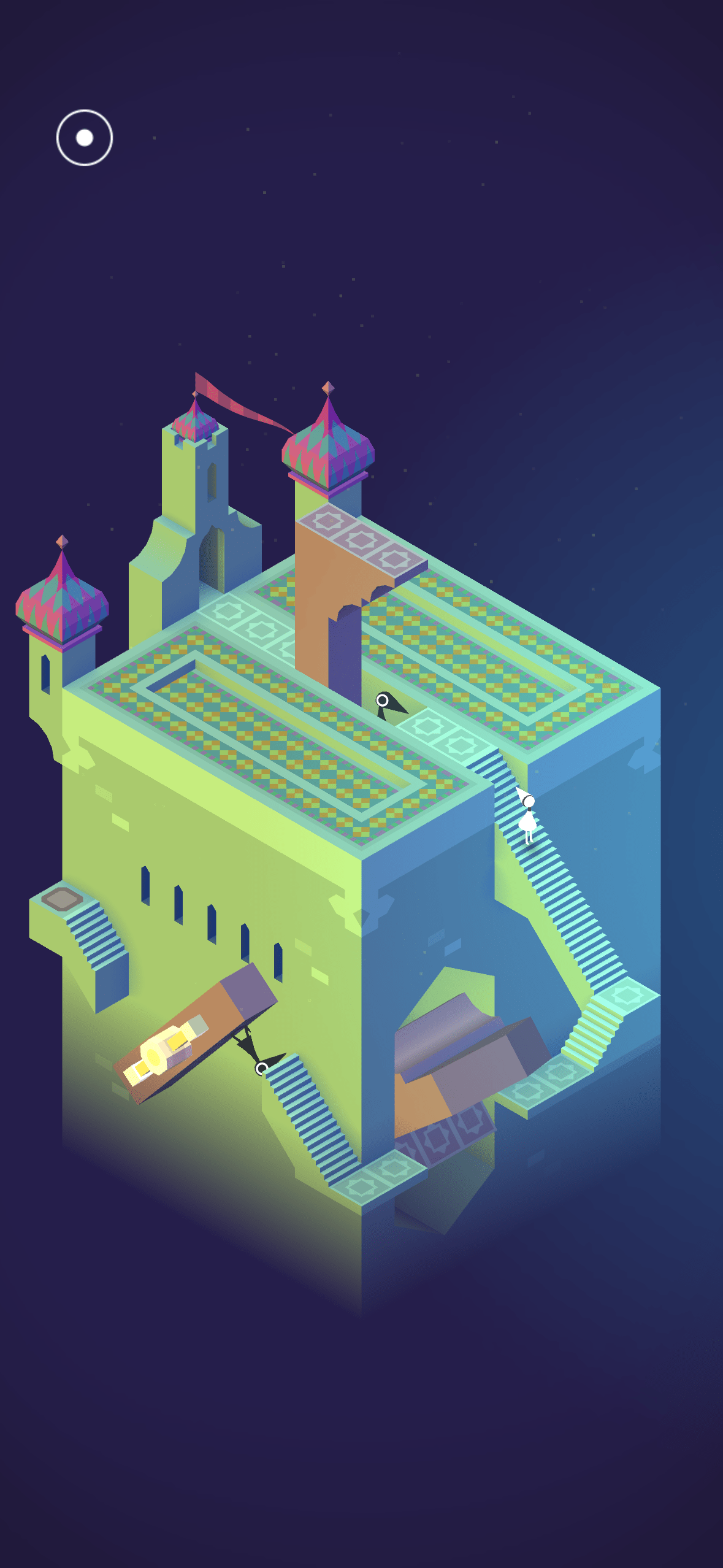
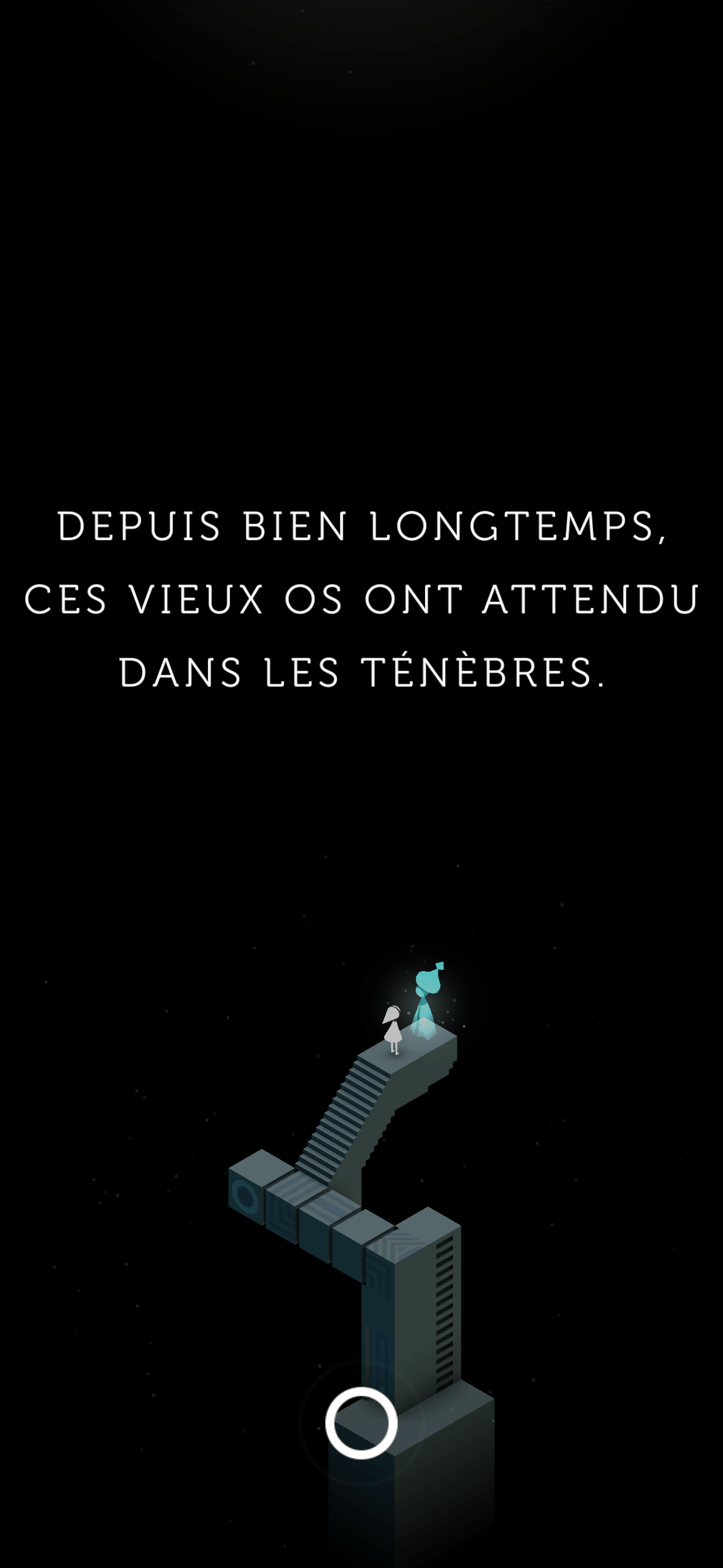
This creates an almost God-like magic circle for the player and amplifies their dynamic of challenge and exploration by proxy of their abilities in this universe. Ultimately, this power motivates the player to find and iterate on combinations of structures so that Ida can progress to the level exit. Additionally, this takes the player out of an enacted narrative: they are not Ida, but someone who guides her, an omniscient being with the power to physically manipulate her world. Thus, I’d argue that this game is more of an embedded narrative, where the player follows two plots, the first being understanding what the Monument Valley is through manipulating its architecture, and the second being figuring out Ida’s story through short scenes throughout the levels (Fig. 2).
The puzzles themselves require the player to configure architecture into non-intuitive shapes and topographies through a familiar lens of anamorphic art, whimsically transforming the role of architecture in Monument Valley. The game itself is very fantastical, with interesting geometrical shapes occurring frequently in the architecture and sudden gravity-shifting; naturally, the “building” puzzles in the game, which are similarly non-intuitive, are natural to the environment. For example, one of the levels made the player configure a Penrose triangle in order to progress to the end, of which I highly commend the game artists for making these configurations lock into place so smoothly (Fig.3 ).

The player must rotate an L-shaped path until the perspective is just right, like those anamorphic art pieces where you have to stand in just the right spot to see it correctly, and suddenly, the path locks into place. There are also points where paths that seem to be above Ida can project onto the level of Ida, allowing her to rise vertically without climbing stairs; again, the player is creating new and otherwise impossible opportunities for Ida, playing a God-like role in the construction of her path (Fig. 4).
Figure 4. It’s not letting me caption the video, but you can see that the platforms are moving vertically and creating new pathways that act as elevators for Ida.
To the player, this new architecture creates a new world, as it is distinctly separate from anything that can be conceptualized in the real world. These curious manipulations transform the role of architecture in Monument Valley; through the mechanics of the puzzles, which allow the player to rotate and manipulate the position of architecture, transforming architecture from constraints and obstacles, gaps that the player cannot cross, into paths and exploration. The pliability of architecture empowers the player to explore different configurations until they unlock new and non-intuitive paths to the end.
In Monument Valley, the player sometimes must trap the crows in the level order to progress (see Fig. 1 again). The player must deceive the crows, make the crows scream at them, and overall disrupt their environment just so they can progress to the next level. This can be a problematic objective, as it implies that progression requires the constraint of others. Additionally, the number of crows in each level as opposed to a singular Ida, stringed with the fact that you must trap them, implies a sense of individualism, and that the player’s desire to unlock their story is more important and takes precedence over the natural state of being of these crows who, previously, were just roaming about their day in the levels. On a surface level, these features seem like purely a means to an end, but on a deeper level, they imply individual supremacy and a malicious manipulation of environment/harassment of an existing people as a means of progression.