I played the game “Factory Balls,” made by Bart Bonne. I remember playing this game when I was 9 years old and still enjoy it now that I am 21. Thus, the game is for a wide variety of audiences who enjoy creative problem-solving and casual puzzle games. It is a single-player game (1 player maximum and minimum), so I played this game by myself (1 player) on my iPhone (specifically iOS). Through its simple mechanics, Factory Ball creates an experience surrounding experimentation and discovery while revealing limitations in repetition and accessibility.
The game uses simple mechanics to create an interesting and captivating game. After watching a walkthrough of the game, I thought, “This should be extremely easy” because the mechanics seemed intuitive. In each level, players are given a target ball design and a set of 3-5 tools (like paint, hats, belts, or googles). The main mechanic is figuring out the correct order of tools to recreate the design on a blank ball. However, I was quickly proved wrong when I struggled thinking “I do not know how I will ever get this pattern just by using these two tools” (Figure 1). Even though the controls and objectives are simple, small changes in the sequence of actions can completely alter the final design.

Figure 1: Level 5 challenged me because I incorrectly assumed the tool went under the hat instead of over it, repeatedly ruining the design.
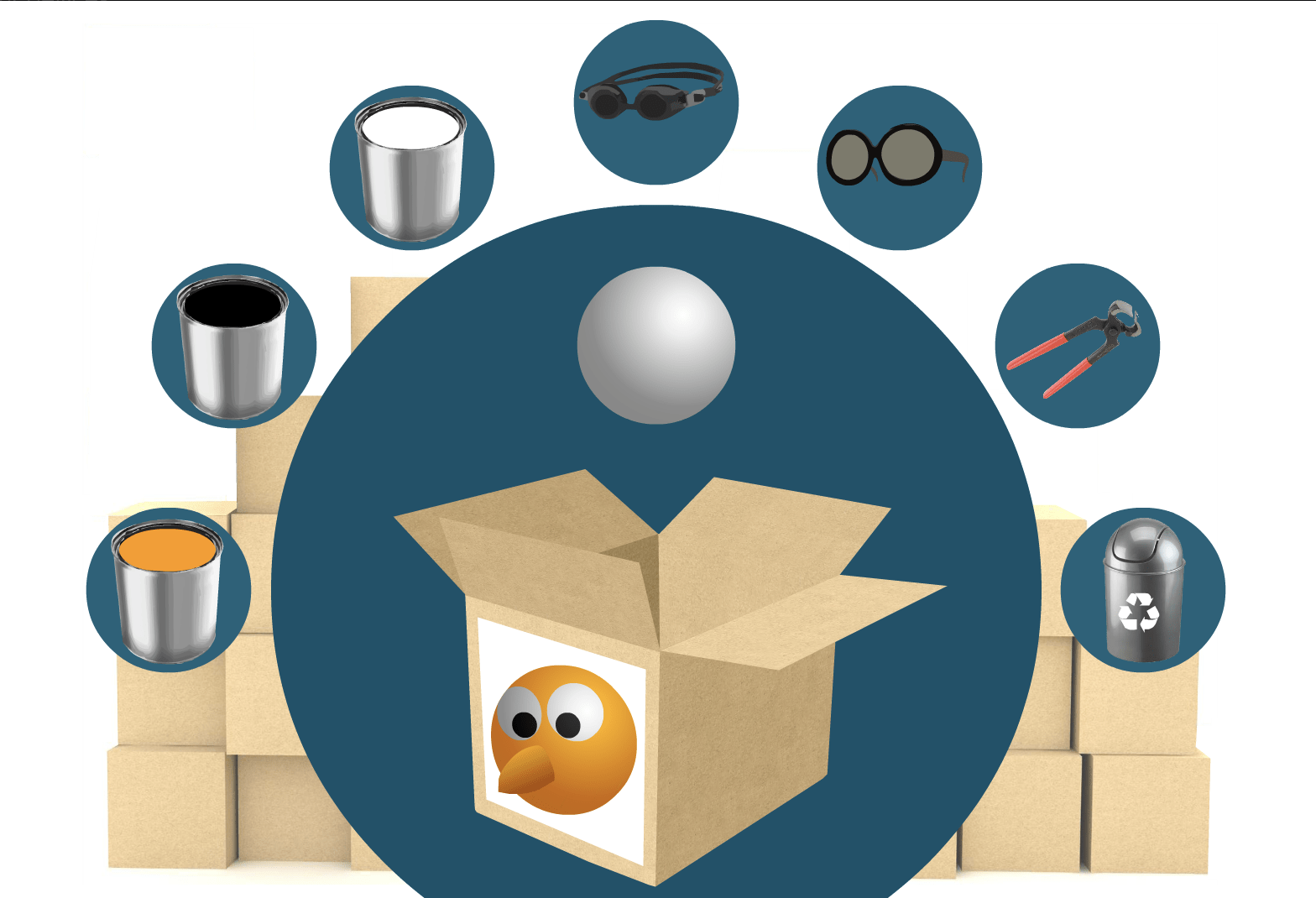
The mechanics of applying tools in sequences create dynamics, including experimentation, planning, and discovery. Whenever I encountered a new tool, I thought “I should just use it to see what it does” (Figure 2). After learning how a tool worked, I tried out different iterations of tools to get the right pattern. Therefore, through trial and error, I felt like I was learning from mistakes and understanding how the game works. As the levels progressed, I realized that they built on one another. I picked up key patterns and thought of “starting from the bottom layer of paint and building up to other layers” and solving “similar problems using similar means” (Figure 3). By learning these techniques, I felt like I had mastered the game’s logic by level 20.

Figure 2: I experimented with the white container and water pot until I understood how they worked.

Figure 3: Although I had only used one belt before, I applied similar steps here and built upward from the bottom yellow layer using patterns I learned from previous levels.
These dynamics then produced the game’s aesthetics, mainly challenge and discovery, as well as relaxation. As the games difficult increased, I felt engaged and continuously challenged. Producing and repeating a series of sequences also made me feel that I achieved key “aha!” moments throughout the game. The visual transformations during these moments were aesthetic and satisfying as I could see the results of the tools I used. I also felt relaxed as I had time to explore tools, persist through failures, and problem-solve without stress.
Some games like Factory Balls that focus on logic, experimentation, and solving puzzles include “The Witness”, “Portal”, and “Monument Valley”. However, these games are in 3D environments and require complex movement, while Factory Balls is minimalistic and has easy rules. However, using this core mechanic of ordering made it repetitive. By around level 20, I felt like I was “doing the same thing over and over again” and the excitement had worn off (Figure 4). This could be improved is by introducing variation in puzzle structure over time, like designing multiple balls at once, challenge modes with limited tools, timed levels, or cooperative gameplay that allows players to build designs together. All these additions could make the game more challenging and social, boosting overall engagement.

Figure 4: By level 18, I was bored of repeatedly using the hat and wished new objects would appear.
Another disadvantage is that levels feel disjoint, and the game has little purpose beyond advancing to the next level. By adding a narrative or light storytelling, players would feel more emotionally invested in their progress. Emergent storytelling could be used by having the balls represent characters and places. Thus, as people complete puzzles, they might uncover the relationships between these objects as well as environmental details. Watching a factory evolve with these balls and characters over time could lead to ownership and immersion as they uncover pieces of the story through gameplay, leading to a stronger narrative.
One ethical issue with Factory Balls is the type of knowledge and reasoning the game assumes players already have. The puzzles are built around cause and effect and pattern recognition. For example, I learned and thought that “placing a hat on a ball will prevent the top surface from being painted,” but this may not be easily learned by all players. Specifically, players who have a background in STEM and logic may be able to figure out patterns quicker than people with cognitive disabilities. In addition to this, there are only a few tutorials and guided learnings for players who need them.
This game also assumes everybody observes colors and objects in the same way. However, people with different cultural or socioeconomic backgrounds may interpret tools differently. There are no built in contrast modes, screen reader compatibility, colorblind friendly palettes, zooming tools, and audio descriptions. Thus, those who cannot easily process visual information may be excluded from the game’s “magic circle” or the enjoyment, challenge, and discovery the game is designed to create.
In the end, Factory Balls shows how minimalist mechanics can make engaging puzzles through experimentation and discovery. Even though it can get repetitive and has accessibility limitations, the fun “aha” moments make gameplay worth it.