Critical Play Response
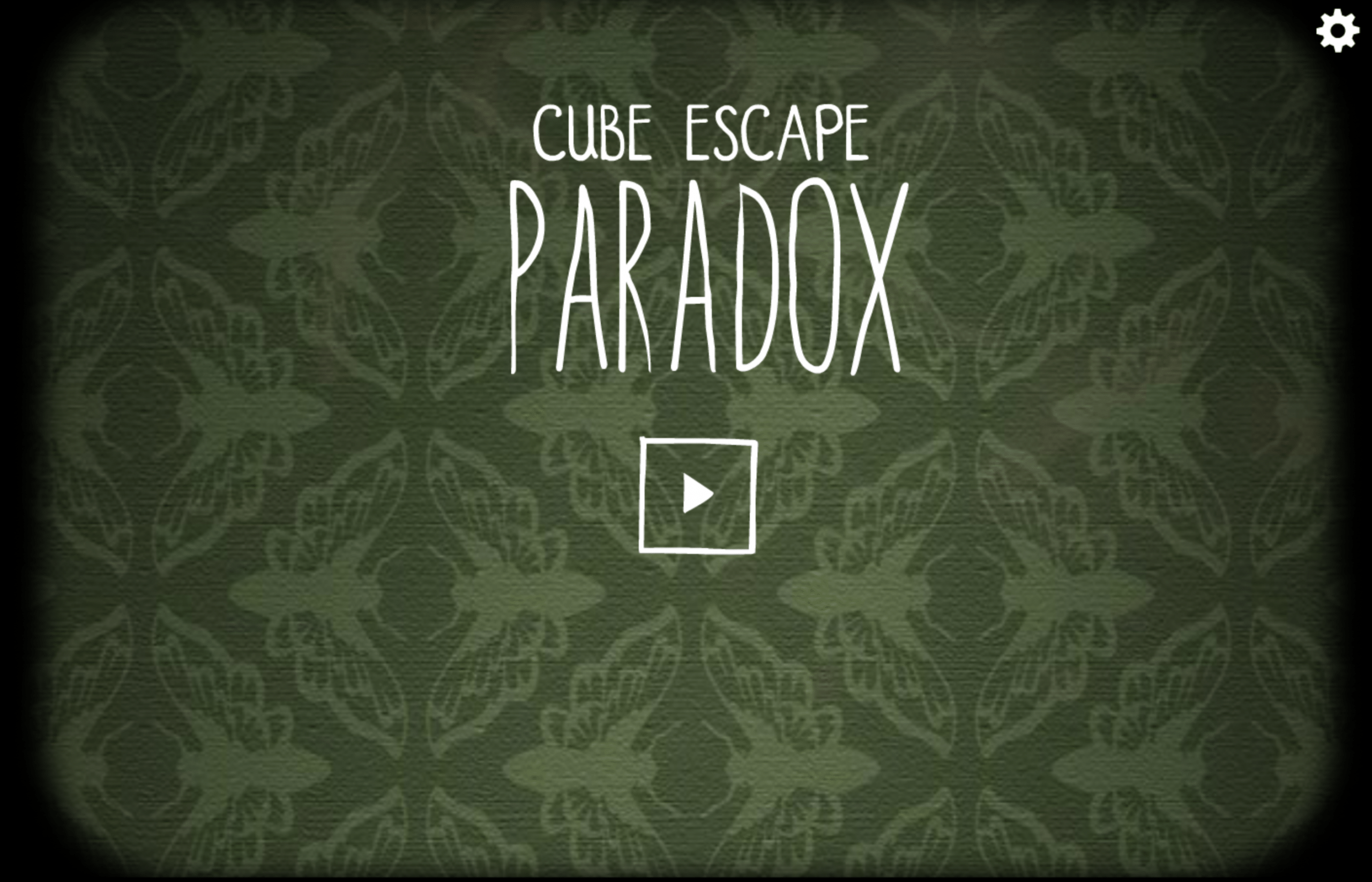
This week I played Cube Escape: Paradox (CEP), a 2018 free-to-play narrative escape room designed by the indie studio Rusty Lake. CEP is part of a series of games targeted at young adults +, who enjoy surrealist horror and psychological mystery, and I played on my laptop after downloading it from Steam. Like any escape room experience, the fun in this game is driven largely by the constraints placed on the player which establish boundaries and limit freedom which is gradually opened up by solving puzzles. The satisfaction from solving a puzzle and moving on to the next one is the core draw here, and concealment is the main narrative device used to create a fun experience. I would argue that minimal guidance through tooltips are the best way to frame an escape room experience, which CEP balances well in its gameplay.
As an embedded narrative, CEP tells its story primarily through context clues and environmental hints that allow the player to piece the story together. Every item in the space is part of the narrative, whether the player knows it or not. As an example, there are plants in the room that seem decorative, but eventually must be used to feed a caterpillar that turns into a butterfly to help you solve the next puzzle. The lack of tooltips mean that the player is incentivized to repeatedly click on everything in the hope of finding some new interaction that will help them move forward. The simplicity of this clicking mechanic gives the player a high degree of autonomy even in the confined magic circle of the escape room. This interacts with the dynamic of retreading old ground in order to find new interactions. The player approaches a flow state when they are on a run of solving clues, and the circular nature of the room where you can only go right or left simplifies access to this state and limits the realm of possibility for productive gameplay.

Illustration of the room with a seemingly innocuous plant on the right that becomes a key clue.
As the player finds clues, they are stored in a panel on the right side of the screen and decisions must be made about which clue to choose for an interaction. The rush of picking the right clue for the right situation is accompanied by audio feedback and a permanent visual change in the escape room based on player actions. For example, when the player connects the TV cables, the TV stays on for the remainder of the game as a reminder that the puzzle was solved. This fills the player with a high degree of competence and the consistent feedback engenders relatedness. This combination of autonomy, competence and relatedness give a sense of self determination that leads to satisfying gameplay. The lack of guidance via tooltips is key to this experience, as too much guidance would upset the balance of competence that is driving the fun.

TV is permanently on in the space after connecting the cables with tape
The narrative is also heavily supported by the deep 1970’s surreal aesthetic. From the carpeted floors to the red chaise and cassette player, the experience feels grounded in a time and place. Even the reveal of the protagonist as a grizzled, middle aged, male detective is through interaction with an old mirror that helps to drip feed information through the environment. This implicit storytelling through the environment is supported by explicit elements in the short films that show up on the TV screen when the player inputs the right channel code.
From an accessibility perspective, one of the most difficult aspects of the escape room experience is what happens when a player is stuck. The lack of tooltips that facilitates desired gameplay so well can be a double edged sword if a player is starting to spin their wheels on the road to the next solution. CEP handles this in two ways: the first is a discord channel where players can ask for hints. This function did not appear to work, as the discord link led to an empty page. It has perhaps not been serviced much since the 2018 release.
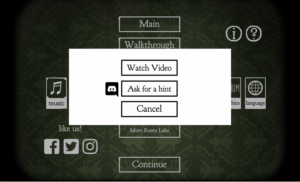
Walkthrough tab in pause screen

Empty discord hint function
The second is an official 30 minute walkthrough video on Rusty Lake’s Youtube channel. This feature was helpful in unblocking specific puzzles that allow the player to continue to work through the game. While this does not target a specific disability, it is a key accessibility feature for the overall game experience and is effectively a voluntary difficulty slider that players can use as needed to facilitate their gameplay experience.
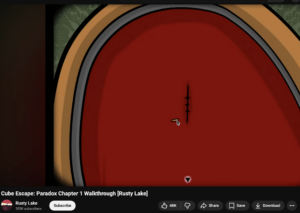
Image from Rusty Lake’s Youtube walkthrough
Overall, Cube Escape: Paradox’s design creates an immersive atmosphere underpinned by a compelling narrative that is supported by the lack of guidance provided, which was an intentional design decision that paid off. In thinking of game designers as narrative architects, the foundation of this particular construct is strong, with the official walkthrough serving as an elevator in a building where most players want to take the stairs to the top.