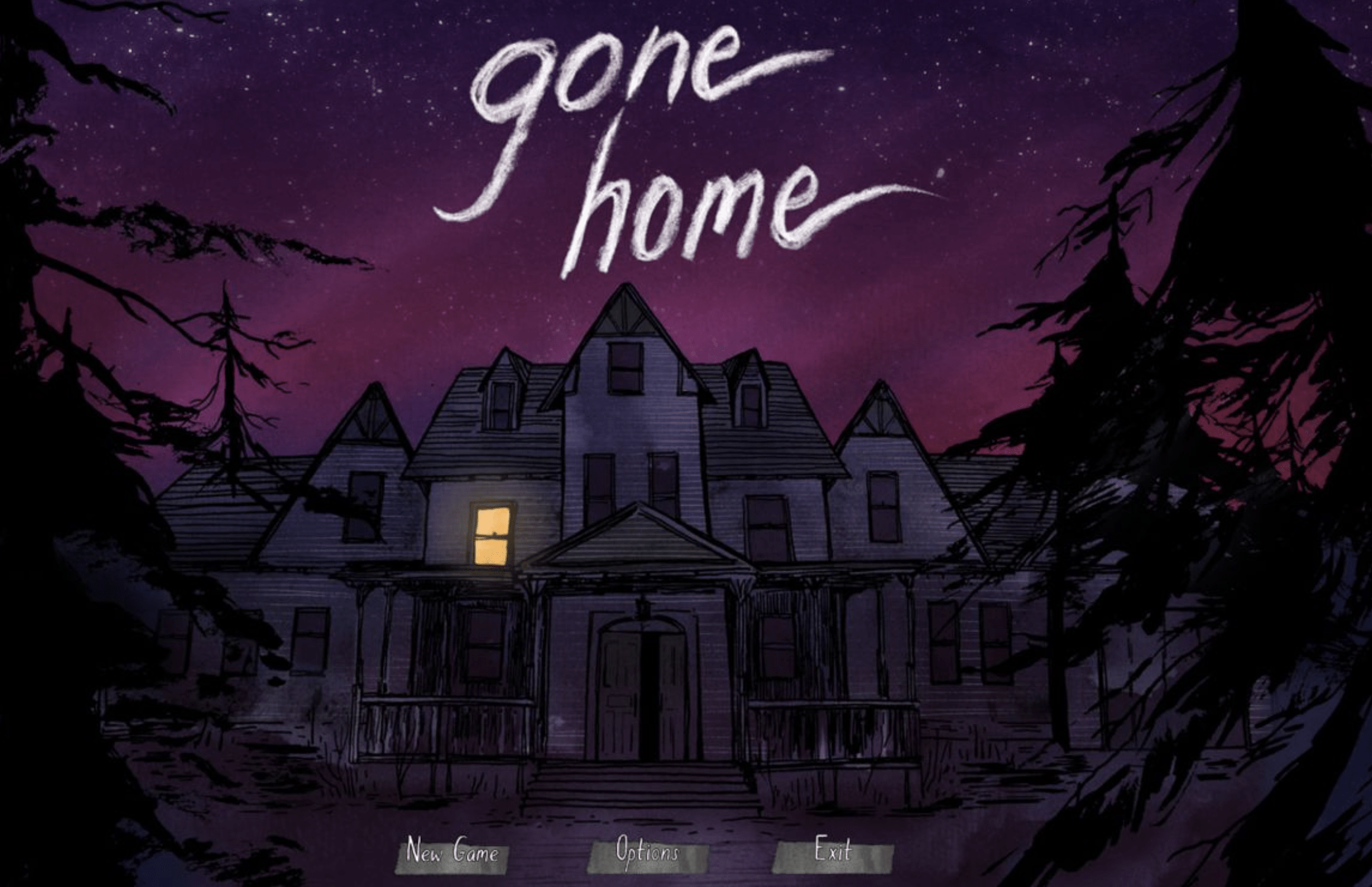
Gone Home Creator: The Fullbright Company | Platform: PC, Mac, Linux, PlayStation, Xbox, Nintendo Switch, iOS | Target audience: Players who like narrative games, mystery, and exploration
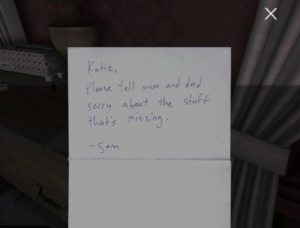
Twenty minutes into Gone Home, I had read a rejection letter on the father’s desk, found a crumpled sticky note in the bathroom, and discovered a mixtape tucked behind a stack of VHS tapes. None of it told me where my family went. All of it made me want to know. This pull is built entirely from objects in a house, with no dialogue prompt, and is the design achievement this game is built on.
Gone Home uses its architecture as its primary puzzle system. The house does not just contain the story, it controls when and how the story becomes accessible. Spatial layout does the same structural work that a skill gate or level lock does in other genres, except here it feels invisible, because a house is just a house. Using the MDA framework, the mechanics are simple: walk, inspect, read, listen, unlock, revisit. But those mechanics produce a specific dynamic. The game never asks me to deduce anything in the way ex: Return of the Obra Dinn does, where each death has a correct answer the game confirms, or Her Story does, where I reconstruct testimony from a searchable archive. Both of those are deductive and there is a verifiable answer I move toward. Gone Home is interpretive. There is no solution screen. Finishing means I have built an accurate understanding of the people who lived there, not proven anything. That design choice makes the mystery feel personal rather than procedural.
The house enforces information pacing deliberately. Shared spaces give me the public version of the Greenbriars: careers, finances, a household under low-grade strain. Private spaces unlock gradually: Sam’s room, locked doors, a hidden passage behind a bookcase in the study. When I found that passage, it did not feel like a game mechanic. It felt like the house had been concealing something on purpose. That transition from shared to private space mirrors the informational transition from context to story, and it works because the layout makes discovery feel earned . This is what Henry Jenkins calls environmental storytelling: spaces that organize narrative through arrangement rather than just containing it as backdrop.
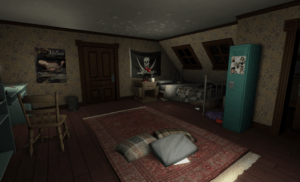
The opening misdirection is one of the smarter mechanic design in the game. The storm, the darkness, the empty rooms all signal horror, which makes players scan everything carefully. I spent the first ten minutes opening cabinets I had no narrative reason to open because the atmosphere made me feel like something could be anywhere. The game needs players to look closely, and it manufactures that behavior through genre expectation rather than mechanical instruction. As a design choice, that is efficient. The problem is that it works too much as genre signaling. Players expecting horror or heavier puzzle mechanics may disengage once the game reveals its actual mode. A small adjustment, like one early audio cue with a warmer emotional tone, or a slightly different color temperature in the first interior room could recalibrate those expectations without touching anything structural.
The voiceover is another flaw. Sam’s audio diaries are the primary emotional delivery mechanism and they are generally effective, but they sometimes explain what the environment already shows. One example is Sam’s secret space, covered in band posters, fairy lights, and handwritten notes about Lonnie. By the time I found it, I had already pieced together enough to understand what it meant to her, and the diary entry that followed felt like confirmation rather than explanation. The fix should be using the audio diaries as reflection after discovery rather than explanation alongside it.
Gone Home removes barriers that most games in its genre do not. There’s no combat and no timed sequences. However, Gone Home’s play depends on low-light environments, quiet environmental audio, and handwritten text, and those choices create access barriers for some disabled players. A deaf or hard-of-hearing player can miss audio cues that carry real narrative weight. A low-vision player may struggle with cursive-style fonts on key documents that do not scale. For some disabled players, narrative games that rely on environmental detail without alternative access modes create gaps in gameplay and the story. In Gone Home this problem is sharper than usual, because the mystery runs on perceiving detail. Missing a note or an audio cue is not an inconvenience, it is a gap in the narrative. Adjustable brightness, high-contrast text for handwritten notes, captions for environmental audio, and a discovery log that records found documents would address most of these barriers without touching the mystery structure.
Gone Home works because it treats mystery as an information architecture problem. The house is the interface, the puzzle system, and the storytelling mechanism. The voiceover occasionally undercuts that system, and the accessibility gaps limit who can fully engage with it. However, the core design logic is coherent, and the spatial approach to narrative pacing is great.