
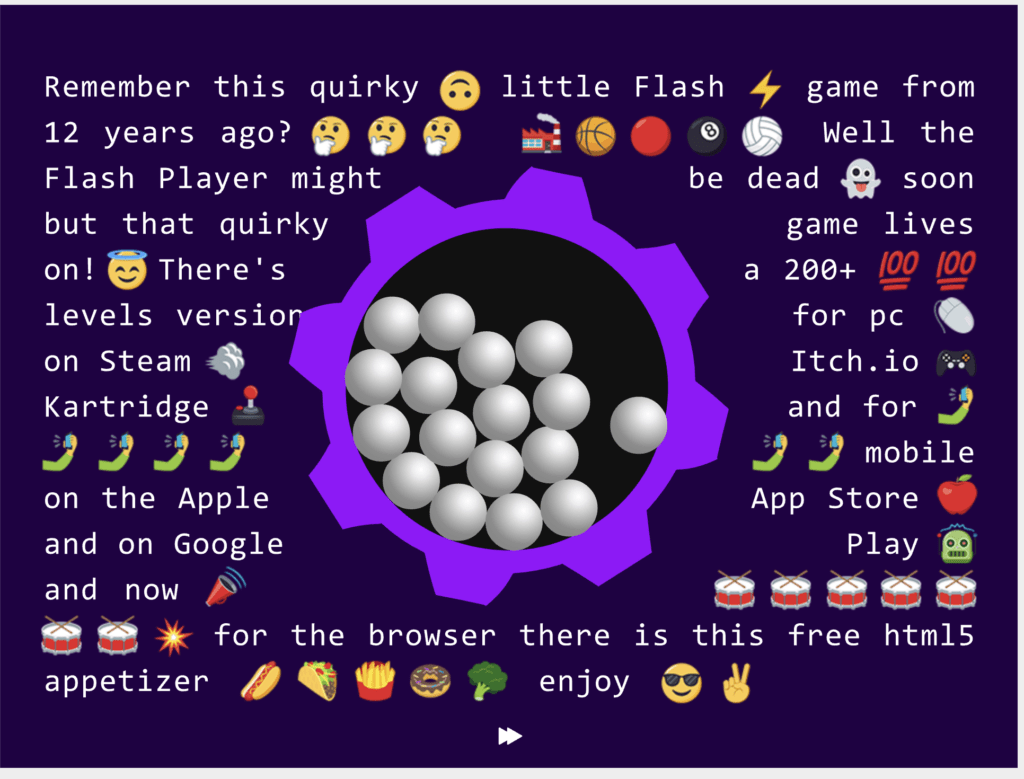
I played Factory Balls and now I have a lot of respect for Bart Bonte. He has independently created multiple puzzle games with great ratings. This game was definitely created for a more casual gamer and is well designed for a wide range of ages and abilities. 25 levels are available for free online (I only got through 18 – see more later) but more of the game is available on PC or mobile.
Factory Balls is engaging not despite its lack of story, but because it turns procedural reasoning itself into play. As players build and revise a mental model of how tools transform the ball, the game creates satisfaction through visible, reversible experimentation rather than narrative progression.

This game is heavy on the puzzle and extremely light on the narrative. The most significant narrative element is the name which loosely suggests that you are working in a factory filling orders.
There is just a tiny bit of emergent narrative as the player creates some abstracted ‘story’ from the aesthetic created on the sphere. Is this ball a spy? a moody teenager? a ninja?

Despite the lack of narrative, the game is still engaging because they take what is already a fun ‘toy’ – decorating balls – and combines it with a goal to turn it into a game.
The level design does a great job of teaching mechanics. This is extremely important because akin to a Bridge puzzle, this puzzle mechanic is not one that users can be expected to have interacted with before. Level 2 does a great job of showing that the provided items and paint colors can change while the user is expected to complete a very similar task. Each new tool teaches a new rule, each failed attempt updates the player’s mental model, and each completed ball becomes evidence that the player has understood the system.
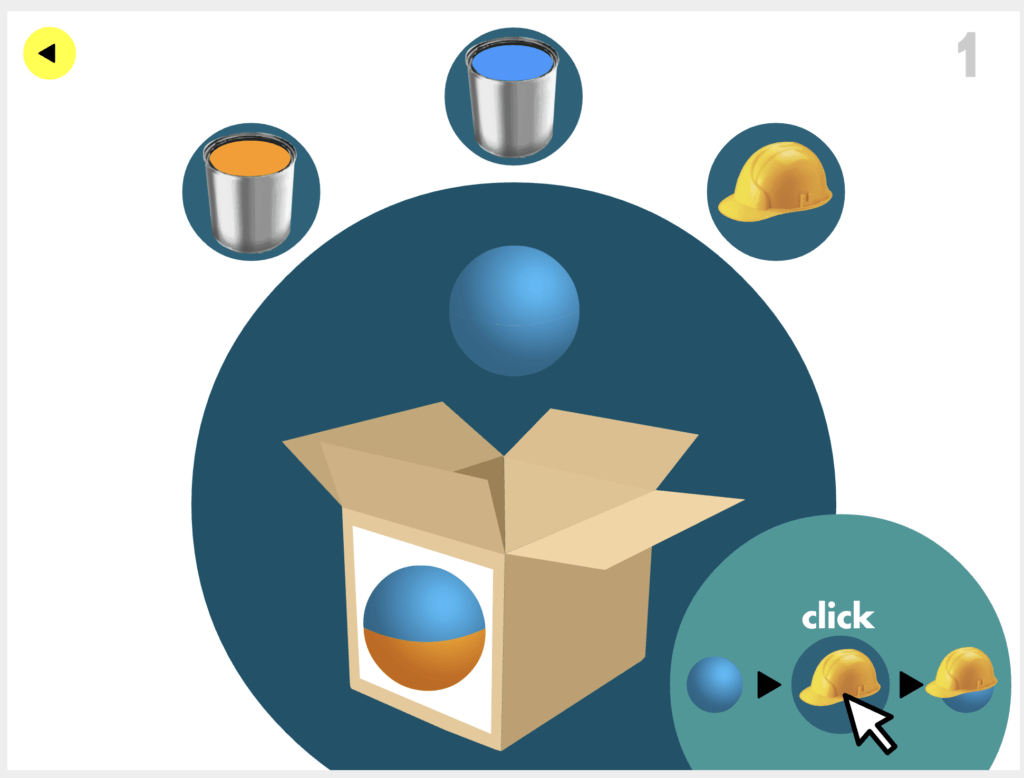
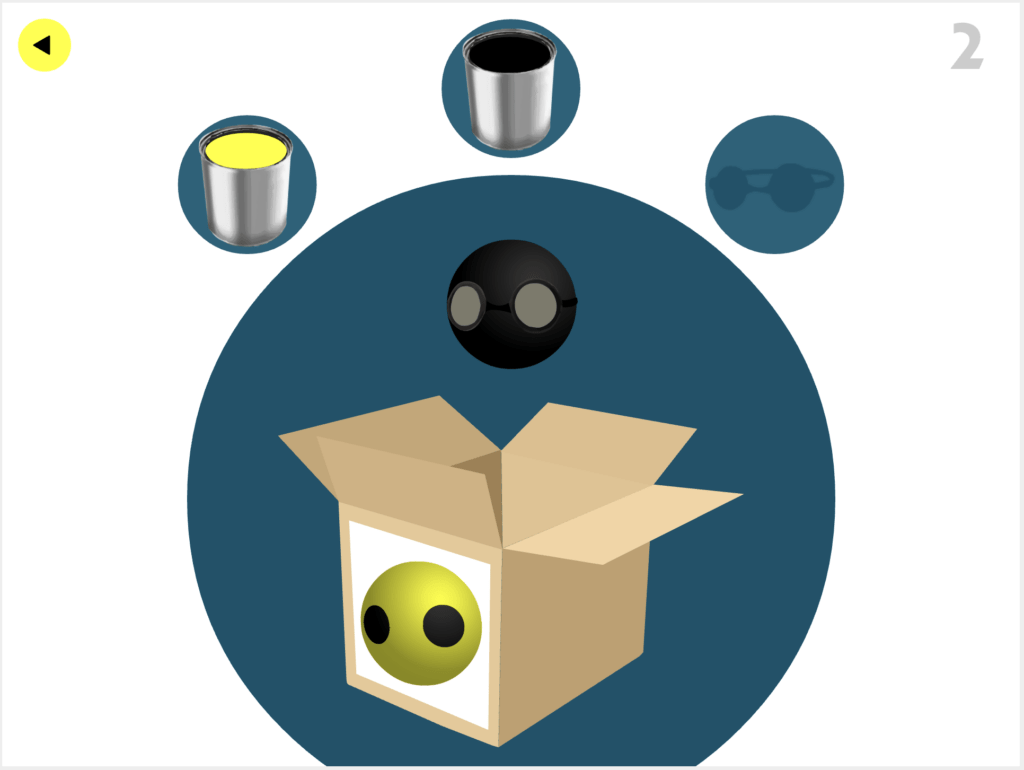
The specific mechanics of these puzzles are interesting. The majority of the tools function by covering the sphere so the user must shift their perception and create a mental model of the process. While one could critique the lack of hints, there are several reasons why they are less useful in this game. The fact that user can remove and replace items at any time provides access to a visual ‘clue’ regarding progress. The external representation innate to this puzzle helps users navigate the puzzle in a way that eases the process in alignment with Don Norman’s work.
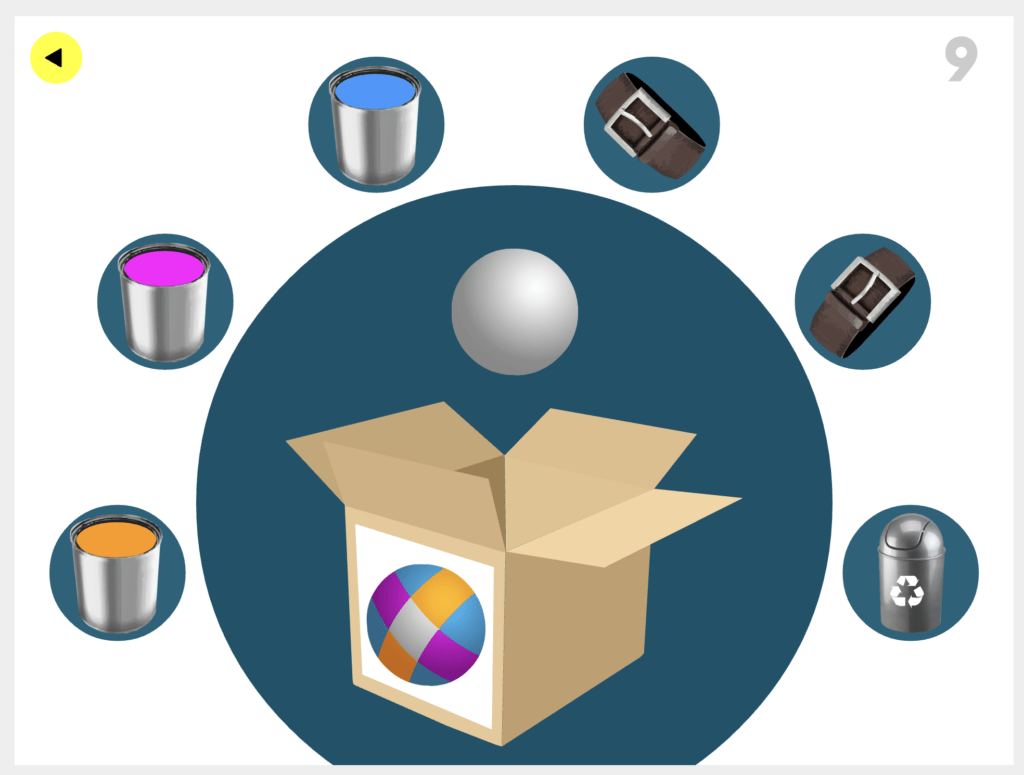
Given that the game is almost entirely puzzles, there is less reason to provide tools to bypass the puzzle and return to the game because the puzzle is the game. That said the designer made a strong choice to have a reset built in such that users cannot get truly stuck.
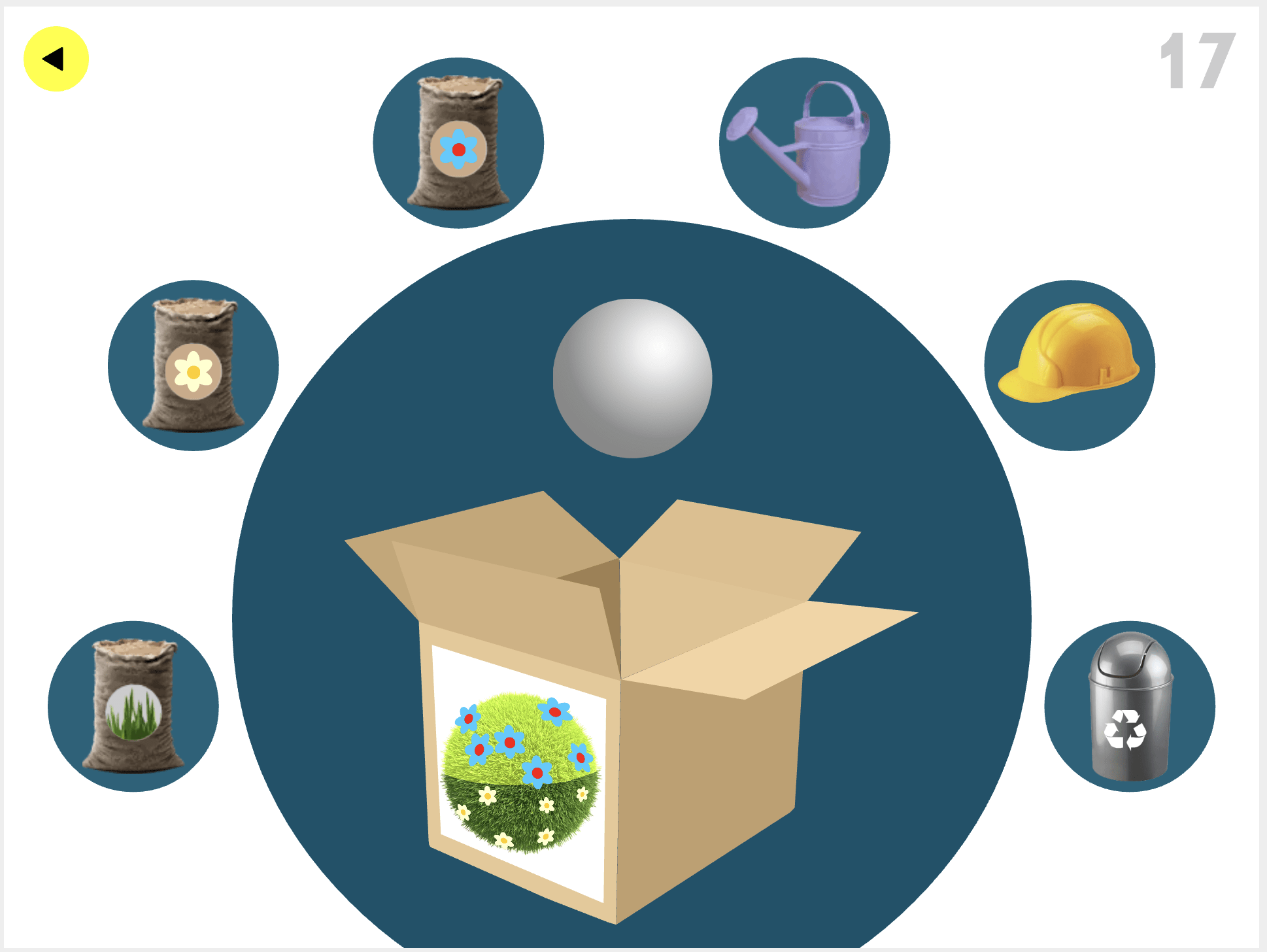
The core loop of this game is extremely simple as there is no external game outside of the puzzles. That means that the puzzles themselves and the puzzle difficulty are more important. Overall I believe that the puzzle difficulty was well designed to a certain point. Level 2 was too easy but that is understandable. Levels 3-16 provided incremental difficulty.
(Image made with ChatGPT)
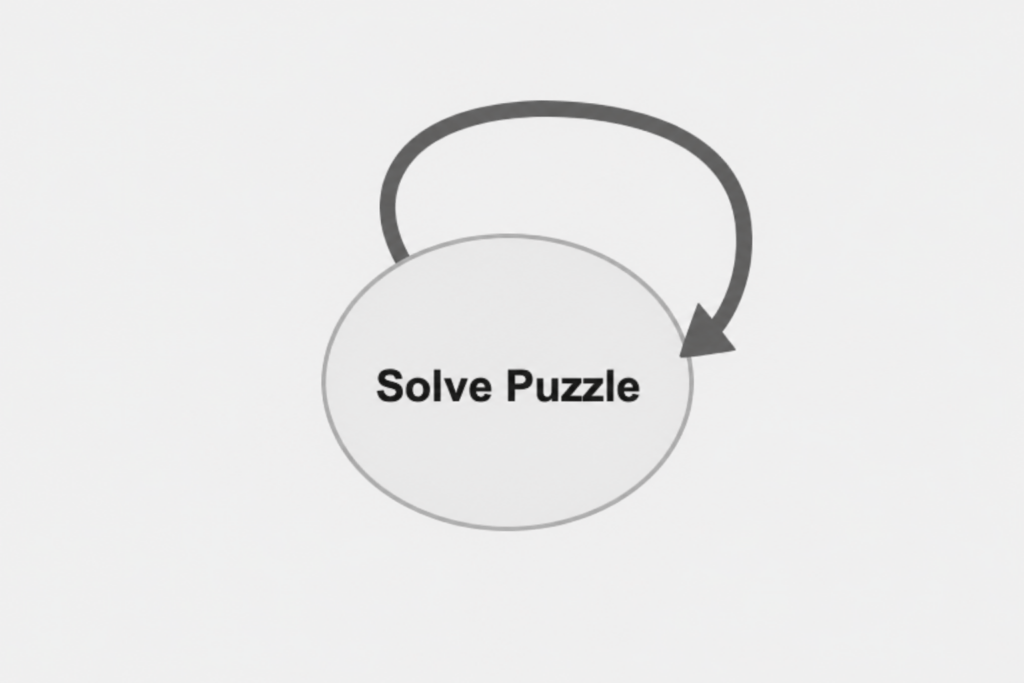
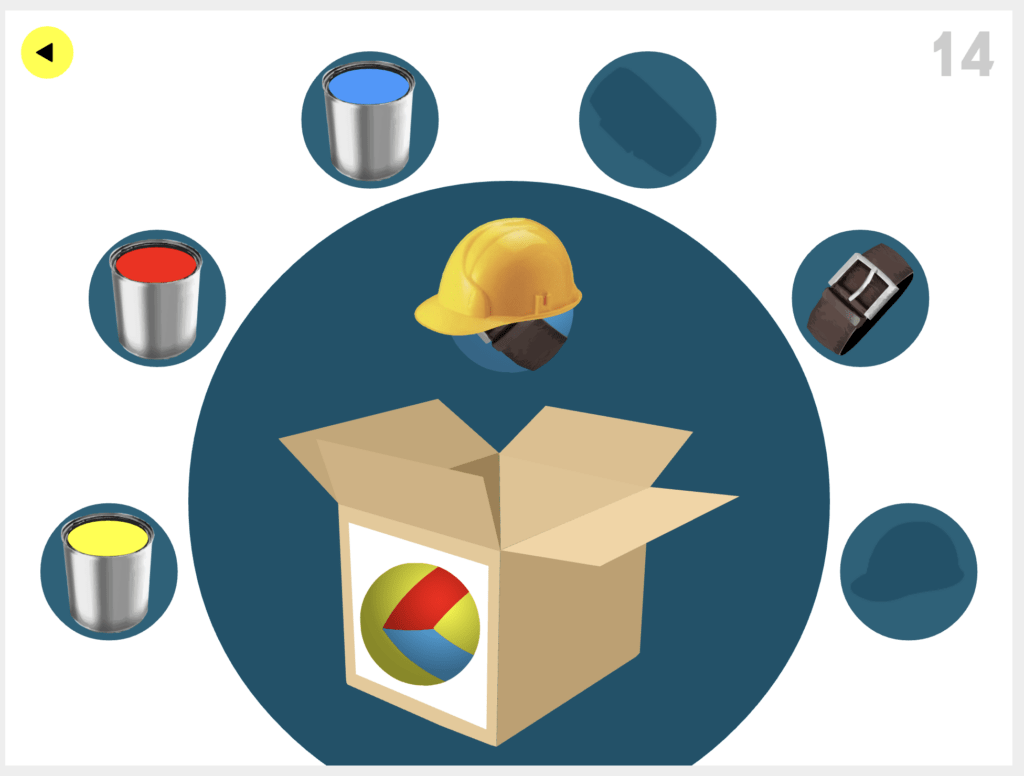
The system takes advantages of the affordances of the items such that users can use objects as designed (as far as protecting a sphere from paint with a hard hat is the intended ‘protection’).
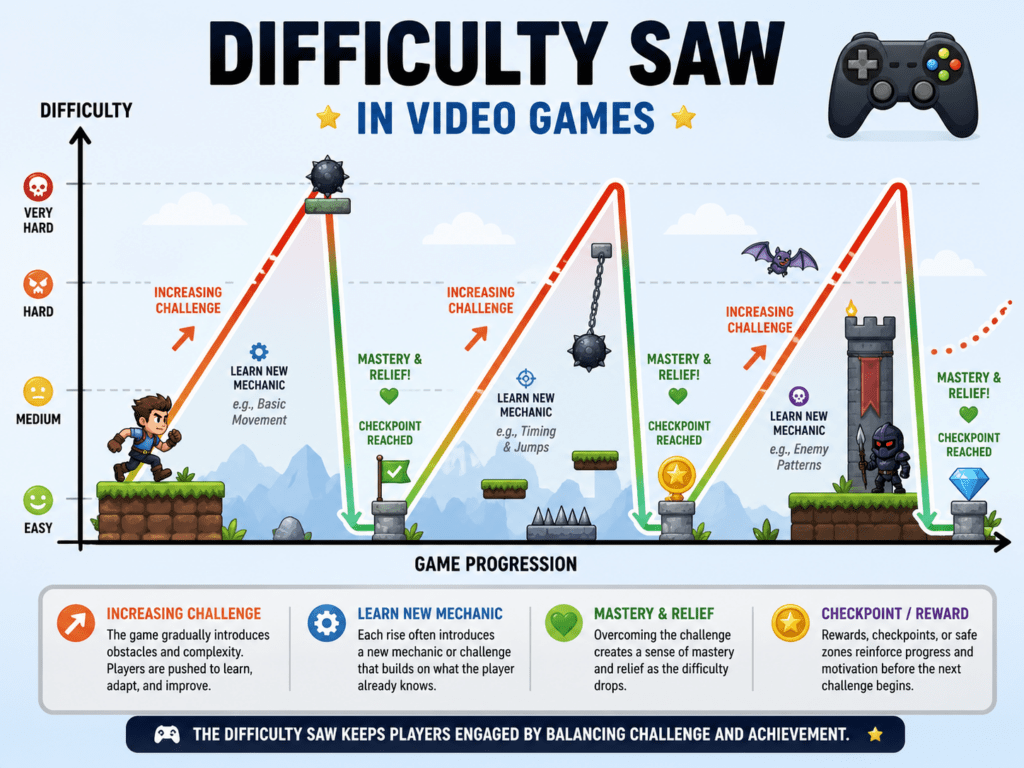
The system incrementally adds elements that you haven’t seen without additional instruction. This creates an element of trial and error but it is manageable because you can explore the effect of the new item before attempting to solve the puzzle. This clearly creates the difficulty saw.
(Image made with ChatGPT)
I gave up on level 18. I exited the screen without really thinking about it when I took a wrong turn in the puzzle. I quit because I knew I had taken a wrong turn and it would take significant effort to return. However, upon reflecting I realized that my propensity to quit was largely because I recognized that my mental model couldn’t hold sufficient information and my options were to guess or pull out paper and pencil to take advantage of distributed cognition.
Having devoted a significant chunk of time to passing 17 levels of this 222 level game left me considering the impact of games like these and if the Kantian imperative would allow for the creation or playing of similar games. One could argue that single player games like this are an addictive distraction that results in the waste of resources. People regularly ‘play office’ or in this case ‘play factory’ while complaining about their office job. For some reason the “Magic Circle” convinces people to enjoy instead of avoid work. “Ce n’est pas du travail.” (Check out “Ceci n’est pas une pipe” and surrealism) While games that involve human to human interaction clearly have redeeming qualities based on human relationship building, are solitary games only a waste of work? I honestly think that if someone had a magic wand that could make it so solitary video games never existed people would be happier as they would find more social and rewarding ways to spend their time. Instead of working for ‘fake’ accomplishment they could invest in reality. But are there any redeeming qualities? Some games bring calm or beauty in a world of anxiety. Factory balls provides an opportunity for one to stretch their spatial reasoning and practice procedural thought but I’m still guessing that interior decorating or cooking would provide more bang for your buck (joy from your free time).