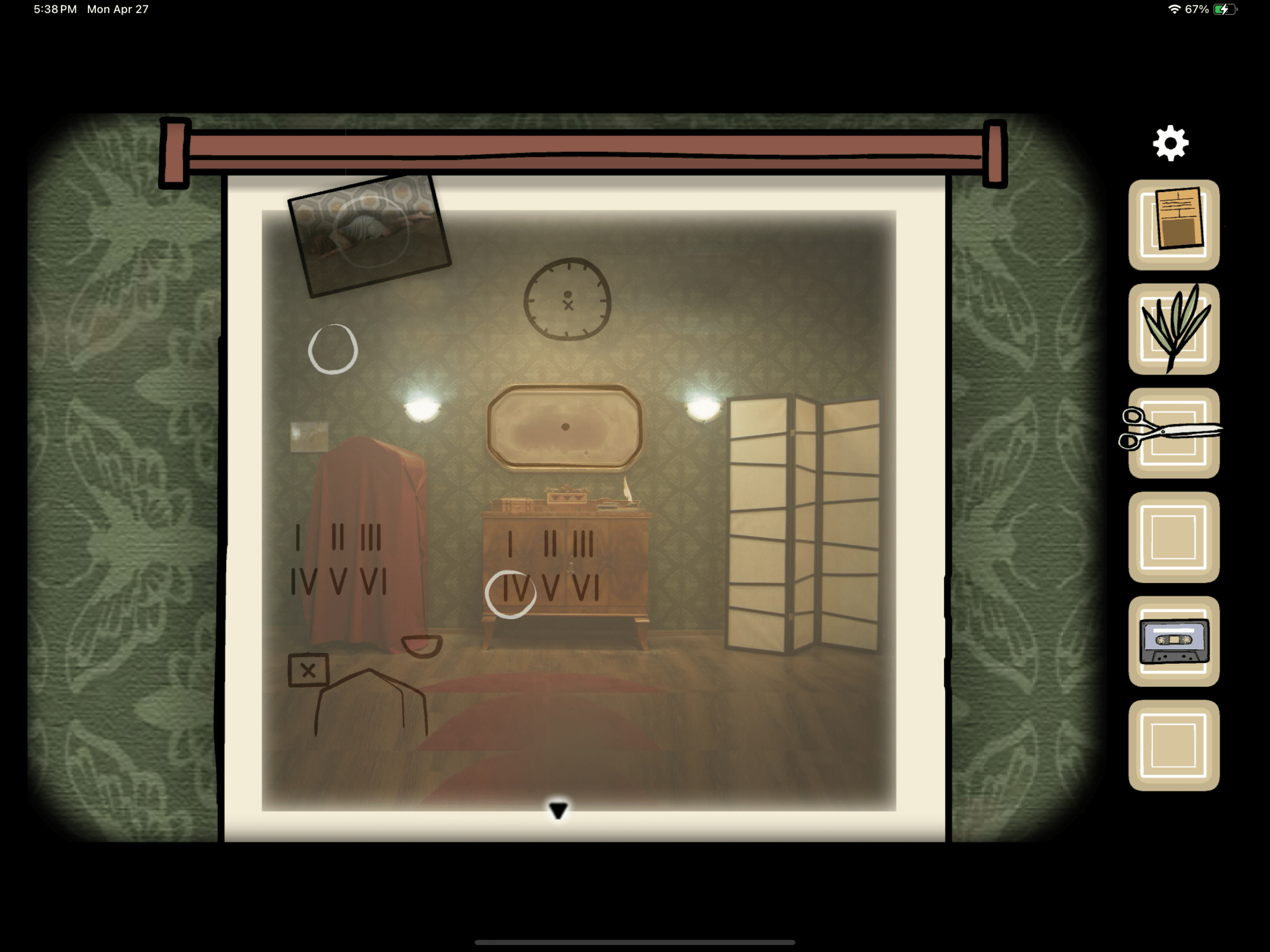
The game I chose is Cube Escape: Paradox by Rusty Lake. The target audience for this game is players who are at least 13 years old and enjoy narrative puzzle escape-room games and horror experiences. The game is available on mobile, macOS, and Steam.
Cube Escape: Paradox weaves its story into the game piece by piece. At the beginning, we know that the character we control wakes up in a room with no memory of what happened. “I” do not know anything at first, and there is a locked door in front of me that cannot be opened. By looking in the mirror, we learn that we are controlling a man. Then, by finding pieces of evidence and information and putting them together, we are able to watch video recordings that reveal more of the story. Through these small pieces of information, we gradually discover that “I” am a detective.
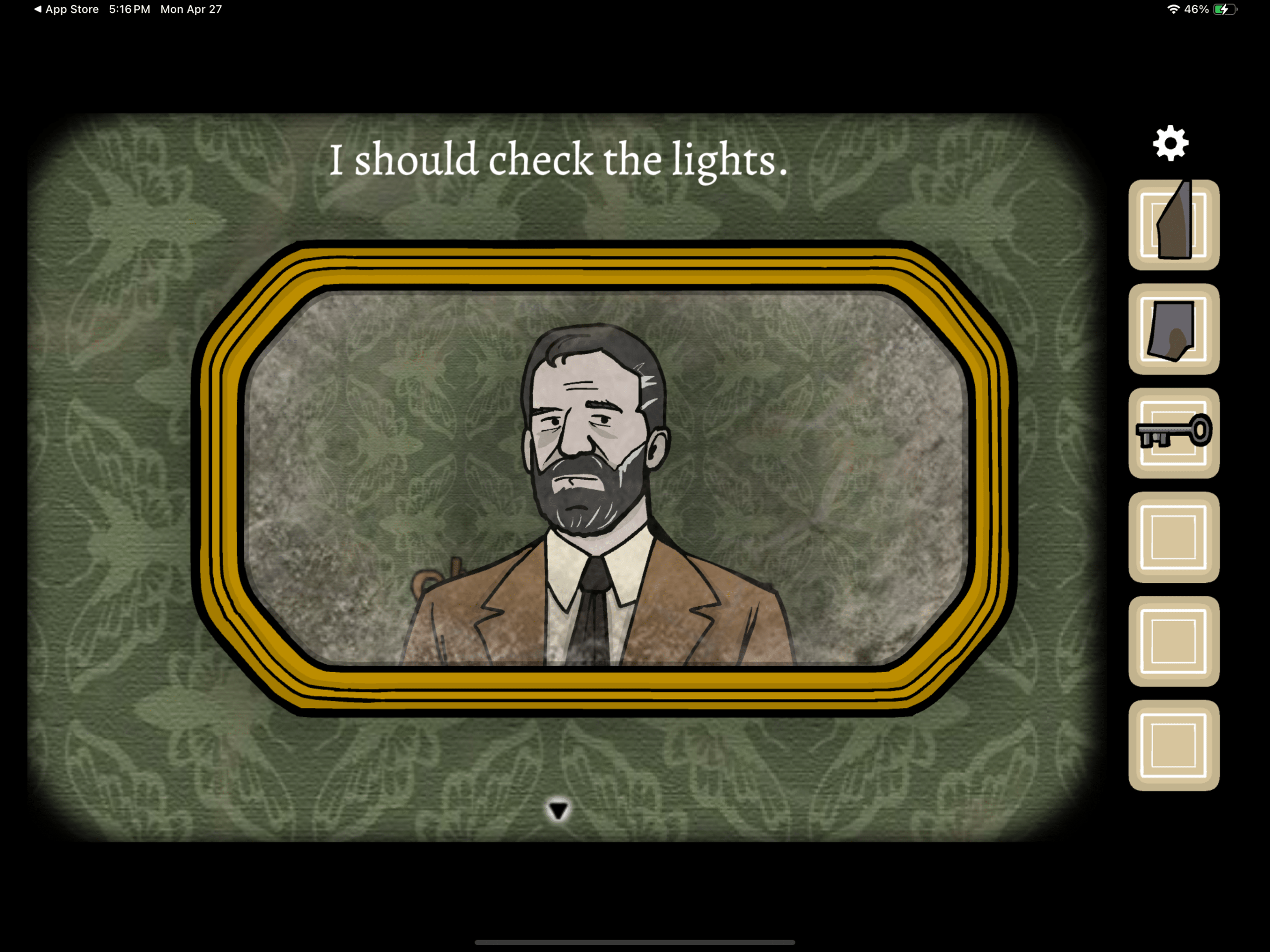
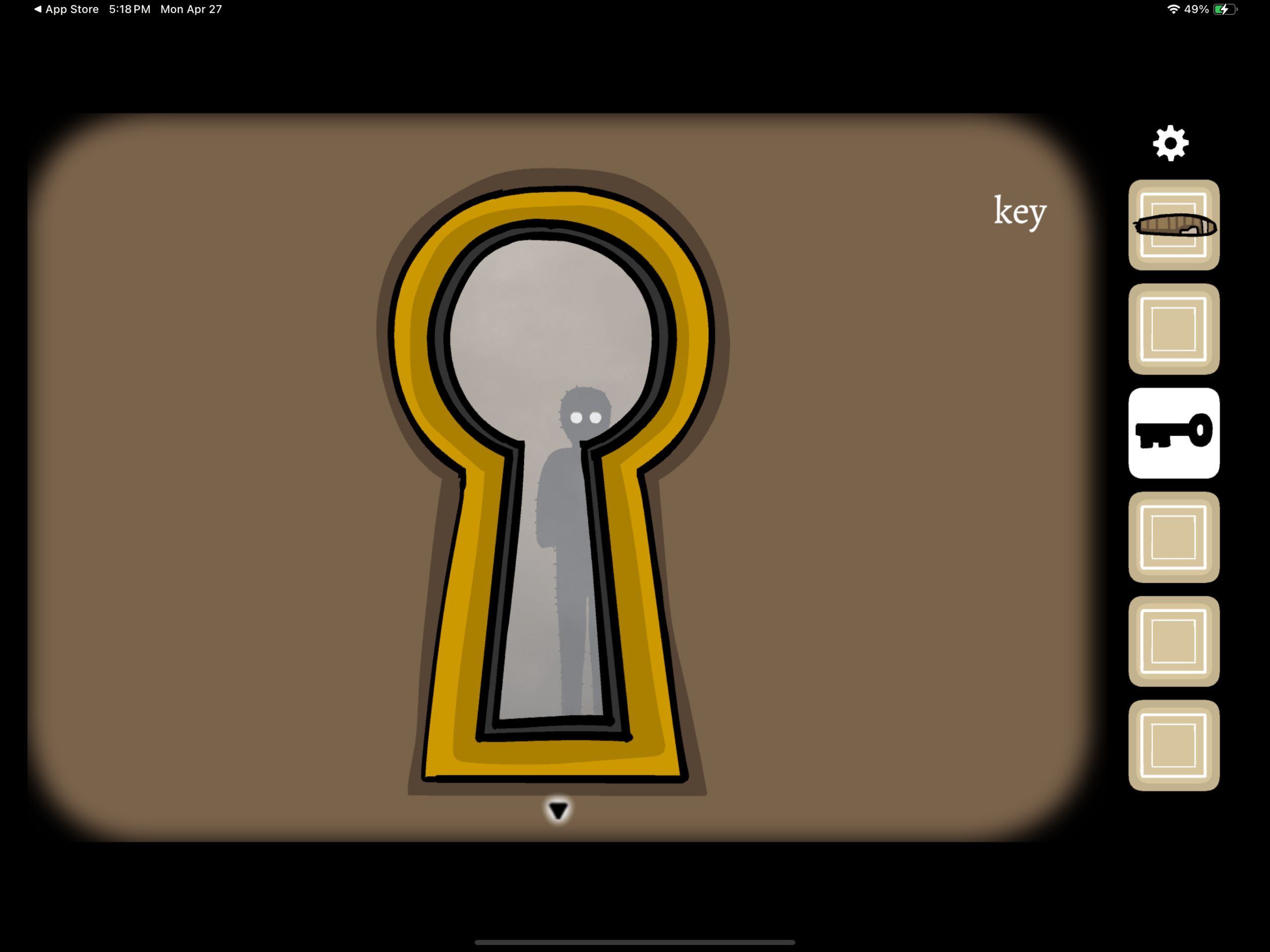
The game weaves narrative into the mystery through puzzle-solving. Each puzzle piece feels like a fragment of memory, and through solving them, we reconstruct the character’s memories. The game’s spatial setup also creates a strong sense of tension. The locked door that we cannot escape from, along with the left and right arrows that let us look around the room, makes us constantly want to find a way out. There are also sudden jump-scare moments that startled me, such as the woman appearing in the mirror and the eye appearing through the keyhole. In addition, the background music occasionally builds suspense. Sometimes, while I am examining clues, sudden sounds make me feel as if another person has entered the room. The game makes the player uncover the story through interaction with the space.
I think one of the strongest aspects of this game’s design is how it gradually weaves the narrative into the gameplay. Instead of telling me everything directly, the game allows me to discover the story myself. If everything were explained immediately, I would not find it nearly as interesting. Instead, the game lets the player uncover clues and piece together evidence, which creates a strong sense of accomplishment through problem-solving.
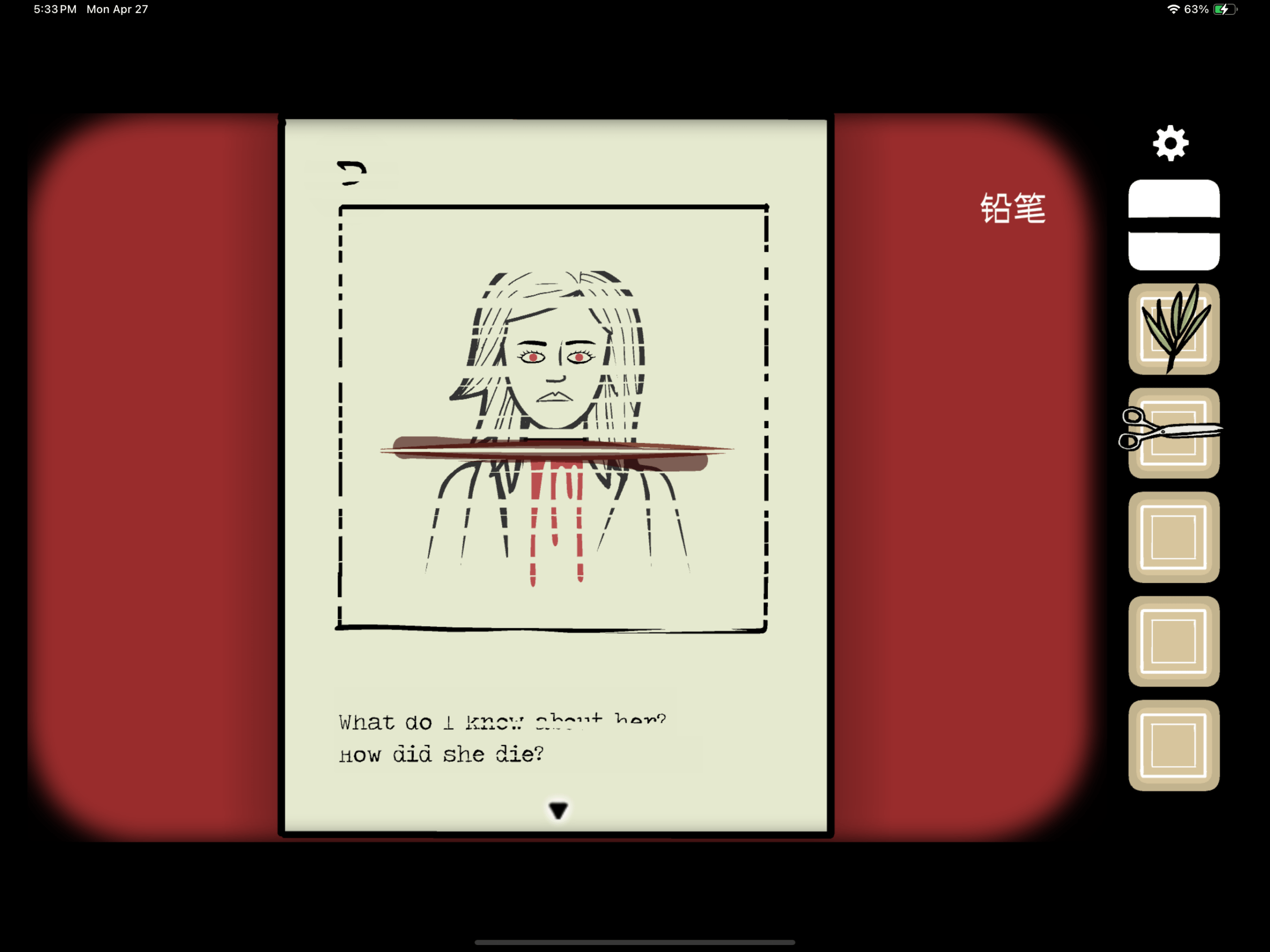
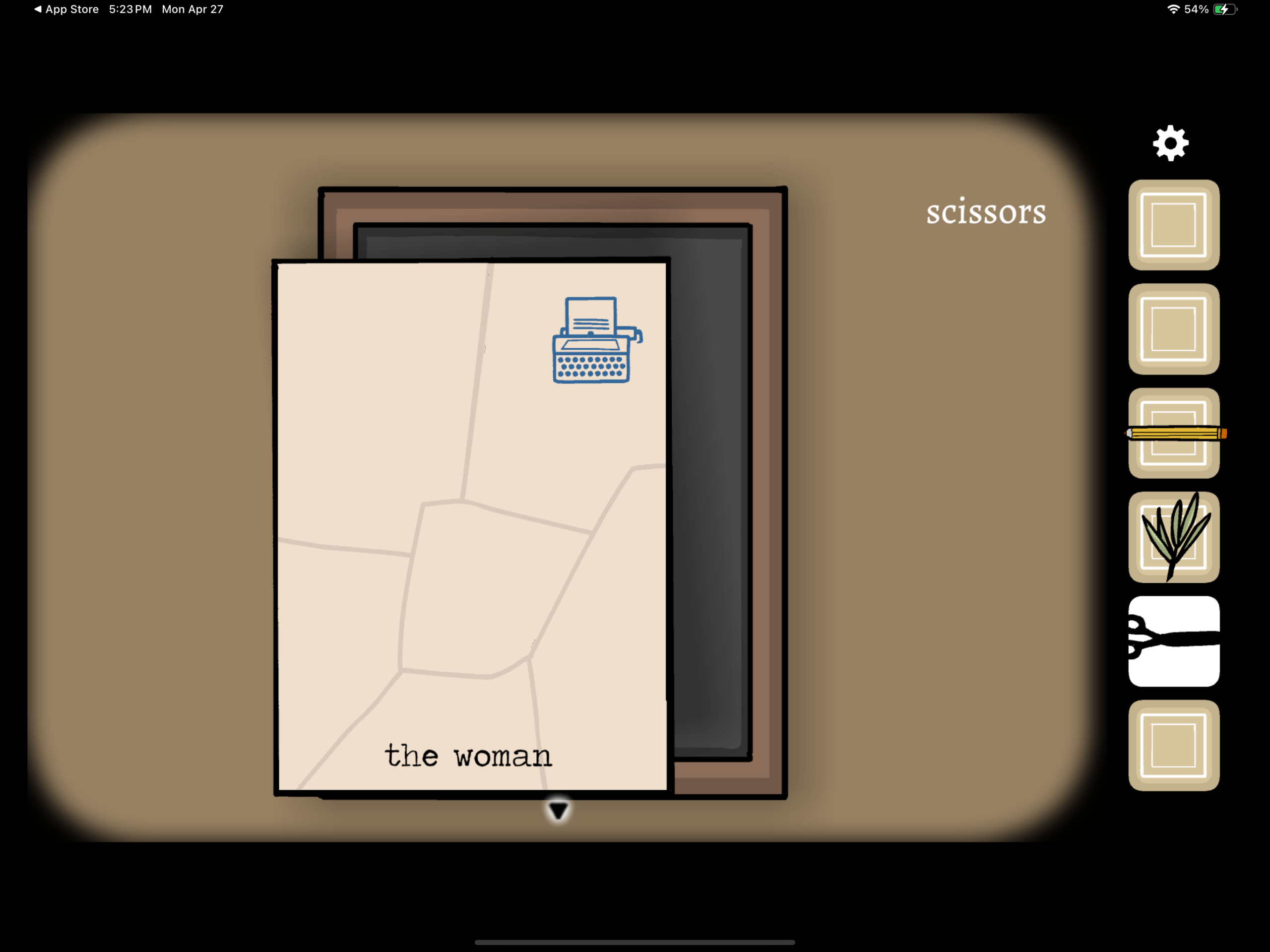
Players click on objects, combine items, decode symbols, and manipulate strange devices in order to progress. One weakness of the game, however, is that when I got stuck at a certain point, it did not provide any additional hints. This made me feel frustrated. I think the game could improve by adding a system that detects when several minutes have passed without the player solving the next puzzle. For example, the character could look into the mirror and talk to himself, giving subtle hints about what to do next. Because the game mainly relies on clicking interactions, it does not require complicated controls. This makes it easy to learn and easy to start playing, with almost no learning curve. Through reconstructing memories, we gradually unlock the next puzzle and the next pieces of the story. For example, reconstructing photographs and uncovering hidden messages revealed what we needed to type on the typewriter.
The mechanics of the game involve solving puzzles through mouse clicking and interacting with objects, such as dialing a telephone number, finding clues to open locked doors and cabinets, and combining items in different ways. These mechanics create the dynamics of investigation and experimentation. For example, players may try feeding leaves to the parrot or placing paper on the light bulb to burn it. The resulting aesthetics are tension and curiosity. This is especially effective because the game rarely explains what to do directly. Instead, the player must infer meaning from symbols and visual cues.
The game also includes several accessibility-friendly design choices. For example, many of the clues are represented visually through symbols and images rather than relying entirely on written text. This helps reduce barriers for players with dyslexia or certain cognitive disabilities. In one section, the player needs to listen to a cassette tape and rewind it multiple times. At the same time, the game provides subtitles, which makes this part accessible for deaf or hard-of-hearing players as well.
The game also does not depend heavily on reading small details. Almost every object can be clicked on and enlarged, which lowers the barrier for players with low vision. In addition, the environment is relatively easy to mentally map. Because the room layout is compact and players can simply click through each side of the room to search for clues, it is more accessible for players who may have difficulty with spatial imagination or navigating more complex environments. However, this design can also increase the difficulty in some ways. While the space is easy to understand, certain clues can still be very difficult to find or interpret. For example, the puzzle where players must arrange the books by name and then use those names to find the correct clue inside the cabinet felt especially difficult and frustrating to me.
A possible design improvement would be to include an optional hint system if the player has been struggling for a few minutes. Rather than giving full solutions through a walkthrough video, the game could provide layered clues that help players remain immersed in the detective role while still preserving the mystery.
Ultimately, this game is a strong example of how mystery design can merge narrative and mechanics. The player does not simply witness the detective story. Instead, they actively piece together the narrative bit by bit, which creates a strong sense of immersion in the experience.