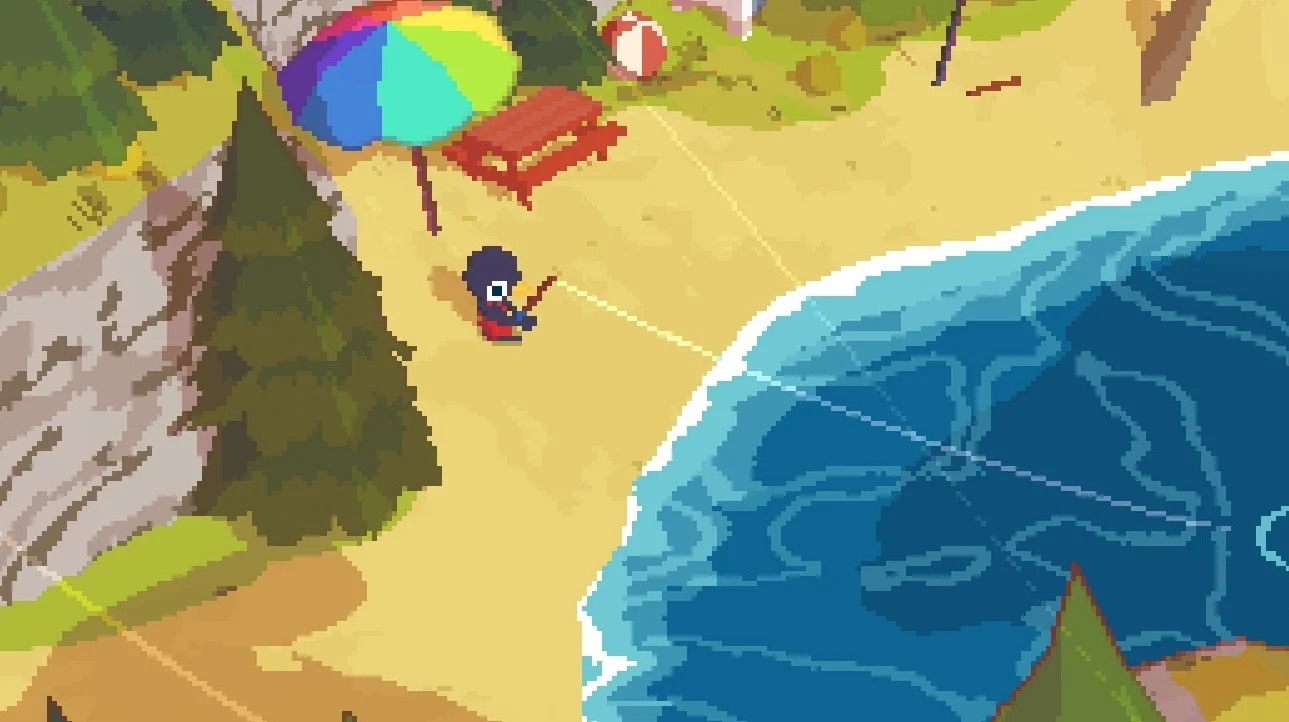
A Short Hike is a 2019 adventure indie game by designed Adam Robinson-Yu. It’s available on many different platforms, but I chose to play it for my Critical Play on the PC. Targeted to casual and competitive gamers alike, it is a walking simulator whose slow gameplay contributes to its overall storytelling. The story follows a bird named Claire who is sent to live off on Hawk Peak Island for the summer. You’re initiated into the game through Claire needing a phone call, with the only place having service being on top of Hawk Peak. Thus, the goal is to hike up to the mountain, revealing story elements as you progress. This is the main pull of the game, as the game purposefully leaves you with no direction beyond this to encourage the player to explore, and in the process discover their own story. A Short Hike tells the story of the game through walking by interspersing key narrative elements behind game mechanics such as character interaction and that require the player to slow down and ‘walk’ through the game as opposed to ‘running’ through it. This serves to illustrate the game’s message: to slow down and walk through life reveals a shared experience with the people around you, which in turn, allows for individual emotional resonance.
The gameplay immediately starts off with the player needing to trade different materials in order to progress. Claire needs to climb a cliff, but does not have the skills to do so, and so the first thing the player does is to seek out different characters to help them achieve this goal. As you play each character you talk to unlocks something different: the gliding mechanic, a request for shells, a compass. However, it unlocks more than that. Each dialogue is imbued with personality even for a few blocks of dialogue: intentionally showcasing the different personalities on the island. 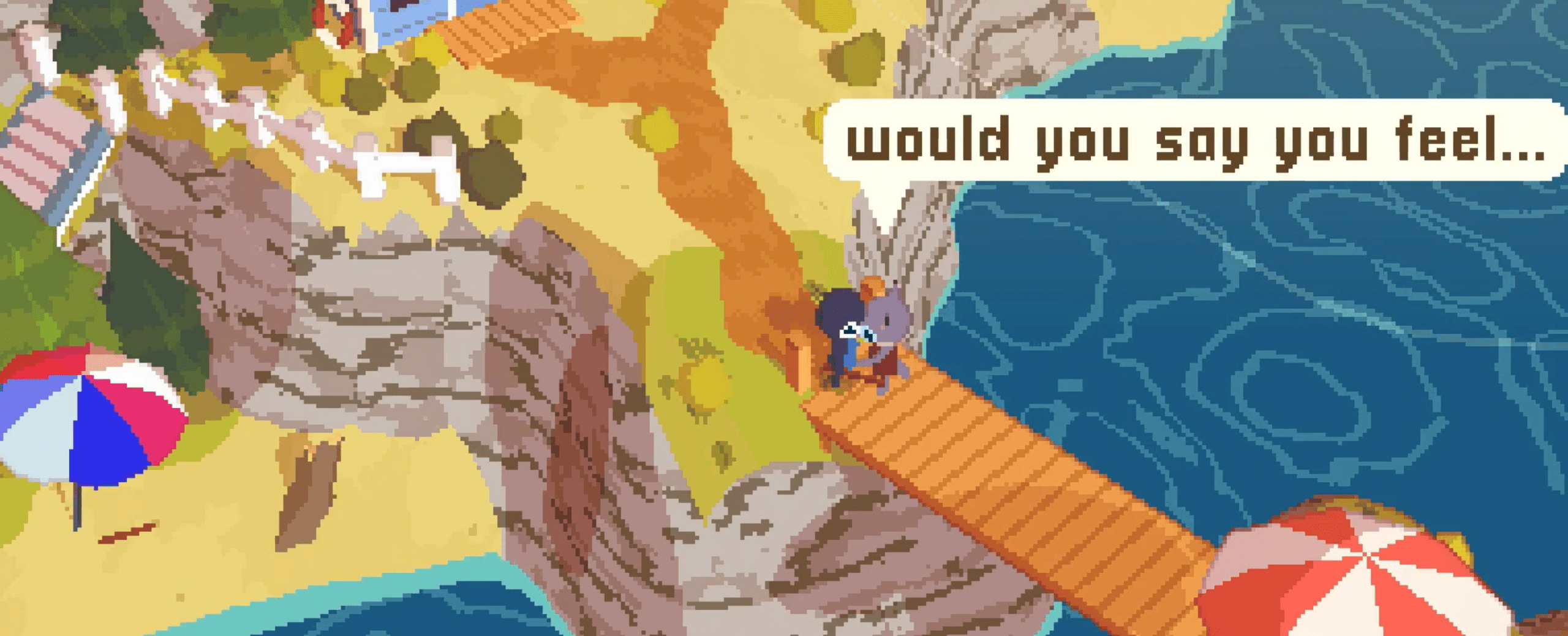
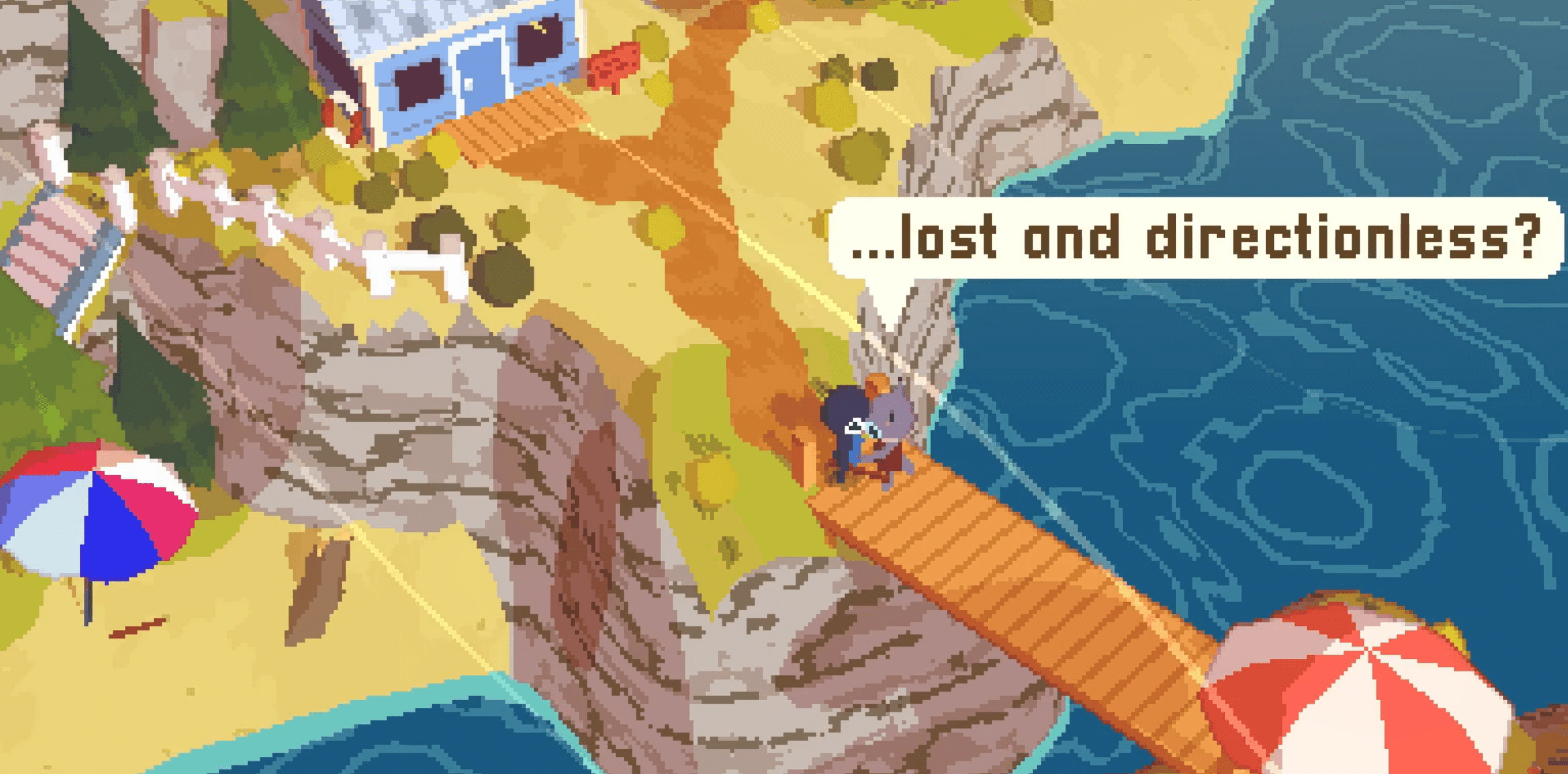 The above conversation, for example, immediately had a stranger character recognize Claire’s stress and offer compassion and sympathy. Another conversation from a kid had it demand shells from Claire without an explanation as to why, with dialogue that felt cute and endearing. Each conversation, even this early on serves to show the colorful personalities of the inhabitants of the island and represent them as more than just NPCs who contain some sort of item or quest. In turn, the conversations also reveal Claire’s detached nature and confusion on her place in the island. This intentional focus on dialogue as a means of progression creates a Fun as Narrative, immediately hooking the player on just what else these silly and cute characters will say next, the same way a game like Undertale or Night in the Woods does. This, in turn, slows down the pace of the game and allows the walking the player does to be an element of the game the player chooses for more enjoyment. It’s also an Embedded Narrative as described by Jenkins: players discover the world through the stories of the other characters and hints about their own lives. This leads to mental curiosity from the player which further incentivizes them to slow down while playing.
Continuing from the previous point, progressing through the hike also rewards the player for calm and careful exploration through character interactions giving rewards that specifically allow for more fun exploration.
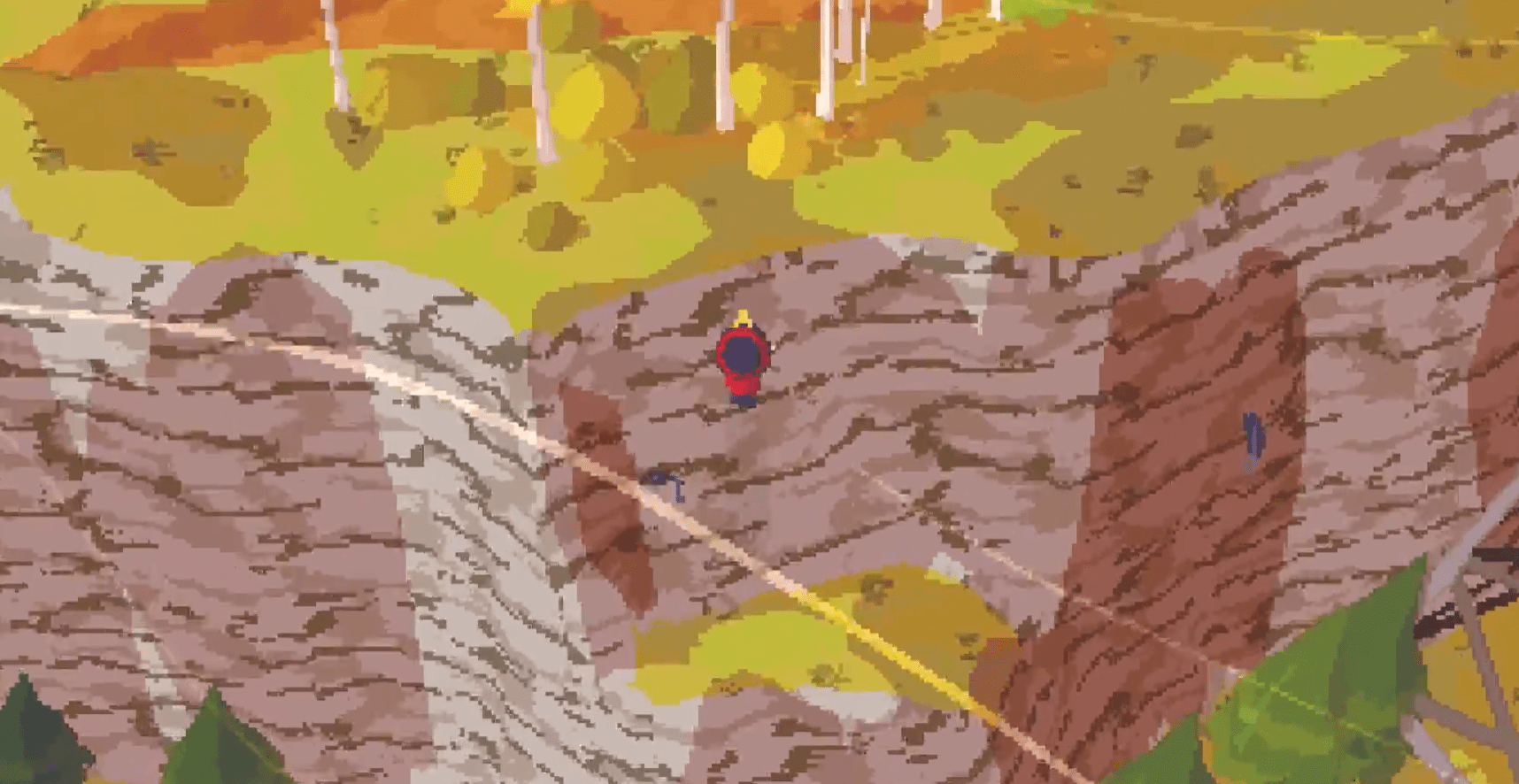
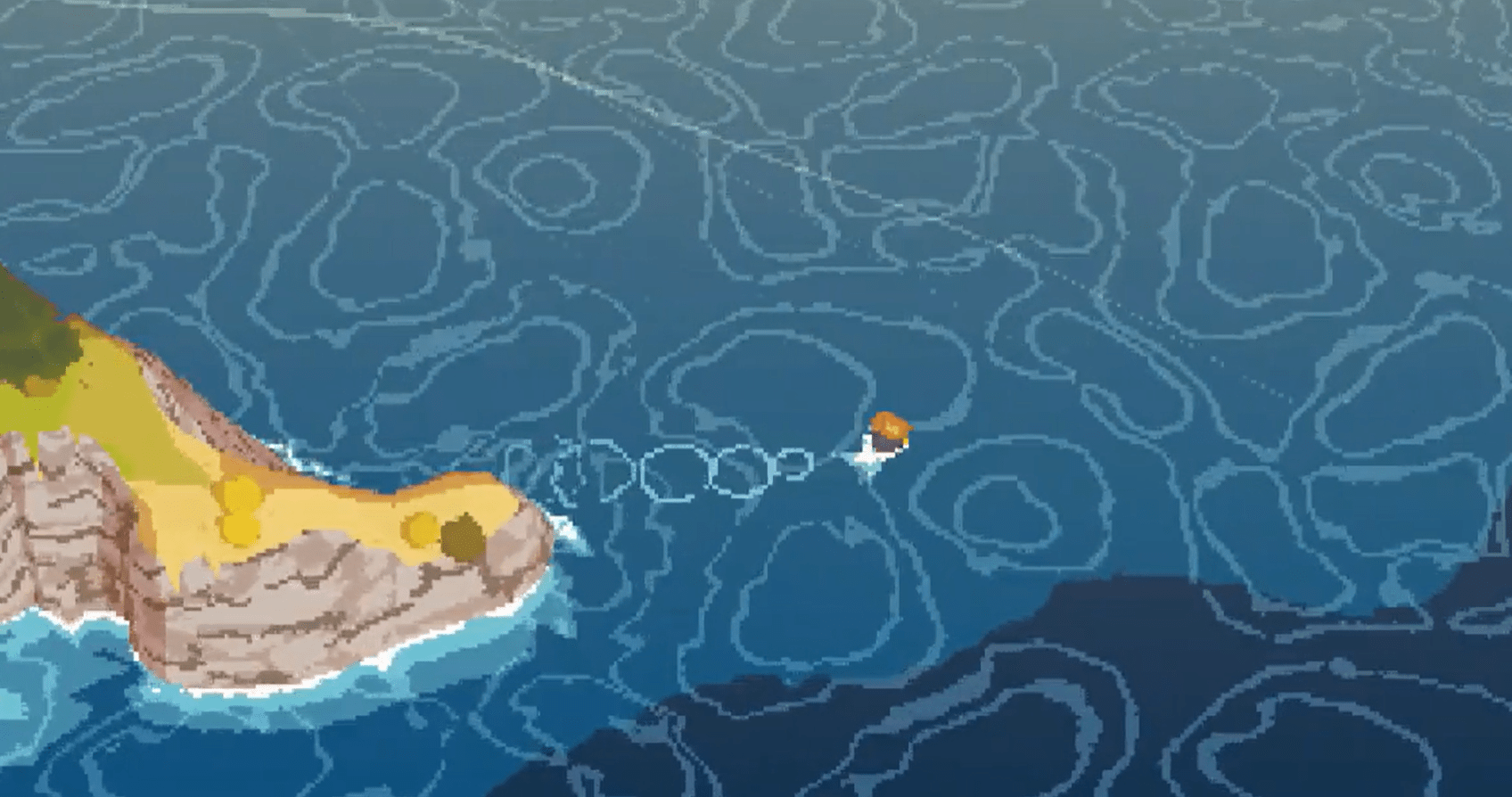
Both of the mechanics of climbing and swimming, for example, grant the player more chances to interact and explore the island. The fact that the world is expansive enough to require these different mechanics to fully dive into is an example of Environmental Storytelling. Intentionally designing for space to be explored that is not explicitly plot focused immerses the player and gives them a reason to slow down the pace of their experience. Additionally, since these mechanics were locked behind character interactions, every time the player uses these mechanics, the memory is linked to the character who granted that mechanic, which in turn, reinforces the dynamic of bonding with the characters placed throughout the game. But what this also does is incentivize the player to use their new mechanics to keep on exploring the narrative of the island in search of new or upgraded mechanics, feeding back into the loop of bonding with characters to find new mechanics – similar to games like Breath of the Wild. This is done with the use of golden feathers, which exist in different places around the island, sometimes also being linked to characters. What this loop does is create another type of aesthetic, one of discovery, that comes from the player having fun exploring the island. It is only because this game is a “walking game” that prioritizes and rewards a slow pace from the beginning that this loop gets to exist, and that players become encouraged to discover the entire peak and the physical and narrative beauty it contains.
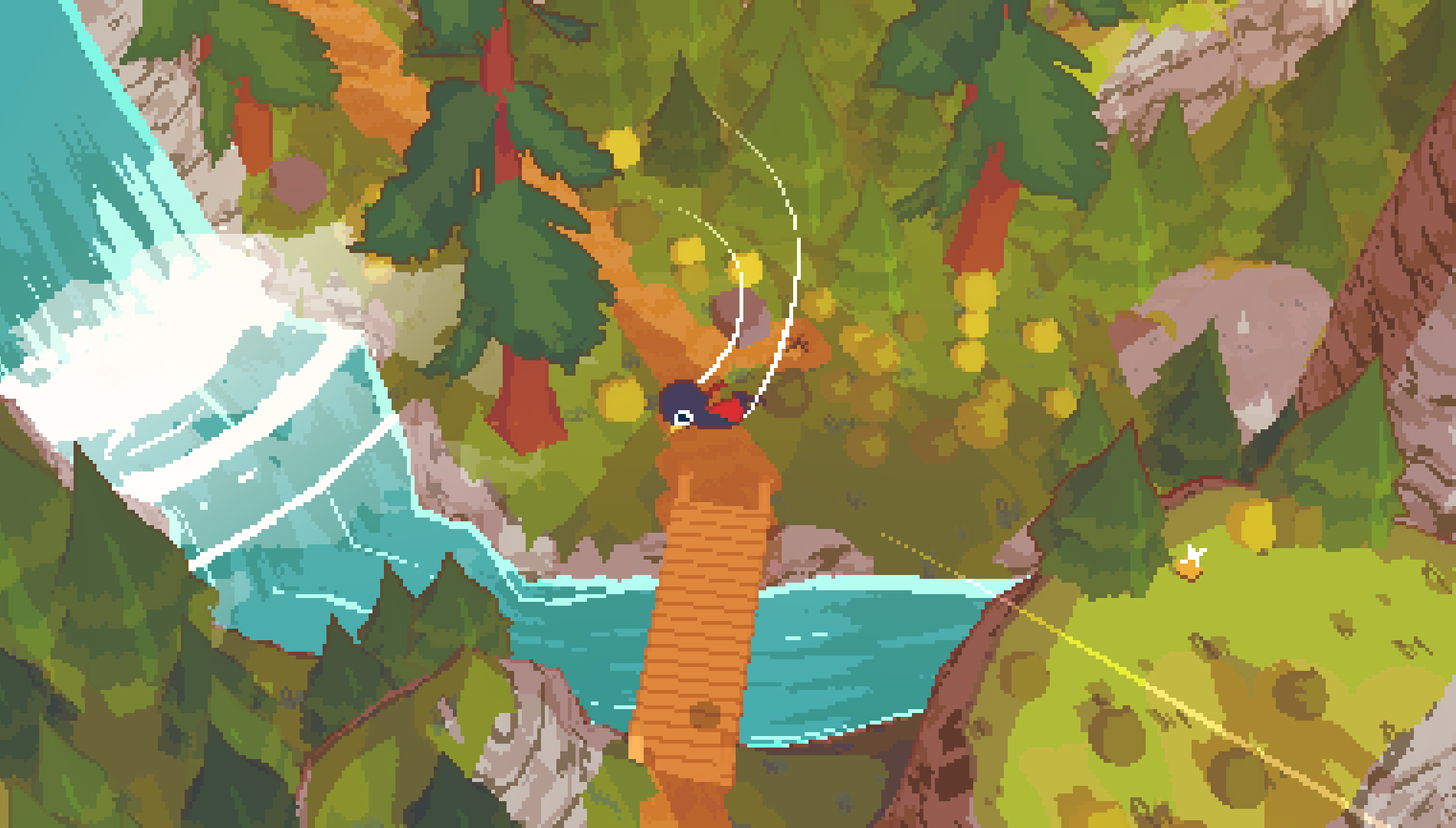
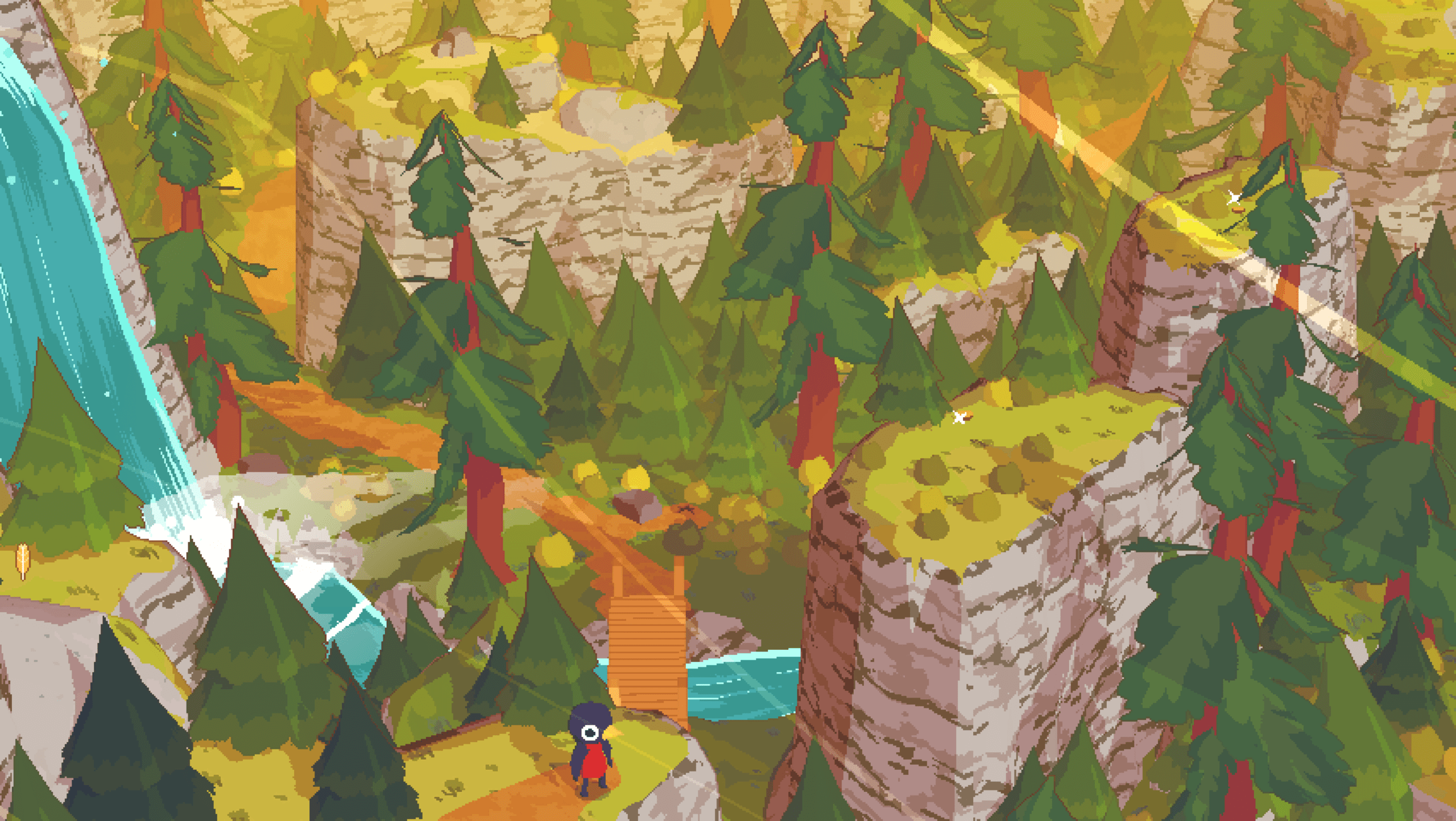
Once again, the ethos of the game is presented to the player through dynamics of character interaction and world exploration that make themselves present right at the beginning of the game. The Theory of Fun reading explains why the effects of these loops persist throughout gameplay: gamers look for patterns that condense the truths of reality onto gameplay. Since these patterns are established in the beginning of the game, not only do they inspire the player to “walk” through the game, they also connect to the player’s willingness to enjoy things like good conversation and the beauty of nature in real life, further validating the game’s thesis.
Overall, A Short Hike uncovers the true story of the island little by little by integrating mechanics into the game’s ethos: therefore the actions the player undergo feel relevant and create a desire from the player to want to slow down and meet the pace the game is setting. The more the player feels these rewards for walking, the more they understand the world around them, the main character, and themselves as a player.
Ethically, I think the role of violence and the exclusion of violence within the narrative of A Short Hike contributes to how the game displays its message. For example, with Krunker I found that most of the reward system in the game rewards and quantifies the amount of violence you commit. The violence in that game provided a quantifiable measure as to who was doing the best, which I felt tells the player: if you are committing the most violence, you are playing the game right. By contrast, I felt A Short Hike did not have any violence within its reward system. In fact, its reward system did not rely on any quantified amount, allowing the player to reflect on what they truly enjoy about the game through its mechanics instead. Because this walking simulator encourages the player to slow down as a part of its core message, it was careful to not include any dynamic that created a reward to the detriment of another player, since that would bring with it aggression linked to combative and reckless gameplay. I think the game’s exclusion of violence is a statement against violence, whether intended or not, that states that violence is not needed to share experiences with others or for self-discovery.