


Bokura Planet is not just a game about surviving strange worlds. It is a game about what happens when two people have to depend on each other even though they never fully share the same experience. Each player sees different things, hides different truths, and can only explain their world in fragments. I found the game so moving because it keeps asking the player to make moral judgments about beings they can never completely know.
That is why Bokura Planet is most interesting when it refuses to make human(ity) simple. The game suggests that our relationships are shaped by the fact that we can never fully share another person’s experience, even when we depend on them completely. A mutated human may no longer look “normal,” but that does not make them less morally real. A robot made of data may not be organic, but I still found myself empathizing with it as a father facing the impossible decision to kill his daughter. And for the character I played, a “father” who knows his role is artificial may still feel genuine responsibility, fear, and protectiveness. Bokura Planet keeps forcing the player into situations where the body/observational facts say one thing, but the feelings and the moral situation say another.

[A decision to terminate or not terminate the mutated daughter of the father turned robot. I ended up choosing to terminate based on my partner and I’s empathy for her.]
That tension becomes especially sharp in the game’s treatment of violence. The beings the player is forced to kill in order to move forward are first perceived as alien creatures. They are judged enemies based on their physical traits and the way they seem unnatural, with their strange movements and screams. However, we eventually learn that they are surviving ancient humans whose bodies have been changed beyond recognition. The game does not let the player excuse violence by claiming the target was never human in the first place. Once a being has been transformed enough, it becomes easier to excuse harm, and the game exposes that impulse instead of hiding it. That revelation matters because it shows how quickly we turn unfamiliar bodies into acceptable targets. It gets even crazier because I then find out that these humans are respawning because they forced the last woman on the planet capable of reproducing to become pregnant (nasty) without giving her any say. Now I can’t even imagine starting to understand the layers of implications that has, and trying to make this decision to terminate or not terminate this living being was so difficult (trying to understand her lived experience was out of the question, no matter how much information I was presented).
Thomas Nagel’s “What Is It Like to Be a Bat?” helps explain deeper why we can never truly understand any living being’s experience. Nagel argues that conscious life has a subjective character that cannot be fully captured by outside description alone. What matters is not just what an organism is made of, but what it is like to be that organism. Living is inherently subjective, and no amount of objective description can ever fully replicate that experience. This same idea applies where the game refuses to let the player reduce beings to visible form or technical function. Instead, it pushes us toward a harder question: what experiences still matter, even when the body no longer fits our expectations? Nagel’s point is not that we can never know anything about other beings, but that the inside of experience matters in a way that outside description cannot completely replace.
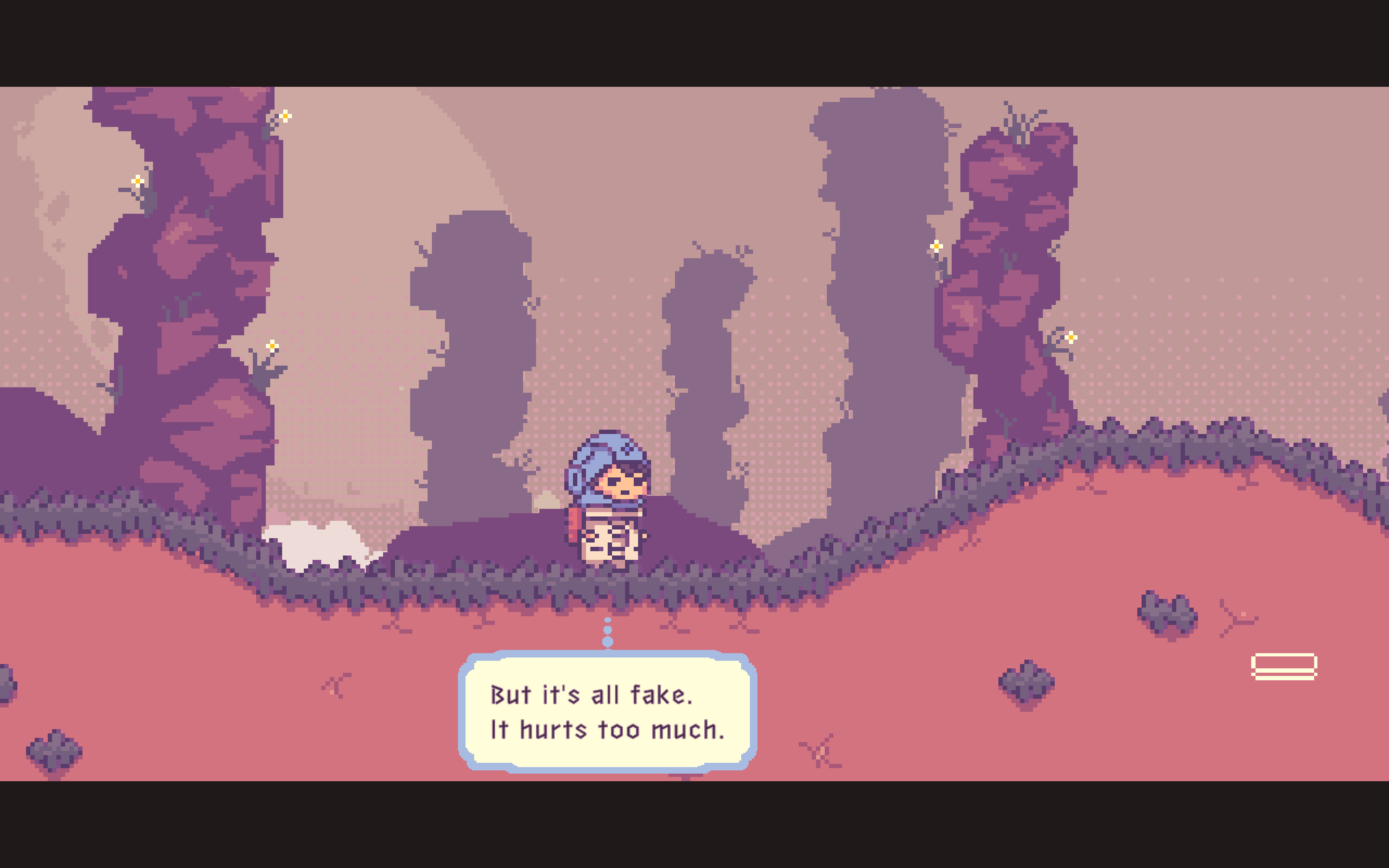
[Image 1, my character thinking to himself (hidden from other player) “But it’s all fake. It hurts too much.” This is in relation to my character finding out that the other player is actually not his son and that his concept of fatherhood was planted.]
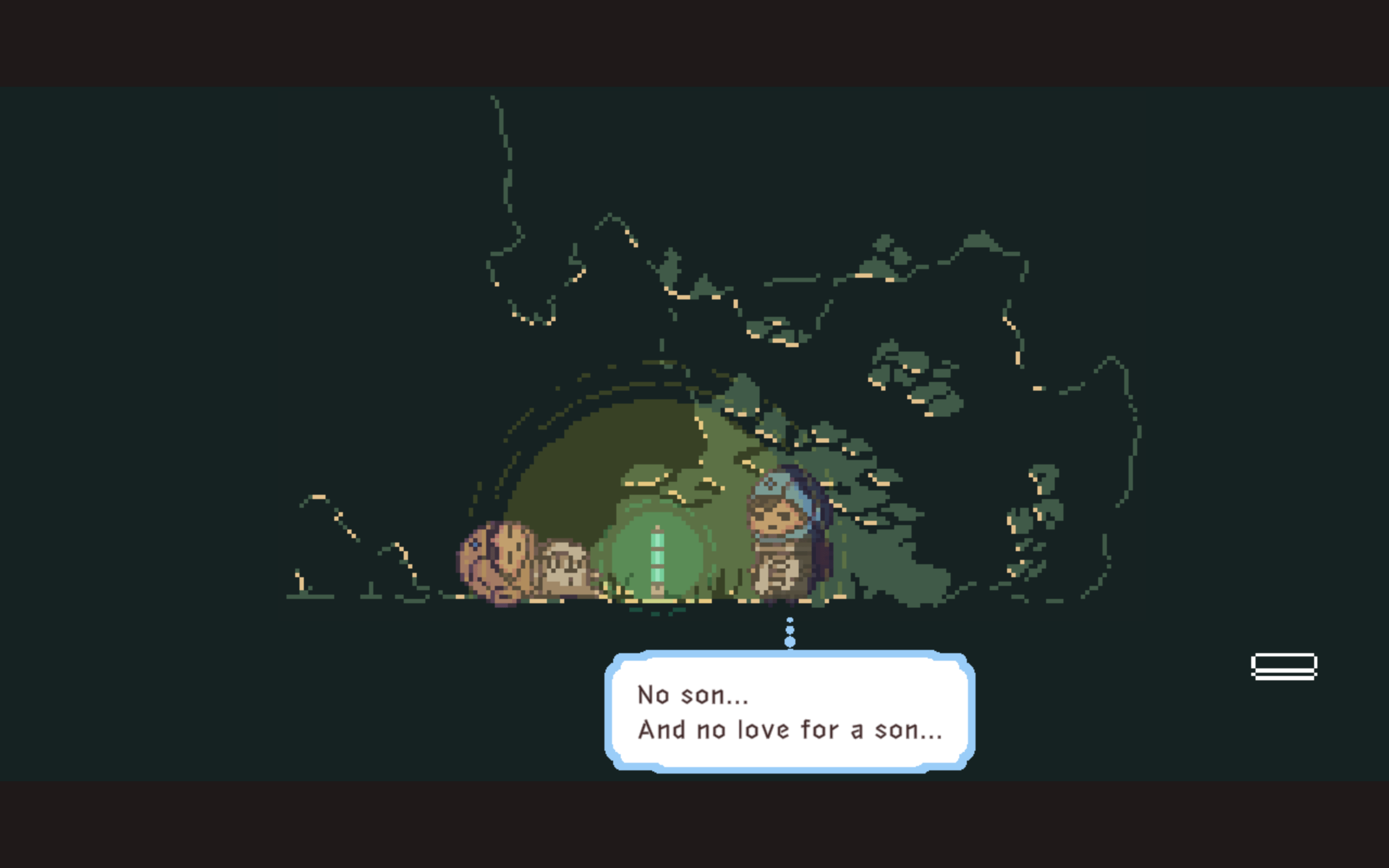
[Image 2, my character thinking to himself (hidden from other player) “No son… And no love for a son… This is a scene where my character’s fake son is sleeping in a cave and my character is pondering over this unfortunate scenario]
This is where my own experience playing the game became spookily unsettling. I played a character who kept grappling with the feeling of being fake, especially in relation to fatherhood. Logically, the role did not make sense. It was complete fiction to have memories from a computer transferred into this lonely convict with no semblance of a family. However, the character still felt responsibility, protection, and attachment. Even though this character does not biologically have a son, you cannot deny this lived experience of caring for someone as if their survival matters more than your own comfort. Even when the role feels artificial, the feeling itself is completely real, and the game treats that feeling as ethically meaningful.
That is what makes the co-op structure so important. Because another player is always involved, the game turns understanding into a shared but incomplete process. You have to work together, but you do not see the same things, and you do not know the same truths. You can describe your world to the other person, but description only gets you part of the way there. The game turns that gap into its central challenge. It is not asking whether two players can become the same person; it is asking whether two separate perspectives can still build trust, care, and moral responsibility without ever fully collapsing into one another. That uncertainty mirrors the game’s larger philosophical point. We rarely know other people from the inside, yet we still owe them recognition.
What makes the game memorable is that it does not resolve these dilemmas neatly. It leaves the player with discomfort. After spending 3.5 hours playing the game, I built up this huge morale with my teammate and felt like I had a full understanding of the situation. However, in the last cutscene, I found that what I thought I observed and knew was completely false. Not to mention, I was COMPLETELY blindsided by the fact that the other player was a parasite the whole time. Now I can’t even imagine what it was like to play as the other person even though I know all of this “objective information” now. I like that this game forces us to grapple with the fact that another person’s experience will always remain partly out of reach, even when that person is sitting right next to us.
