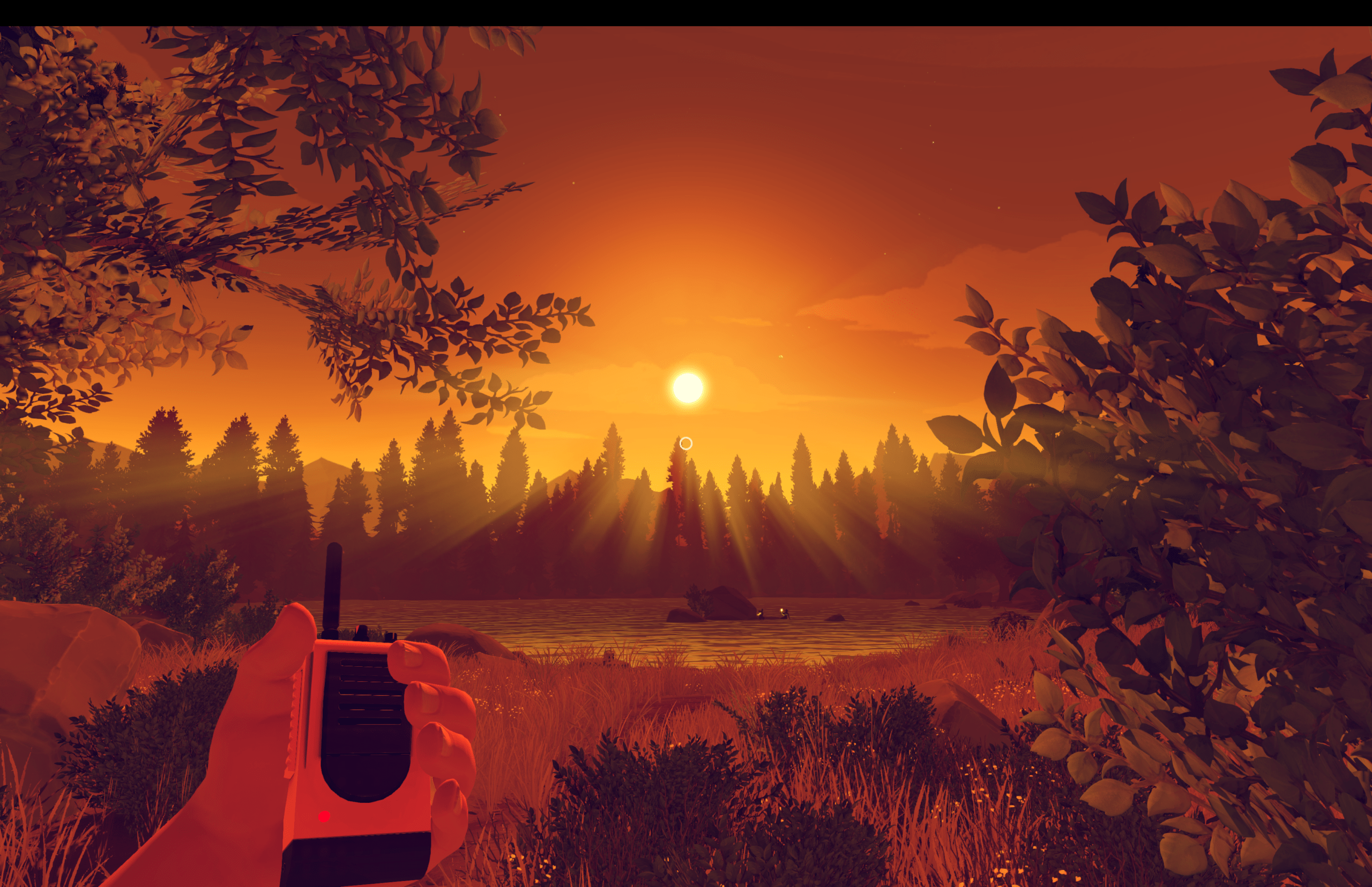
Walking simulators make the bet that “walking” and moving through different environments, without super obvious objectives or combat, can create a compelling story as well as any other combination of mechanics. I think that Firewatch, released in 2016 by Campo Santo, lives up to that wager. I played Firewatch on Steam on my Mac, and I believe that I fall into its intended, mature (16+) audience who enjoys a story driven experience. I argue that Firewatch tells its story through the act of navigating, interacting, and listening rather than clearly defined conflict. The exclusion of violence is a clear decision that helps focus the mechanics and player on character interactions and environment.
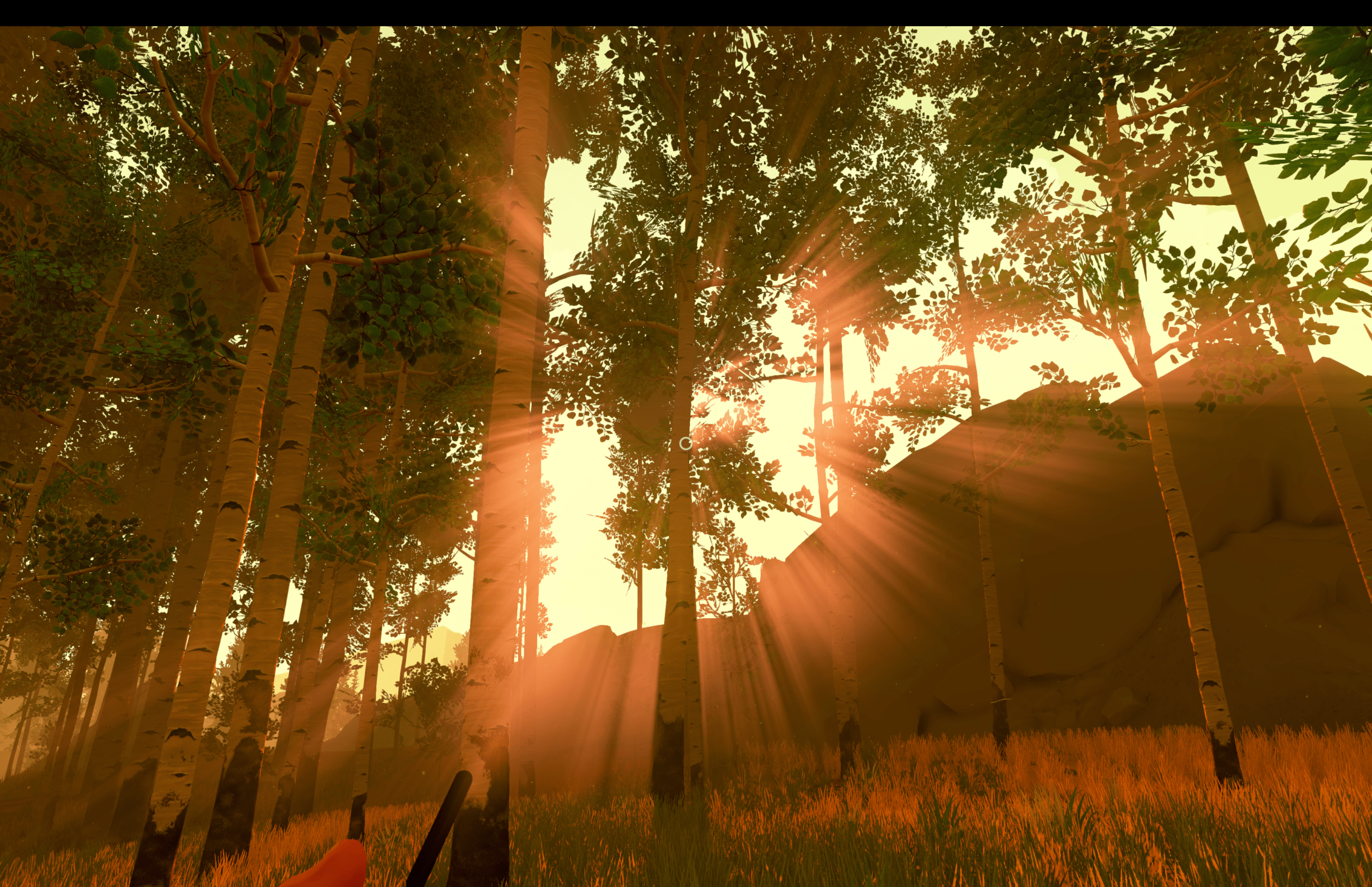
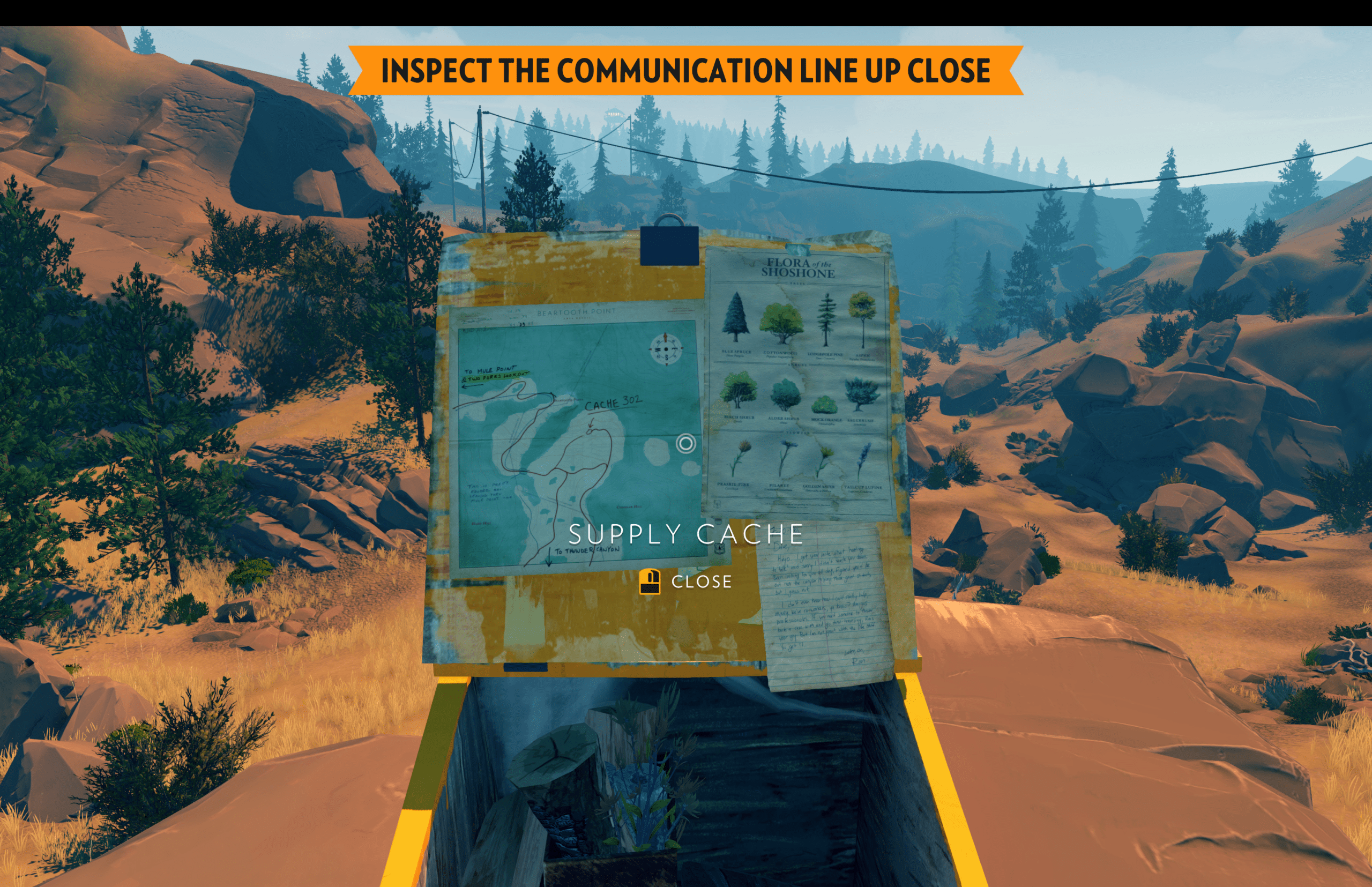
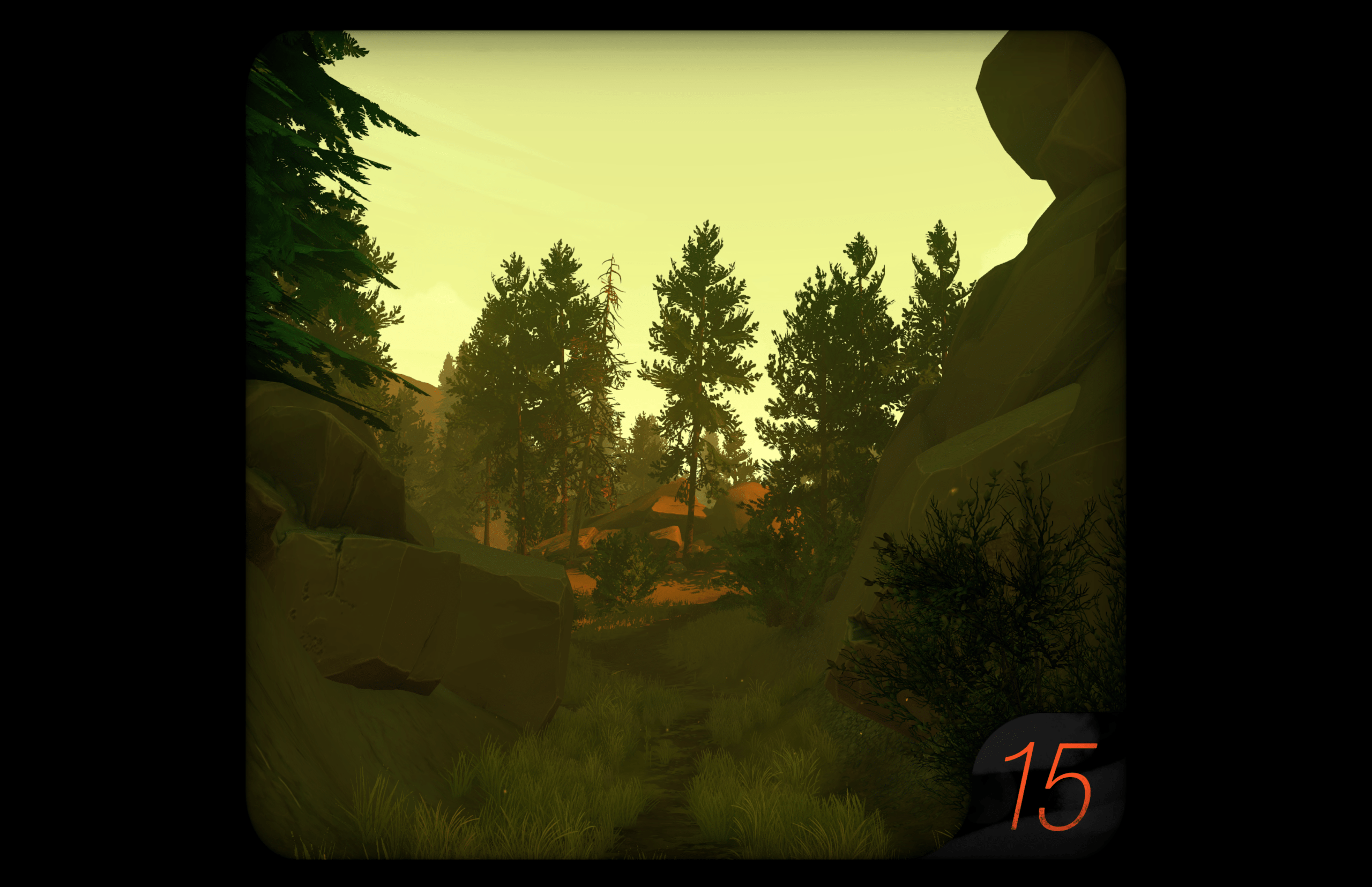
The most distinctive mechanical decision in Firewatch is the absence of any on-screen navigational aids besides the paper map and compass that you can inspect more closely to navigate the woods. To get anywhere, I mostly followed the obvious trails by looking for the dirt paths, only occasionally using the map. Compared to other “open-world” games, Firewatch does not have the obnoxious quest markers telling you where to go and how far it is. The disorientation that comes from this is intentional. As I was playing, the surreal nature environment was so visually and sonically pleasing. It made me eager to continue discovering the different environments in the game from a lush forest to regrowing, burned one.
Firewatch uses an embedded narrative through interactable objects that tell the overall story and backstory of the game. The forest and lookout tower are dense with things you can pick up, examine, and sometimes keep. For example, picking up a whisky bottle on day 1 appears on the main character Henry’s desk the next morning. This was a detail that really excited me and made me look for other things to pick up. Locked supply caches contain letters between previous rangers that hint at previous lives and characters. Most of the small interactables, like a photo of Henry and his wife, do not advance the main story, but instead advance your understanding of the space and the people who have moved through it. This is the game’s primary method of environmental storytelling since the environment holds the narrative without necessarily spelling it out. Because items are not mandatory to pick up and talk with Delilah (another lookout and Henry’s boss), players will have different levels of understanding depending on how much they want to interact with the things around them.
I think that the film camera is a clear example of this. At one point, you find a disposable camera with exposures left on it. You can take photos of the landscape around you and the photos do not unlock anything. But the act of framing a shot within the game makes you look at the landscape deliberately and treat moments as something finite and worth preserving, even if it really is on a film camera in a digital game.
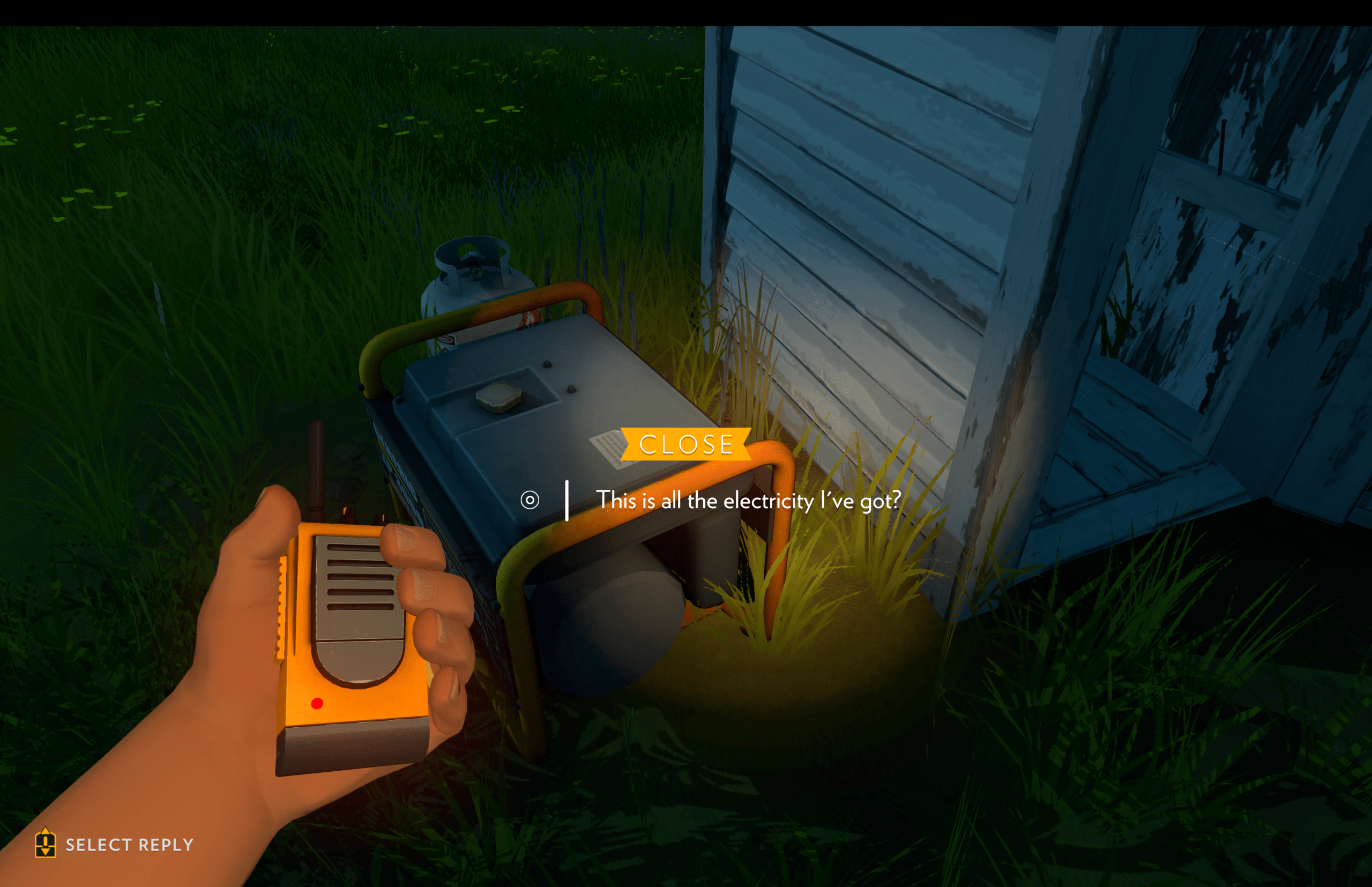
Firewatch communicates character story almost entirely through radio exchanges with Delilah, your boss at a distant lookout tower. These exchanges use a timed response system where a set of replies appears on screen and you have a set amount of time to choose one before the window closes. The intention is to simulate real conversation, where silence is itself is also a choice. The effect is mostly successful but I think has a design flaw. The time given to read and select a response often feels too short, especially when I am trying to look at the map, climbing down a rope, or enjoying the visuals around me. In moments of emotional weight, when the dialogue choices ask you to commit to something vulnerable or confrontational, the clock produces anxiety to respond in time rather than reflect on what you might actually say. I sometimes clicked the first option because it is the fastest. A longer window option would let players make more considered choices without losing the dynamic of conversational pressure.
The game’s opening uses text-based choices to establish Henry’s backstory. The intention is efficient exposition, but the effect is distancing compared to the rest of the game. Hearing about emotional events breaks the pattern the rest of the game maintains, that you learn by doing rather than by reading. For consistency, it might have been better to cut the opening portion of the game and include more interactions and items that hint at Henry’s relationship and past. But I also think that the interactable system is limited by the fact that items can be easy to miss especially on the busy forest background. Players who do not hover over objects may not realize that it is actually meaningful.
Firewatch contains no combat, and violence exists only at the edges, as a reference to something that may have happened in the forest or a sense of threat that never materialized in my two hours of play. By removing violence as a mechanic, the designers had to build player agency through other means, like dialogue and interaction with objects, and the result is a relationship to the game world that is more observatory and peaceful.
Playing Overwatch alongside Firewatch made the ethical stakes of including violence more visible. In a shooter, violence is so normalized as a mechanic that it stops registering as a choice at all. Without anything to attack in Firewatch, I paid attention differently, reading environmental details I would have run past in a combat game. Firewatch did not make a moral argument against violence, but its design quietly demonstrated what becomes possible when a popular game mechanic is removed, which for me was attention and care.