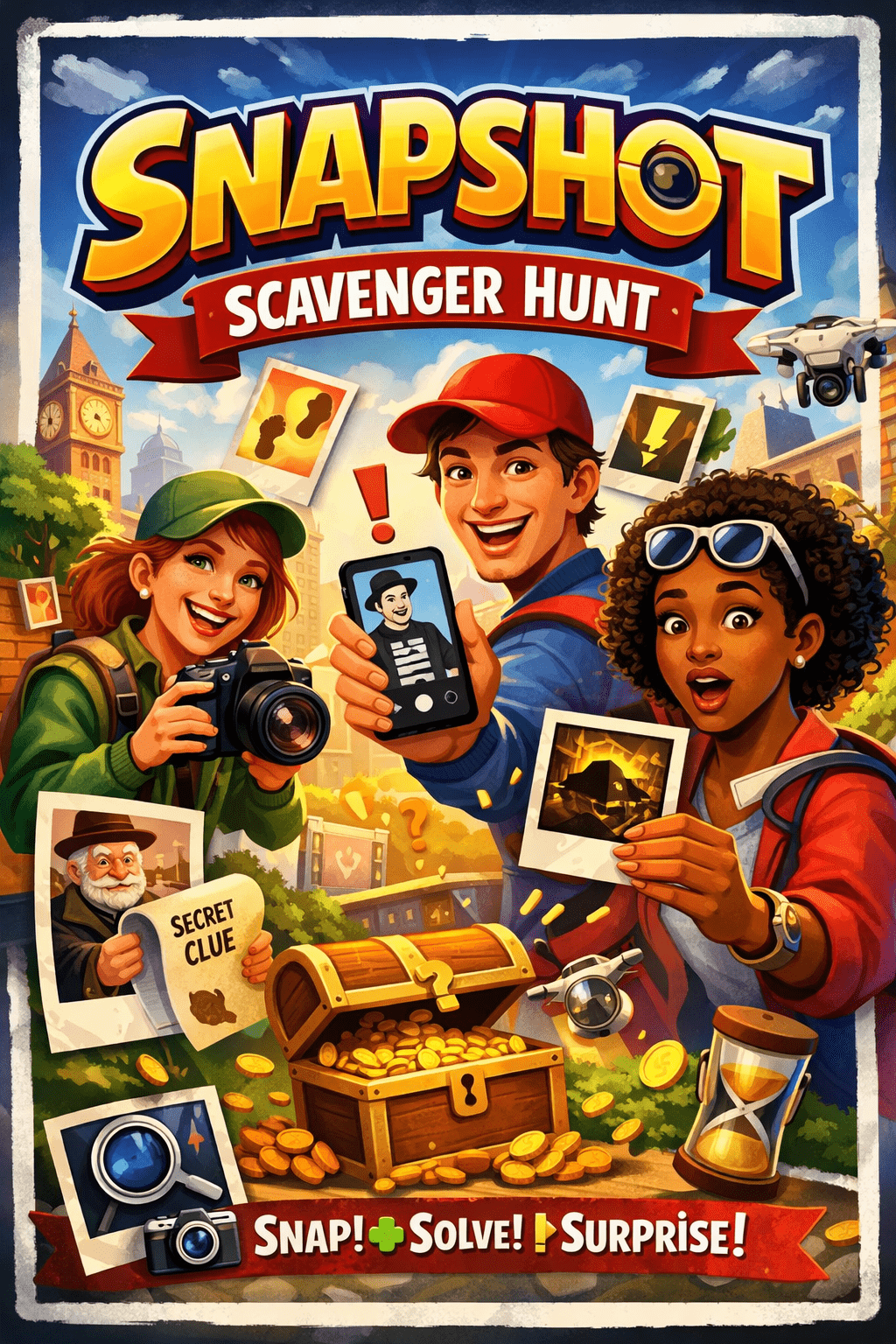
Image generated by ChatGPT
While prototypes can be made to test many elements, the most important elements in my mind at this time are game mechanics and specific look and feel makes more sense after mechanics are more established. Here are “four” questions about how the Photo Scavenger Hunt can be designed and ideas of how to prototype them.
- Question: How much time will it take players to complete a task in the scavenger hunt? How much time will it take for a full game of photo scavenger hunt?
- It is important to understand as designers how long it will take people to complete particular tasks so that they get enough quick wins and enough more challenging items. The time it takes to complete the task is also important in determining balanced points.
- Potential Prototypes
- Have people or groups complete single tasks and time them.
- Have people play a game version where there are added points for completing tasks faster
- Prediction
- People will enjoy the time pressure as it adds to the challenge.
- Task time will last between 30 seconds and 15 minutes. The longer times will be caused by needs to coordinate with multiple people or a need to find a physical object or location in the real world.
- Question: How can we prevent quarter backing? How can we ensure there is sufficient surprise/novelty in the game?
- If players have all the information at the start then they can create and then implement a plan. This in particular allows single players to dominate the experience. Introducing dynamic elements that cause them to shift their plan can add to their enjoyment.
- Potential Prototypes
- Have players compare a version where they know all the tasks versus one where they only see task n when they complete task n-1.
- Have people play a game version where there are temporary bonuses for different things like symmetrical photos.
- Prediction
- People will enjoy the temporary bonuses.
- People will want more information than just the next task because they want to make choices but we could provide 3 options at a time or some similar compromise.
- Question: How can we facilitate positive social interactions among team members? How can they have positive social interactions with those not playing the game?
- Given that fellowship is an important element of this game, conscious consideration for optimizing social interactions is important.
- Potential Prototypes
- Provide tasks with greater cooperation needed (i.e. build a human pyramid) and tasks with less interaction (i.e. take a picture of one team member doing a handstand) with varying point values and allow people to pick which they would rather do and explain why.
- Provide tasks with interaction with strangers (i.e. shake hands with a stranger) and tasks that only include team members (i.e. take a picture of holding hands in a circle) with varying point values and allow people to pick which they would rather do and explain why.
- Prediction
- People will select tasks with less interaction because they perceive them as easier but if the point values of interaction tasks are >=50% higher they will be selected.
- Question: How can we integrate reflection/recollection to increase enjoyment?
- Experience design has shown that people’s enjoyment is increased as they remember the activity they engaged with. In relationships people also enjoy recollecting shared experiences.
- Potential Prototypes
- Have people playing tag images with a specific hashtag on social media so a ‘gallery’ can be created and discussed.
- Add a mechanic where people vote on the best single picture for bonus points and explain why.
- Prediction
- People will enjoy and choose to interact with gallery even if there is not a task like voting for the best image but the voting task will increase engagement and thus enjoyment.
- People will award images that are particularly funny.