Game Name: The Room
Game’s Creator: Fireproof Games
Platform: Compatible with Nintendo Switch, Microsoft Windows, Mobile App (iOS, Android)
Target Audience: Individuals aged 13+ who enjoy puzzle-solving games with dark themes
The Room is a challenging puzzle-solving game that relies on escape room mechanics to build layers of dark narrative, suspense, and intricate puzzles to decipher. Right off the bat, the fine balance of “not too easy but also not too hard,” which is integral to a good, well functioning puzzle, stood out to me. The game starts off with a series of tutorial-like directions that guide the player through common point-and-click mechanics, such as double tapping to zoom in, swiping to move around, and pinching out to zoom out. Additionally, the initial set of steps, like inspecting the letter on top of the safe and collecting the key, are well guided, so the player isn’t left in the dark about how to begin their escape room journey.
That being said, about a minute into the guided instructions, the game takes a step back. Help becomes limited to when the player clicks on the clue menu and is presented with up to three clues, or when they click on something that might be useful but requires additional steps to access or understand, or when they click on something unrelated to the puzzle at hand. I found these three forms of help to be useful because they prevent the player from feeling completely stuck while still preserving the challenge of figuring things out independently. This helps maintain the fine line between offering guidance and encouraging the player to problem-solve on their own.
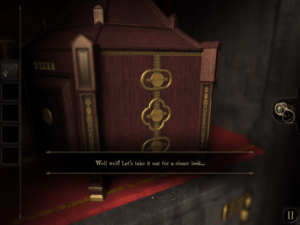
Image 1: Guiding clues help frame the window of discovery and allow players to not feel too lost
Another mechanic I found interesting is that, while The Room is a puzzle-based game with a single correct solution, each level contains multiple steps that can be approached in a flexible order. For example, in the second level, there are several mini puzzles where solving one, like deciphering cryptic text, isn’t immediately necessary to solve another, such as using a reconfigurable key to unlock a part of the safe. These sub-puzzles can be solved in a fluid, non-linear order depending on the path the player takes. This is an effective design choice because it lowers friction. If a player gets stuck on one part, they can still progress by tackling other sections, using the clues they’ve already uncovered, which brings them closer to the final solution.
In terms of the types of puzzles, I found it to be a combination of many: riddles, information gathering, codes, and unusual uses of objects. The safe, for instance, while expected to be something cryptic and unlockable, contains layers of intricate sub-chambers with a plethora of embedded hints. This creates a strong sense of mystery, which is key to a game that draws from escape room mechanics. There are also scattered riddles throughout, including one early in the game that reads: “Feed me and I shall survive, give me drink and I shall die.” Upon exploring the room, it became clear that the answer was fire, which then allowed me to open a compartment and retrieve a key hidden behind the fire labeled foot of the safe.

Image 2: Fire riddle allowed unlocking of a special key that is later used to unlock to multiple locks
Finally, the use of hidden information and coded clues is the primary basis of the puzzle structure. Players have to piece together multiple fragments to uncover the chapter’s solution, and many of these pieces involve deciphering hidden codes. The use of logic and trial and error also plays a significant role, making The Room a rich and complex experience that gives puzzle lovers a sense of satisfaction as they peel back its many layers.
To comment briefly on the game’s aesthetics, it shows strong artistic design by using deep, moody shades, dim lighting, and an antique look that reinforces the theme of suspense. The serif fonts used throughout give the text a rigid, aged feel, which helps the player immerse themselves into the eerie environment of the abandoned manor house and its mysterious safe.

Image 3: Rugged, aged aesthetic choices such as this weathered book provides a times, mysterious feel
Ethical Reflection
From an ethical point of view, The Room encourages critical and lateral thinking through non obvious connections and inferences. However, it’s worth thinking about what kinds of knowledge the game assumes players already have. For example, the riddle about fire draws on familiarity with English metaphors and proverbs. Certain design choices, like the use of specific locking mechanisms, magnifying lenses, or alchemy-like symbols, may also require some cultural or academic context to fully understand. Not every player may have that context, and that can affect how accessible the game feels. These assumptions, while subtle, can unintentionally exclude players who don’t share the same baseline experiences. This makes it important for puzzle based games to consider context aware hint systems or more universally intuitive design, so that players from all backgrounds can engage meaningfully without unnecessary frustration.