Reflection
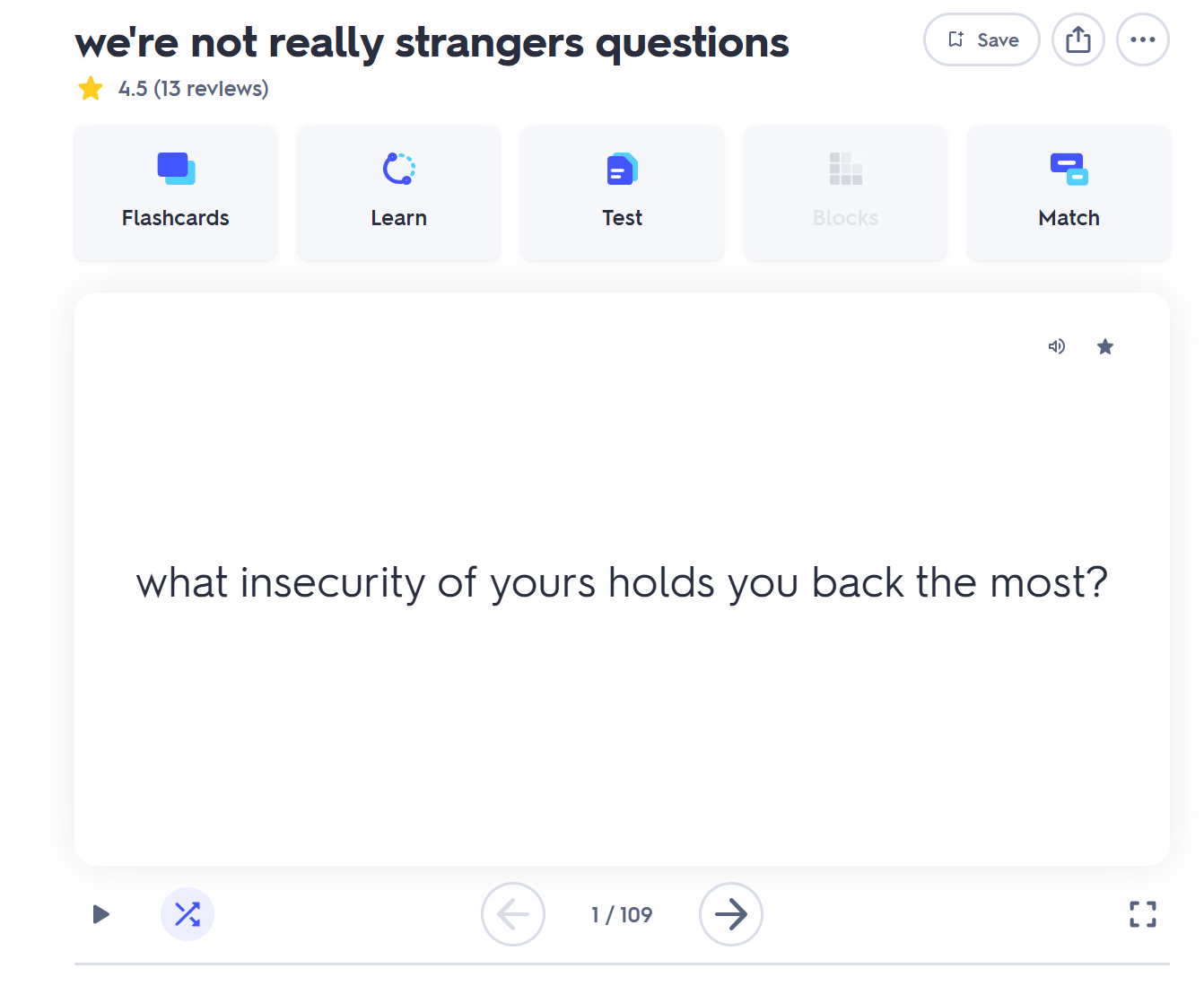
I played a free and online version of We’re Not Really Strangers, originally designed to deepen relationships through guided conversation. Though the official version is typically played using physical cards, I accessed it through a Quizlet deck, which made it easy and casual to play with a small, intimate group of friends. The game’s target audience—young adults interested in emotional connection and self-discovery—definitely aligned with my group, and I could see how the structure was meant to draw us in gradually.
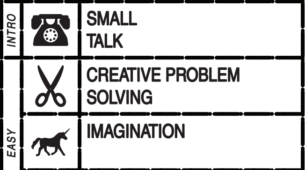
While playing, I noticed aspects of my own communication style that I hadn’t fully recognized before. I tend to be more reserved and analytical, which became evident in how I answered questions. Compared to my friends, I was less forthcoming and found it difficult to elaborate on emotional topics or share vulnerable details. At first, this felt like a personal shortcoming, but as the game progressed, I realized that this hesitation wasn’t unique to me—most of us needed time to “warm up.” The game’s three-tiered structure (Perception, Connection, Reflection) supported that process, allowing us to ease into deeper conversations. This progressive format influenced how open I felt comfortable being, and helped me practice vulnerability in a way that still felt safe.
Another aspect that stood out during the game was how much I rely on humor or vague responses to deflect from sharing too much. I noticed that when I felt a question touched on something personal, I would either give a short answer or say something lighthearted to move on quickly. This made me realize that I sometimes prioritize keeping things comfortable over being emotionally honest, even in safe spaces. It’s not something I do consciously, but playing this game made it clear that this is a pattern in how I communicate.
In terms of decision-making, I found myself carefully choosing what to share and when, often gauging the group’s energy before I responded. I noticed I took on a listener-observer role within the group rather than a lead storyteller. Though I didn’t contribute as many deeply personal stories, I still participated thoughtfully and encouraged others, which highlighted how I often support emotional conversations by creating space for others to speak.
Overall, the game’s mechanics and tone helped me reflect on my own relational tendencies. Even though I didn’t share as openly as others, I still stepped out of my comfort zone and strengthened my ability to connect. That, to me, felt like a meaningful takeaway—one that aligns with the creator’s goal of making emotional depth more accessible, one card at a time.
Even though I didn’t emerge as a leader during the game, I played a quiet role in helping maintain the group’s emotional pace. The game brought that dynamic to the surface, and it’s something I’ve started to reflect on more in other parts of my life—how I contribute to group settings even when I’m not the most vocal.
Ethics
We’re Not Really Strangers is built on the social norm that emotional vulnerability is valuable and often lacking in everyday conversation. The game responds to the Western, particularly millennial and gen z, norm that emotional intelligence, self-awareness, and over authenticity are desirable traits in a relationships. It assumes that people not only ant to connect more deeply, but that they’re safe to do so.
The game’s structure reflects individualistic cultural norms (i.e. Western cultural norms), where expressing personal feelings are often encouraged. In this context, it’s normal and encouraged to ask very deep and vulnerable questions. But in collectivist or more reserved cultures, these questions might feel intrusive, inappropriate, or even disrespectful. For example, as someone who comes from a very traditional southeast Asian family, I found myself struggling to open myself up (as I mentioned in my reflection). Overall, this game can unintentionally leave out people who come from non-Western cultures or even people who are simply not comfortable (due to upbringing, personality, trauma, etc.) with talking about personal topics.
Proof
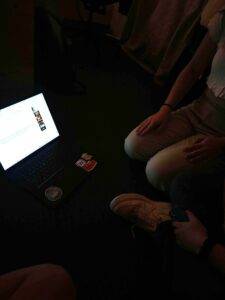
Here’s some pictures of my game experience: