- Title of game + author(s)
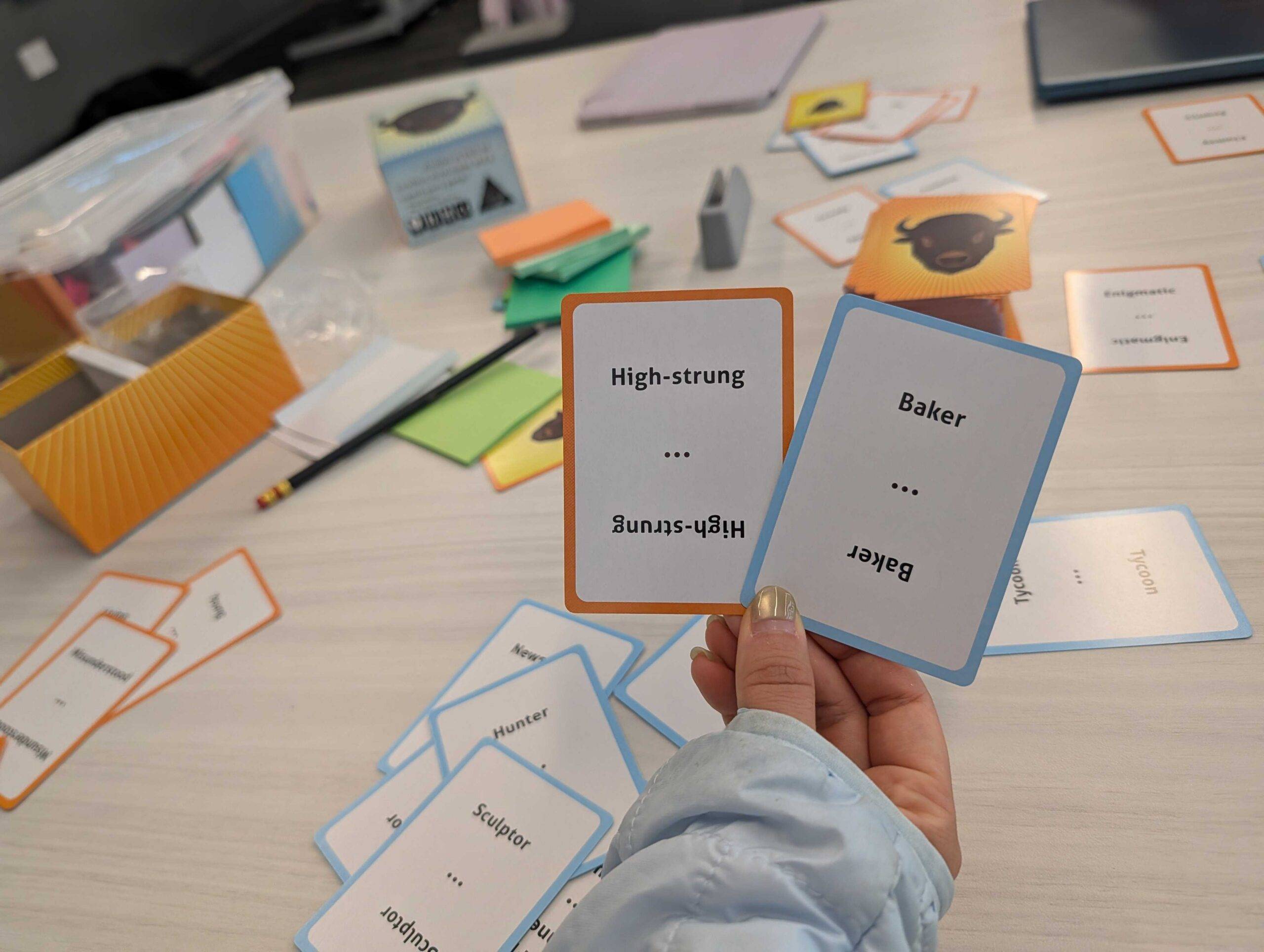
We played Buffalo in class, which was designed by Mary Flanagan, Max Seidman, and Sukdith Punjathitkul, and published by Resonym.
2. What it’s about (this can be super short, eg “It’s a game about the Syrian refugee crisis.”)
It’s a name-dropping game – players have to race to answer names of real or fictional figures that match the described attributes that come from random card-drawing.
3. What kind(s) of fun it uses
To me, the game involves mainly 3 kinds of fun: first, it is a social party game so it involves fellowship – players judge and dispute each other’s answers. It also offers challenges for the players to race other players to recall a name that fits. When players find out how many people they can’t think of and pick up new names from other people, they have the fun of discovery. There’s a slight fantasy element involved too where fictional figures could count, so players can draw on make-believe characters.
4. How does the MDAO framework apply to this game?
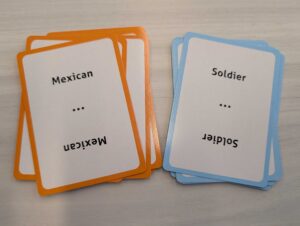
M – the mechanic of the game is simple: players draw random cards – each from two piles – that combine identity and quirky attribute prompts. Players race to name someone who fits the criteria. Other players can challenge the answer, and the first valid answer scores. The winner of the round gets to take the cards.
D – the dynamic of Buffalo is basically a frantic recall process. During our game, we blurted out familiar games and sometimes blurry familiar games, and sometimes others act quicker when getting a hint from a blurry name that reminds them of the intended person. For example, for this combo of “high-strung baker”, Jessica was talking about “there was a British cooking show host that likes to shout at people…”, then I got reminded and take the first shot “Gordon Ramsay?!”; and then I won the cards.
We also argued over whether a name fits the criteria. There was one time where the card draw reads “Christian recordbreaker”, and we were arguing which one of Donald Trump or Taylor Swift fits better to this, and we had different opinions within the group. But eventually the group agrees to have Taylor Swift for the combo.
What is interesting for our group is that we accidentally turned this into a vocabulary learning game in a way because there were times where the attribute adjective is not familiar to group members including myself that don’t have English as first language. Words like high-strung and enigmatic are examples: 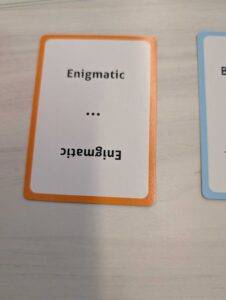
A – the aesthetic of Buffalo involves challenge, fellowship, discovery, and laughters and some mild embarrassment when you blank on a name.
O – outcomes from this game is mainly information and notice of our own biases.
There were times where the combo showed “Mexican soldier” and “Native American high school teacher” and we as a group blanked out. Jessica came up with one of her ancestors who fought for the Mexican war for the Mexican solder one, but for Native American high school teacher we ended up having no answers for. I think there are two reasons to this – one, these two prompts reach into the more private spheres of people’s lives because it is kind of difficult to come up with someone famous for these prompts that people can google and verify. Two, as a systematic bias, if the combo shows an “American solider” or a “white high school teacher”, it’d be much easier to come with answers for due to the exposure of these characters in popular media like Hollywood movies which is very white and Western-centric. So that is also one of the reflections and learnings we gained from the game.
5. Thoughtful documentation: Photos, videos, pull quotes – and HOW they relate to your analysis (integrated above)