

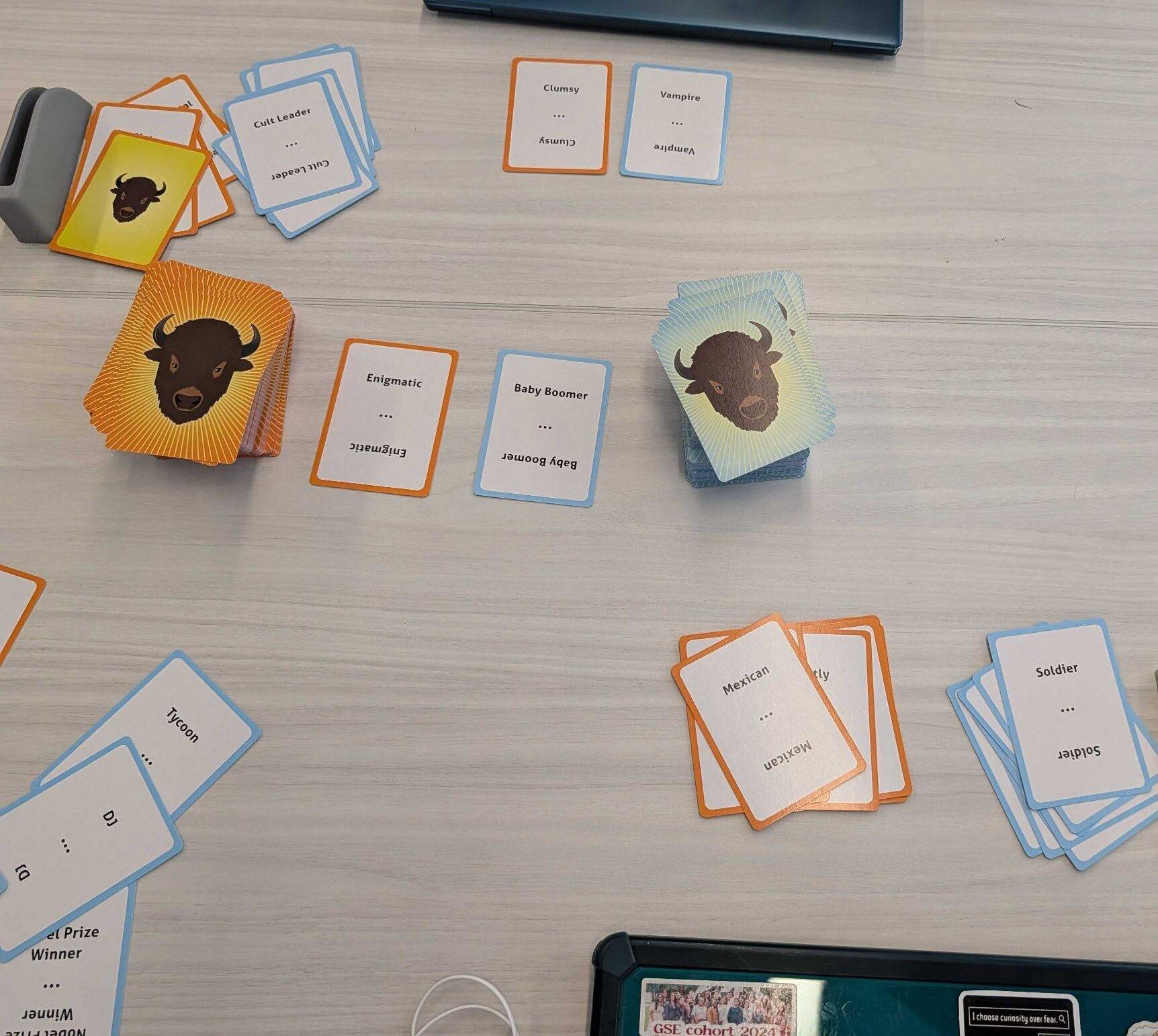
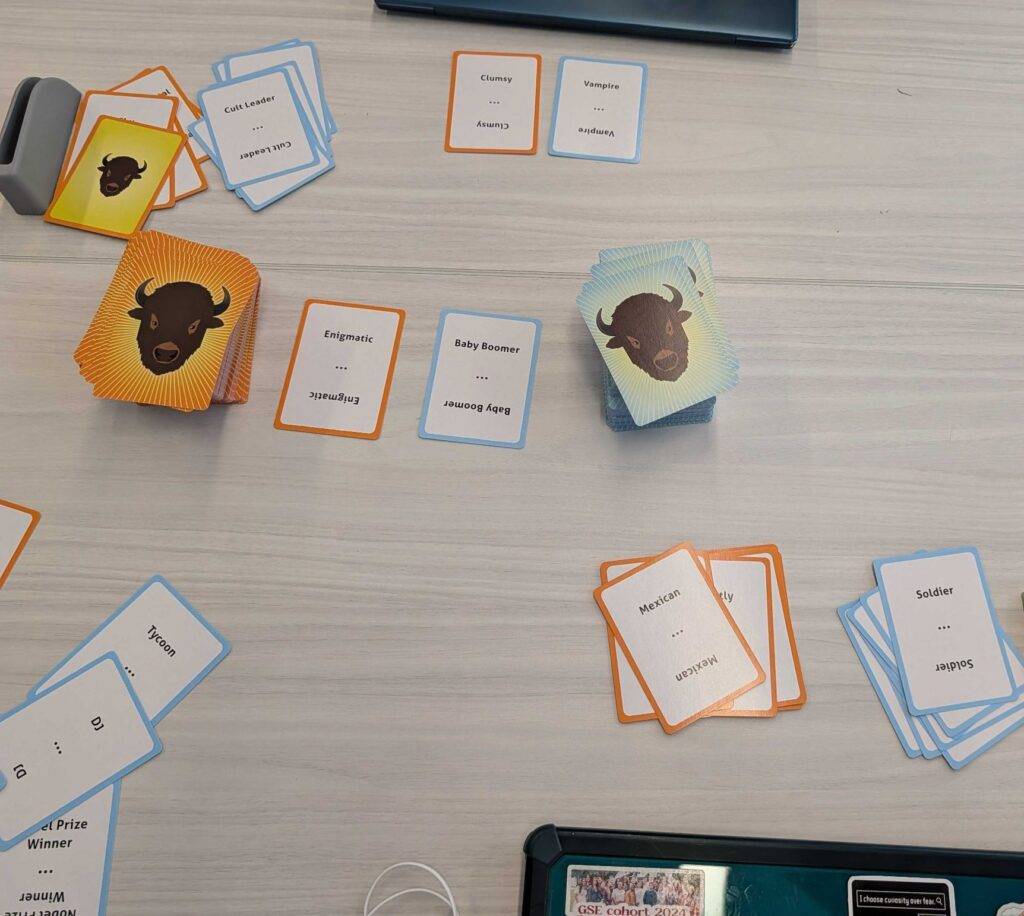
We played “Buffalo: The Name Dropping Game” which is designed by Mary Flanagan. It is a card game that prompts players to name a person fictional or real who fits 2 descriptors.
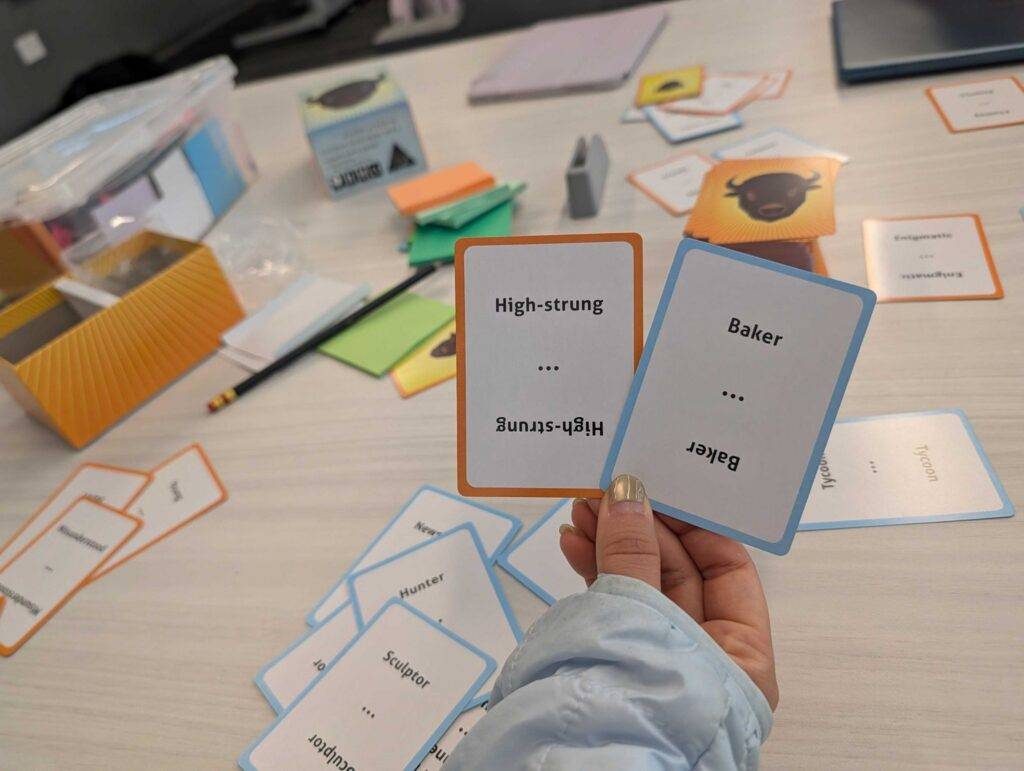
For example, Gordon Ramsay is a High-strung Baker (see the cards Judy won). The game is competitive as players win cards by naming the person first. It blended multiple types of fun:
- Challenge as players had to think of creative answers
- Fellowship as we struggled together, or laughed together about shared references, like Bella the clumsy vampire (see the cards Paprika won).
- Discovery as we learn new things like the President of Brazil (see the cards Judy won) is named Lula
As a serious game, it met Browning’s criteria reasonably well.
- While we weren’t exactly freely choosing to play given the class dynamics, I would be willing to play this later with my husband.
- The group operates inside the artificial challenge created by Buffalo’s cards. Instead of discussing people, players temporarily care about strict categories like “flamboyant popstar” or “blind scientist.” etc.
- You cannot predict what combination or answer will appear. Sometimes nobody can think of an answer and sometimes it’s over in seconds.
- The immediate goal is entirely unnecessary. This matches Browning’s argument that a serious game’s in-game goal should be distinct from its real-world outcome.
- Artificial constraints turn name-dropping into a game.
- Make-believe is probably the least obvious of the six in Buffalo because it doesn’t have a fictional story world. However in Buffalo, players temporarily accept that bizarre combinations of categories matter and treat finding someone who satisfies them as an urgent goal. The inclusion of fictional characters makes this slightly more explicit.
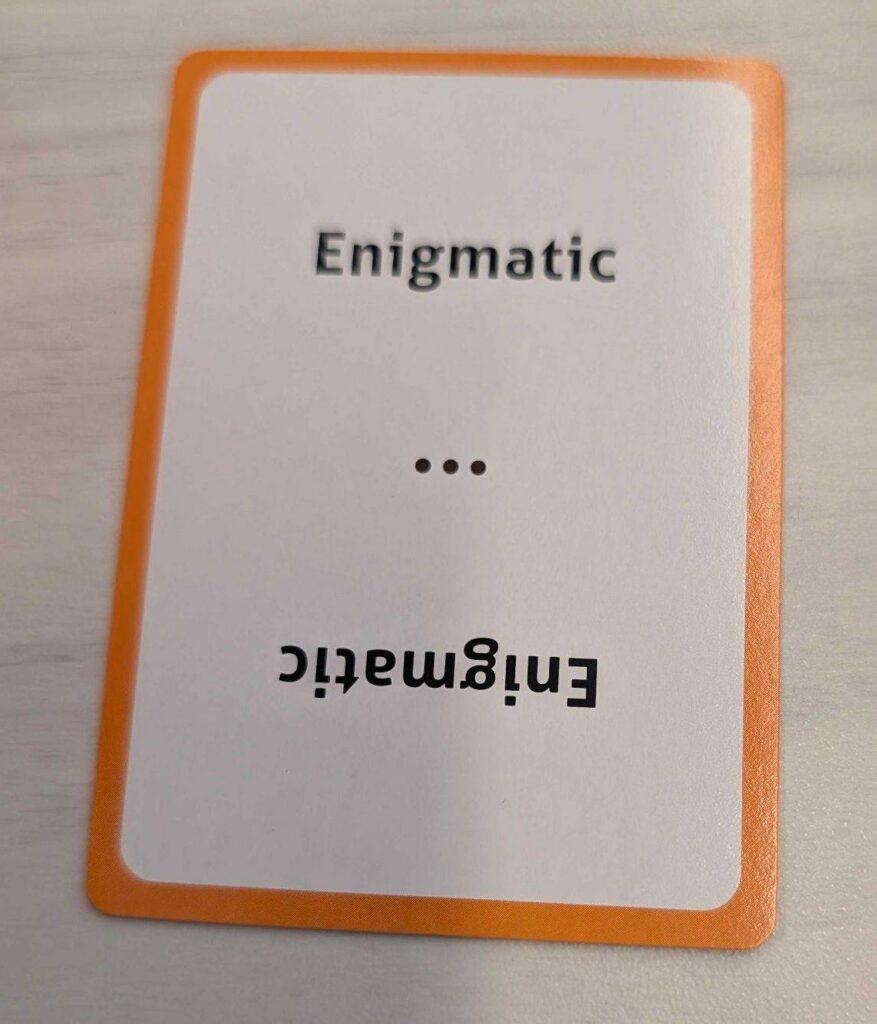
Our initial noticings around the outcomes of game play centered on learning information. We learned historical, political, and pop culture references that one might use in bar trivia. Two members of our group, for whom English was not their first language, were also learning vocabulary words like enigmatic and mutant.
However, as we continued to play we did notice themes around representation. We were “buffaloed” (could not think of an example) by “Native American” and “Composer” and named Michaelangelo as a “Creative” “Sculptor”. While this was not our initial experience, this was one intended outcome of the game. Buffalo was developed by “Transforming Science, Technology, Engineering, and Math (STEM) for Women and Girls: Reworking Stereotypes & Bias.” which was funded by the NSF. Buffalo aims to reduce gender bias and broaden participation in STEM. So far, initial data suggests that the game succeeds at reducing prejudice and encouraging greater inclusiveness in representations of social identity groups.
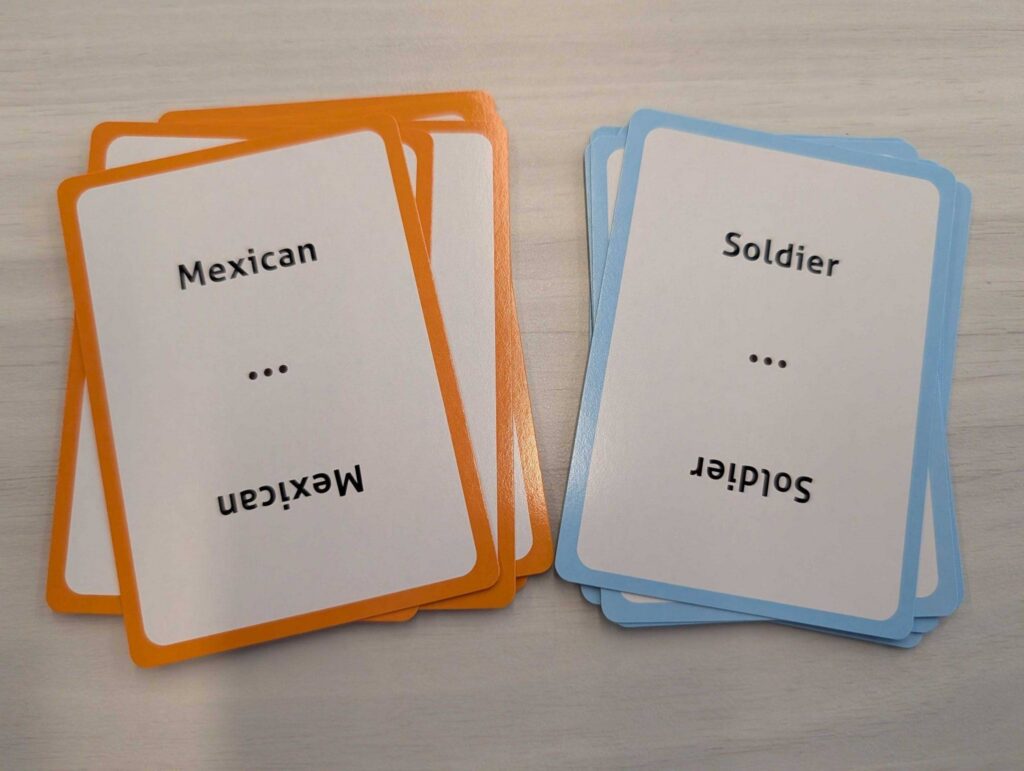
The basis for this outcome is grounded in research about broadening participation. Expanding people’s knowledge of diverse role models can be powerful in supporting diverse groups. This tries to gamify the instruction in the Scientist Spotlight project (scientistspotlights.org). The challenge I personally experienced in regards to this outcome is the inconsistent presence of the theme. Many pairings are irrelevant to the theme like clumsy vampire or shy cult leader. Many other pairings may inform the theme but without a reason to reflect are lost, like our choice of male bakers, artists and tycoons. Only specific pairings really highlight concerns around representation and sometimes something else overshadows the theme. Mexican Soldier had the potential to spark consideration but instead it was an opportunity for me to share that Antonio López de Santa Anna (a 19th-century Mexican general) is my ancestor and led Mexican forces that defeated the Texians at the Alamo.
