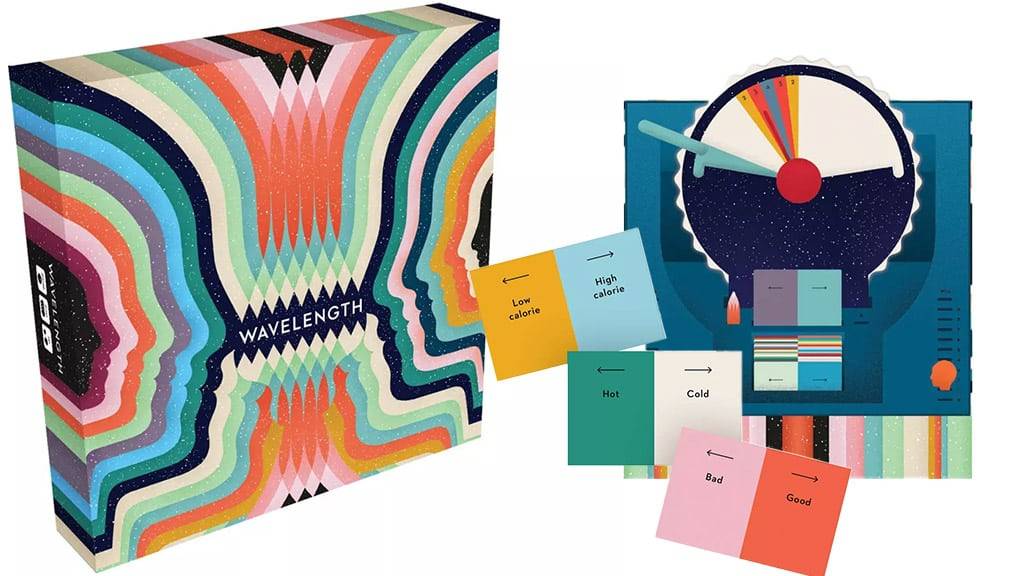
For the bluffing, judging, and getting vulnerable critical play, I played Wavelength. Wavelength is an analog party game that requires 2+ people; and was created by Alex Hague, Justin Vickers, and Wolfgang Warsch. The target audience is any group of people that want to get to know each other better, or argue about stupid hypotheticals (like if cereal is soup).
The game uses its elements like multilateral competition (in the version I played it was everyone for themselves), outwitting others, and zero sum ending to be fun to the people playing. If it was boring no one would want to try to get close using it. Wavelength fosters fellowship, competition, sensation and challenge. Fellowship because it’s a party game where you try to learn more about/test your knowledge on others around you; sensation from spinning the wheel; competition because you get points of someone guesses your hint correctly; and challenge because you are trying to decipher their hints.
Playing Wavelength really forced me to think out of the box. Especially when it was completely in the middle. I allowed me to notice that if I really am neutral on a topic, I don’t remember it. Which causes me to make bad hints and the guessers to be completely off.
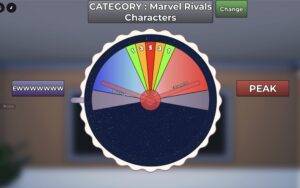
(to play with my friends back home, we were on call and paying Roblox Wavelength)
Moreover, I mostly talk about things I either love or hate. I can go on and on about Inscryption, Blue Prince, PEAK, MTG, etc. as well as complain about some changes they need, or talking about how much I hate one of the characters. But my friends almost never guessed the middle correctly. So, the game forced me to think extra hard, to figure out what to put as the hint when it was in a hard spot (like the middle).
I have always been the listener of the group, the combination of my bad mic, bad social skills, and tendency to go quiet, it is easy to let others talk and allow myself to listen. I did get really close to the middle most of the time, especially when we made up our own categories (I talk about it more later). Even so, I didn’t know little things like one of my friend’s favorite fruits being cherries.
I love using the random topics it has, but I wish the actual game had blank cards so you can make your own categories. I know personally that these were a lot more fun, and helped us learn more about each other. After a while, you get the same categories, which have similar answers, and the game starts to repeat. Making your own categories makes it fun again because the repetition stops.
This game was an easy play for players who are friends from similar backgrounds like me and my friends. But for people of different ethnicities or viewpoints, it could cause alienation and destroying a friendship before it can start. Even with my friends, prompts like music and video games were hard to answer because we each had out different tastes. This is the main feature of the game, and can foster a feeling of closeness as well as learning more about each other; but if you are too wildly different, there is a chance you bring something up that is offensive to them without you knowing. This can cause serious arguments which can destroy your chances of being friends.