

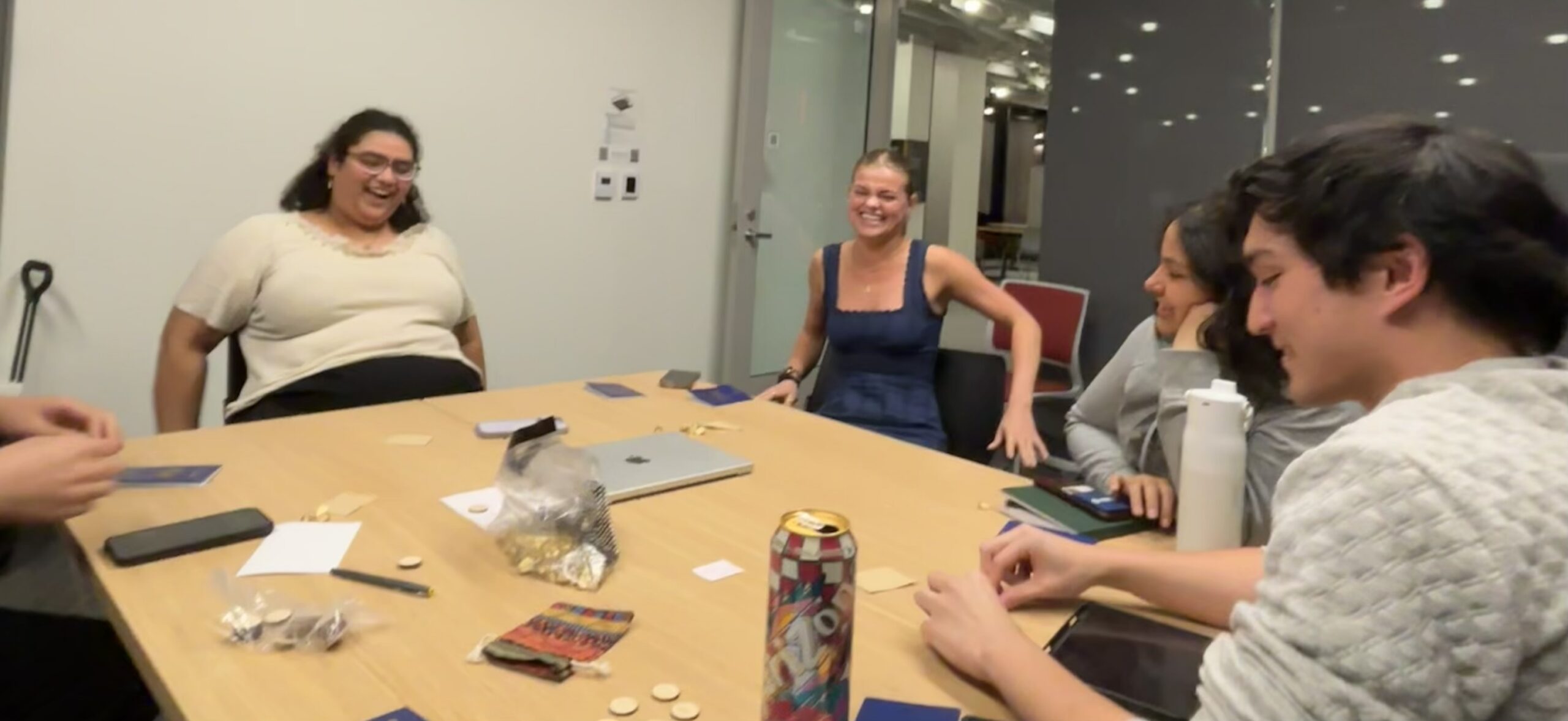
I’ve always been very competitive. From games to sports to academics, I’ve found a lot of self worth through winning and being the best. That’s what games were to me, a vessel for my competitive drive. I’d played some board games and video games, but I hadn’t spent much time thinking about their design beyond the emotions the game evoked for me. I also considered myself very bad at video games and somewhat of a video game hater.
I was fairly insecure about my lack of video game experience coming into this class. On the first day of class, I remember listening to conversations about game mechanics and terminology that I didn’t understand. But, after our first day playing Mafia, I knew I would be able to engage with the course.
I really connected with the concept of MDA. Through lectures, in-class discussions, critical plays, and project writeups, I learned how to identify the aesthetics I felt during games and connect those back to the mechanics that promote them. This sort of design framework was so exciting to me; learning to think of games as systems, as pieces of art, as solutions helped me connect my engineering brain to the class and get excited about playing and building them.
I think this course asked a lot from me in the best way. I felt extremely motivated to build games that I would genuinely enjoy and feel proud of. There were nights (particularly those in the CoDa basement at 2am) where I felt so disheartened, that we would never finish the game we wanted to make. But, through the frameworks I learned in this class, the various tools we were given, and relentless playtests, we made it to the other side. When we felt particularly stuck, I always went back to MDA. What aesthetic are we going for here? What dynamic would evoke it? What mechanics do we need to make that dynamic happen? Looking at our problems through that simplified framework made it feel so much easier and often pushed us just as much as we needed.
I really want to keep making games and to find ways to integrate them into more parts of my life. When I build my next game, I don’t want to think about building it as something fulfilling course objectives. I want to build something that inspires me and use the course concepts to help me along the way.
At the end of the day, I will never stop trying to win games. Social deduction games with clear winners and losers will always be my favorite, but this class has taught me that there is much more to experience in games besides the aesthetic of challenge. Now, when I play games, I think about the entire system and I feel more present as a player. I experience more of what the game has to offer, even in a singleplayer game. After four years at Stanford, I feel like I’ve learned the academic game and its optimal strategy. Now, there’s a whole new world of games available to me, and I can’t wait to keep learning.
Thank you to the course staff for a genuinely valuable learning experience and such an enjoyable quarter! And for all of the raigebating 🙂


MDA GOAT!!!
YAY BROOKE UR SO INCREDIBLE
BANG
I often think school is a poorly designed game. ;P