

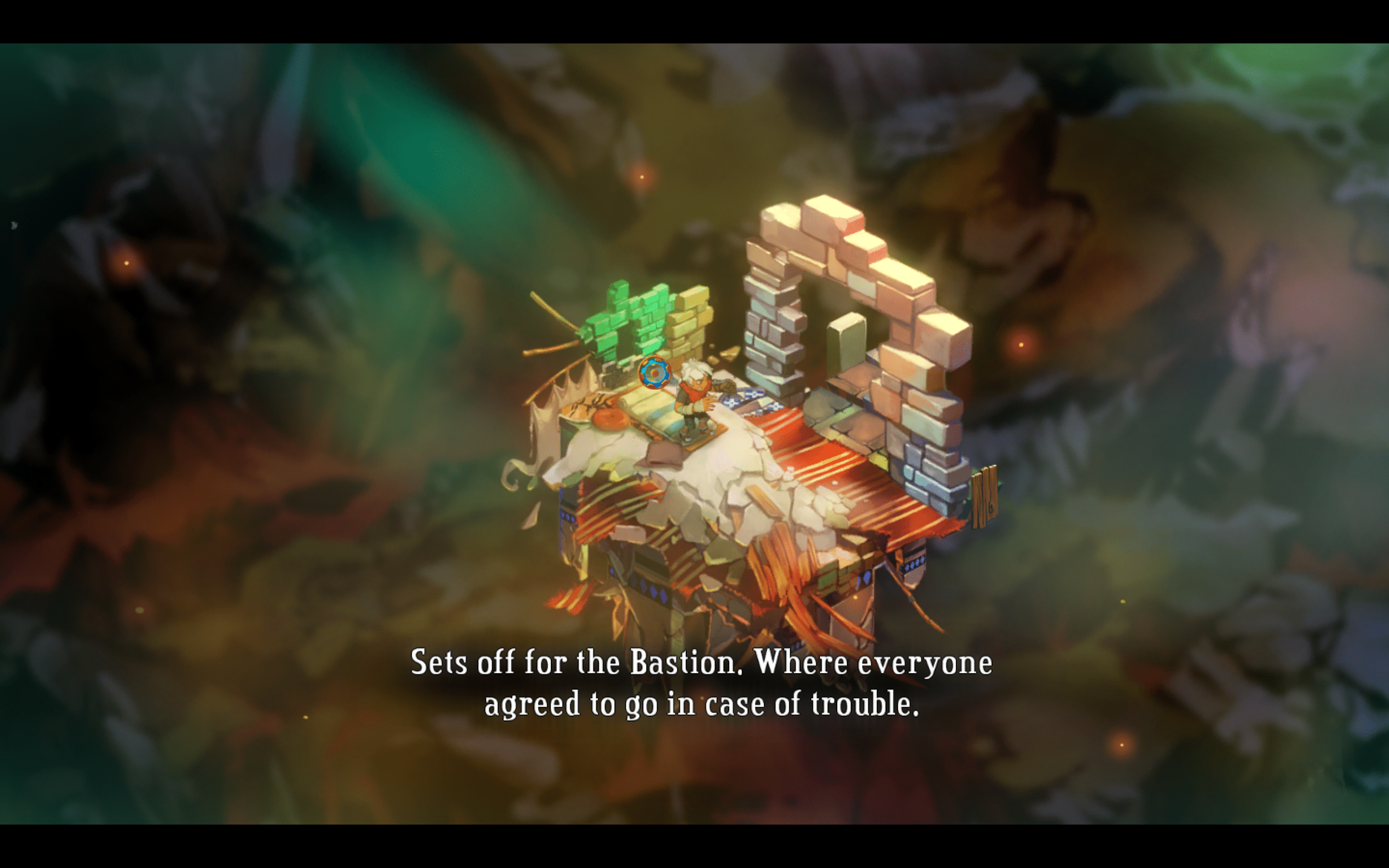
From the start of the game, I was given a clear mission: get to the core and return it to the monument. I immediately set off on this and struggled to explore the new land and fight off the squirts and windbags, but I eventually got the core. Once I returned and placed the core in the monument, the ground started shaking and the Bastion grew. There was a new location that opened up and some upgrade to my weapons or powers was granted to me. It felt like I was being rewarded for all the struggle I had gone through. As a result, I kept pushing myself through the different worlds and levels to find a core, expand, and see the win. Even as the game started to become more confusing and complex, there was a constant feeling that I was doing well and making things better.
This feeling is where the ethical issue with Bastion comes up. At first, the game does not show restoration as a difficult moral question, but just the rules of the game. I am given a task and completing it results in visible progress. This is important because by the time restoration, in the form of rewinding time, actually becomes a choice at the end, I have already spent the entire game working towards it. This is where I agree with Clarkson’s reading but not his conclusion: he is correct that the game’s worldbuilding makes the old world feel worth restoring but he believes this is why the ending is flawed. Mitchell is more convincing that the ending is a response to the player’s wish to do the right thing, but I believe the ending works because restoration doesn’t feel like control at all – it feels like care, leading the player to mistake progress for goodness before challenging the desire that the game spent hours building.
This idea is embedded into the way we play the game. The Bastion expands as I return cores, the Kid becomes stronger as I discover and upgrade weapons, and more locations are unlocked as I defeat creatures. Through this, the game builds a reward system which makes restoration feel good. Clarkson describes how the game’s weapons and narration create an “air of nostalgia” for Caelondia. But I would take this a step further and say it isn’t just the nostalgic feeling that drives the desire for restoration, but rather the physical satisfaction of unlocking, building, and going forward.
Rucks, the narrator, reinforces this idea. Rather than acting like an objective narrator that simply describes what is happening, he encourages us as the player to believe in the goodness of restoration. When I found a core near the end of the Hanging Gardens level, he said something along the lines of “thank god it’s coming together, it’s going to be alright.” This exemplifies how Rucks, the only voice we have in the beginning of the game, convinces the player that progress is beneficial and helpful.
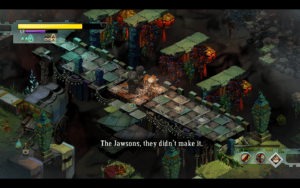
The frozen dead people I encountered made this feeling stronger. The game deliberately spends time on each statue, giving them names and backstories. This made the consequences of the Calamity feel real. These were people with lives, and I felt sad for their deaths. This fueled my desire to find the cores and restore the world more. Taking it further than just rebuilding the Bastion, it made it about giving people back the lives that they lost. So, when the ending comes, rewinding time seems like the optimal choice because it can help these people, but this sentiment was encouraged long before. This shows how “Bastion” makes restoration feel compassionate.
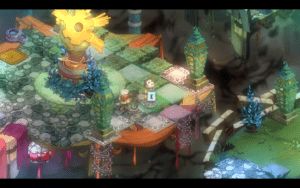
Mitchell’s reading offers more of a perspective on this. He argues that “Bastion” first seems like a power fantasy where the player is “travelling the post-apocalyptic world to set it aright”. This is how I felt while playing the game, where I was trying to respond to the Calamity by returning cores and completing levels. Mitchell continues to argue that at the ending, the game “imposes Evacuation on the player”. I agree that Evacuation is where the game hopes us to go, but I disagree with why that choice is difficult. Restore did not feel like a selfish fantasy of control, but rather actions taken with compassion. The game made me want to control the past because it rewarded my rebuilding and showed me people that I hoped to save.
This is why I disagree with Clarkson’s belief that the ending is a weakness. The ending choice does not clash with prior parts, but rather it reveals what the rest of the game has been doing. Through the rebuilding, Rucks’s reassurance, and the frozen people, “Bastion” makes restoration feel like care. Wanting to restore this world comes from sympathy and encouragement of progress. For me, “Bastion’s” ethical dilemma does not begin with the final choice, but in the hours before it. The game shows that progress can feel good without it actually being good and that the world can look better while the old injustices remain unchanged.
