


‘Why Strong Cards Can Make You Weak’
Unstable Unicorns, it’s a card game created by Ramy Badie and published by TeeTurtle/Unstable Games
It’s a very casual party-game players who like sabotage, humor, and light strategy. The game can supports 2–8 players, and the rules are built around starting with a Baby Unicorn, building a Stable, using Magic, Upgrade, Downgrade, and some Instant/Neigh cards, and trying to be the first player to complete a Unicorn Army. In our game, since we had a larger group, the goal was to reach six unicorns.
I chose this game because our team’s concept also depends on player interaction, temporary trust, and people trying to move toward their own goal while others can interfere. My main takeaway is that Unstable Unicorns is not really about having the strongest card. It is about knowing when to reveal strength. The game turns simple card effects into social threat management: if you look too powerful too early, everyone suddenly remembers you exist.
At the beginning, I was definitely learning while playing. The people around me already knew the game, so I only went through the rules quickly. I understood that everyone starts with one Baby Unicorn, then takes turns drawing and playing cards. There were a lot of card types — Basic Unicorns, Magical Unicorns, Magic cards, Upgrades, Downgrades, and Neigh cards but I did not memorize all of them. Honestly, I did not need to. Because most cards explained their effects directly on the card, so I could read as I played. That is one smart design choice. The game looks chaotic, but the cards make the rules learnable in small pieces.
My first big mistake happened almost immediately. On my first turn, I had a really strong Magical Unicorn. I thought, “Why not play it early?” Its effect let me replace three cards in my hand, which seemed extremely useful because I could search for better cards and build momentum. But then Benjamin used a Magic card to steal my Magical Unicorn. That moment changed how I understood the game. Before that, I thought a strong card was simply an advantage. After that, I realized a strong card is also a public announcement. When I played it, I gave everyone information: I was becoming dangerous.
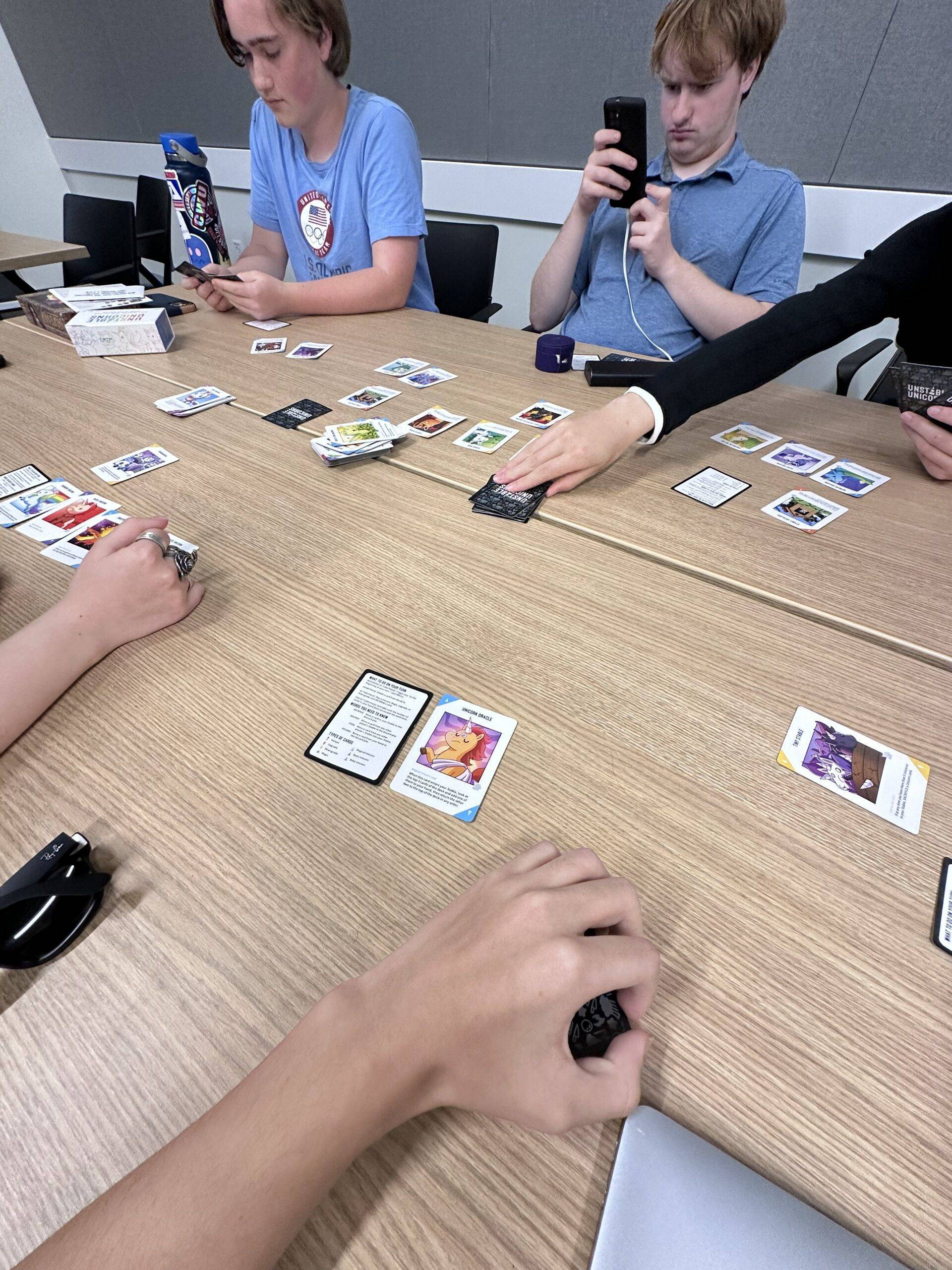 I Just got Neigh by 3 People
This connects to MDA really clearly. The mechanics are simple: draw cards, play cards, steal unicorns, cancel cards with Neigh, and build toward six unicorns. But the dynamics are social. Players start watching who is close to winning, who has a scary effect, and who needs to be stopped. The aesthetic is not just “cute unicorns.” It is playful betrayal. You laugh, but you are also slightly annoyed because your plan can disappear in one turn.
Another moment made this even clearer. I had a card that would make my future cards immune to all Neigh cards. At first, I thought this was one of the strongest cards in the game. If I could make my cards impossible to Neigh, then I could move toward six unicorns much more safely. So I played it pretty early. But the funny part is that this card could still be Neighed before it became active. As soon as I played it, multiple people immediately tried to stop it. They were not just randomly attacking me. They understood the threat. If that card resolved, they would lose one of their main ways to interact with me.
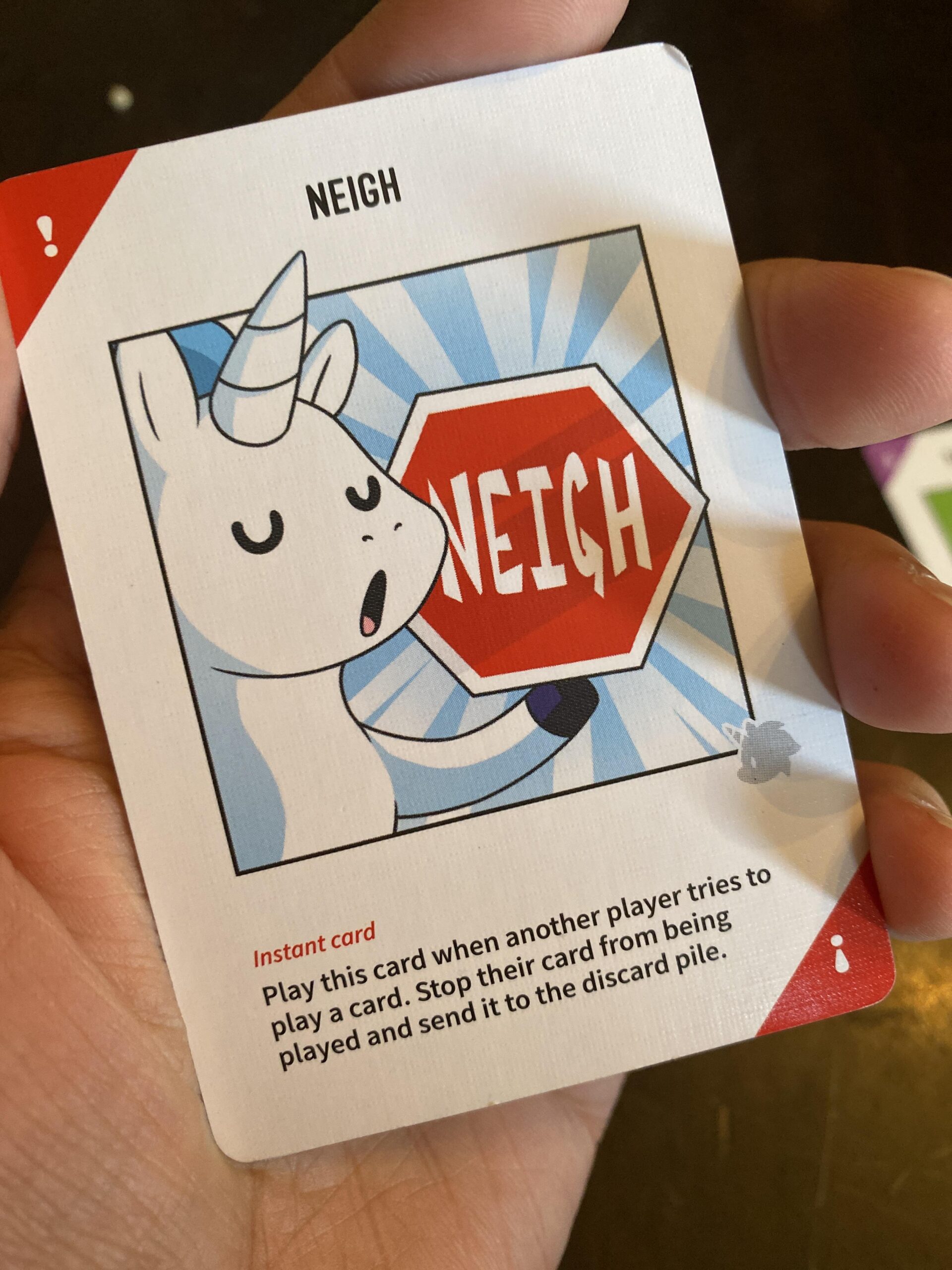
The Neigh Card
That moment shows why counterplay matters. A powerful ability is more fair when other players still have one small window to stop it. If the immunity card could not be Neighed at all, it might feel unfair. But because it could be stopped before activating, the game created a tense table moment where everyone had to decide whether I was worth blocking. This is also where the game’s ethics get interesting. Targeting someone can feel personal, especially for a new player, but the game frames betrayal through silly art and exaggerated card effects, so it usually feels more playful than mean. Still, if one player gets attacked over and over, the fun can turn into frustration.
Later, I changed my strategy. I drew a card where one unicorn would count as two unicorns. This time, I did not want to repeat my earlier mistake. Instead of playing it immediately, I planned to quietly build my Stable to four unicorns, then play the double-counting unicorn next turn and suddenly reach six. That felt much smarter. I was no longer just playing strong cards because I had them. I was hiding my win condition.
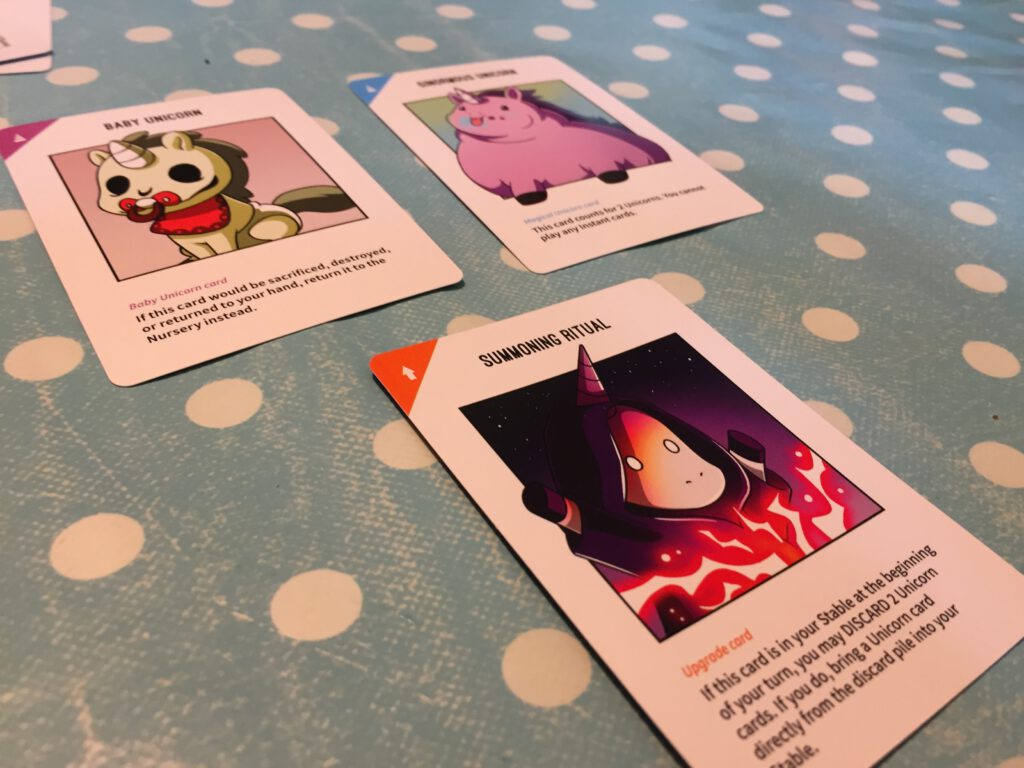
Hidden cards create secret win conditions, even without hidden roles.
Compared with Among Us or Mafia, Unstable Unicorns does not use hidden roles. Nobody is secretly an impostor. But it still has hidden information because each player’s hand is private. Compared with games like Uno or Exploding Kittens, the sabotage feels more strategic because it is tied to visible progress. You are not only attacking because you can; you are attacking because someone’s Stable shows they are close to winning.
For our team’s concept, I think the biggest lesson is that player interaction should not just be added on top of the game. It should come directly from the win condition. Unstable Unicorns works because every public move changes how others judge you. However, I would improve it by giving targeted players slightly more protection or comeback options, especially when the whole table gangs up on one person. Our concept should borrow the readable card effects and the feeling of sudden reversal, but we should be careful not to make sabotage feel like bullying. The best version of this type of game is not when everyone attacks randomly. It is when every attack tells a story about fear, timing, and trust.

