Artistic Statement:
AN ANCIENT EVIL has cursed the town of SHRIKE’S LANDING, transforming its people into monstrous versions of themselves and leaving the once lively town abandoned in fear. Empty streets, forgotten homes, and scattered belongings are all that remain of the lives the townspeople once lived.
While most people have fled, three brave souls — SCOOTER, BUG, and PIP — choose to return to the cursed town together in a desperate attempt to save their neighbors, friends, and family before the curse consumes them completely.
YOUR MISSION is to travel through Shrike’s Landing as a group, gather resource objects, uncover forgotten memories, and confront terrifying monsters that were once ordinary people. However, these monsters cannot simply be defeated through force. To free someone from the curse, players must carefully pay attention to the narrative hints and emotional clues left behind by those they encounter, using meaningful personal belongings to remind each person of who they once were.
YOUR SQUAD must make difficult decisions about which resources to keep, trade, or sacrifice during encounters, before time runs out as you face the inevitable: curses lurking within the walls of your own home…
To the players (aged 16+) who can’t resist make-believe, roleplaying, and story-based puzzles, what will you uncover as you re-enter a town of lost hope? Nostalgia? Fear? Friendship? Lost dreams? Or perhaps, a transformation.
Concept Map:
To get to our final game loop and MVP, we conducted many playtests which lead to our final game loop is shown here. Specifically, Shrike’s Landing is a cooperative narrative board game targeted at people who love make-believe, roleplaying, and puzzles. It is designed for 3 players in which participants travel together through a mysterious town to uncover clues about their cursed family members. Players move across the board using a single character piece and collect resource cards. They also trade with teammates and encounter townspeople whose identities have been transformed to monsters by the curse. During each monster encounter, players discuss the monster’s backstory and deduce which resources best match the individual. They submit their choice to the digital judging system. Successful matches free the monster and reveal clues about the players’ families. However, failed attempts waste valuable resources and create tension due to limited retries. The game encourages collaboration, discussion, deduction, and trial-and-error problem solving as players gradually piece together the town’s history. In the end, players return to their neighborhood where they must use the clues and resources they have gathered to free their family members. Through the game’s mechanics and narratives, the game promotes themes of empathy, teamwork, and personal identity.
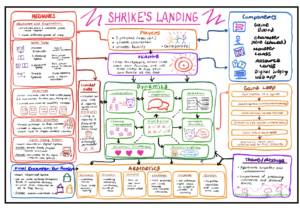 A concept map showing Shrike’s Landing mechanics, dynamics, and aesthetics
Initial Decisions:
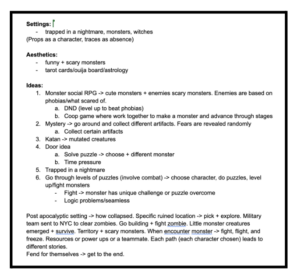 Our first initial brainstorming doc where we discussed key narratives, formal elements, and values
From the beginning, our team wanted to create an interactive monster game centered around exploration, emotional storytelling, and player choice. We talked about many different themes like tarot cards, astrology, Katan, and a nightmare. However, we decided to focus on a post-apocalyptic world because we wanted to make the monsters more cute and came up with a strong narrative surrounding this world.
Specifically, the earliest version of the game focused on child-like monsters navigating a ruined world while encountering dangerous creatures and uncovering fragments of forgotten memories. We were especially interested in creating encounters that felt emotionally meaningful rather than purely combat-focused. Players could respond to monsters through actions like fight, flee, phone-a-friend, or fawn, which reflected different emotional reactions instead of traditional power mechanics. We also wanted the game to feel mysterious and imaginative, where players slowly pieced together the world through objects, encounters, and environmental storytelling.
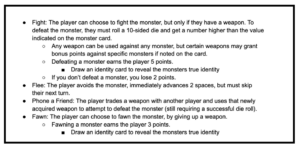 Our first initial design and description of the fight, flee, phone a friend, and fawn mechanics to respond to monsters
Early in the game design process, we talked about how we wanted to incorporate levels and puzzles. Specifically, we talked about how we could add puzzles with these mechanics to effectively defeat monsters. Our team also valued collaboration and discussion based players as we saw success with this dynamic in P1. Even in the earliest brainstorming stages we talked about balancing cooperative and competitive elements so that players would constantly negotiate, strategize, and interpret situations together. For example, we considered cooperative vs competitive levels that players could participate in.
We kept our audience, specifically players interested in make-believe, role-play, and narrative games/puzzles, in mind. Thus, we made sure to consider how these mechanics could ultimately help people invent stories and emotionally invest themselves in fictional worlds. As a result, we made sure to prioritize aesthetics and dynamics over pure mechanics and challenge. We wanted the game to create feelings of curiosity, tension, nostalgia, and emotional attachment, while encouraging social interaction and emergent storytelling between players. The mechanics existed mainly to support those emotional and collaborative experiences rather than to create a highly optimized strategy game.
Scope of the Game:
When defining the initial scope of the project, our team intentionally approached the game as an MVP rather than attempting to fully build every narrative branch and mechanic we imagined. The original concept included many ambitious systems, including branching paths, personalized endings, physical and digital integration, and multiple monster types. However, we recognized early on that the full vision would be difficult to complete within the timeframe of the course. Because of this, our initial goal became understanding and testing the core gameplay loop first. This included exploration, encounters, collecting meaningful objects, making emotional choices, and uncovering identity through play. We wanted to see whether this loop could create the emotional tone and player engagement we envisioned before expanding the system further.
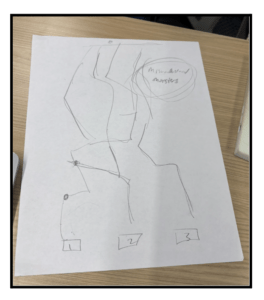 Our first sketch of our board and branching paths
We also used the early version of the game as an opportunity to experiment with tone and setting. During brainstorming, we explored both curse-based and post-apocalyptic ideas before gradually combining them into a world where monsters were transformed remnants of humanity. We were drawn to abandoned towns, ruined childhood spaces, eerie monsters, and fragmented memories because these settings created opportunities for both horror and emotional storytelling. The initial version leaned heavily into atmosphere and experimentation, especially in how cute child monsters contrasted against unsettling environments and themes of loss, memory, and survival. At this stage, the focus was less on polish and replayability and more on discovering whether the world itself felt emotionally compelling and fun for players to explore together.
Playtest 1: Testing Our Idea (May 5)
During our first iteration, the game was much more focused on combat and survival mechanics than narrative. The original concept involved players returning to a cursed town to battle monstrous versions of townspeople and eventually confront corrupted versions of their own families. Players collected weapons, rolled dice to defeat monsters, solved puzzles, traded resources, and gained points through encounters. We experimented with many mechanics early on, including cooperative and competitive rounds, branching paths, trade systems, multiple monster difficulties, plot-twists, riddles, and combat-based encounters with actions like fight, flee, fawn, and “phone a friend.”
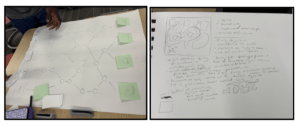 A sketch of our initial board and narrative that we presented to initial playtesters for review/feedback
The early iterations of the map also reflected this heavy emphasis on mechanics. The board was designed around branching combat encounters, resource spaces, monster spaces, and progression systems rather than emotional storytelling. Different paths represented locations like schools, parks, and neighborhoods, but they mainly functioned as gameplay zones where players optimized movement, gathered tools, and defeated monsters for points. Cooperative and competitive phases were separated into different sections of the map, and many of our design discussions focused on balancing trades, puzzles, movement, and difficulty scaling. While these systems were interesting individually, the overall experience began to feel more like a traditional strategy or survival game than the emotional narrative experience we originally hoped to create.
For this playtest, our guiding question/goal was focused on understanding the cohesion of our narrative and our overall game. After initial conversations with 3 other students in 247g and 2 members of the teaching team, some positives were mentioned. Specifically, people said how “they liked the monster idea” and how “they would play a nostalgic, role-playing monster game”.
Most importantly, though, we realized this version of the game felt mechanically overloaded and narratively disconnected. After explaining our narrative, players said “the setting was confusing” and they were “not sure why they were fighting monsters in the first place.” They also stated that “the final remembrance and family reveal at the end of the game seemed disconnected.” Nonetheless, the game felt “disjointed” and players said how “the apocalyptic setting, the identity reveal, and the combat systems all felt like separate ideas rather than one cohesive experience”. Many players also found the fighting mechanics too complicated, especially the layered combat rules, point systems, and puzzle encounters. Instead of encouraging emotional storytelling and discussion, the game often shifted player attention toward optimizing combat and resource management.
Because of this feedback, we decided to move away from these heavy, complicated combat mechanics and focus more heavily on narrative, deduction, and emotional interaction. Rather than treating monsters as enemies to defeat through force, later versions of the game focused more on understanding who they once were and using meaningful objects, clues, and discussion to break the curse. This shift helped align the mechanics, narrative, and emotional tone into a much more cohesive experience.
Playtest 2: Brainstorming (May 6-11) and First Actual Playtest (May 12)
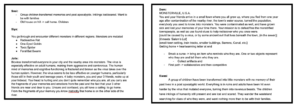 Brainstorming different narratives and combining all ideas into one cohesive story
After realizing our first version was too combat-focused, we returned to the drawing board and spent several days rebuilding the game’s narrative and structure from the ground up. During brainstorming, each team member proposed different ideas involving cursed towns, post-apocalyptic settings, memory loss, and child monsters trying to return home. Eventually, these ideas merged into the first cohesive version of Shrike’s Landing: a cursed town where players must free monstrified townspeople, including their own loved ones, by presenting meaningful personal belongings that remind them of who they once were. This version finally gave the game a stronger emotional foundation and clearer motivations for why players interacted with monsters in the first place. At this stage, the game’s aesthetics focused heavily on eerie nostalgia, emotional mystery, and collaborative imagination. We wanted players to feel like they were wandering through a broken childhood memory filled with unsettling monsters, abandoned neighborhoods, and objects tied to people’s past lives.
This phase also produced the first real version of our rules and our first moderated playtest. To support the narrative of our game better, the mechanics of the game shifted away from direct combat and toward creativity, discussion, and collaborative storytelling. We introduced Scooter as a narrator and game master figure who gave out monster cards and revealed monsters’ identity, determined whether players’ explanations for using resources were convincing enough to break the curse, and tracked the game in the computer to ultimately generate a memorable letter to the players about the game. Players explored the board, collected resources, traded items, and attempted to “free” monsters by explaining why specific objects connected to their former identities.
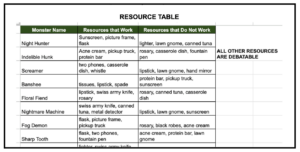 An example of a resource table we gave to Scooter so that they had some guidance on which resources best freed the monsters
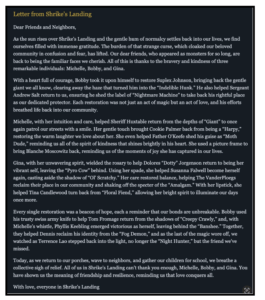 This shows an example of the concluding letter generated by the computer. We included this letter to encourage players to reflect on their journey and achievements throughout the game. By ending with a personalized victory message, we hoped to leave players feeling accomplished and optimistic about the experience.
As a result, of these mechanics, dynamics like narrative deduction where players must infer which resources might relate to a monster based on the monster’s description and backstory emerged. Additionally, players persuaded Scooter about why the resource would remind the monster about their past life.
We also introduced cooperative and competitive play as in the first level, players could work together to free every monster in the town. Only after all monsters were freed, could players proceed to their neighborhoods and homes where players had to work individually. Players also were given some initial descriptions of their character so that they could roleplay as their character.
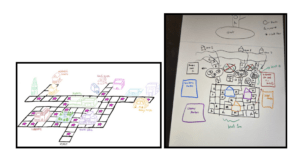
Images of our first playable boards
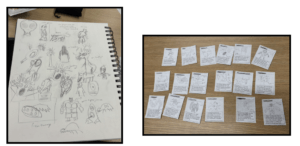 Examples of our first monster cards
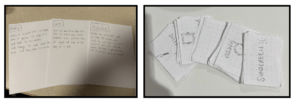
Examples of our first player and resource cards
For this playtest, our primary goal was to evaluate whether revisions to the game’s mechanics and narrative structure improve overall engagement. While playtesting with 3 students in 247g, we received more positive feedback and observations. Specifically, the dynamics that emerged during the first couple of rounds surrounded deduction and persuasion. Players tried convincing Scooter why monsters they encountered should be freed with their resources. Players laughed and engaged heavily during these phases, saying “I liked encountering monsters” and “I enjoyed the premise of the game”.
However, the playtest also revealed several problems, especially in later rounds when engagement decreased. Firstly, players thought that the game lacked challenge and said “we got bored playing after a while because of the lack of randomness in the game.” Players also thought that the GM was “assigned to manage the game” and thought that “they were not having much fun”. The GM added to this, saying “I really did not want to play this game because it felt like I was just controlling it and not participating”. Lastly, players stated how they felt like there was “no clear narrative objective of the game besides going to the next level” and they felt like “it was really hard to get into character and role-play.” Overall, these issues suggest that the game needs stronger sources of challenge and unpredictability, a more engaging role for the GM, and clearer narrative motivations that help players connect with their characters and the story world.
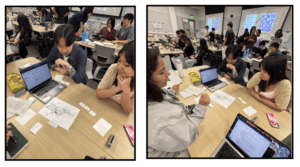 Pictures from our first playtest
Playtest 3: Testing with Teaching Team on May 13
We implemented feedback from the previous playtest, making the game much more focused and system-driven compared to earlier versions. One of the biggest changes we made was refining the way monsters were freed as we removed the role of the GM. Instead of simply presenting one object to free a monster, monsters now required a specific number of resources, and a player had to creatively explain how those objects connected to the monster’s human memories or identity. The other 2 players then judged whether the explanation was convincing enough to break the curse. If players disagreed or they agreed to not free the monster, the outcome shifted into a dice roll system where failed attempts increased the monster’s curse counter, making future attempts more difficult. Mechanically, this created a blend of storytelling, persuasion, randomness, and strategy. At the same time, the aesthetics of the game became much more cohesive, leaning heavily into eerie nostalgia, childhood memories, cursed suburban spaces, and playful but unsettling monster designs.
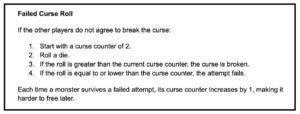 Detailed description of the curse counter mechanic
This stage also introduced much stronger character identity systems to increase roleplay. We created player character cards with specific perks, backstories, and personality prompts to encourage roleplaying and emotional attachment. For example, Michelle’s “Teacher’s Pet” perk made her stronger in the schoolhouse, Bobby’s “Bookworm” perk helped him in the library, and Gina’s “Soap Box” perk strengthened her at town hall encounters. Players answered questions about embarrassing memories, dreams, and interests to further shape their characters during gameplay.
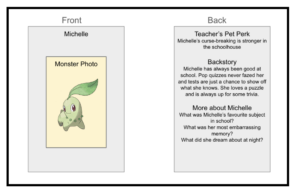 Example of a new character card
Additionally, to address the concern about randomness, we added random events where players swapped resources, lost turns, re-cursed previously freed monsters, or changed the number of resources needed to defeat future monsters. To add challenge, we capped the number of resources players could have at a time to 5. We also added more objectives and incentives by introducing end-of-game awards that recognize different playstyles, such as freeing the most monsters, giving the funniest explanations, and staying most in character.
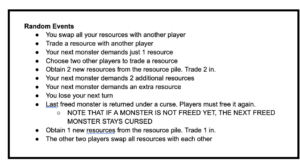 Example of random events
The primary goal of this playtest was to evaluate whether our revised mechanics and narrative successfully encouraged role-playing and player engagement. We playtested this game with one member of our team who had been absent for a while and two members of the teaching team. They noted how they “liked engaging in and enacting roleplay” and how “the objectives helped them do this”. They also mentioned how “the narrative of the game was interesting” and liked the whole goal of “presenting resources to free the monsters”.
However, the game still had some important issues. Firstly, the game still lacked a strong enough central objective. Specifically, players thought that “the counter system was confusing” and that the competitive objective of freeing the most monsters “clashed with the judging system”. Mid playtest, we removed this objective but then players “didn’t understand why they were freeing monsters”.
Players also identified issues with the board layout, stating that there was “no progression towards the neighborhood branches” and that movement through the game felt disconnected from the overall journey. Players also wanted to engage “more with their character through meaningful actions rather than questions”. They expressed a desire for more choices and decision-making opportunities that would help them better connect with and role-play their characters.
Lastly, playtesters stated that the “narrative was engaging” but that “there were too many moving parts to form a cohesive narrative.” They advised us to be intentional about what to include for the purposes of building an effective MVP. This playtest marked an important turning point because it showed us how to combine mechanics, dynamics, and aesthetics into a much more unified emotional experience rather than treating them as separate systems.
 Pictures from the second playtest
Playtest 4: Brainstorming, Revising, and Individual Playtesting (May 14-18)
The goal of playtest 4 was to make the mechanics and narrative more unified. We started with narrowing down the game, reflecting a change in scope and worldbuilding. Firstly, we simplified the board into a square structure because the earlier branching layouts became too difficult to balance and far too ambitious for the project timeline. As a result, we decided to have two levels or two major puzzles, one related to freeing the monsters and the other related to freeing families.
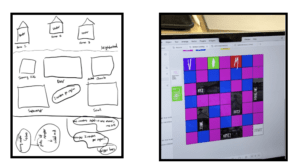 Low-fidelity prototype of the game board alongside its digital Figma design
We worked on having more narrative as to what is the reason behind discovering monsters and how this could lead up to a final family puzzle. Specifically, we introduced the idea of a final level centered around family houses and personalized endings. Throughout gameplay, players gradually uncovered clues by freeing monsters. The clues explained why specific resources were emotionally tied to their family and what kinds of memories or identities could break the curse. The final confrontation no longer felt disconnected from the rest of the game because players had been building toward it the entire time through exploration, lore, and resource collection. We refined the system so that each player only needed to present three resources to free their families from the curse. At this stage, the aesthetics of the game became much darker and more emotionally symbolic, focusing less on generic monsters and more on themes of repression, memory, loneliness, nostalgia, corruption, and emotional attachment within small-town communities. This was also the point where Shrike’s Landing began feeling less like a traditional board game and more like a collaborative narrative horror experience.

An example of hints on the monster cards that were revealed to the player throughout the game
As a result, players chose between three family cards (the Vanderalls, Oakleys, or Moores), each representing different themes and relationships to Shrike’s Landing. The Vanderalls represented wealth, politics, and hidden corruption, the Oakleys represented religious, normal folks, and the Moores represented history, nostalgia, and emotional attachment to the past. Each family card included family lore, a mystery and rumor surrounding them, and some strengths and weaknesses to encourage more roleplay and more engagement with the family cards. Additionally, to improve role play, we added quirks to enact throughout the game to character cards that players could choose from.
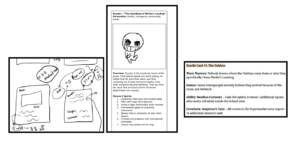 Sketches and examples of the character cards and family cards
Another one of the biggest additions during this stage was the new competition system, where two players competed to free a monster while a third player acted as the judge, deciding which explanation was more convincing. Players were asked to draw resources if they didn’t have any in hand so that they could compete. We tested this mechanic through individual playtesting and found that it created much more discussion, tension, and roleplaying than previous versions. Instead of simply presenting resources to monsters, players now had to persuade another player through storytelling and emotional reasoning. This dramatically improved the game’s dynamics because players naturally debated interpretations of monsters, defended why certain objects mattered, and became more invested in their characters’ personalities and motivations. Specifically, players stated that “the game’s mechanics fit the narrative of the game a lot better now” and that “they had fun competing and judging”.
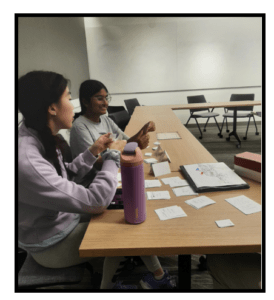 Pictures from individual playtesting
After creating these changes, we refined and simplified the game’s objective to fit the narrative. Specifically, players would focus on earning the most points by freeing monsters, with points determined by the number of resources needed to free each monster card and additional points earned from the final challenge of freeing families. Points for the final challenge were calculated using a predefined rubric created by the designers, along with a computational system that evaluated the submitted resources and displayed the resulting score to the player.
 Example of a rubric given to the computer for evaluation of resources
 A sketch of how the new computational component would work
We continued to include the two other goals (giving the funniest explanations, and staying most in character) as secondary goals to encourage roleplay. We also edited/polished up monster descriptions and random event cards to better fit the overall narrative.
 New random events
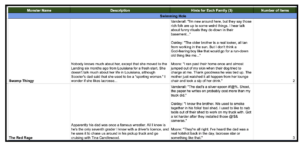
New monster descriptions
 New monster cards
Overall, these playtest and brainstorming sessions represented a major step toward creating a more cohesive experience by aligning the game’s mechanics, objectives, and narrative. In future playtests, we hoped to evaluate whether these changes successfully increase player investment in the story, strengthen role-playing and decision-making, and create a clearer sense of progression and purpose throughout the game.
 Pictures from our brainstorming sessions
Playtest 5: Playtesting with Students in Class on May 19
Playtest 5 was the point where we started identifying the major structural flaws in the game. Specifically, our goal was to see if major changes like the new monster competition system and board lead to smooth gameplay and collaborative, fun storytelling. This playtest consisted of three classmates playing our game.
 Playtesters having fun playing Shrike’s Landing
Players laughed when they encountered monsters and had to come up with convincing arguments. Specifically, they said that they “loved creating fun stories of monsters and characters based on the items and descriptions”. Choosing quirks was a fun process for them. Specifically, they said that they “loved role playing throughout the game” even if they were not the biggest fans of role playing. They also said they “loved listening to other characters’ quirks”. Overall, they thought the game was “a great idea to practice creativity and listening skills”.
Although players enjoyed the role-playing and monster encounters, many completely missed the idea that they were supposed to search for resources connected to their families for the final challenge of freeing their families. Instead, players gravitated toward repeatedly fighting monsters and drawing cards because those actions “were more exciting and rewarding than collecting resources.” Resource spaces felt like “non-events,” and many players reused the same strong resources over and over rather than exploring the board strategically. Players also said that they did not like going to spaces that had events as they are “risk averse and don’t want to land on an event if I don’t know what it is.” Players also said that “the board gave them too much freedom and agency”, which unintentionally reduced tension and decision-making because monsters were too accessible from anywhere on the map. Overall, they said that “the game felt repetitive and felt like there was a lack of scarcity as we received resources whenever we needed them to fight monsters”.
Another major issue was that players said that “there was a lot of mental effort required from players to shape the game”, mainly due to a lack of direction. Not only did players have to dictate and make decisions on where to go, but they had to constantly invent convincing emotional explanations during monster encounters which became exhausting depending on how comfortable players were with improvisation. Players also said that mechanics like rolling dice, strengths and weaknesses, and multiple scoring objectives “did not feel meaningful enough” during gameplay and that “they did not feel connected to them”. Players also said they “ignored family strengths as the advantages/disadvantages were not very meaningful.” Instead, they focused on role-playing as the character and defeating monsters as efficiently as possible.
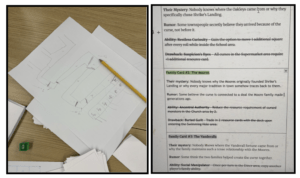 An early sketch of our new board and examples of strengths/weaknesses we removed from family cards
As a result, this playtest led to some of the biggest revisions in the entire project. To enforce people to visit resources, we redesigned the board to represent a path. This created more structure, reduced excessive player agency and mental effort, and added stakes to the die roll. We also removed the requirement that players must encounter and free every monster before attempting the Family Challenge. Additionally, we removed dedicated monster locations, allowing players to encounter monsters more flexibly and making progression through the board feel smoother and less restrictive.
We deleted the family strengths and weaknesses system to reduce the mental load of aspects players needed to improvise. We also decided to simplify or remove multiple objectives to reduce confusion and competing motivations and removed the rule to gain resources when encountering monsters to enforce scarcity.
More broadly, this playtest taught us that the game needed stronger progression in order for resources and clues to feel emotionally valuable rather than secondary to monster encounters. This stage pushed the game away from feeling like a loose improv activity and closer toward a more focused narrative experience with clearer motivations and structure.
Playtest 6: Playtesting with Teaching Team on May 20
Playtest 6 was the point where we realized the biggest issue in the game was the disconnect between the collaborative narrative and the competitive mechanics. The goal of the playtest was to test our new board and to see if it led to more exploration of the board, less player agency, and reduced the mental load on players. We playtested with 2 members of the teaching team and one person from our team.
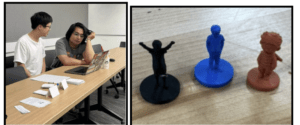 Pictures of playtesters discussing the game and also the initial 3D print player tokens/pieces used during game play
This playtest once again verified that players loved the narrative. Players said how they “thought the quirks were interesting and fun” and “loved the monster pictures and the associated lore”. When asked about the mental load of the game, players said “no I don’t think I am exhausting myself”. This verified the impact of the board, especially as we saw players exploring multiple spaces (like resource and random event spots instead of just monster spots). Players also seemed to have limited agency, as they said “aww I wish I landed on a monster space” or “I really wanted a random event that time!” Overall, people said that “they had fun moving around the board.”
However, changes in the board also revealed problems. Even after revisions, the board felt too large, which made gameplay slow. Players said “it took too long to reach monster encounters”. Thus, we condensed the board size by a loop while keeping all 10 monster spaces, which led to a higher concentration of monsters and increased the likelihood of meeting a monster.
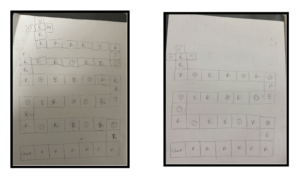 Before and after pictures of the board
Additionally, one of the team members never encountered a monster. As a result, they “felt like a passive participant in the game” as they “always judged the monster encounter”. Thus, they encouraged us to think of how we could reduce the imbalance of the game, perhaps by “having all players move together”. We revised rules so that all players picked up a resource when they landed on the resource space. We also revised the random events to make more sense when a group of people were moving together. Overall, by moving together, players encountered monsters, events, and clues at the same pace, keeping everyone consistently involved in the same narrative moments. This also led us to create more collaborative game play.
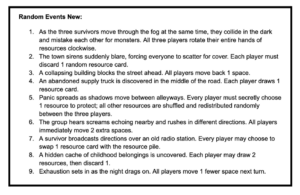 List of revised random events for when players move together
Another major issue was that many players “felt that competing against each other to win monster encounters clashed with the premise of trying to save the townspeople together”. Players naturally wanted to discuss the world, build stories together, and experience the game more like a shared adventure rather than a competitive battle system. Thus, we began exploring systems where players would contribute resources together against monsters rather than directly competing, potentially using a digital scoring component to evaluate how well resources matched monster identities.
Overall, this playtest marked a major philosophical shift for the project because it pushed Shrike’s Landing away from being a competitive role-playing game and closer toward becoming a collaborative narrative horror experience focused on shared storytelling and emotional discovery.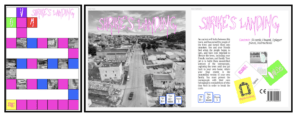
Figma of the board and also the bottom/top of the box

Figma of the character cards
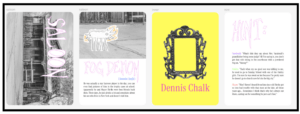
Example of a monster card in Figma
Playtest 7: Individual Brainstorming and Playtesting on May 21
During class, we brainstormed a new mechanic for freeing monsters that better supported collaborative gameplay, since all players now move around the board together. One idea was for each player to independently submit a resource to a computer, which would evaluate its effectiveness and award points. However, this approach encouraged competition and reduced discussion among players.
As a result, we changed the objective and made it more collaborative. Instead of trying to earn the most points, players work together to free monsters and uncover clues needed to break their families’ curse (which became the ultimate goal). To preserve the discussion that players consistently enjoyed in previous playtests, each player proposes a resource they think could free the monster. The group then discusses the options, chooses the best resource together, and submits it to the computer, which determines whether the players succeed.
We also realized that emergent storytelling and collaborative discussion were the strongest parts of the game. Because of this, we did not want the game to be overly difficult or frustrating. The game’s tone had become increasingly lighthearted, with players often creating jokes and funny stories during playtests. To support this experience, we created a list of ten effective resources (out of twenty-five total) for each monster and family, making success achievable while still encouraging discussion and strategic thinking.
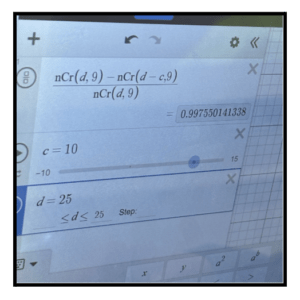 Math we did to determine the likelihood of winning a monster encounter
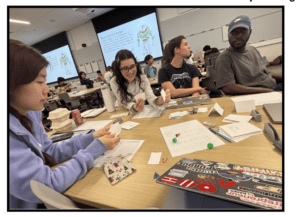 Our team playtesting our new mechanics
Three members of our team playtested our game to see if the gameplay was smooth with these new changes. While playing, members of our team said “that we should remove family descriptions as it’s too much information and increases the amount of stuff we have to remember”. Players also thought that presenting information weakened the mystery surrounding the families. Instead, players should slowly uncover clues about their family identities throughout gameplay by successfully freeing monsters and opening the hidden lore inside monster cards.
 Figma of the revised family cards
Players also mentioned how they thought that “trading resources would be more beneficial instead of random events” as “people discover more information about families”. As a result, we changed the random events to trade spots and allowed for one trade per spot. Players also ran out of resources, especially later in the game, so we added spots where they could pick up 2 resources instead of just 1.
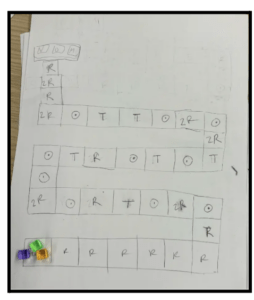 Sketch of the revisions of the board
We used a Wizard-of-Oz approach to test our computer, as one of the team members acted as the computer. When doing this, players stated how they “wanted more feedback from the digital component when resource submissions failed” to understand why their reasoning was wrong. As a result, we added more description as to why the resources failed in the computational component. We also realized players wanted “more agency when fighting monsters”, especially the ability to retry encounters multiple times using different combinations of resources. This led us to add systems where players could attempt to free the same monster up to three times before moving on.
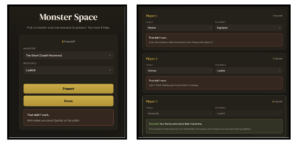 We added explanations for failed monster attempts. Because the family challenge has higher stakes, we included explanations for both successful and unsuccessful resource choices.
More broadly, this stage represented a major refinement of the game’s mechanics, dynamics, and aesthetics. The mechanics became simpler and more collaborative, the dynamics focused more heavily on group discussion and emotional deduction, and the aesthetics leaned fully into collaborative narrative horror built around memory, mystery, and uncovering the hidden history of Shrike’s Landing.
Playtest 8: Playtesting in Class on May 26
During this playtest, we wanted to test out the effectiveness of having a computer as a judge and the complete game play loop. Throughout the game, we encountered a lot of positive feedback. Specifically, we found people strategizing and using deductive reasoning to see which resources they should use now and which ones they should keep later for their families. For example, many people said “I don’t want my resources to be considered now because I want to save it for my family.” They also said “I don’t know if I have the correct resources right now.” On trade spots and throughout the game, we heard people discussing and saying “maybe you should have this resource because it can flee your family.” There was also a lot of discussion when fleeing the monsters as many players said “I think your resource is the best so you should play it.” Overall, we saw that the major dynamics of social deduction, collaboration, discovery and negotiation emerged. Thus, by adding the computer as a judge, we saw that the overall game loop improved.
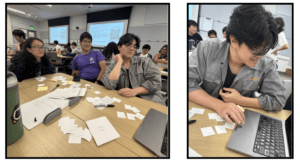 Players having fun playing “Shrike’s Landing”
However, the game still had some issues. Firstly, many people said “I started to enjoy freeing monsters and the game suddenly ended.” Other people added on, saying how the “end was anti-climactic.” As a result, we added some screens that increased anticipation. Specifically, we gave brief explanations about each family in an eerie, dramatic, reflective tone before directly revealing the answer.
 Pictures of the final screens
Players also wished that they were provided more information at the beginning of the game about Shrike’s Landing and wanted “an introduction to the town”. As a result, we constructed a letter that introduced the town’s history and the origins of the curse, helping players better understand the world and their role in freeing the cursed townspeople. It also briefly introduces the major families without revealing key clues, preserving the mystery and making clue discovery more meaningful.
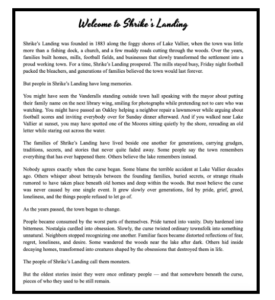 Introductory letter for Shrike’s Landing
Another major piece of feedback was that “it was hard to identify the correct resources from clues” and “that the final family resources were unclear.” As a result, we revised the resources, monster descriptions, and family hints to make it apparent what the resources were. Specifically, each family clue hinted at one of the ten resources that worked for the families. Additionally, each monster description was carefully edited and extended so that players could more easily deduct the correct resources.
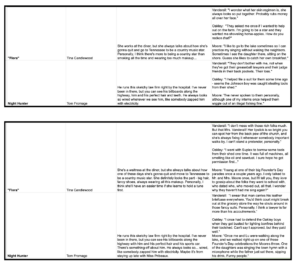 Monster descriptions and hints for families before and after narrative revisions
 These rubrics were used by the computer to evaluate resources. The criteria and decisions were defined by our team.
Polish and Playtesting on May 28
As playtesters were playing the game, we realized that on average they were encountering just 4-5 monsters. Since monster encounters are so important in understanding the families and the resources associated with them, we thought of ways to increase the number of monsters players encountered. We replaced the 4-sided die with a coin toss mechanic that moves players 1 or 2 spaces each turn. This slows player movement, increasing the average number of monster encounters from about 3-5 to 6–8 per game.
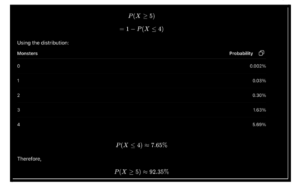 Mathematical calculations when designing the board
We playtested this coin toss mechanic with 3 members of our team. They stated that they “enjoyed encountering more monsters”. However, they stated that “they were running out of resources”. As a result, we added extra resource spaces (often two in a row after several monster spaces) to ensure players regularly gained new resources. We also removed resource spaces from the beginning of the board, as they encouraged excessive resource gathering before any monster encounters and added little value to gameplay.
 Sketch of the board revisions
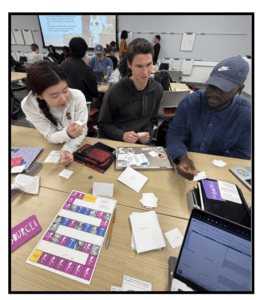 Our team enjoyed playing Shrike’s Landing
Final Playtest
By the final playtest, the game loop was engaging and consistently generated laughter, excitement, and discussion. Players immediately liked the character quirks, joking that they were assigning stereotypes to each other. One player enthusiastically acted out their quirk, laughing, “I have to keep leaning against furniture” (11:23), showing how quickly players immersed themselves in roleplay. Excitement was also evident when players encountered challenges, cheering, “Whoo, we got a monster!” (14:09). The monster descriptions themselves lead to humor, particularly when players discovered a monster was a “druggie” (14:33). Laughter also emerged when players realized that some monsters were inspired by their fellow classmates and instructors (19:35), creating familiarity and inside humor. A lot of fun was because of collaborative problem solving, with players laughing at absurd resource suggestions such as a nametag (17:30) or a petition (24:28), which became a recurring inside joke throughout the session. Players also laughed while reading clues about their families and joking about characters such as Mrs. Vanderall. The humor continued later in the game when players asked, “What is his problem?” while reading another monster’s backstory (40:24). Players also celebrated successes, exclaiming “It works!” and even clapping when a resource successfully freed a monster (52:38). The continuous laughter, joking, cheering, and playful disappointment showed that the game remained entertaining and engaging throughout the entire playtest.
Interesting dynamics also emerged around resource management and long-term strategy. Early on, players treated some resources as disposable, proposing items simply to get rid of them or adding them to the machine without much confidence. One player admitted, “I don’t know how these are relevant but we will see” (29:00), showing that early decisions were more exploratory. However, players quickly began learning from their choices. After joking about the petition, they later realized its value, saying “if you kept the petition it would be good here” (32:06). This shifted the gameplay from random guessing to strategic planning. Players began using deductive reasoning, saying, “I think this one will work less than these two” (35:36), and became more careful about saving resources saying things like “we should keep the bible” (36:06). They also avoided trades when they felt an item might matter later, saying they “need to save this one for the big challenge” (37:45) and not trading because “we all have something for ourselves” (38:00). By the final challenge, players were actively debating choices, asking “Why did you pick it?” and responding to the computer’s descriptions with “Yes it [the resource] does” (58:06), before celebrating with applause (58:44). Overall people said that the game “was good. It was interesting” (59:06) and laughing about the game even when telling feedback.
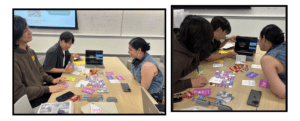 Players had a lot of fun playing the final version of Shrike’s Landing
Players spent around ten minutes reading the rules and introductory letter, often using dramatic voices that reflected the game’s tone. The color-coding in the rules helped players quickly identify corresponding cards during setup and gameplay. Players generally learned the mechanics as they played, asking questions such as “how many tries do we have?” before figuring out the answer themselves (18:32). However, feedback suggested that onboarding could be better, suggesting making the introductory letter shorter (1:06:06).
Players also noted that roleplaying emerged naturally during the first half of the game, with players saying things like “I’m now going to roll my eyes at dramatic moments” (16:13) and speaking in motivational phrases (23:11). However, this behavior gradually faded, leading one player to suggest that it would be “nice if [the game] had incentive to roleplay” (1:02:11).
Players also felt that resource collection became repetitive over time. They noted there were “too many resource spots and not enough cards” (59:55), and that having to repeatedly “cycle through resource cards was a bit boring” (1:02:50). Because resources remained useful across many monsters, drawing new resources became less meaningful (1:03:00), and some players became focused on finishing the game quickly after collecting enough clues, saying they were “hoping tails to go fast” (1:03:32). This could be improved by adding more resources and monster cards, reducing the size of the board, or adding some more engaging components at the end. Someone additionally suggested removing completed monsters from the computer interface (35:48).
Players also commented that the final family challenge was “a lot easier than expected” because multiple resources could successfully free a family member (1:04:20). However, this was an intentional design choice and was also why players had multiple opportunities to free monsters and families. Across our playtests, the most enjoyable moments came from players joking, roleplaying, and discussing possible solutions together. We wanted collaboration and emergent storytelling to be the focus of the game rather than winning or losing. Making the final challenge too difficult could create frustration and detract from the lighthearted atmosphere that players consistently enjoyed. By allowing multiple successful solutions, we ensured the game ended on a positive, collaborative note.
In the end, we achieved the game loop we intended. Players “figured out the narrative” (1:02:32) and could “tell which resources they needed” (1:01:29). Our playtesters ended with saying that “individual to group movement is so good because this is now truly a collaborative game” (1:05:25).
Future Additions Beyond a MVP
One aspect we iterated on a lot throughout the process of developing Shrike’s Landing was the board. Based on the final playtest, we would reduce the number of resource spots so that people would not get bored seeing the same resources over and over again. One interesting element we would have loved to explore is adding more paths users can choose from in certain locations. Specifically, they could choose if they want a path that is “monster heavy”, “resource heavy”, or “the quickest”. This could have allowed for more player agency while still having a more controlled board. Also, it would have been interesting to explore how players could move using non-random tactics like a die roll. This could be driven through resource management, specifically that players can move x amount of spaces if they give up x amount of resources.
Roleplay could be used as an incentive to get more clues, especially if the game was harder. This could be done by reducing the number of resources that work for each monster and family (going from 10 to 5). This would incentivize roleplay for clues/additional resources. Specifically, if another player notices that a player is acting out quirks, then the player doing the quirks can get a resource card or a clue about their family. Additionally, monster descriptions could include clues about quirks that relate to certain characters. Successfully freeing a monster could consist of players acting out relevant character quirks and identifying the correct resource associated with that monster.
Lastly, we could have added some more engaging mechanical and narrative components to make the game more interesting as it progressed. One way is by revising the narrative and adding more resources. Additionally, a player in the final playtest suggested to “reveal the introductory letter more throughout the game and just introduce the curse” (1:06:30). Thus, we could have made the game longer, with some monsters revealing clues about the town and others revealing clues about the families. The final challenge could then include the family challenge and a town challenge where players need to solve a riddle about the town based on clues. Specifically, players would need to work together to solve the riddle, piecing together clues they each obtained about their family and town. Adding random event spaces could increase challenge and tension by disrupting players’ plans, such as redistributing resources or forcing unexpected strategy changes.
MDA/Final Game Analysis
Shrike’s Landing is designed for players aged 16+ due to mature content like cursing and risque innuendos like references to prostitution. Specifically, it is designed for players who enjoy collaborative storytelling, mystery solving, roleplaying, and narrative-driven games. More specifically, the game appeals to players who enjoy uncovering lore, interpreting clues, and working together to solve problems rather than competing against one another. Throughout our playtesting process, we discovered that players were consistently most engaged when discussing monster identities, sharing theories, and collaboratively building stories about the town. Because of this, the final version of the game shifted away from competition and individual progression toward a shared adventure where all players travel together and collectively attempt to solve puzzles from clues to save the cursed townspeople of Shrike’s Landing.
The mechanics of the final game were intentionally simplified to support this audience. Players move together as a single party through a condensed board filled with monster encounters, resource spaces, clues, and story events. As players explore, they collect limited resources and use them to free monsters from the curse. Each monster encounter requires players to collaboratively decide which resources to contribute before submitting them to the digital judging system. Players may attempt encounters multiple times with different resource combinations, encouraging experimentation and discussion. Successfully freeing monsters rewards players with new lore and clues that gradually reveal the history of the town and the truth behind their chosen family. These mechanics create a clear gameplay loop of exploration, resource collection, monster encounters, and narrative discovery.
These mechanics create several important dynamics. First, the game encourages discussion and negotiation because resources are limited and players must collectively decide how to use them. Second, the game creates emotional deduction as players attempt to understand what kinds of objects might reconnect a monster with its former identity. Third, the game creates mystery and discovery because clues are distributed gradually throughout play rather than explained at the beginning. Finally, the game generates tension because resources are scarce and players have a limited number of attempts to successfully free each monster. During playtesting, these dynamics consistently produced the most engagement as players debated theories, interpreted clues, and worked together to solve encounters.
These dynamics ultimately support the game’s primary aesthetics of fellowship, discovery, narrative, and challenge. Fellowship emerges because players share every major decision and experience the story together as a group. Discovery emerges as players slowly uncover hidden information about the town, the monsters, and their family. Emergent narrative emerges because every monster encounter reveals additional lore and encourages players to construct meaning from clues and memories. Challenge emerges through deduction and deciding which items are worth risking during encounters. Unlike many traditional board games where challenge comes primarily from defeating opponents and hard puzzles, challenge in Shrike’s Landing comes from interpretation, communication, and collaborative problem solving.
The tone of the game is best described as collaborative narrative horror. While the setting contains monsters, curses, abandoned homes, and unsettling mysteries, the game is not focused on fear through combat or violence. Instead, the horror comes from forgotten memories, lost identities, and the emotional tragedy of seeing ordinary townspeople transformed into monsters. This creates a balance between mystery, melancholy, nostalgia, and hope. Players are encouraged not only to survive the town but to understand it and restore the people trapped within it.
In terms of formal elements and player types, Shrike’s Landing supports several different styles of play, beyond our target group of people who enjoy role play/make-believe and narrative. Narrative players are encouraged to engage with the lore, roleplay their characters, and interpret the stories hidden throughout the town. Social players enjoy discussing clues, negotiating resource use, and building theories together. Analytical players are challenged to identify patterns between resources, monsters, and family clues in order to make more effective decisions. Because success depends on group discussion rather than individual skill alone, players with different strengths can meaningfully contribute throughout the experience.
The final game loop reinforces these experiences. Players explore the town together, collect resources, encounter monsters, discuss possible solutions, and gradually uncover clues about their chosen family. Each monster that is successfully freed reveals a new piece of lore, helping players better understand their family’s history, values, and connection to the curse. This information becomes increasingly important as the game progresses because, once players reach their family house at the end of the game, they must use all of the clues they have collected to collectively determine which resources are most meaningful to their family. The final encounter therefore acts as the culmination of everything learned throughout the game, requiring players to synthesize clues, debate interpretations, and make a final collaborative decision. This creates a gameplay loop where narrative discovery directly informs strategic decision making, making progression through the story inseparable from progression toward victory and creating a cohesive relationship between mechanics, dynamics, and aesthetics.
Ultimately, the final version of Shrike’s Landing reflects the most important lesson from our playtesting process: the strongest part of the game was never combat, challenge, or competition, but collaborative storytelling and emotional discovery. Every major design revision moved the game closer toward these goals. The result is a collaborative narrative horror experience where players work together to uncover hidden histories, restore lost identities, and save the people of Shrike’s Landing.
Ethical Considerations
One of the biggest ethical considerations throughout our design process was how we wanted players to think about the monsters they encountered. In many games, monsters exist primarily as enemies to defeat. However, the core message of Shrike’s Landing is that the monsters were once ordinary people who have lost themselves to the curse. Because of this, we intentionally moved away from combat-focused mechanics and toward systems centered on understanding, empathy, and restoration. Rather than rewarding players for defeating monsters through force, the game rewards players for uncovering clues, interpreting memories, and helping monsters reconnect with their former identities. We hope players leave the game with the idea that understanding someone is often more meaningful than simply overcoming them.
Another important ethical consideration involved collaboration. Earlier versions of the game included competitive systems where players competed against one another to free monsters. However, during playtesting, we noticed that competition often conflicted with the emotional themes of the game. Since the narrative centers on saving a town together, competing for rewards or recognition felt disconnected from the story we wanted to tell. As a result, we redesigned the game so that players travel together, make decisions together, and collectively determine how to use their resources. This encourages communication, listening, and shared problem-solving rather than individual achievement. We wanted the game’s mechanics to reinforce the idea that communities overcome challenges through cooperation rather than isolation.
We also carefully considered how family relationships and personal memories were represented throughout the game. Because the final mystery revolves around uncovering information about a player’s chosen family, there was a risk of introducing themes that were overly personal, upsetting, or uncomfortable. To address this, we intentionally kept family stories fictional and focused on broad themes such as belonging, nostalgia, identity, regret, and memory rather than topics that might pressure players to discuss their own personal experiences. Similarly, clues and monster stories were written to invite interpretation without requiring players to reveal sensitive information about themselves. This allowed players to engage emotionally with the narrative while maintaining control over their own level of personal disclosure.
Ultimately, we hope players leave Shrike’s Landing with a greater appreciation for empathy, collaboration, and the importance of preserving memories and personal histories. The game’s central message is that people are more than what they appear to be on the surface, and that understanding someone’s story can be the key to helping them find their way back to themselves.
Accessibility
Throughout the design process, we considered how to make Shrike’s Landing accessible to players with different abilities and play styles. The game uses a primarily black and white visual design, reducing reliance on color as a gameplay mechanic and making information easier to distinguish for players with color vision deficiencies. Important information is communicated through text, symbols, illustrations, and narrative clues rather than color alone. In addition, all players control a single shared character piece that moves throughout the board. Because movement is collective rather than individual, players can easily assist one another with navigating the game, reducing the physical and visual demands often associated with tracking multiple pieces and positions.
Additionally, we incorporated extensive feedback from Checkpoint 3 to improve accessibility and usability. We increased the size of the cards to make text easier to read, added visual reminders such as displaying family names on both sides of family cards, filled in blank letters with the background color, and improved text readability through better color choices and higher contrast. For example, we replaced low-contrast color combinations, such as light pink text on white backgrounds, with more accessible alternatives. We also redesigned the board using images of Shrike’s Landing in the background connected by a clear path, making navigation more intuitive. Finally, we rewrote and reorganized the rules into a clear visual hierarchy (introduction, game setup, and gameplay) so players could easily learn and understand the game.
We also designed the game so that participation is primarily based on contributing ideas rather than performing physical actions, which relates more to our target audience of people who enjoy make-believe, role playing, and puzzles. Players engage by discussing clues, interpreting monster lore, and deciding which resources should be used during encounters. Since all cards, clues, and narrative information can be read aloud to the group, players do not need to rely solely on reading small text themselves to participate. The collaborative structure encourages players to support one another by sharing observations and theories, allowing individuals with different strengths and levels of experience to meaningfully contribute to the game. As a result, the mystery-solving and storytelling experience remains accessible to a wider range of players while reinforcing the game’s core themes of cooperation and collective discovery.
Shrike’s Landing Pictures
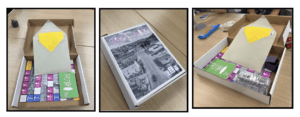 Layout of the game
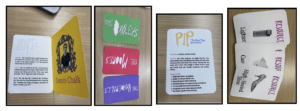 Monster, family, character, and resource cards
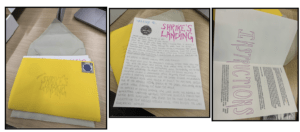
The letter and instructions
Print-n-Play: https://drive.google.com/drive/folders/1qPyoJVthB8LbZ2TgSN82lOydgnRzVvdI?usp=sharing
Print-n-Play Instructions:
*all prints should be done in color!!*
- The top and bottom of the box can be printed as is or printed on a game box
- “Board” can also be printed as is
- The “pamphlet side 1” file is the outer cover for the instructions and can be printed as is
- The “instructions inner” can be printed single-sided, folded along the midline, and glued together to form the booklet
- “Monsters,” “resources,” and “fam & characters” should be printed double sided, cut along their borders, and for the monster cards folded down the midline of each card to form small booklets
- To set up the game, follow the instructions at the beginning of the instruction manual
Link to Digital Component: https://siyagoel.github.io/247g_p2/
Figma: figma.com/design/JlUAMhoYYlzfoVMkPFHUNx/Shrike-s-Landing?node-id=0-1&t=HWvRw1v8FoNRWgMg-0
Final Playtest: https://youtu.be/3KytjjAFxvw
Extra Credit Additions: We added explanations showing how Shrike’s Landing promotes ethical and accessible gameplay. The game was highly polished, featuring cardstock cards, rounded corners, and 3D-printed components. Additionally, we effectively integrated both analog and digital elements to create a cohesive player experience.