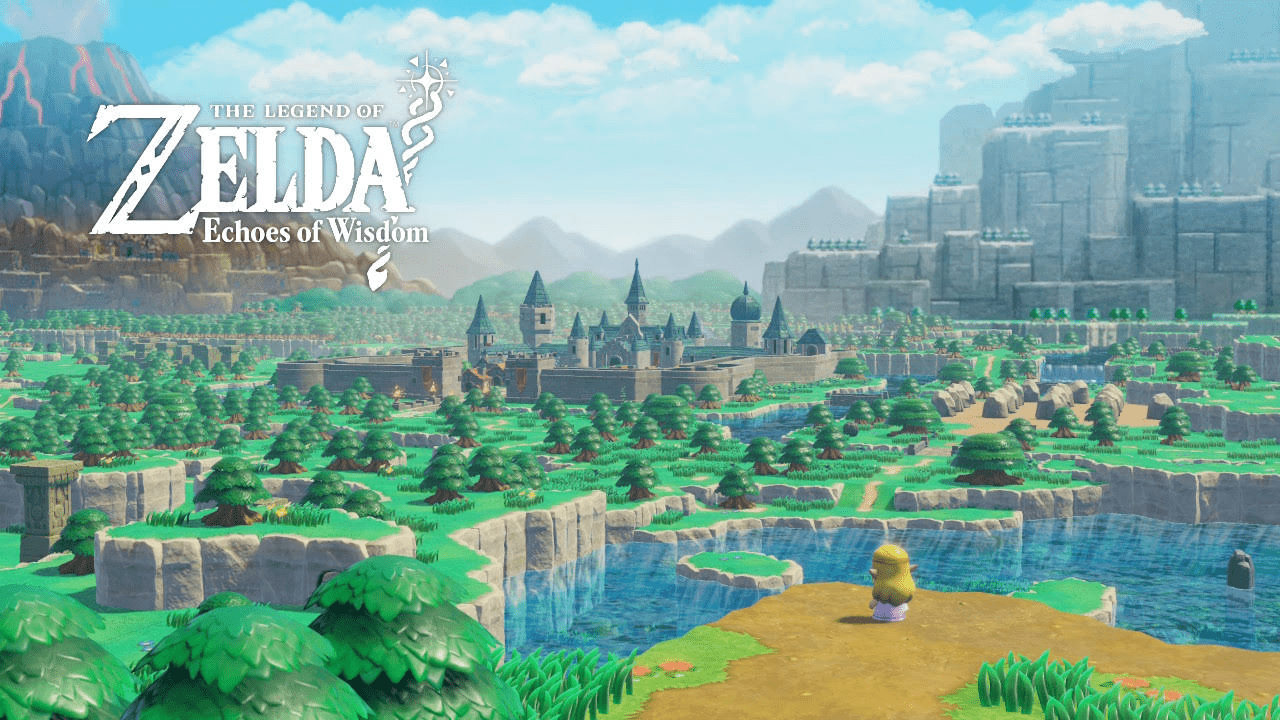
In the summer of 2024, Nintendo announced that they had created the impossible: a Zelda game… featuring Zelda.
Yes, the rumors were true; their upcoming Nintendo Switch title, The Legend of Zelda: Echoes of Wisdom, would be the first mainline game in series history to actually feature its titular character in the primary playable role. This news was a cause for celebration for many Zelda fans, particularly those in the games’ target audience of puzzle-focused, dungeon-crawling adventure enjoyers. However, when I first learned about it, I was admittedly very skeptical. I was excited by the idea of a new story centered around Princess Zelda, but I was worried that it would be relegated to the status of a quirky, unserious spinoff game of negligible importance, much like the now-infamous Super Princess Peach.
However, after finally playing through a good chunk of it earlier this week, I found that those initial fears were soon assuaged. For all intents and purposes, Echoes of Wisdom is a definitive, fully-fledged Zelda game: one that provides plenty of excellent gameplay and narrative moments. As an exercise in gaming feminism, however, keeping in mind Shira Chess’s arguments in her book Play Like a Feminist… I found it a success in some ways and a failure in others. Despite the historic step it takes forward for the Zelda series, The Legend of Zelda: Echoes of Wisdom seems unwilling to give Princess Zelda the representation that she deserves, often limiting both her abilities as a protagonist and her agency over “her own story.”
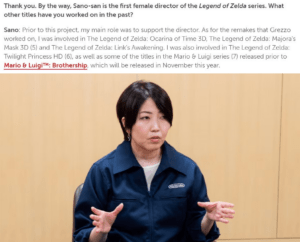
To start, it’s worth at least acknowledging the game’s overall historical significance. Throughout 37 years of Zelda games, Princess Zelda has usually embodied the classic trope of the powerless damsel in distress. In most games, she simply gets captured by Ganon, the powerful male antagonist, and then saved by Link, the courageous male protagonist. Echoes of Wisdom overturns those longstanding gendered conventions by giving Zelda herself the task of banishing evil and saving Hyrule. In addition, the game’s director, Tomomi Sano, was the first woman to ever direct a Zelda game: a meaningful shift in not only who gets to feature in Zelda stories, but who gets to tell those stories as well.
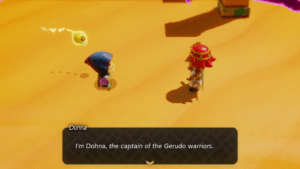
Unfortunately, Echoes of Wisdom neglects to capitalize on its own gravity. It is not truthfully a game about Zelda: not extensively or authentically. Rather than giving Zelda some unique character development, the game seems to slot her into the position usually occupied by Link with minimal changes. She rarely talks or emotes throughout the game; she usually wears Link’s cloak to disguise her true identity; and she doesn’t showcase much of a personality in her interactions with NPCs. At times, it feels like Zelda has had all the aspects of her interiority—thoughts, feelings, and motivations, et cetera—stripped away from her: so much so that the player might sometimes forget that they are not, in fact, playing an ordinary Zelda game, ordinarily, as Link. To me, playing this game “like a feminist” meant specifically noticing the gap between the game’s stated premise in theory (Zelda’s game) and its actual design in practice (Link’s game with Zelda’s face). Indeed, it is the opposite of what Chess argues for in Play Like a Feminist, as simply fitting Zelda into Link’s blank-slate template rather than building a protagonist with genuine interiority may reflect the default presumption of a masculine player.
Additionally, much of the gameplay in Echoes of Wisdom actively pulls Zelda (and the player as well) out of the action. The primary game mechanics all come from a magical item called the Tri Rod, which Zelda uses to create copies of objects or monsters that she encounters. It does make for some creative puzzles and challenges, but it also means that in most combat scenarios, Zelda mostly just sits back and lets others do the fighting for her.
She does occasionally get to engage more directly with enemies using a sword and shield, but that requires the use of a temporary ability that, effectively, “turns her into Link.”
As such, the combat system in Echoes of Wisdom mostly puts Zelda on the backline, only letting her confront foes directly when she adopts this explicitly masculine-coded “special form.” Combat is still fun and novel enough (it’s like playing a summoner class in a TTRPG), but it makes for a passive gameplay dynamic that undermines Zelda’s capabilities. On top of that, it conflicts with Chess’s argument that feminist game mechanics should actively build players’ capacity for agency rather than withhold it. Longtime Zelda fans who have played games like Hyrule Warriors (shown below), in which Zelda takes full command of the battlefield with her own godlike magical abilities, may find the Echoes of Wisdom approach disappointing and even uncharacteristic.
Personally, I was quite torn after playing through Echoes of Wisdom. It earns its rightful place in the Zelda series from a pure gameplay perspective, maintaining and elevating the Discovery, Fantasy, and Narrative aesthetics that these games are famous for. However, it also feels like a missed opportunity to give many players what they really wanted: the experience of truly being Princess Zelda, not just “playing as her” in a surface-level way. Ultimately, Echoes of Wisdom could have done with more actively involved feminist perspectives: for instance, by utilizing Zelda’s previously established narrative characterization as a wise, talented protector of her realm, or by redesigning the gameplay mechanics to showcase her full strength and aptitude. At the end of the day, it is still a very good Zelda game, but not a very good “(Princess) Zelda” game.