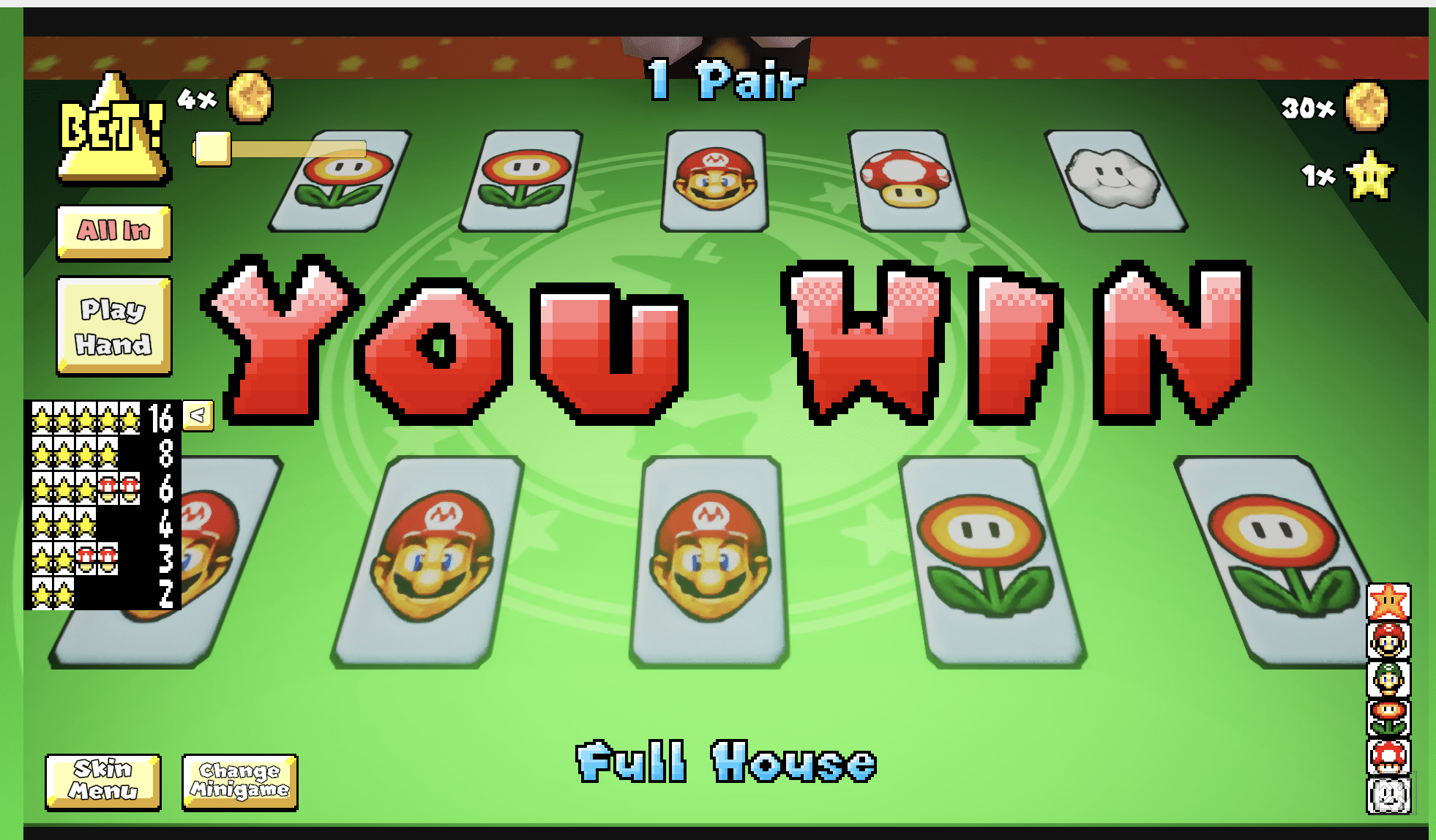
Luigi’s Picture Poker is a single-player digital game that combines the game of chance, Poker, with cartoony geared-for-kids graphics of the Mario franchise, which is always a great idea. The version I played was by Marcy4000 on Itch.io, and I played this game on a Mac laptop. This Itch.io version is a recreation of the Luigi’s Picture Poker mini game found in Super Mario 64 DS/New Super Mario Bros, which are games by Nintendo for the Nintendo DS/Nintendo 64 respectively.
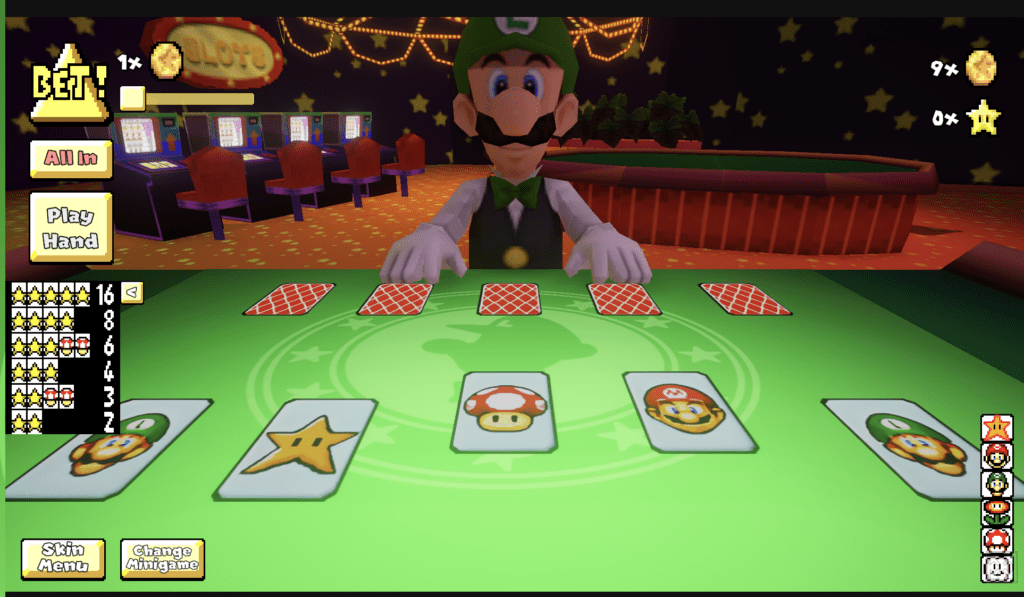
Picture Poker is a very simplified version of Poker, featuring symbols like Stars and Flowers instead of the numbers and shapes of a regular playing card deck, and compressing the betting process into one single round: you are given 5 random cards, you may choose to “give up” any number of cards and be given new random cards, and you may bet any number of coins you have (see Fig. 1). The round outcomes are winning (you beat Luigi’s hand), losing, or drawing. The overarching objective of the game may be to reach the integer bit limit in number of coins, as seen from screenshots of people in the comments section.
As someone who has played a good amount of Poker during my college life, Picture Poker has less of a chance for putting people at risk for addiction. The simple fact that no real money is involved changes the dynamics of the game, as the adrenaline high or excitement you get while playing Picture Poker has a lower ceiling in comparison to when you narrowly win a big pot in Poker, leading to more apathy while playing Picture Poker as you are not as attached to the resource you are betting. You can just randomly go all-in, why not? The differences in mechanics between the two games also leads to different primary types of fun. The mechanics that Picture Poker strips away are the ones that create the aesthetic of “challenge” in real Poker: the social deception element of “bluffing”, the bet sizing and multiple betting rounds, and the fact that very skilled players can roughly track percentages of winning throughout the game because of how studied Poker is and the known number of cards in the deck. In fact, Picture Poker is more akin to a slot machine game than Poker, based more on purely chance, leading to a primary aesthetic of submission.
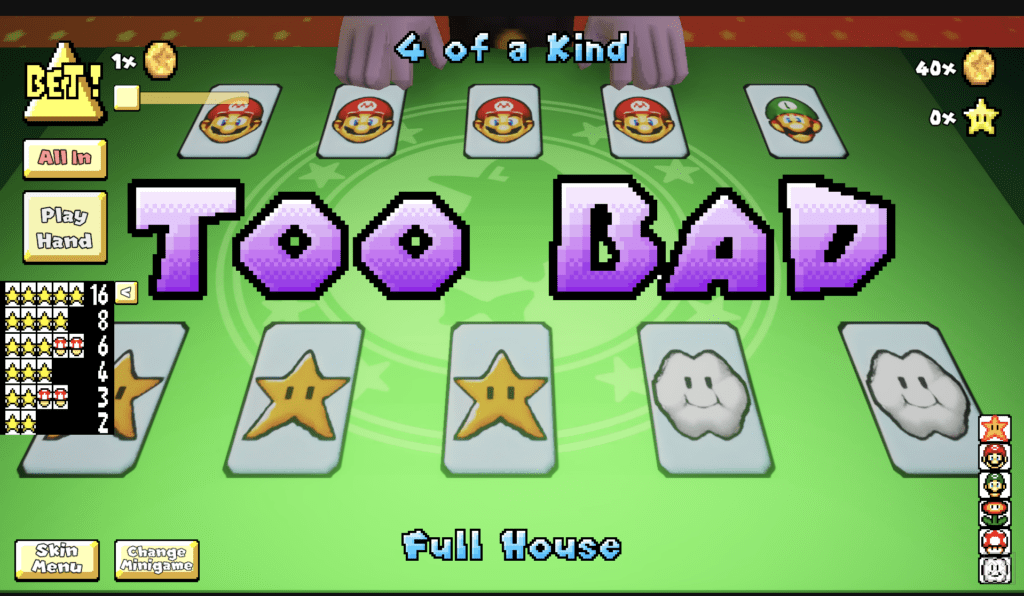
In the book Designing Chance, Addiction By Design, the author touches on methods slot machines use to get people addicted to them, such as purposeful obfuscation and near misses. Picture Poker uses these concepts to keep players engaged: purposeful obfuscation in that you have no idea your actual percent changes of winning as you don’t even know the number of cards in the deck, and near misses in that you think you have a great hand before Luigi hits you with the Big Luigi special (Fig. 2). The most important principle Picture Poker employs however is the illusion of control. Addiction By Design stated that when players had a larger perception of controlling the slot machine (buttons to “stop” the rolls), they would play for significantly longer. Picture Poker offers that same illusion of control by letting you “discard” any undesirable cards, though there’s nothing stopping the game from nudging Luigi’s hand to just be slightly better than yours after the fact.
(Though, Poker may also be employing the same tactics under the hood, as the agency players feel through these different mechanics of control hold not a candle to Lady Luck just handing a randomly unbeatable hand to any other player during the game.)

Another reason Picture Poker isn’t as addictive/harmful is that once you reach your overarching objective (reaching the integer bit limit or buying Wario Deck skin), there’s no real incentive to keep playing after the fact, while in Poker you can really go on for forever. However, that is not to say that Picture Poker is not harmful at all.
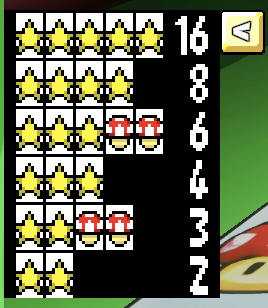
Even though it’s a much more simplified version of Poker, it still takes place in a kid’s game and teaches them the PRINCIPLES of the game’s rules. One of the reasons people may not be interested in Poker is because of the steep learning curve, as it takes a while for beginners to learn the rules as well as the context for what exactly moves do (that’s actually why total beginners can sometimes beat hardened Poker pros, because they don’t follow the “theory”). By teaching these basic principles of Poker to kids like hand strength and how some “symbols” are stronger than others (Fig. 3 and Fig. 4), it may serve as a way to make Poker more accessible to these players later in life, which may not be a good thing.
As for permissibility, I think it’s morally permissible to use chance in games when the chance isn’t explicitly used to manipulate players into playing longer, like live service games or slot machines. As an indie designer, I wouldn’t use these “tactics”, but companies that need to continuously make money may use these “undead” live service games and tactics to squeeze money out of players over time, which I believe is simultaneously morally reprehensible, makes games worse as companies spend less time on what makes the actual game fun, but is also a symptom of the capitalistic world we’re living in.