


The Penrose triangle appears to be a solid loop whose three beams connect consistently in 3D space. In real life, even a slight shift of perspective reveals its impossibility; however, Monument Valley beautifully plays on 2D, screen-based digital games to turn optical illusions into a character’s reality.
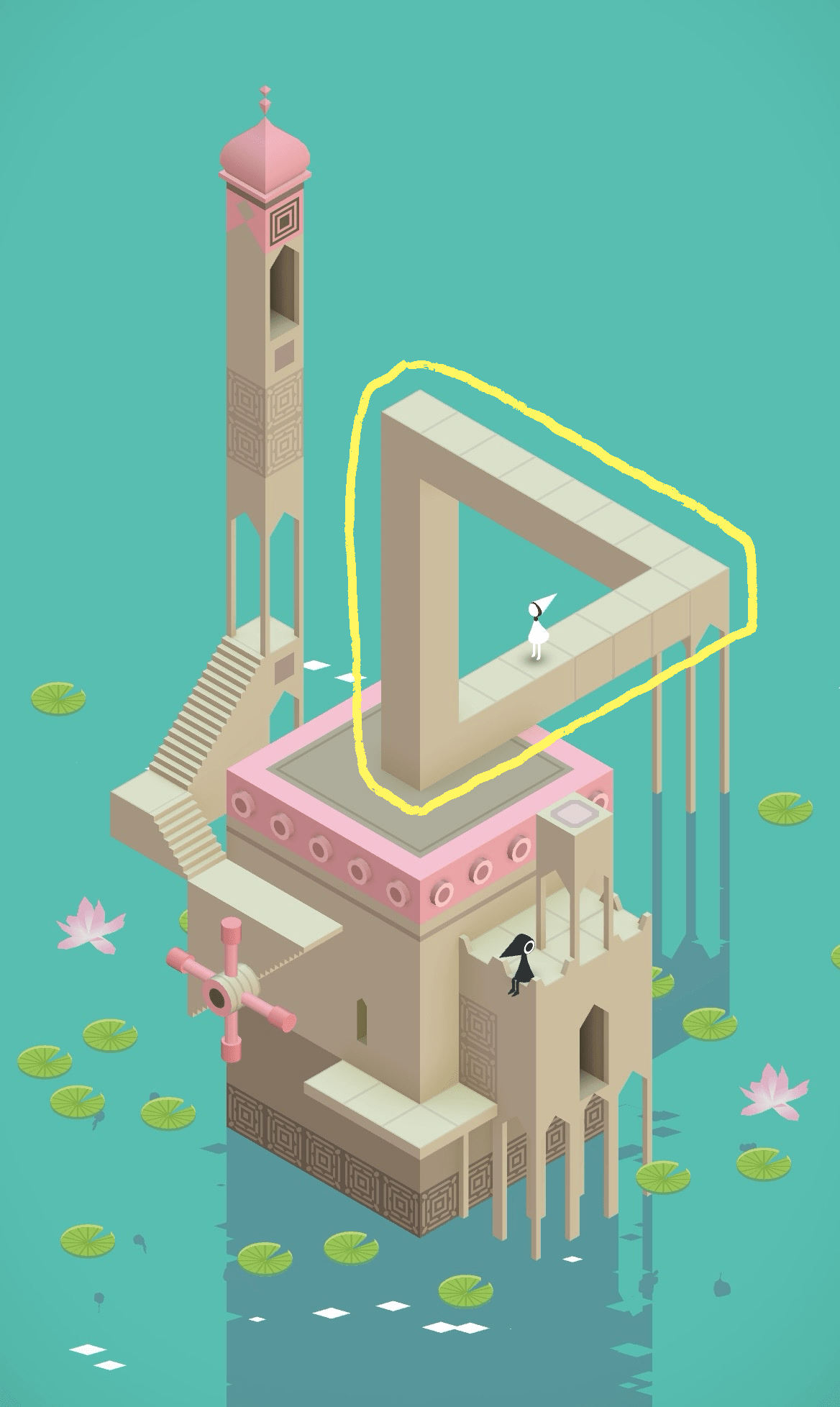
Monument Valley is a single-player, indie puzzle game by Ustwo Games on mobile, PC, and numerous consoles. Well-renowned for its simplistic yet distinctive isometric art style, gamers and non-gamers of all ages enjoy this scenic, relaxing experience—though the puzzles are suitable for those 11 and up, able to make sense of controls across levels. The mechanics in Monument Valley contribute to a slow-paced, siloed experience focused on one disparate puzzle at a time, leading to incremental, leisurely learning of the world’s peculiar puzzles and the story behind our player character, Ida.
Monument Valley crafts unhurried and comforting levels through core mechanics that only allow access to the current puzzle, even within one level. Each monument, a series of ever-shifting puzzles, serves as the formal element of boundaries, delineating where the player can physically go—the first impression of these intricate intertwined structures can be overwhelming. If the player had access to the entire level, it can muddle the player’s focus and understanding of the “objective” formal element. To help direct the viewer’s eye toward the goal, the game uses simple color-identical shading and parallel linear paths at different elevations.
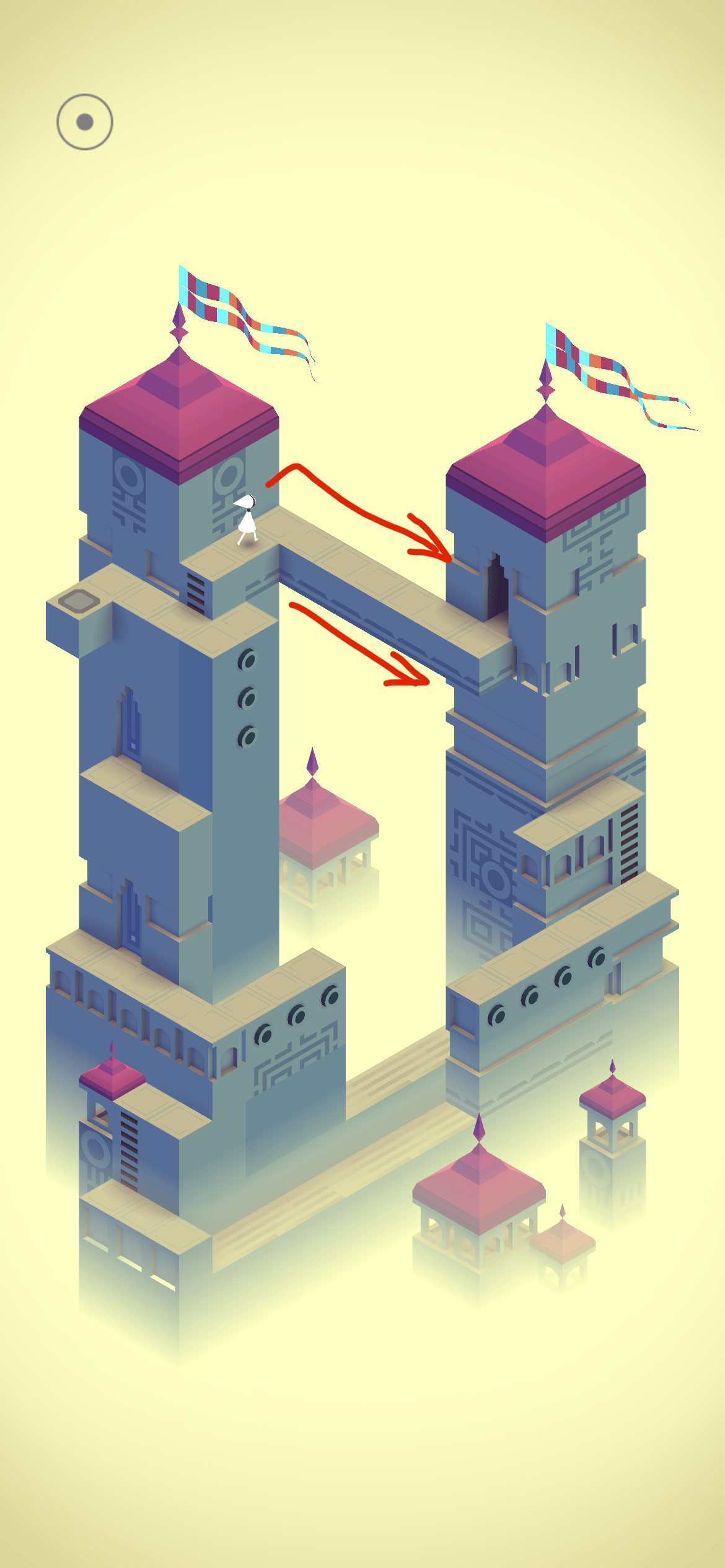
In addition to player-adjustable platforms, Monument Valley separates each puzzle by making it physically impossible to proceed to the next unless the current one is solved. For instance, in the images below, the platform on the right doesn’t appear unless the player accesses the only visible button. Then, the central platform does not emerge from the ground unless the second new button is pressed.
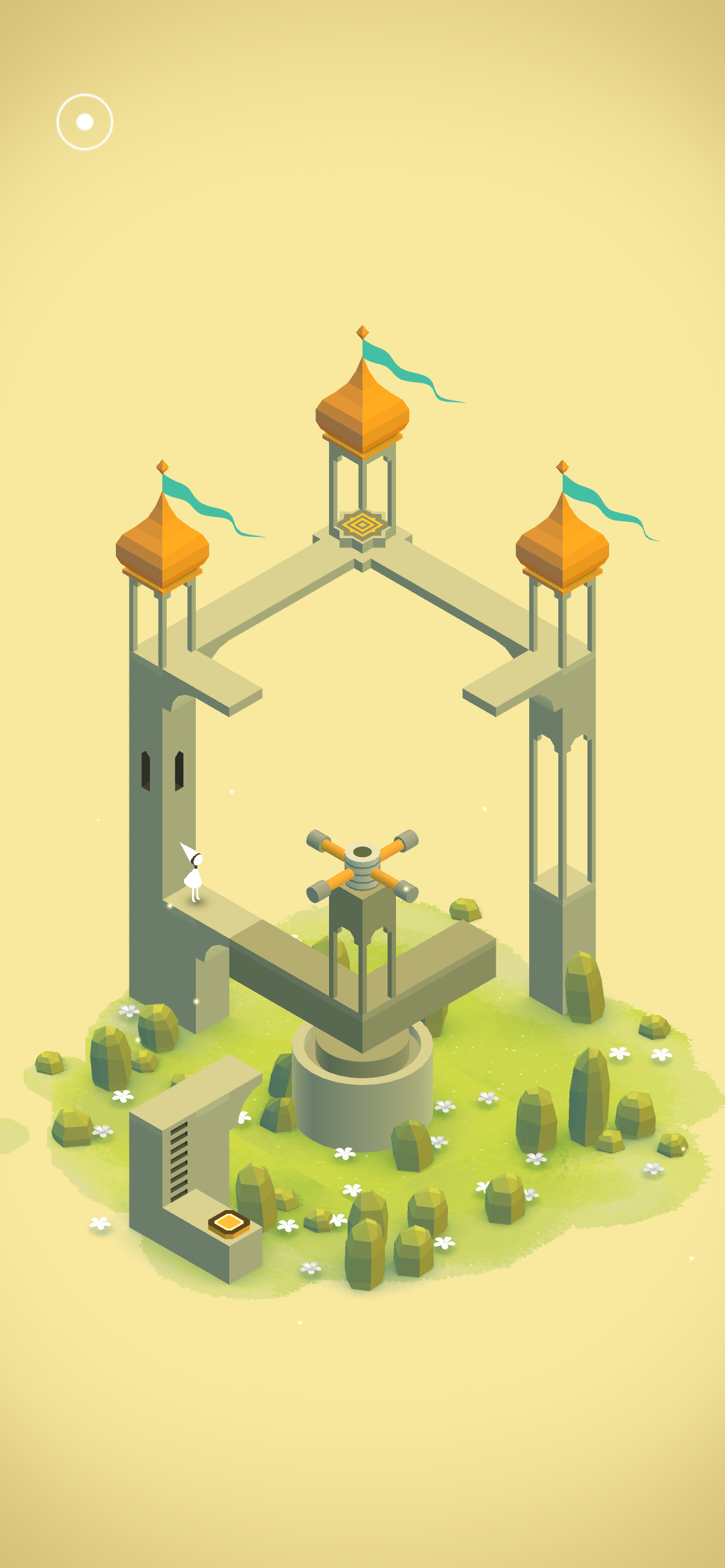
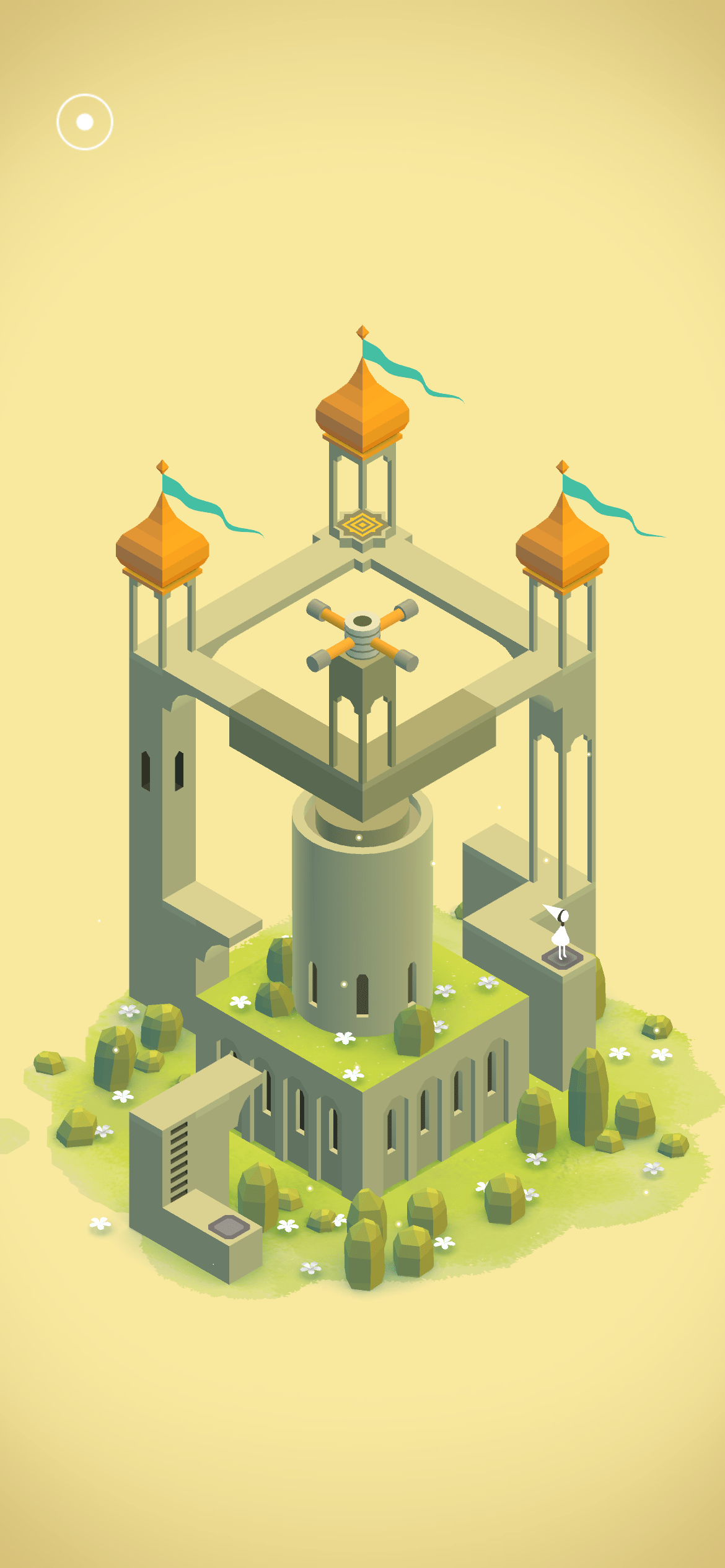
This mechanic encourages the player dynamic of clicking to move Ida to follow the uniquely “correct path”, at the expense of player agency and knowledge of what the entire level looks like—the full monument is not given to them from the beginning. This emphasizes the aesthetic of Discovery—curiosity of what might happen if this button is pressed—over the Challenge of juggling multiple puzzles and possibilities at once, and over relying on player skill to analyze the full information given. This mirrors last week’s critical play Year Walk with a linear storyline, where puzzles out of this predetermined order are locked and inaccessible. Despite both games requiring the “correct solution” to proceed, Monument Valley is more interactive and relies on player manipulation of the levels. Also, platforms emerging from the ground add to the fantastical nature of Ida’s world, whereas Year Walk’s barriers felt arbitrarily enforced. Monument Valley’s discretization of puzzles into manageable chunks with one focused goal creates a slow-paced, guided experience that circumvents the player sensation of being challenged or overwhelmed.
In addition to forcibly channeling the player’s focus on one puzzle at a time, Monument Valley introduces only one new puzzle mechanic and narrative piece in each discrete level or “Chapter”, creating a gradual, player-friendly experience. In Chapters 1 to 6, the respective puzzle mechanics that appear for the first time are: spinning levers, yellow buttons, slidable platforms, changing gravity, crow obstacles, and the totem. The game also utilizes Chapter titles that allude to a new mechanic’s functionality, preventing confusion and surprise.
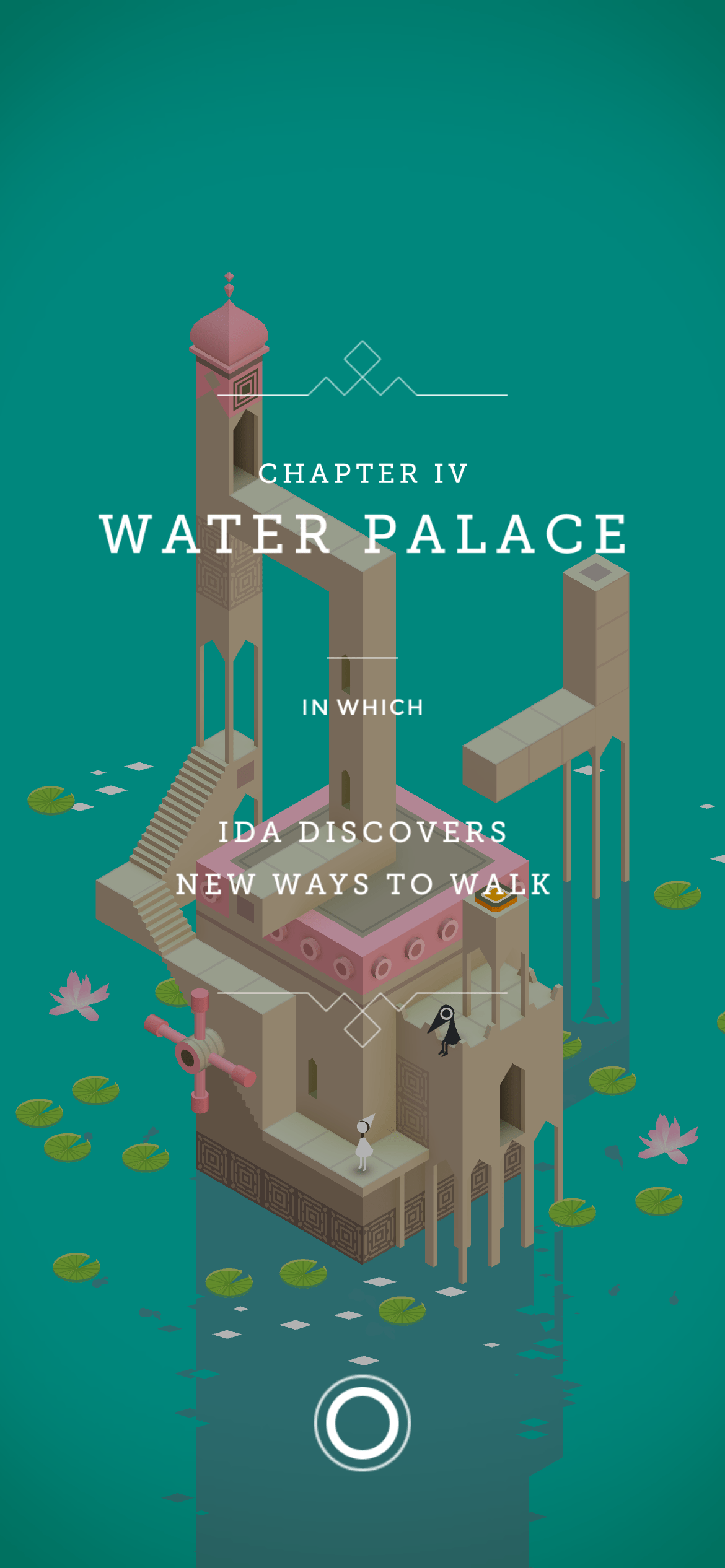
By introducing only one new mechanic in each new Chapter, Monument Valley creates the player dynamic of tinkering with and learning a feature before it appears in subsequent Chapters with the assumption of player understanding. This allows for a gradual build-up of an unhurried experience rather than equipping the player with everything possible in this already unfamiliar world. The pace of the game changes slightly when the moving crow characters introduce a timing puzzle, where players must direct Ida quickly and intentionally. However, they don’t pose a threat to Ida even when confronted, aligning with the low-stakes, comfortable feeling of the game. Some puzzle mechanics, although intuitive, have room for improvement. The spinning lever, though an “ordinary use” puzzle, is annoying to use especially at an angle that compresses its rotation, makes movement finicky, and causes my finger to obscure the puzzle itself. A potential alternative solution could be different-colored ends of the levers that each spins in one direction or the other with a long press. To my surprise, buttons with the same color did different things, like move the orientation of platforms or raise new ones—it would be more intuitive and cohesive design to have certain-colored buttons manipulate the monument in one consistent way. Each level, Monument Valley has one cutscene as enacted narrative that uncovers one small piece of the story, bit by bit. These incremental, player-friendly introductions to new mechanics and narrative pieces separated by Chapters contribute to an overall leisurely, relaxing gameplay experience in Monument Valley.
Set in an unfamiliar fantasy world, Monument Valley requires minimal previous player knowledge in any specific culture, which I applaud. Its abstract design detaches from our reality save for the able-bodied, walking Ida, and players solely rely on visual cues to explore new mechanisms in this universe. However, the portrayal of crow characters solely as obstacles in the player’s path is peculiar—they are depicted as noisy, disposable, unwise beings who can easily be trapped without possibility of freedom.
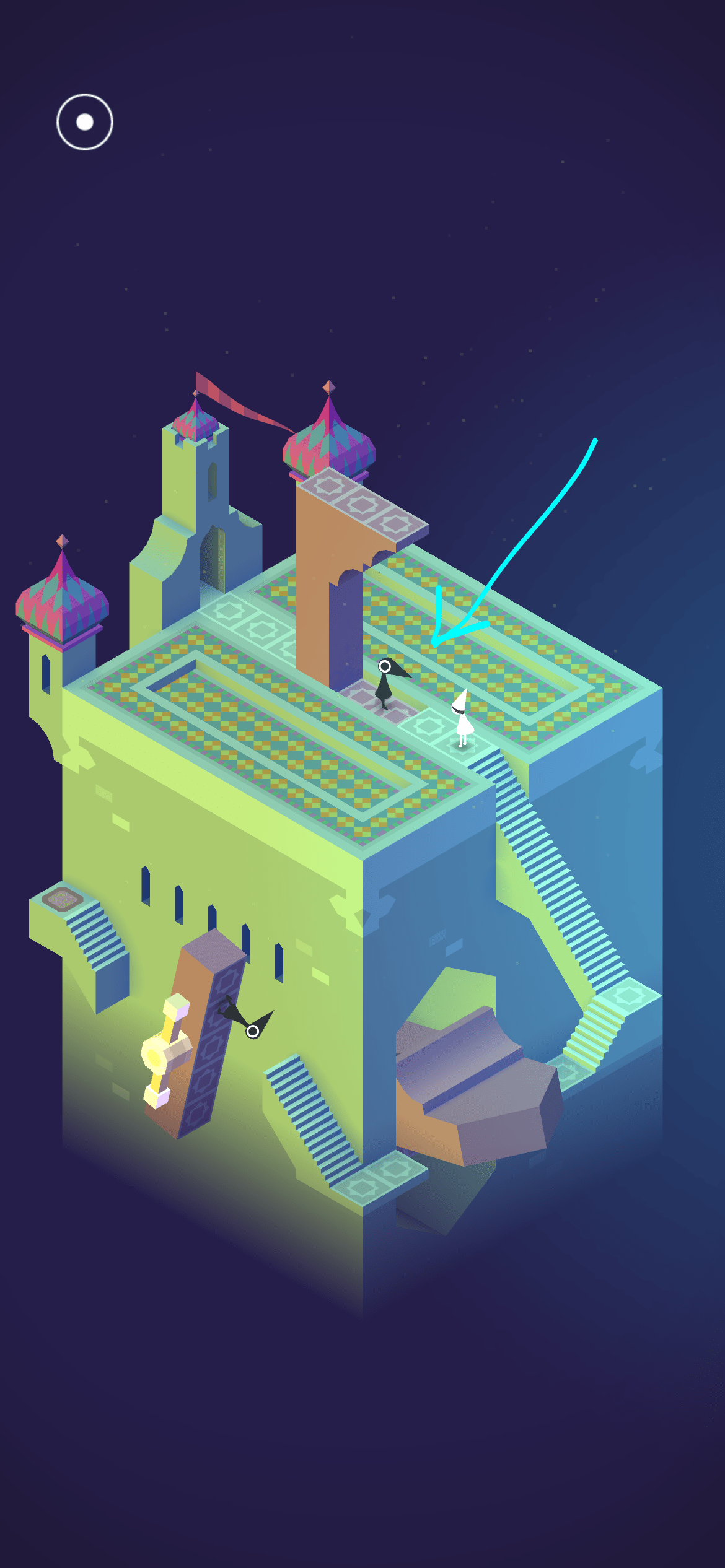
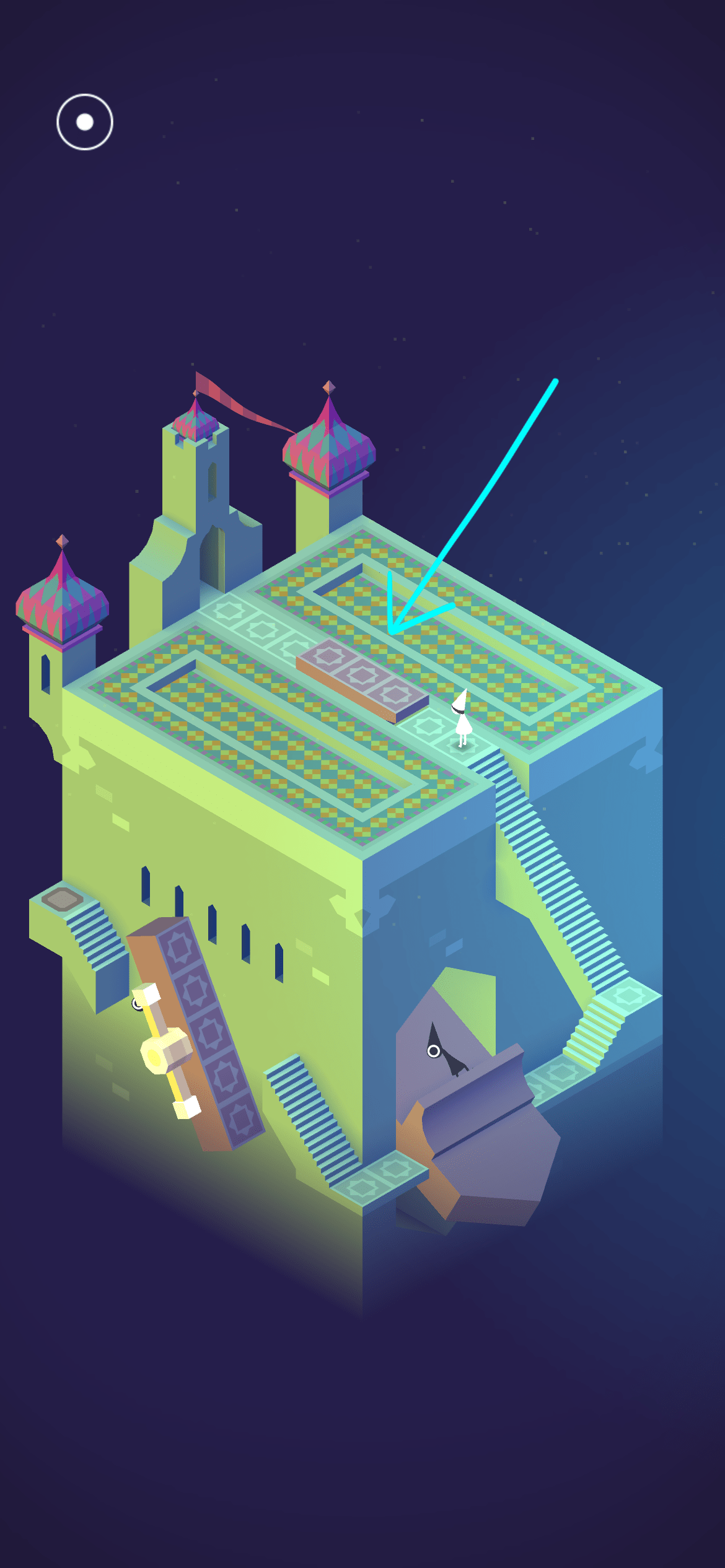
This dynamic raises ethical questions about whose perspectives are permitted within the game’s world, and reinforces a hierarchy between the player’s “sophisticated superiority” and the crow inhabitants reduced to impediments. Rather than treating them solely as obstacles, the game could allow moments where players understand their motivations, show the consequences of trapping them, inhabit their viewpoint, or cooperate with them to solve spatial puzzles.

