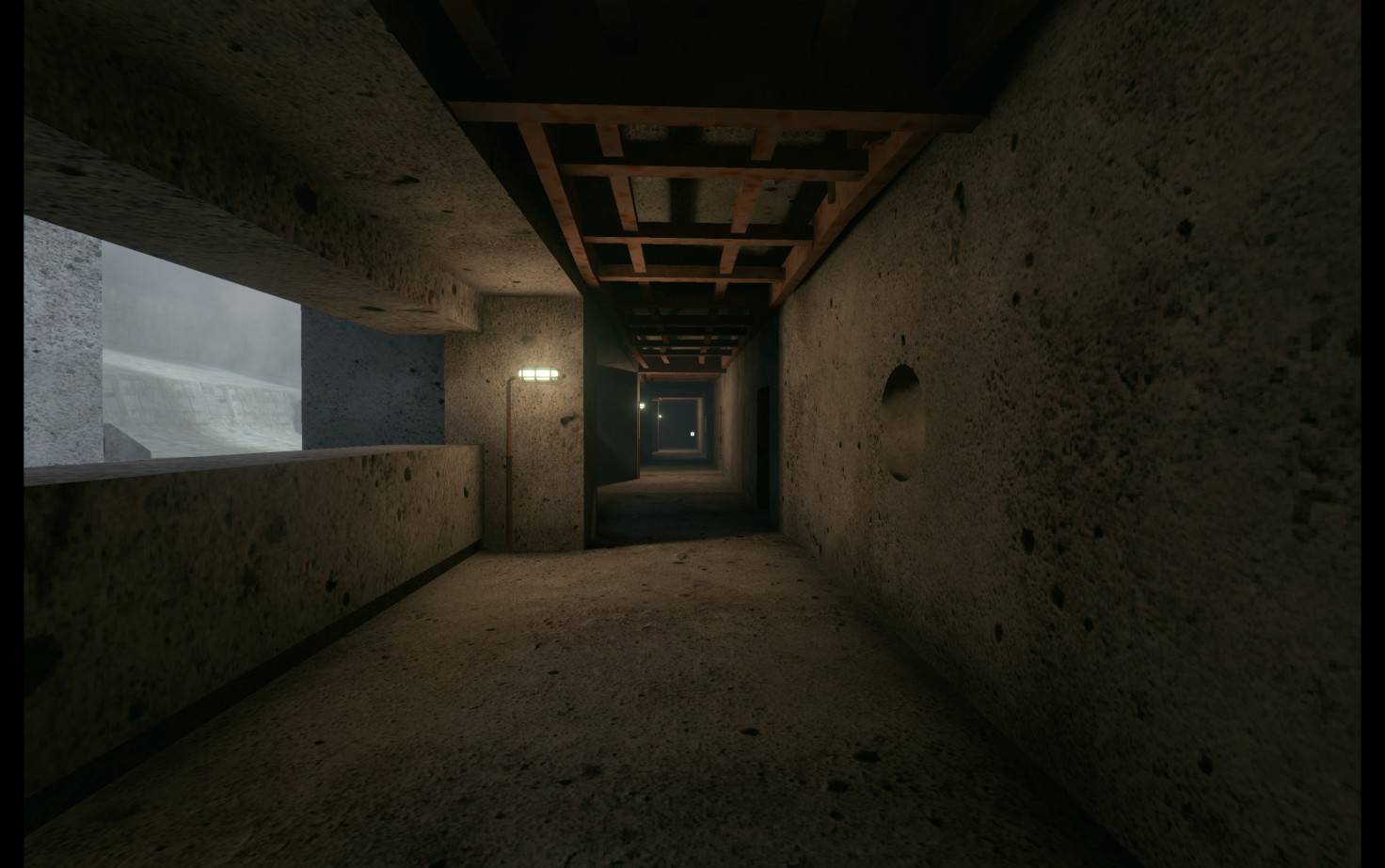
Babbdi is a walking simulator created by the brother duo Sirius Lemaitre and Léonard Lemaitre. Available on Steam for macOS, Windows, and Linux, the game is clearly intended for players who enjoy collectathons, exploration, and the strange allure of liminal spaces. While many independent games attempt to stand out through combat systems or cinematic storytelling, Babbdi takes a far riskier approach: it strips away both violence and conventional narrative structure, leaving exploration itself as the central experience. In doing so, it creates a world that is hauntingly memorable, even if it can sometimes feel emotionally distant.
Like most walking simulators, Babbdi forgoes mechanics pertaining to violence. There is no fighting, there are no enemies, and falling from great heights does not kill the player. Instead, the game offers walking, NPC dialogue, and several traversal tools that make movement through its concrete jungle more engaging. The absence of violent mechanics immediately communicates that the stakes are low. Players are not rushed, threatened, or punished for curiosity. They are encouraged to wander, experiment, and discover the city at their own pace. This design philosophy becomes clearer when contrasted with a game like Doom. In Doom, violence and combat are the central focus. Enemies, weapons, and survival dominate the player’s attention, often pushing narrative into the background. In Babbdi, the opposite occurs. Because there is no combat to distract the player, the environment itself becomes the focus. Every staircase, rooftop, alleyway, and tunnel matters more because the player’s attention is free to rest on space rather than danger.
However, unlike many walking sims, Babbdi takes an interesting gambit by sacrificing much of its story as well. In many games of the genre, players explore in order to explore a narrative through notes, dialogue, or environmental clues. What Remains of Edith Finch, for example, uses exploration to gradually reveal the tragic history of a family, making each discovered room or object emotionally meaningful. By contrast, Babbdi’s story is fragmented, disjointed and lackluster. NPC dialogue is limited to a few short utterances, and many characters appear to have little relevance to any larger plot.

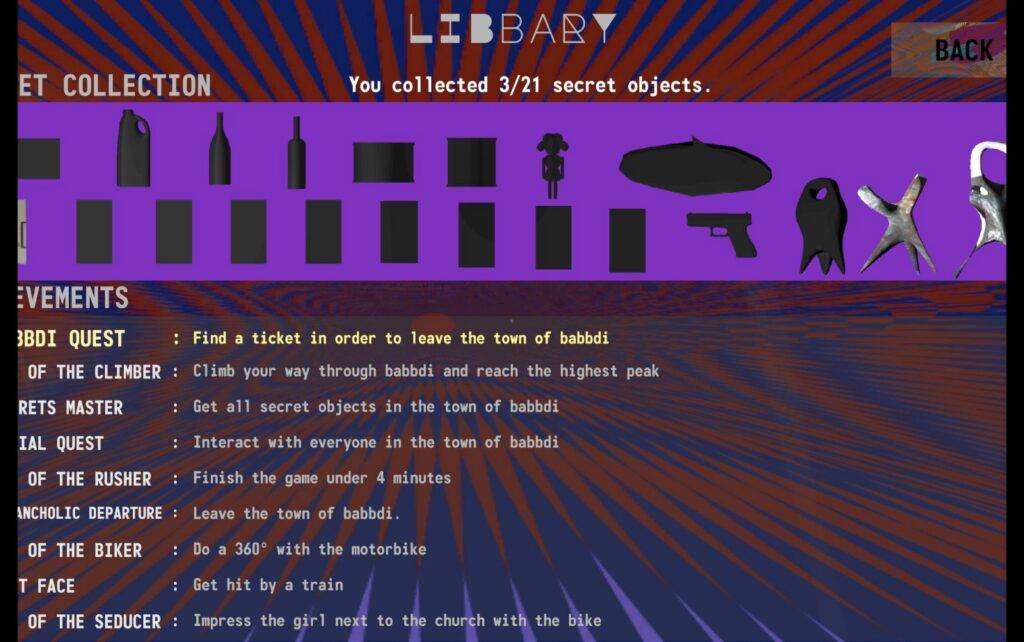
Objectives are also presented with minimal context and rarely feel tied to a grand purpose. Yet this lack of context transforms objectives into something more interesting: suggestions rather than commands. Instead of tightly guiding the player through a sequence of tasks, the game invites them to decide what matters. Freedom becomes the true objective. The Lemaitre brothers are uninterested in controlling exactly what the player does. Rather, they create a dynamic in which players naturally choose to explore. One does not search the city for more story or to unlock stronger abilities. One explores because the world itself feels unknown and mysterious.
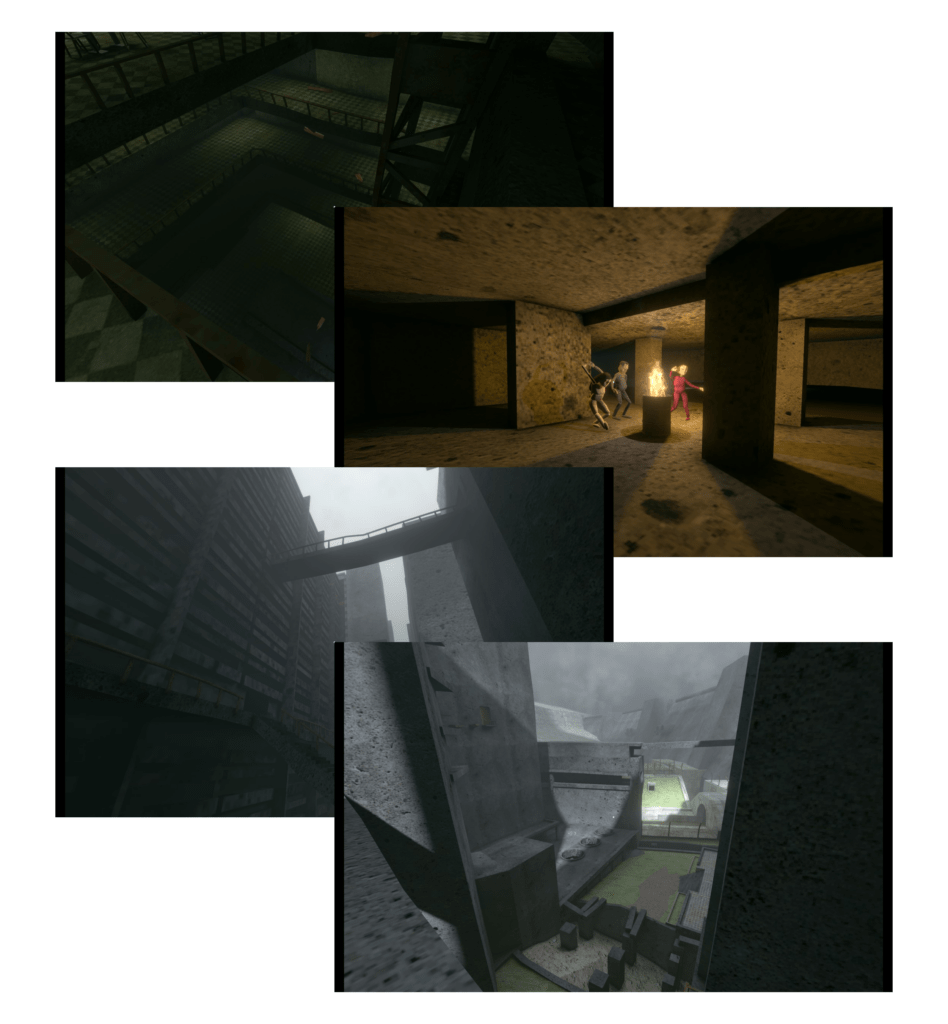
That mystery is rooted in the game’s use of liminal space. Liminal spaces are transitional or in-between environments: places that feel familiar yet strangely empty, suspended between purpose and abandonment. Hallways, stairwells, parking garages, vacant plazas and dim corridors often create this sensation. Babbdi captures that feeling exceptionally well through its architecture. The city is filled with vast concrete surfaces, odd pathways, isolated rooms, and corners that seem like they should lead somewhere meaningful but often do not.
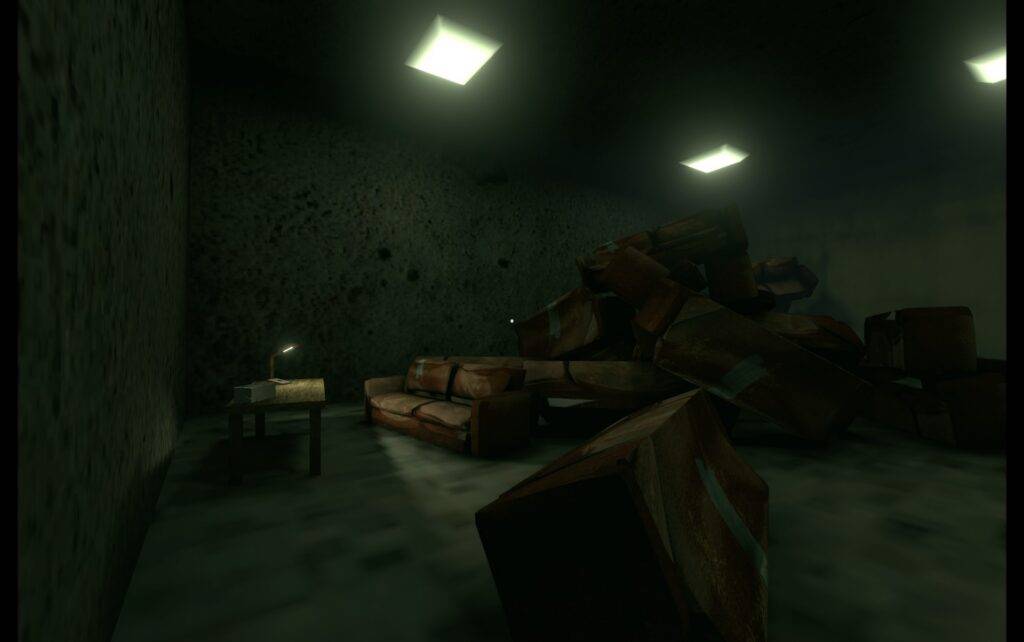
This can be one of the game’s greatest strengths. The many nooks and corridors that lead nowhere mirror real urban environments. When walking through a city block, one does not expect every street to reveal something incredible. Much of the world is mundane. Many roads are dead ends in the sense that they offer no treasure, revelation or spectacle. By recreating this emptiness, Babbdi feels more authentic than games that reward every path with loot or story beats. Exploration becomes valuable for its own sake rather than for external rewards.
At the same time, this same quality can disengage some players. Without meaningful narrative payoffs or constant discoveries, the city can occasionally feel like just another place the player passed through. Its liminality may be hauntingly beautiful, but beauty alone does not always sustain long-term investment. Some players may leave appreciating the atmosphere while feeling little emotional connection to the experience.
The obvious remedy would be to introduce more story, clearer characters or stronger objectives. However, doing so would damage the game’s original aesthetic and novelty. Too much explanation would reduce the ambiguity that makes the city compelling. Instead, a better solution would be subtle additions: more environmental storytelling, more varied NPC remarks, or occasional landmarks that hint at meaning without fully explaining it. These small touches could deepen player engagement while preserving the mystery that defines the game.
Babbdi understands that exploration can be enough. By embracing liminal emptiness, it creates an experience centered on curiosity itself. It may not appeal to everyone, but for players willing to wander without promise of reward, it offers something rare: the freedom to simply exist in an unfamiliar world.