


This week, I played BOKURA: planet, a two-player puzzle game made by Tokoronyori. At first, the game seems like a typical co-op platformer where the challenge is just timing your movements and helping the other player get through obstacles. But as the game goes on, it becomes clear that its difficulty is doing more than making the puzzles harder. I found that BOKURA: planet uses deliberate friction to express the difficulty of understanding another person’s perspective. For example, through small lags, forced waiting, repeated backtracking, and split access to information, the game makes misunderstanding feel unavoidable, turning co-op play into an experience of trusting someone whose perspective you can never fully get.
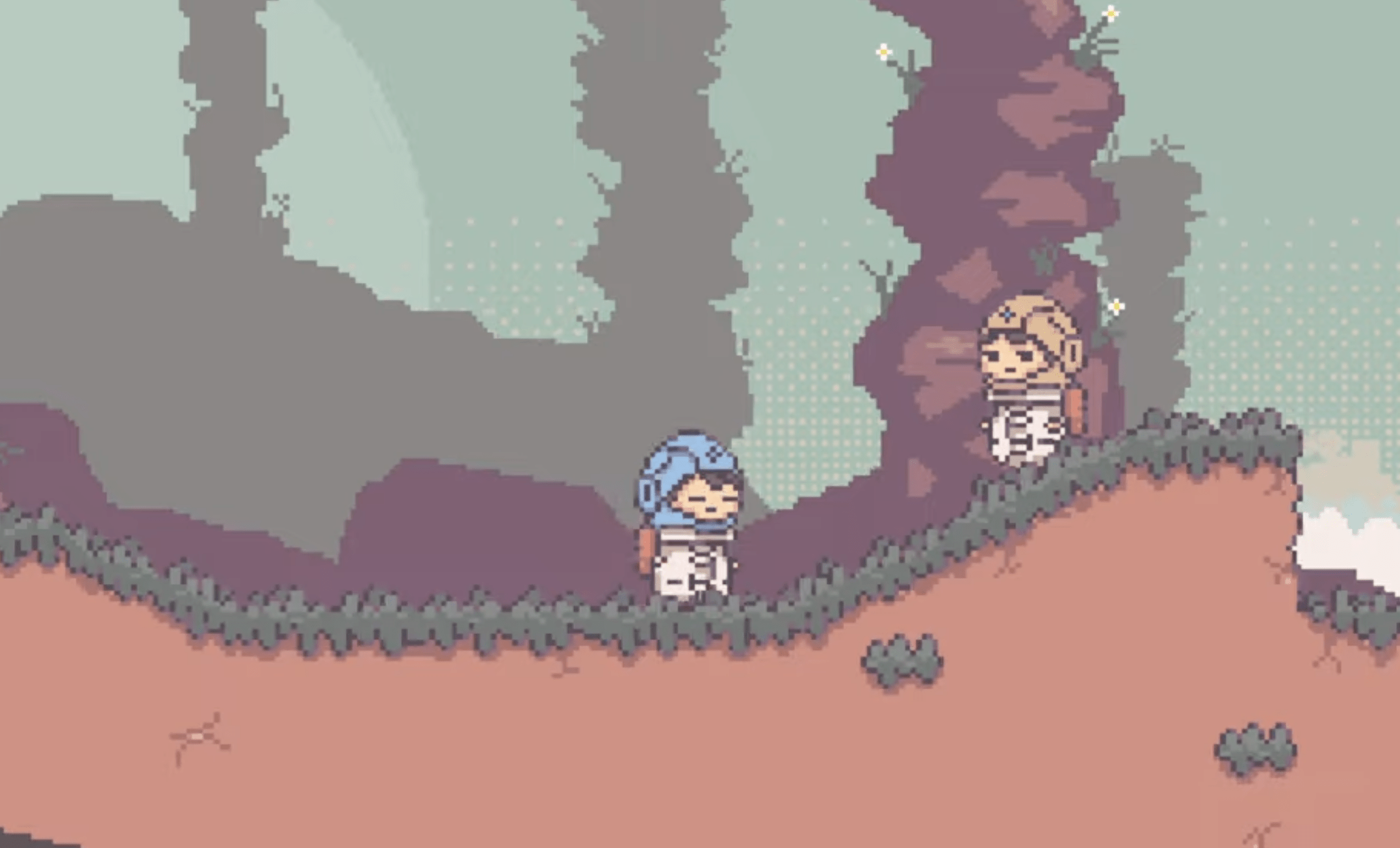
[Image of the opening scene where two characters together at the start of the game.]
I played as the orange character, with someone who had played as orange in a previous run. So even though they knew the storyline of my character, I had no idea of the blue character’s motivations and goals. This was immediately an interesting separation from typical games that I’ve played similar to this, like Fireboy and Watergirl where both of you can still see the same level and understand what the other person is up against. In BOKURA: planet, once one of you splits off, you have no choice but to complete your section of the level.
This asymmetry in experiences felt connected to Thomas Nagel’s argument in “What Is It Like to Be a Bat?,” in which he argues that subjective first-person experiences cannot be fully captured from the outside, so we can know objective facts about someone else’s experience, but cannot actually know what it feels like to be them. That distinction becomes even more important because the game keeps requiring trust. In the beginning, there’s swift trust because you need the other player to press switches and move things with you. But later, once the storylines separate, trust doesn’t feel as certain. Since I received my own goal as the orange player, I started to wonder if the other player had some hidden motive, or if the game was rewarding them for things that would hurt me. I wasn’t able to play through the entire game, but in the scenes that I saw, the game didn’t let that uncertainty go away.
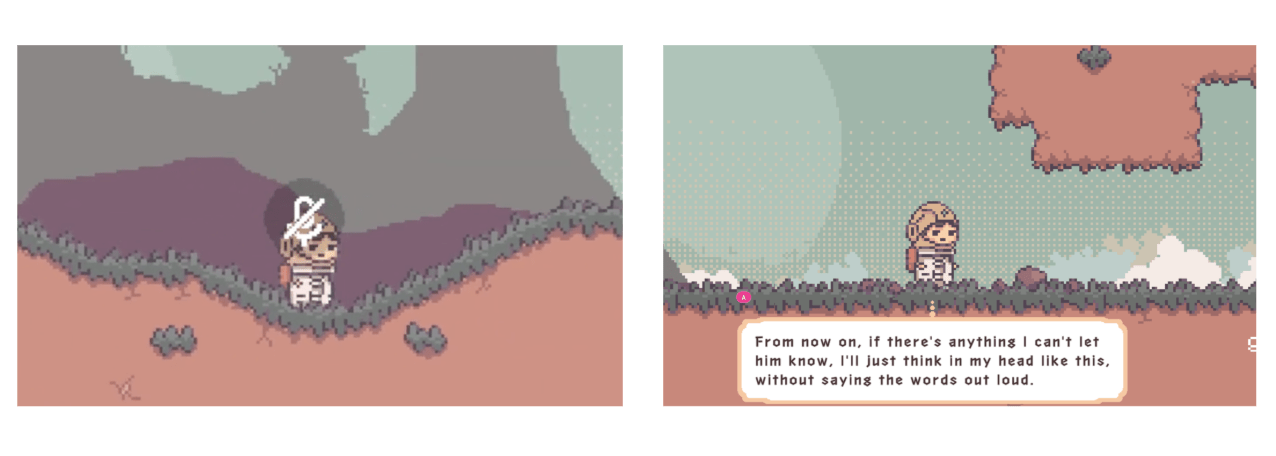
[Image of receiving a hidden goal as the orange player and being told not to speak with the other player.]
As the game progressed, every action felt very effortful. You’re often forced to wait for the other player to complete an action on their end, and the game even forces you to die sometimes to go back and fix earlier mistakes. For example, at one point there is an end of a section and upon leaving you are immediately killed because you did not switch the pillar symbols before leaving the scene, something you could not have known to do beforehand.
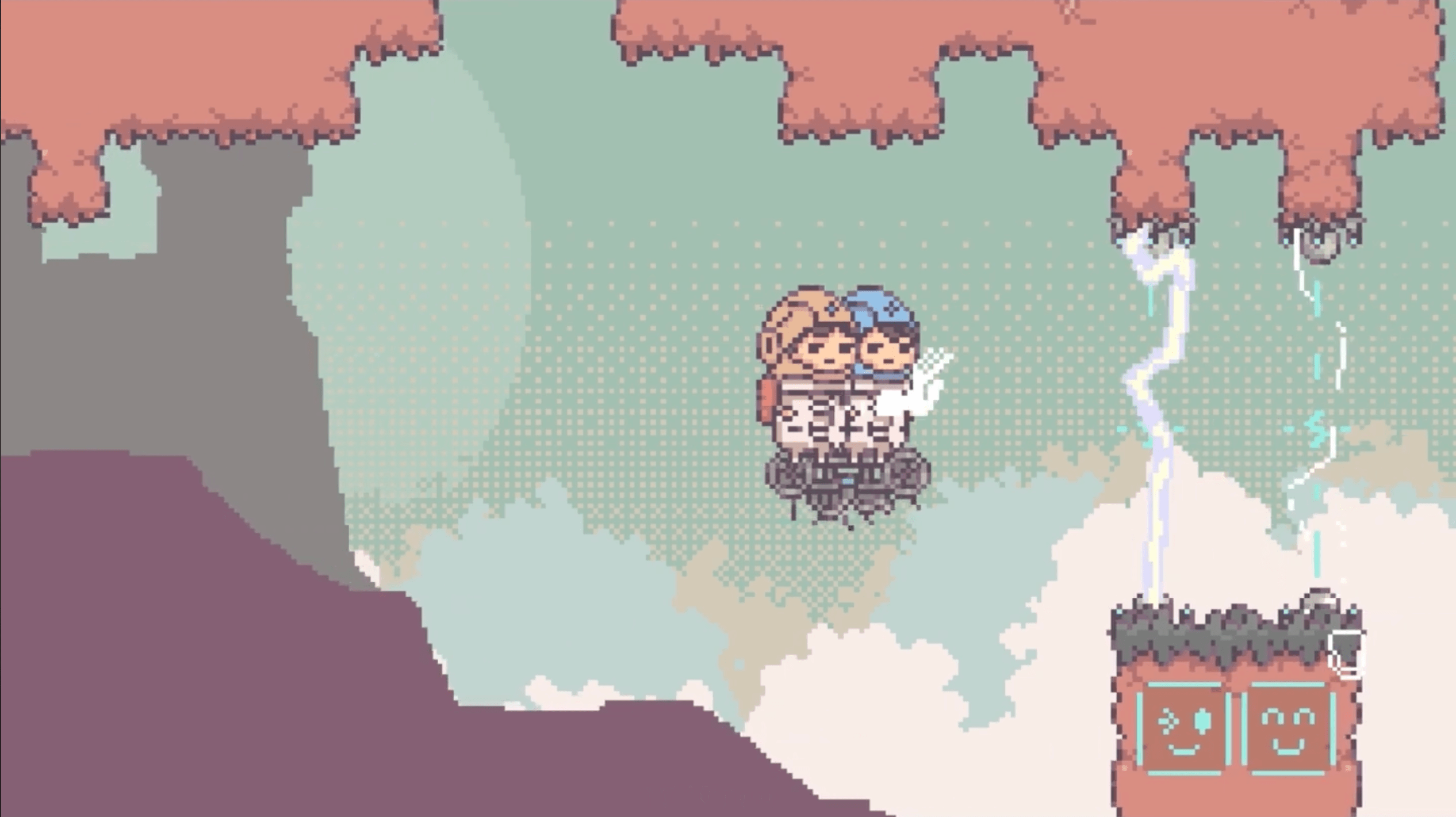
[Image of flying blind into the laser because of not knowing to switch the symbols.]
These small quirks that slow progress and force you to go back and fix mistakes reinforced my sense that the game’s roughness was not just a technical issue, but part of what its designers were trying to communicate. In most games, lag is something to eliminate because it gets in the way of player control. However, in BOKURA: planet the slight lags that make it seem like someone is not jumping in time, or that cause a missed button press at a crucial moment, seem to hover uncomfortably between frustrating and unplayable. But I think this lack of smooth play is intentional and adds a unique quality to the game that makes coordination feel especially strained.

[Example of lag time between jumping and seeing the other person jump, making you assume they’re late.]
This relates to Nagel’s suggestions of the limits of imagination, and how any attempt to imagine another creature’s consciousness results in a projection of our own faculties, not true empathy or understanding. While playing separated, I found that I would frequently try to picture the other player’s environment, and assume that we were looking at similar challenges, or that they were in certain positions that would be beneficial to us. In most cases, this was not the case and we killed each other pretty frequently by acting on those assumptions.
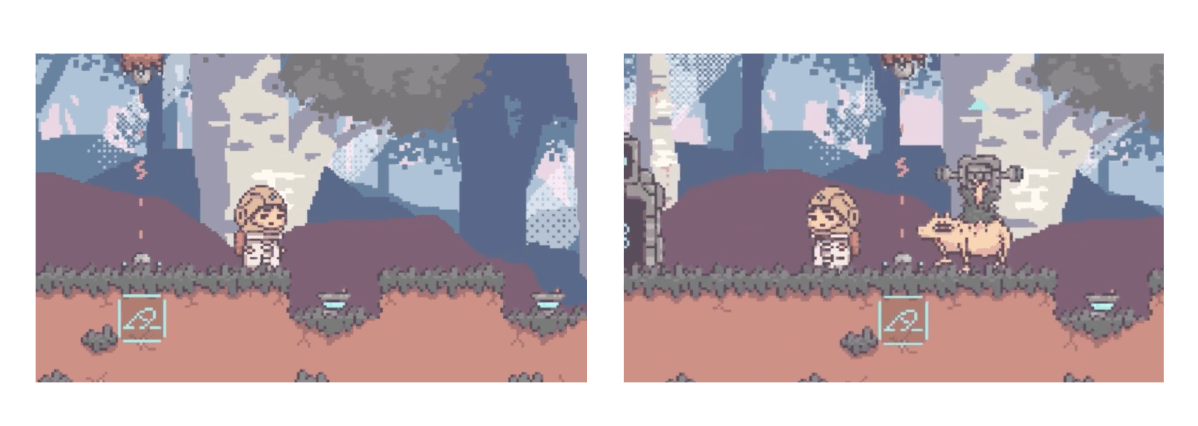
[Image of waiting as the orange character while the other person is doing their own actions off-screen on another path, and another image of an action sequence that depended on the other player doing their part in time. ]
Ultimately, BOKURA: planet is an interesting co-op game because it does not solve the problem of collaboration and instead builds a game around that problem. Nagel argues that subjective experience cannot simply be captured from the outside, and BOKURA: planet turns that idea into lived frustration for the player. If everything were easy, you could treat the other person as support for your own progress, but because the game keeps slowing you down and making you rely on them, you never get the satisfaction that your own perspective is the full one. In this way, BOKURA: planet is able to turn these typical co-op mechanics into reminders of how hard it is to fully understand what another person is seeing or trying to accomplish. Even when both players are acting in good faith, the game’s built-in miscommunication and misunderstanding by design makes it difficult to believe that is the case.
