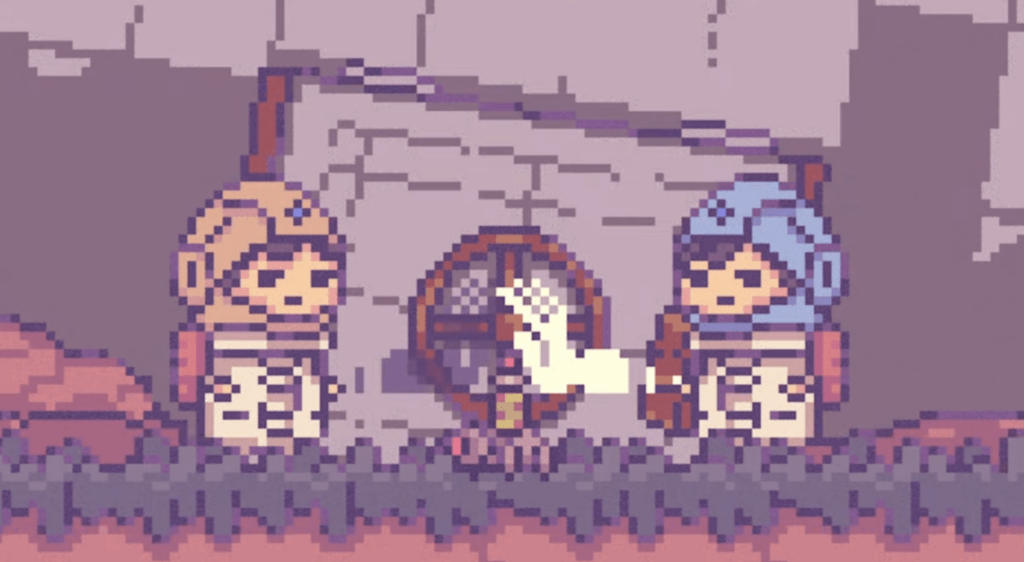

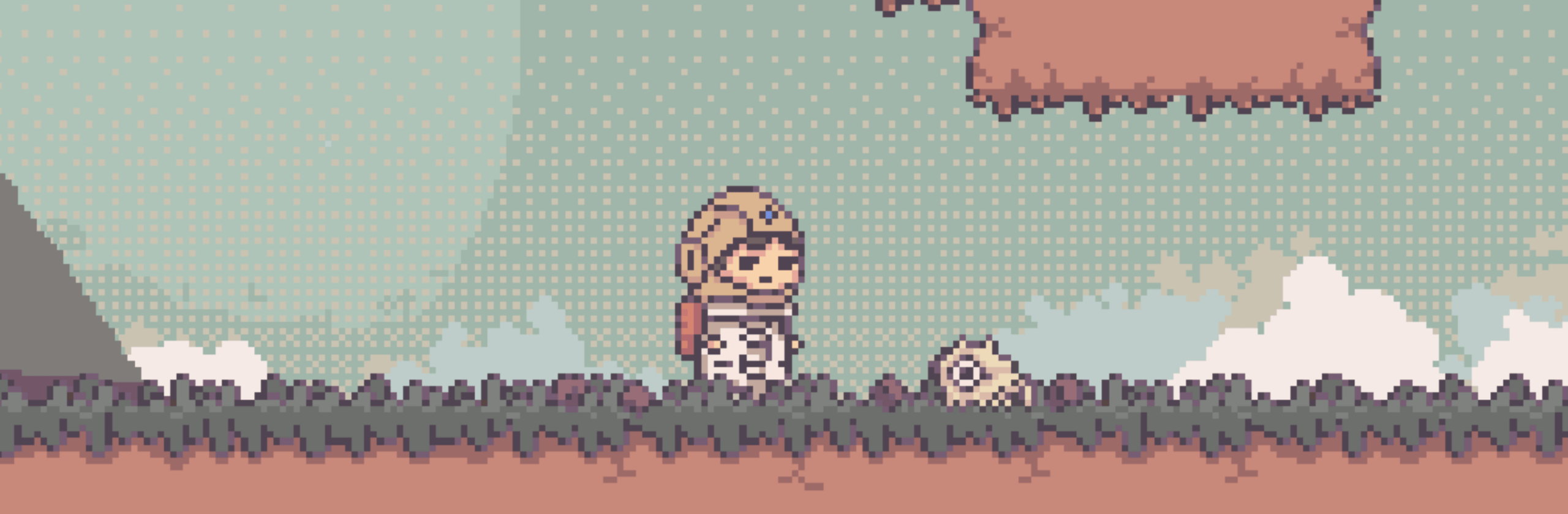
In my first playing of BOKURA: Planet, I knew I was in for a treat when Orange was killed and replaced by a parasitic alien. Having acquired Orange’s body, memories, and emotions, the alien begins to feel human things. It realizes that Orange has a child. Then it realizes that Orange loved his child. And then, it realizes that it loves its child. Is this just a complex form of mimicry? Or is the alien actually experiencing complex feelings of guilt, regret and love? While Nagel says we can never fully understand another’s subjective experience, BOKURA: Planet suggests that merely striving to do so changes you, even when you don’t completely succeed.
In What is it like to be a bat, Nagel argues that objective facts will never fully capturing another’s subjective experience. There is something it is like to be a bat, but no amount of knowledge about bat-biology will allow you to fully understand what it is to be one: the gap can’t be crossed.
Simultaneously, Nagel suggests that this gap is not the same size for everyone. While we may never fully understand what it is like to be a bat because we are so dissimilar, we can more fully understand a classmate’s experience when they bomb a test. A bat who (probably) has never bombed a test will be further from understanding my subjective experience than my friend. While it is impossible for my friend or a bat to fully understand my subjective experience, there is a difference in their degrees of success depending on how similar we are.
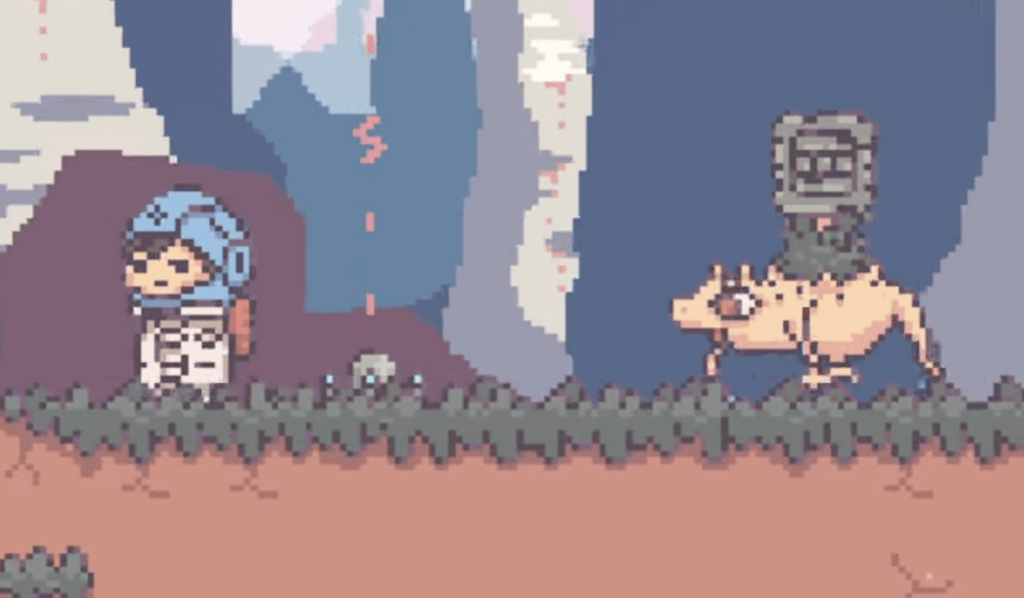
BOKURA: Planet proposes a more nuanced perspective. Throughout the game, we encounter two creatures that seem alien to us. The first is the parasite that kills and inhabits Orange. The second are malformed pig-like creatures that squeal, charge, and attack on sight. We work side-by-side with the parasite to solve puzzles while tricking and killing the pigs to obtain puzzle pieces. Eventually it’s revealed that the pigs are descendants of ancient humans, aka our biological ancestors. By Nagel’s logic, they should be the closest beings to us, the ones whose subjective experience is closest to our own. Instead, they are reduced to dumb, moving puzzle pieces. On the other hand, the parasite, the thing that killed our friend and is planning to kill us, is our reliable puzzle buddy. What narrows the gap isn’t shared biology or ancestry, it’s the attempt to understand each other through repeated communication and collaboration. This is what Nagel ignores: striving to cross the gap changes who is on either side of it.
There is a third type of “alien” that we encounter: the babies produced by Mother which, similar to the pigs, we are asked to treat as brainless puzzle pieces. Maybe it’s the fact that we have a hand in creating these babies, maybe it’s the knowledge that they are only babies, or maybe it’s their human-like cries that gave me pause and made me feel uncomfortable in a way I didn’t when killing the pigs.
This feeling of discomfort is worth examining. Despite being our ancestors, the pigs remained objects to me throughout. The babies, despite being biologically just as alien, did not. We don’t share a common experience or overlapping frame of reference. And yet something in the attempt to understand another’s perspective after hours of puzzle-solving with my partner had expanded what I was capable of feeling for. The discomfort I felt is evidence that my striving to understand another’s perspective had changed me.
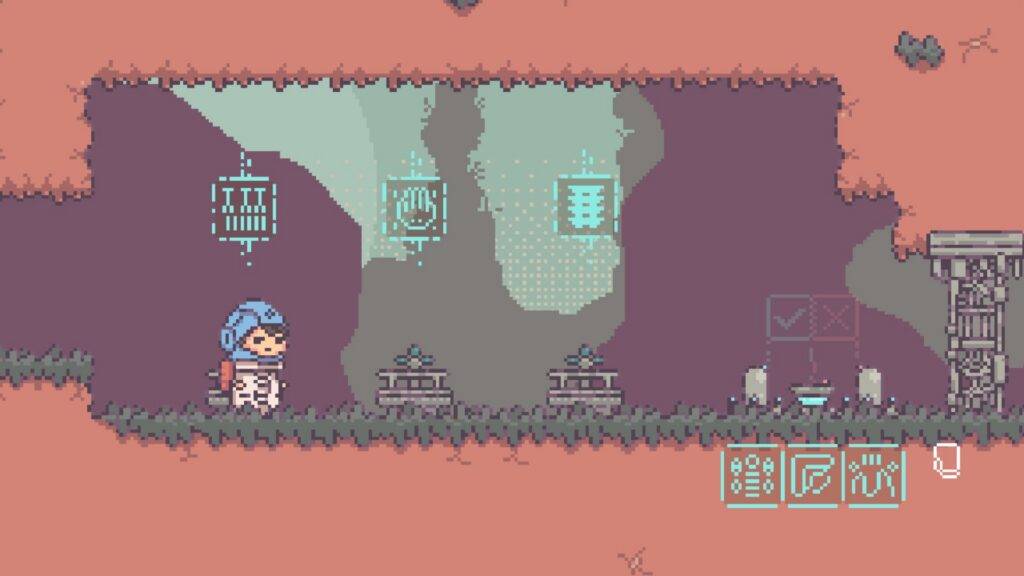
Beating BOKURA: planet requires an understanding of what the other player is experiencing. At several points we must input a code to open a door. Crucially, I could only see the code for my partner’s door while they could only see mine, forcing us to describe alien symbols by comparing them to things we both understand. Reductionism may never fully communicate another’s experience, but it remains an essential tool in the attempt.
Finally we arrive at the crux: one imposter must sacrifice themselves to save the other. After hours of exploring, communicating, and striving to understand others’ perspectives, hope for a future together is shattered upon arrival to the spaceship when our recently expanded capacity for empathy is used against us as what appears to be a child in distress rushes towards us. Disarmed, we freeze as it melts away to reveal an active landmine. 3. 2. 1. Push.
This is BOKURA: Planet’s strongest argument. An alien parasite and a human with implanted memories eventually grow to trust, depend, and even like each other. So much so that in the end, when push really comes to shove, both are willing to sacrifice themselves to save the other. BOKURA asks: what if an incomplete understanding is enough? This is why, to see the game’s true ending, you have to play through both perspectives. One side of the story isn’t enough. It is only by striving to understand both can we reach a brighter future.