The game I chose is What Remains of Edith Finch, the creator is Giant Sparrow, and we can play it on a few different platforms. The target audience I think, is the players that interested in a narrative storytelling game and exploration.
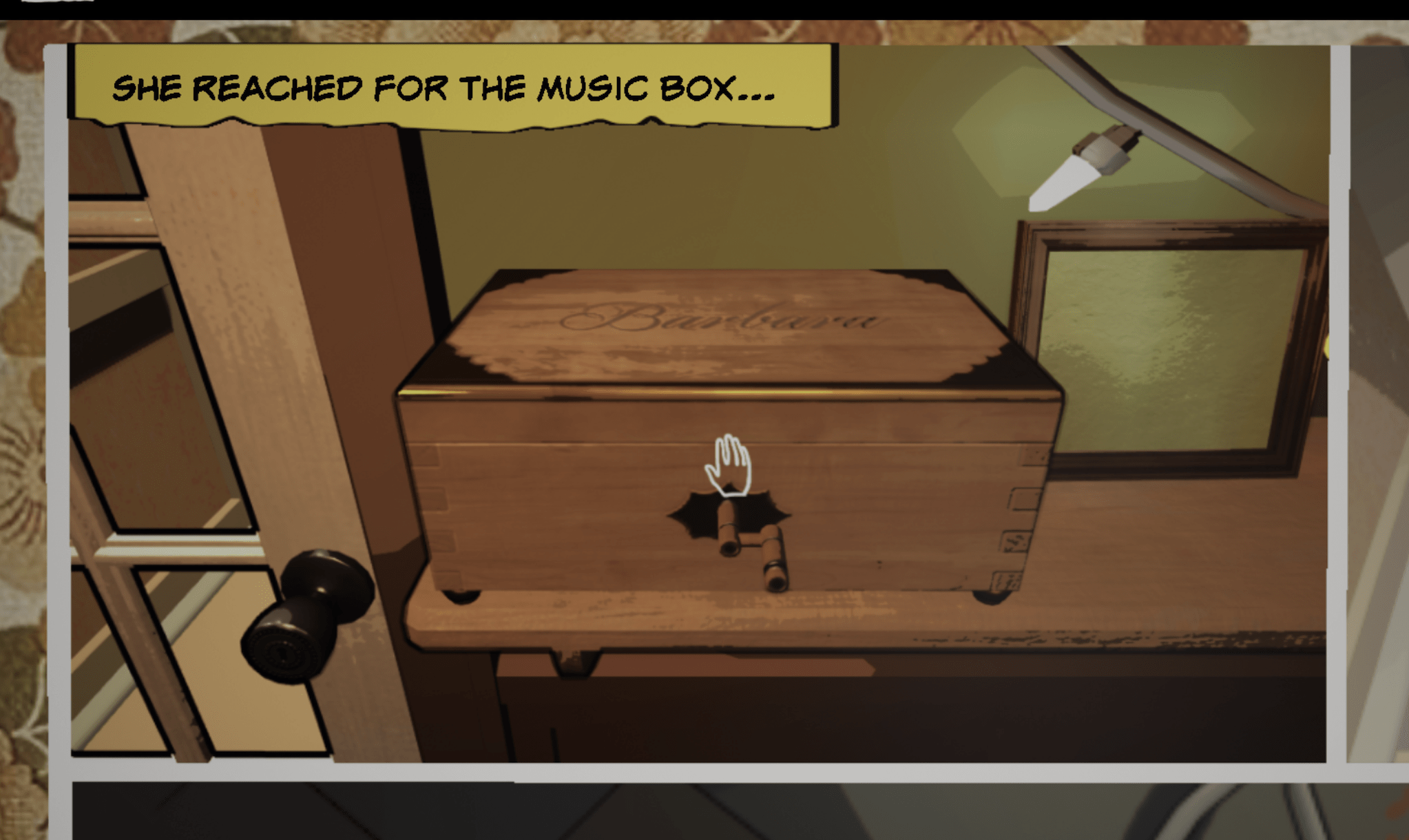
In What Remains of Edith Finch, the central argument is that walking becomes a method of reading the story. Instead of reading long pages of text, the game combines visual and audio storytelling piece by piece. We are not simply reading, but instead, we are walking into the story. The movement controls are simple: up, down, left, right, along with a few clicks to interact. This game tells its story through movement. I can see lines of text appear in the sky, on the cabinets, and in the environment, while narration plays at the same time. Walking also functions as a guide, showing me which direction to go. When I move in the correct direction, I am able to hear the next part of the story. Every hallway, staircase, hidden passage, and bedroom becomes a storytelling device. Walking also creates emotion. For example, after I played as the monster in Molly’s story and then heard Molly say that the monster was under the bed, when I returned to the main character, I was actually afraid to go near the bed.
The game’s visual style is excellent, and most of the time it guides the player clearly on where to go next. However, Molly’s story confused me a little. She eats many strange things and then transforms into a cat, then a shark, and finally a monster. I found the cat section somewhat difficult to control because I kept moving the mouse around and often lost sight of the bird I was trying to catch. In terms of violence, I would say the game is not extremely violent. For example, I control the cat to catch birds and the shark to eat fish. There is some blood shown when the fish is bitten, and the bite animation is visible. However, when I control the monster to eat a person, the game does not actually show the violent act directly.
The core mechanic is simple walking exploration, looking around, and interacting with objects. The dynamic that emerges is curiosity and the desire to figure out the puzzle, because the house is designed almost like a puzzle box, full of locked doors, peepholes, and secret routes. This creates a constant forward momentum driven not by danger, but by the desire to know what happened next.
The core mechanic is simple walking exploration, looking around, and interacting with objects. The dynamic that emerges is curiosity. The aesthetics produced are the emotions triggered by the audio, the story, and the environment itself. For example, when I see that a door is permanently locked, I immediately feel curious and unsettled. When I have to crawl through a small opening, I feel nervous about what might happen next. Each room functions as a specific memory, and each room produces a different aesthetic. Instead of merely reading about a family member, the player walks into their space and then transitions into a playable memory. Each family member’s story introduces a different mechanic, which makes every memory feel unique and reinforces the emotional storytelling of the game.
Overall, What Remains of Edith Finch proves that walking is not merely walking. It is a narrative structure. Every step is a sentence, every room a chapter, and every path forward a confrontation with memory. I like the storytelling thing, and I think it might be a good idea to combine history with this kind of storytelling game.