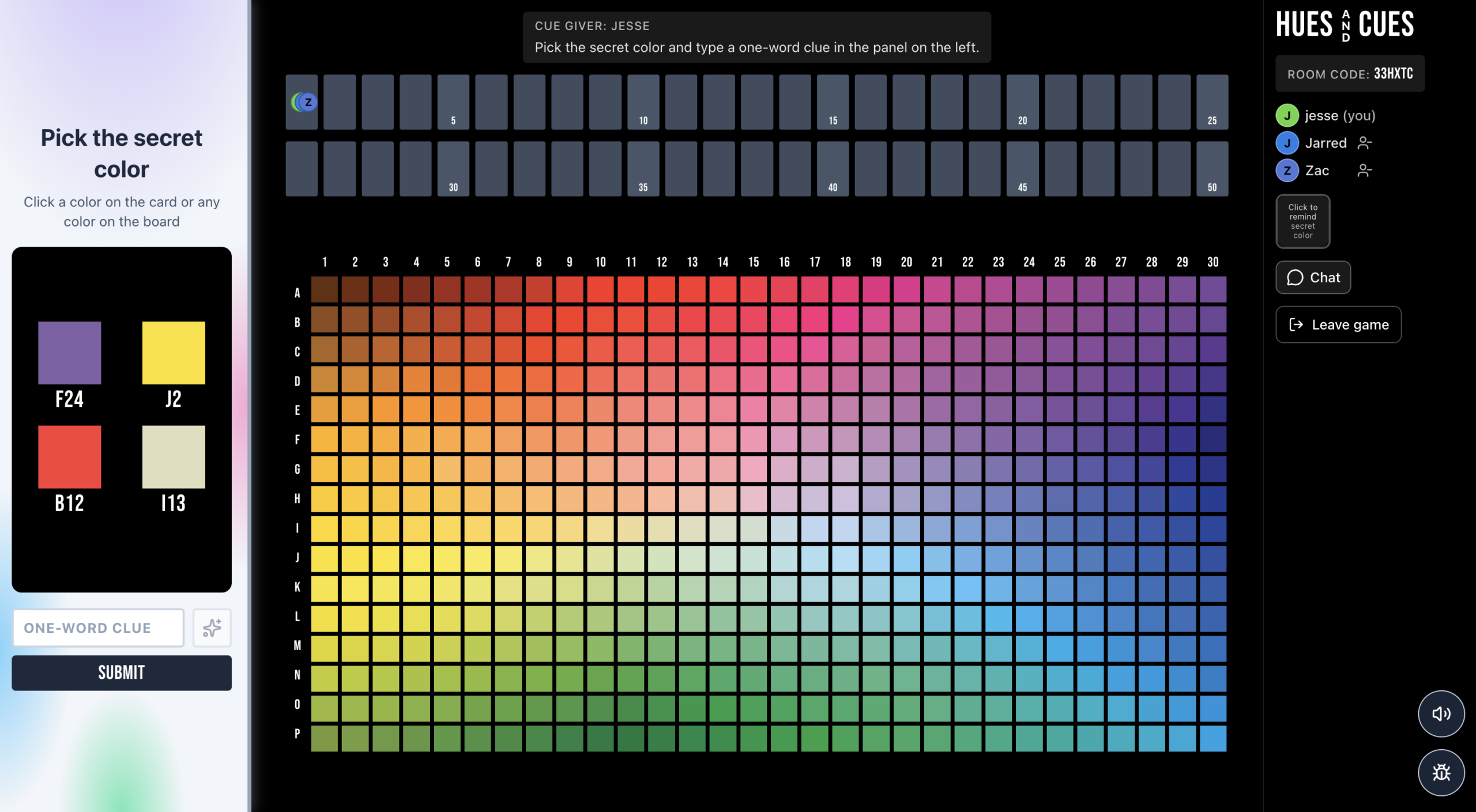
Hues and Cues is a color-guessing party game created by The Op Games that allows three to ten players who are at least eight years old to take turns describing specific hues using one and two word cues. The game is available as a board game but I played with my brother and husband online through their private game room because we were not co-located.
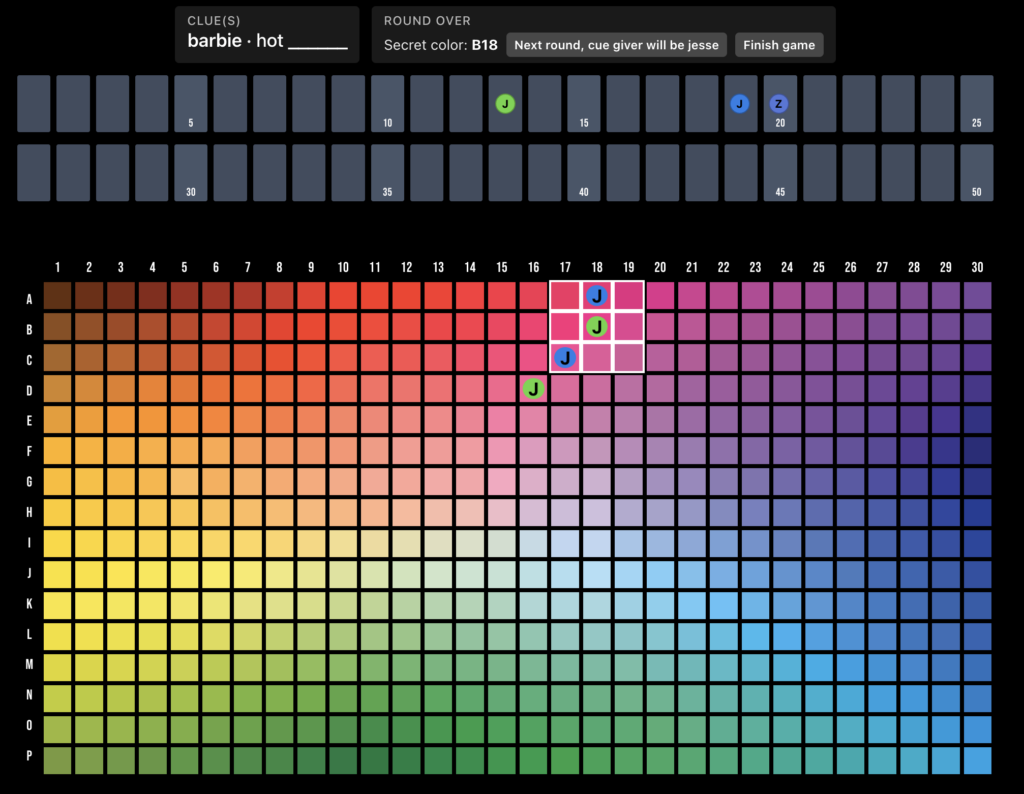
While Hues and Cues was an interesting play with well balanced mechanics for giving and guessing clues, I do not believe that the clue giving mechanic will be balanced in the context of a Stanford map. A central mechanic to Hues and Cues is that you are banned from using basic colors as clues. This mechanic was obvious when my husband provided the clue “Barbie” first and then “Hot ____” second because the clue hot pink was so powerful but not permitted by the rules. In the context of Stanford the banned list would have to include building names, street names, professor names, department names, course names…. in order to avoid these obvious clues. Without those options, I’m not sure how I would describe the ANKO education building: “new”, “tower” or “learning” feel problematic. While it seems to be a small mechanic change the banning of “obvious” Stanford clues would not just tweak play difficulty, but would reshape the overall aesthetic experience of the game by making successful clue-giving dependent on insider knowledge rather than broadly legible play.
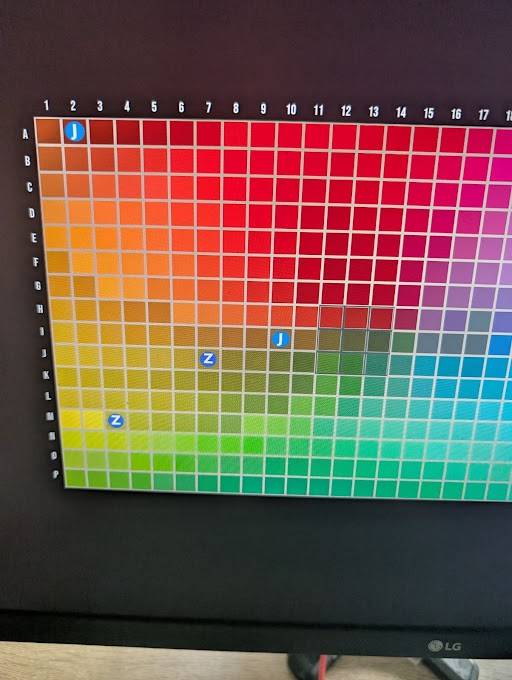
Game play also relies on shared experience. After one round of play where my husband moved in the exact opposite direction of clues, we discovered that his computer was inverting all the color hues. He commented “you can’t play a color game when your colors are messed with.” I worry that this challenge would apply to the Stanford map. Even my cohort members and I have very different experiences of campus as we live, work, and play in different spaces. It is possible that game play could fall into anti-patterns around nationalism where players create cliques based on shared experience and others are excluded. If the Stanford map game depends on already knowing campus-specific associations, then it stops being a game of learning and becomes a test of prior belonging. Newcomers would not discover patterns. They would only be judged on whether they already know them.
My suggestion is that we can use the location naming mechanism present in Hues and Cues (or Battleship) to create a common language for locations on the Stanford campus. We can then take advantage of the unknown nature of campus such that the game can make use of discovering and sharing experiences. My suggestion is that players are required to physically move around Stanford campus to find a particular location with constrained question asking but where more than one word can be given as a clue.
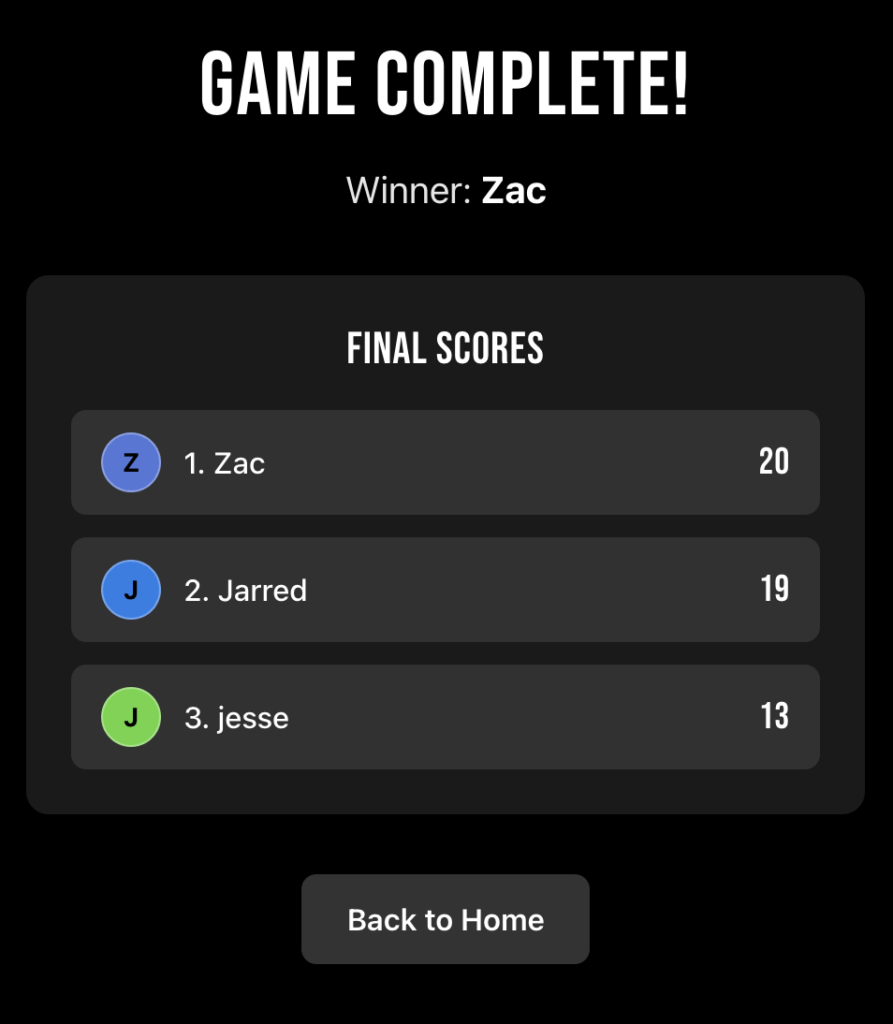
Another weakness of Hues and Cues that I feel we can counteract in our game is the limited social nature. We chose to be on a phone call and laugh at each other when my brother thought out loud and said “if the question mark is load bearing then …” and my husband’s next clue was “load bearing”. However, the game as designed has very limited interactions. The one sided nature of clue giving limits opportunities for friendship format due to limited reciprocity and the general scoring mechanism is a soft-coop. Our game can integrate greater elements of reciprocity where players offer something in return to clue givers and game play elements require at least periodic hard-coop game play. It is my hope that we can transfer the game from relying on challenge for fun to combining challenge, fellowship, discovery, and expression.