

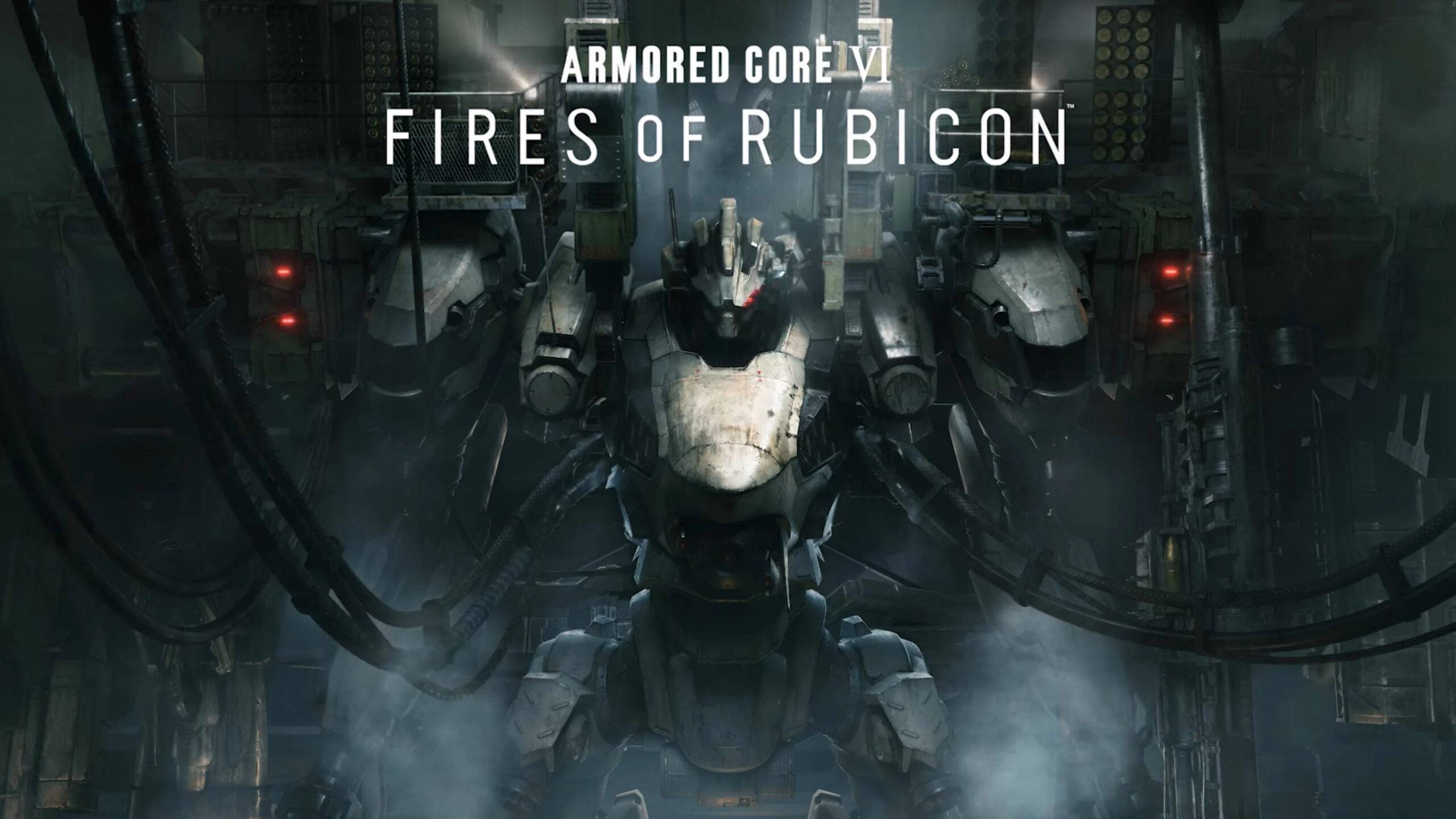
The core aesthetics of my favorite game, Armored Core VI: Fires of Rubicon, are that of fantasy, expression, and challenge. These three types of fun all go hand in hand in the Armored Core series, as the essential appeal of the series (which spans all of PlayStation’s console generations) has always been the fantasy of customizing and piloting one’s own giant vehicular robot to conquer various encounters offered through a set amount of missions—the general world building as fantasy, the customization engine as expression, and beating the missions as challenge.
I am specifically in awe of the perfect marriage between expression and challenge within this framework: the player is given a wide range of weapons and robot body parts to choose from, each associated with its own aesthetic and kinetic language, as well as stats that enable different play styles, which, together with the option to individually paint every part within the customization engine, offers near endless possibilities for player expression; meanwhile, these expressive choices also intimately inform game play feedback—how it feels to pilot your very own customized robot, whether it is heavy and powerful or light and agile, and how aptly it counters the varying enemy placements and terrains in different missions. By presenting challenges that encourage players to experiment with different parts and weapons, the game nurtures player agency in both artistic expression and iterative problem-solving.
Building on these already robust core aesthetics established in previous generations, Armored Core VI heightens the experience of play by honing and perfecting other ways of fun, most notably sensation, via pristinely crisp and satisfying sound design, and narrative, via a thoughtfully written story told through the mission format in an unobtrusive yet ultimately transformative manner.