Slay the Spire is the game I have spent the second most time on (the first being Civilization VI). I deeply admire the designers of this game—within a highly minimalist framework, they designed a clever system and then handed it over to randomness. Regardless of the seed, it manages to create an experience that is full of challenges yet never leaves you feeling entirely “without countermeasures.”
Using the MDA framework, the core mechanic I want to analyze is “draw 5 cards and gain 3 energy at the start of each turn.” This is a “restrictive” mechanic that raises two questions: Can I draw the cards? Can I play the cards? Luck will occasionally solve this problem, but in most cases, it must be dealt with through the dynamic of “deck building.”
Deck building includes a series of operations, such as removing cards (deleting useless cards to increase the probability of drawing key cards), selecting energy-generating cards, and selecting card-drawing cards. There are also some cooler operations, like temporarily removing useless cards during combat. If the deck is constructed properly, you can achieve the highest accomplishment in this game: the infinite. No matter the card order, you can draw any number of cards and restore any amount of energy in a single turn. You have “broken” the rules and become the supreme ruler of the game.
The core fun brought by these elements is challenge. If there were no initial card and energy limitation mechanics, and you could go infinite right at the start of the game—then it wouldn’t be a game at all. The limitations of the mechanic make players feel oppressed in the early game, tormented by various monsters, forcing them to make choices under pressure (whether to remove a card to help with long-term goals, or pick a card to survive the next monster), and finally allowing them to enjoy an unparalleled sense of achievement the moment they achieve the infinite (or other ways to beat the game).
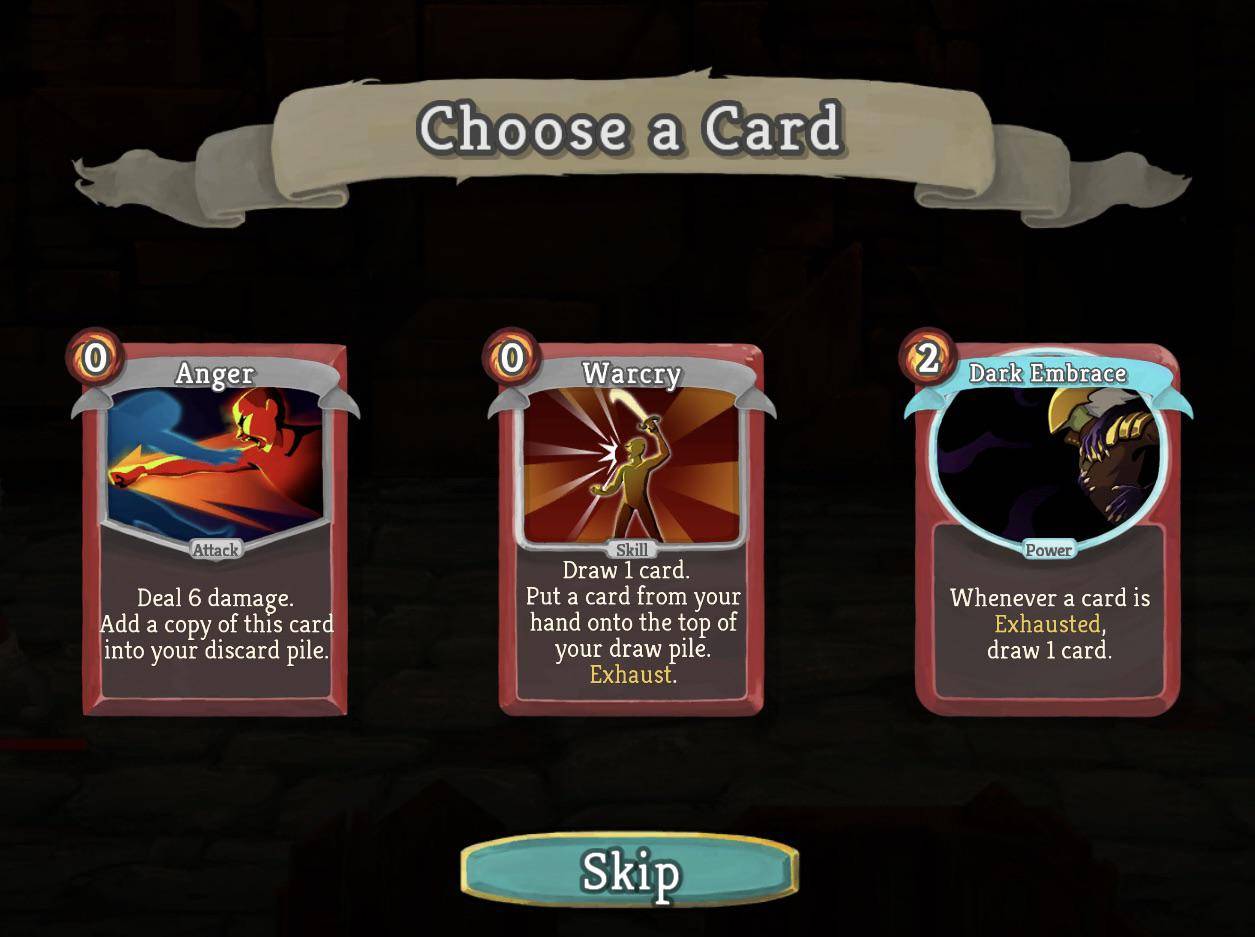
Beyond this, discovery is also a key fun. As a roguelike game, randomness is the core source of its replay value. The moment of selecting a random card after each battle is a “discovery”: players must think about how to make choices in completely new scenarios, unable to simply repeat a single routine to beat every game. This sense of freshness appears after every battle, making players persist in the “challenge” because of the “discovery,” and ultimately keeping them addicted to these joys.