Game: Hades
Creator: Supergiant Games
Platform: PC (Steam), and Xbox 1
Target audience: Teen–adult players who like action roguelikes with strong narrative hooks.
Time played: ~2-3 hours
Webpage: https://www.supergiantgames.com/games/hades/
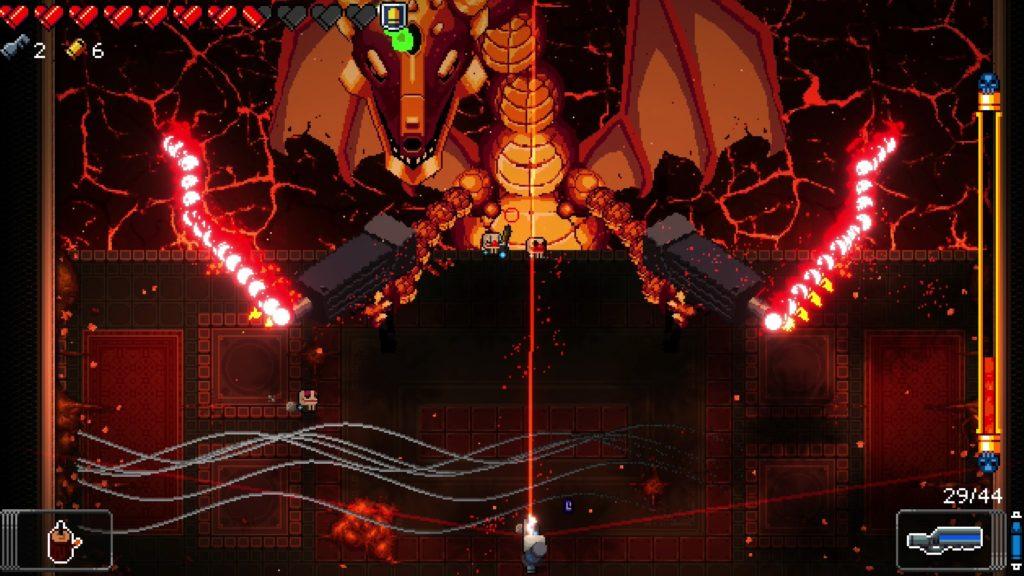
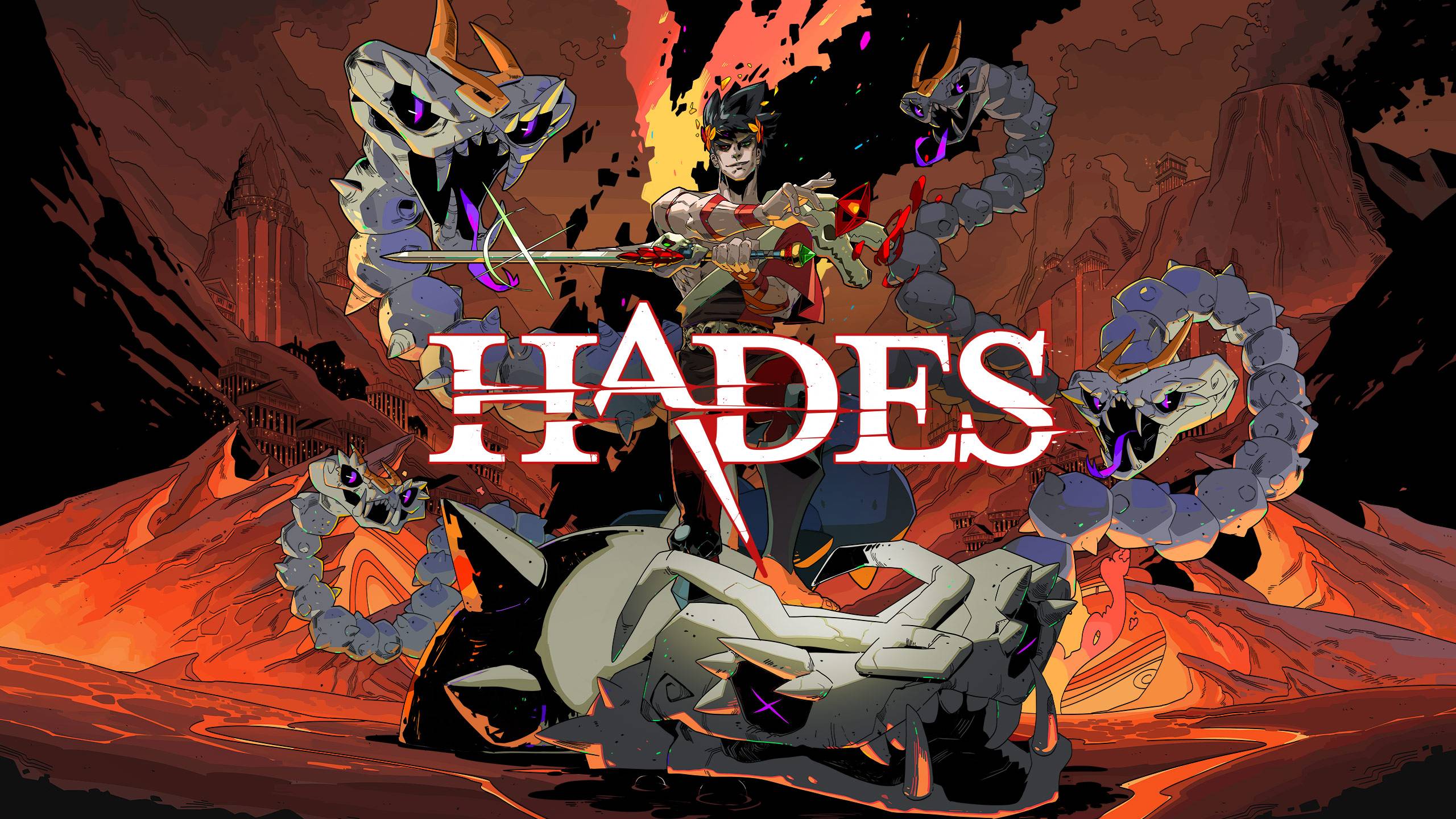
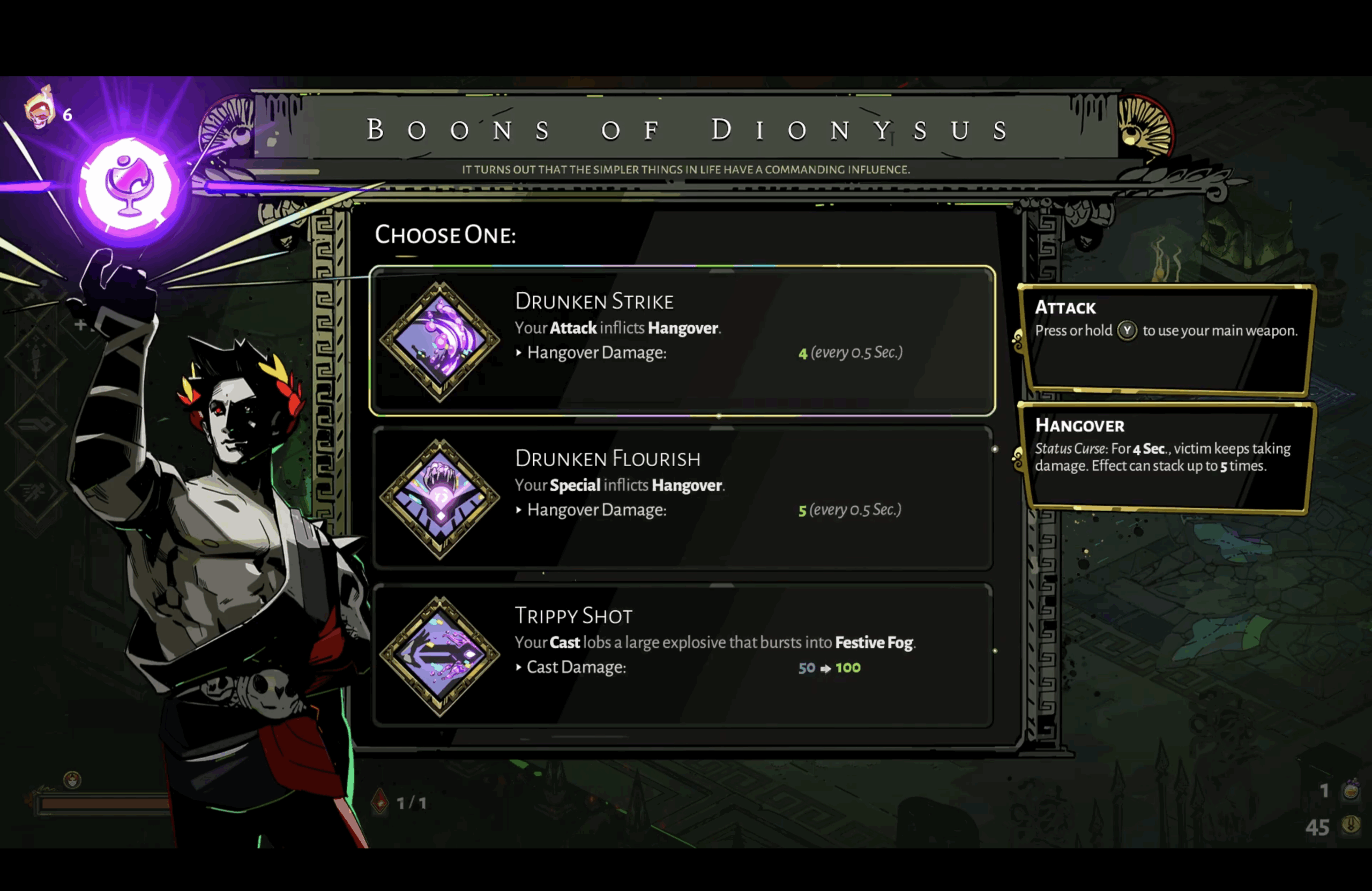
Hades is a roguelike dungeon-crawler where you play as Zagreus, the son of the Greek god of the underworld, Hades. Your goal is to escape the underworld to find your mother, and to do this, you must go through the piles and piles of monsters in all the circles of Hades, all trying to kill you. When you die, however, you’re sent back to the beginning, where you’re able to level up (slightly) and then go back on your path down the road. You pick a weapon, and then improvise a build using the help of the gods, with resources called “boons,” buffs to weapons, abilities, health, or just boosting the chance of finding better things down the line.
Genre:
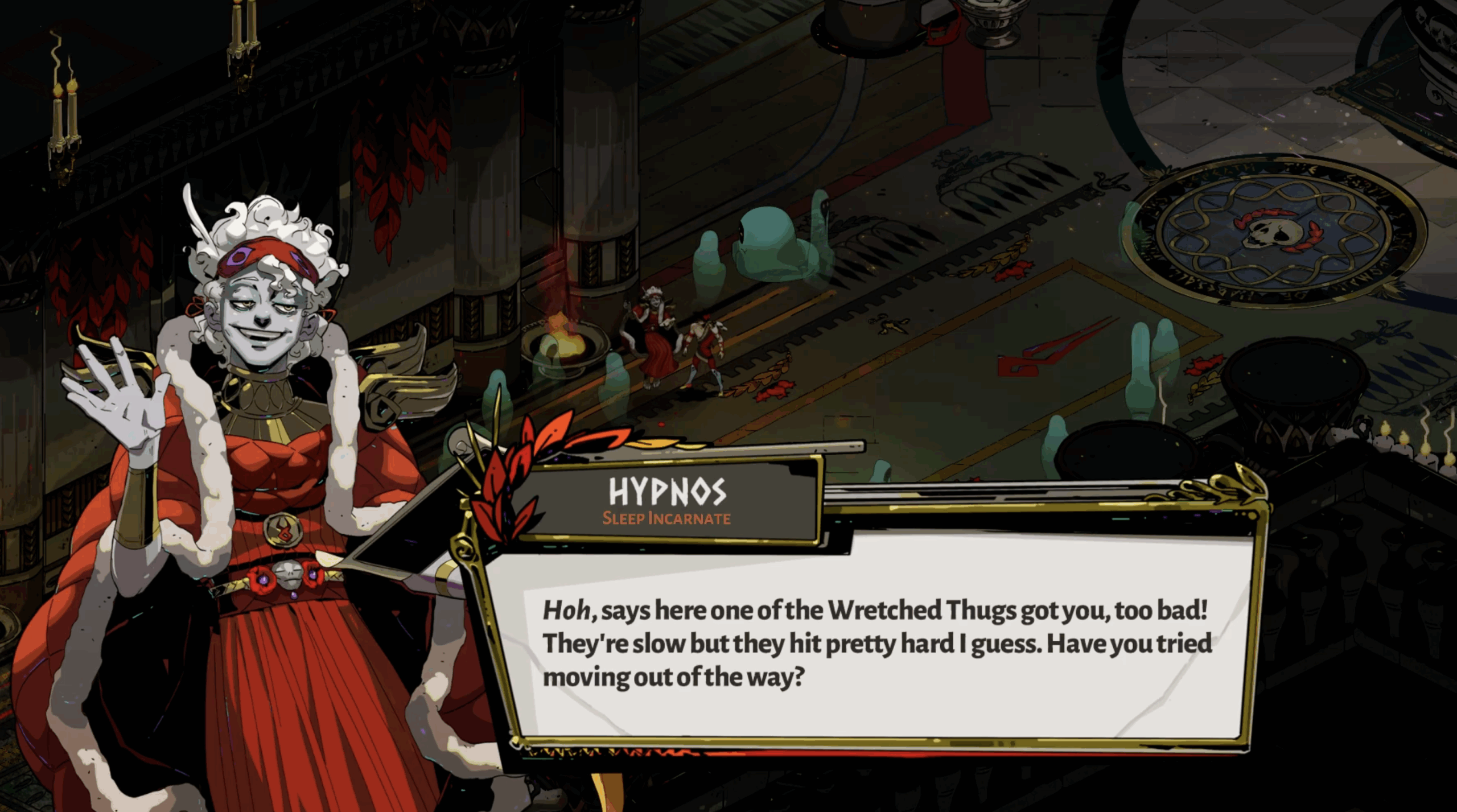
The roguelike RPG dungeon-crawler meta-progression thing with these interwoven visual novel-esque beats is insanely cool and is prime territory for some great system dynamics. The inner loop that the roguelike gives is cool, you do room->reward->next choice->repeat, in order to make your run continue better, while the meta-progression adds longer arcs (upgrading weapons, finding keepsakes by giving gifts to the gods, and upgrading yourself). The narrative/almost dating-sim/visual novel aspects are interesting too, giving the player new dialogue (with a beautifully designed dialogue system), and reveals about the story matter, because these characters help you along the way.
Loop:
- Upgrade with currencies from withing
- Pick a weapon
- Enter the dungeon
then once you’re in…
- clear a room of enemies
- choose a reward from a few options
- go to the next room
- repeat
then once you die, go back to the top.
Arcs:
Meta-progression arc: spending Darkness currency at the Mirror of Night, Unlock weapons and weapon upgrades, give gifts to the gods to get and equip keepsakes
Narrative arc: when you go back to the House, you get new lines of dialogue, new favors from the gods, and narrative reveals, spawning interactive cutscenes
Difficulty arc (heat): I didn’t get this far, but according to my reading online, something happens a while in, where the difficulty gets turned up for everything, once you’re too good.
Delays:
Skill delay: You learn how enemies fight once you’ve died a few times. Once you realize how they come at you, it becomes a lot easier to play.
Investment delay: Once you get upgrades, it takes a while for them to pay off, and it goes real slow. But it’s worth it in the long run.
Narrative delay: You literally can’t get to the end of the story without dying a few times. I don’t think, at least. Well, apparently someone did. But it’s not how you’re meant to play. Once you die, the story moves forward more and more.
I played about two hours on Xbox, then installed it on Steam at home and immediately got farther, from a new save state. The permanent upgrades helped, sure, but the big delta was embodied practice—dash spacing, target priority, reading tells. That practice carried between platforms and paid off right away. It was crazy to me, how good I was on a new save.
Connections to course concepts:
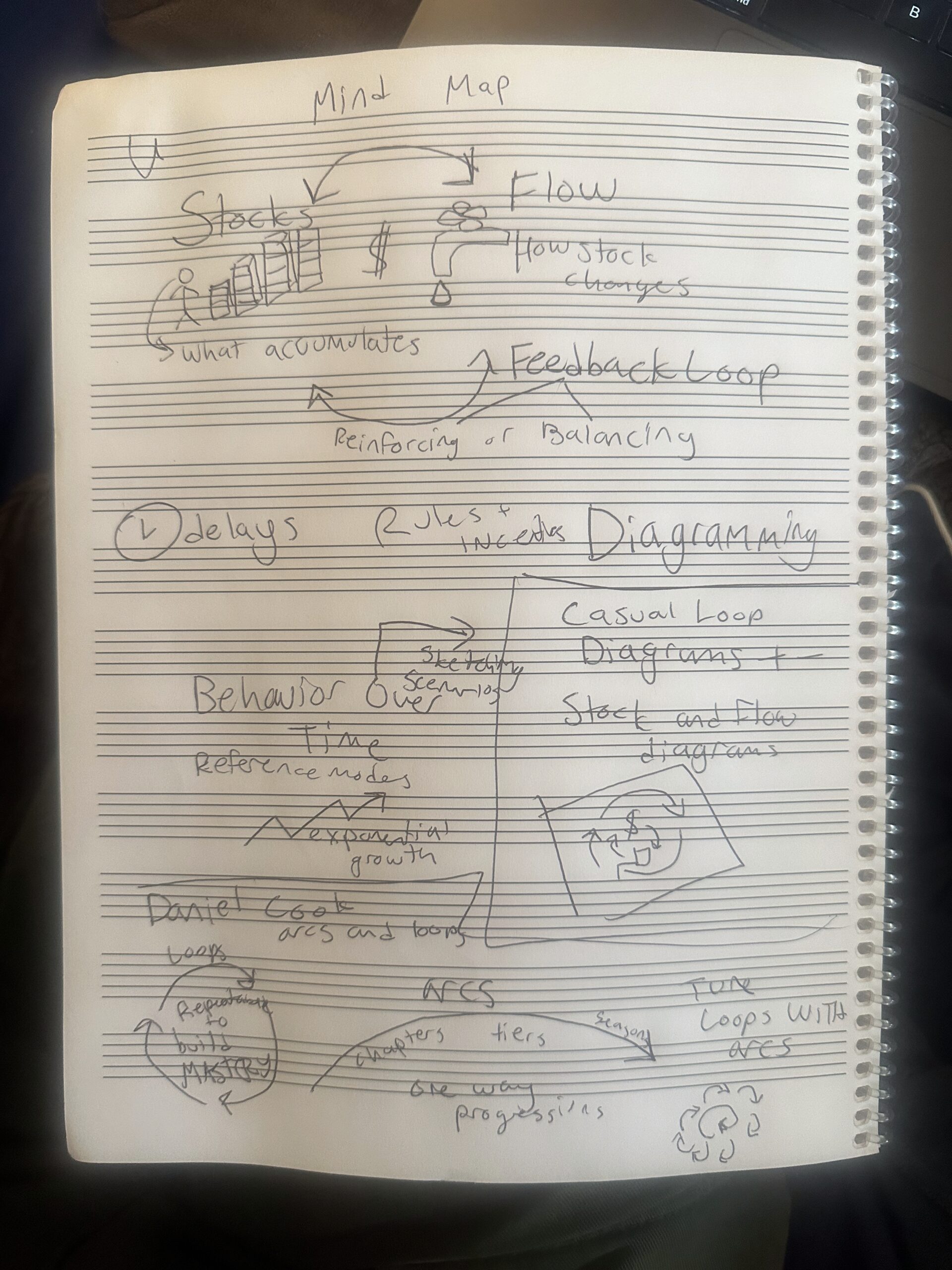
Stocks/Flows: Health and currencies are stocks, damage/second, income/room and boon frequency are flows.
Feedback loops: synergies of boons, density of the dangerous platform hazards, limited healing are all feedback loops that cause the player to have to back up and retry, feeling that one leads to another and so on.

Inspirations:
I really love a roguelike game, and I love how all the pieces fit together to tell a full story, while also being a challenging fighting game. I would love to make a game that explores a system strongly, but also incorporates a grand story arc while you do it.