Introduction
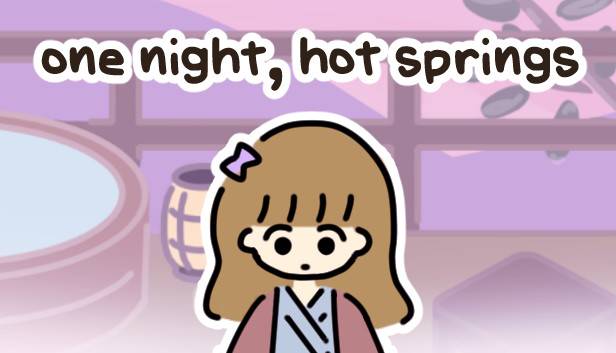
I played “one night, hot springs”, a narrative-driven game created by indie developer npckc, available for free on Steam for Mac. The game is targeted at players who enjoy narrative experiences rooted in story/character development and social empathy. Because the experience is centered around the theme of social acceptance, the game especially appeals to individuals who have marginalized perspectives, especially with respect to gender identity and sexual orientation. During the game, players step into the world of a young trans woman named Haru who is navigating a visit to the traditional Japanese hot springs with her childhood friend. Through multiple choice narrative dialogues, the game reveals Haru’s internal experiences, discomforts, and quiet moments of insecurity as she confronts both systemic and personal barriers to feeling safe, seen, and accepted as a trans woman in a public space. The game’s gentle storytelling immerses the player into a deeply personal situation which allows the player to discover the subtle forms of exclusion embedded in everyday social spaces.
Thesis
Playing “one night, hot springs” as a feminist means engaging with an experience that marginalizes identity through internalizing the small, soft moments of vulnerability as a potent critique of exclusionary social structures. This feminist perspective avoids dramatizing trauma and portraying identity in ways designed to provoke or sensationalize. By respecting Haru’s experiences and avoiding performative hardship for the sake of player entertainment, the game challenges mainstream gaming notions of what it means to “win”. Through guiding the player through experiences of emotional turmoil, bodily autonomy, and social vulnerability – especially in gendered spaces – the game centers soft resistance and emotional truth as acts of agency. This aligns with Shira Chess’s idea of feminist games as a training ground for practicing agency through navigating complexity and building empathy, centering affective systems over traditional win states.
Analysis
The core mechanics of the game are dialog reading and small action choices which shape the narrative path of Haru’s experience at the hot springs. It is a mechanically simple game, but I want to highlight the emotional depth of the choices themselves. For example, one of the choices that a player must make is whether or not Haru wants to go to the hot springs for her friend’s birthday, as depicted below:

Although this choice may seem mundane for cis players, it carries real stake for a trans woman in a gendered space. This decision captures a broader feminist critique of who gets to feel safe, integrated, and relaxed in everyday leisure environments. The mechanic of decision-making in this feminist world creates a dynamic of internal negotiation and social risk for an aesthetic of quiet tension and empathy.
Additionally, the game utilizes visual and audio cues sparingly, but intentionally. Referencing the below image, very little changes from screen to change. Facial emotions and background scenes don’t change and the music remains consistent (almost like elevator music); only the text itself and character positioning is variable from screen to screen.

The pastel color palette, relaxed pacing, and calm piano music serve to contrast with Haru’s internal anxiety, creating dissonance that underscores emotional vulnerability. These quiet moments of tension evoke what Chess describes as the “affective systems” of feminist games; it makes players feel through slow, careful reflection rather than rapid action
Finally, I would like to highlight one of the most powerful examples of the game’s feminist narrative design which appears in a private conversation between Haru and Erika about what it’s like to be trans in Japan. Rather than offering a dramatic turning point or moral resolution, the scene unfolds as an honest, somewhat awkward dialogue between friends as seen below.

Throughout the conversation, Haru expresses her exhaustion with having to explain herself, while Erika struggles (albeit earnestly) to understand. This exemplifies what Shira Chess refers to as the “narrative middle,” where the story lingers in emotional complexity, rather than following the mainstream climactic arc or closure that traditional games embody. There’s no grand epiphany or reconciliation; instead, the player sits with the tension of imperfect ally-ship and the underlying burdens of marginalized identity. By dwelling in this middle space, the game mirrors real-life conversations around gender and identity which are often unfinished, uncomfortable, and deeply human. It is precisely in this narrative refusal to “resolve” that the game reveals its feminist core, inviting the player to reflect, not react.
Comparison
When comparing “one night, hot springs” with the game “Florence”, it is interesting to note how each game uniquely shapes a feminist environment. “Florence” leverages nostalgia and coming-of-age tropes to establish emotional milestones which culminate in a beautiful budding romance as the main site of transformation. On the other hand, “one night, hot springs” lacks a clear emotional arc and climactic resolution to draw attention to the present-tense emotional labor of simply existing as a trans woman. Rather than offering fantasy or longing for the past, the game invites players to dwell in the uncertainty through micro-interactions rooted in social realism. The discomfort of asking for a private bath, the pain of hearing well-meaning but ignorant comments from a friend, or the cautious joy of being seen are all small, but profoundly meaningful moments. Where other games might romanticize transformation through love or loss, “one night, hot springs” reorients transformation as internal, relational, and incremental. It carves out narrative space for emotional truth over narrative satisfaction.
Critique & Improvement
While the game succeeds in creating an emotionally resonant and feminist narrative experience, its core limitation lies in the minimal integration between its mechanics and the emotional stakes of the story. Because the game mechanic of choosing dialogue options remains flat across the entire experience, game dynamics are also limited, reducing the sense of urgency, complexity, or personal consequence that could otherwise deepen the player’s engagement. As a result, while the aesthetics of empathy and reflection are clearly present, they’re not mechanically reinforced. The decisions the player makes often feel emotionally meaningful but structurally inconsequential.
This disconnection between narrative and mechanics ultimately weakens the game’s ability to fully realize its feminist goals. If the gameplay is meant to simulate the emotional labor of navigating gendered spaces, then the lack of mechanical evolution fails to model that labor dynamically. For example, the emotional weight of choosing whether to enter a communal bath is profound, but the game doesn’t visually or structurally respond to that choice beyond minor text shifts. The moment is impactful in narrative, but not in form.
A meaningful improvement would be to incorporate responsive visual and environmental feedback to reflect Haru’s emotional state. For example, changes in the background color palette, text speed, facial expression, and ambient sound could shift depending on the choices made to mirror Haru’s rising anxiety or relief. This would tie the mechanics more directly to the aesthetics, reinforcing the emotional consequences of the player’s decisions and making the experience more immersive. By integrating emotional states into the game’s formal elements, the player’s sense of agency would be more viscerally felt, aligning more powerfully with Chess’s vision of feminist games as agentic training tools rooted in affective systems.