Town of Salem
Introduction
Town of Salem is a social deduction game made by BlankMediaGames. It first came out on PC on December 15, 2014, and later was released on iOS and Android. It is meant for players who enjoy role‐playing and mental challenges, especially those who have played board games or online deduction games before. I chose it as a competitive because, like our Rumors game, it is a social deduction game. Town of Salem adds many new roles and night‐time powers, which change how players get information and interact. These ideas help us think about the mechanics of Rumors.

More Roles, Deeper Strategy
Compared with Mafia, Town of Salem’s biggest change is that it has dozens of different roles. For example, the Bodyguard can protect a player from being killed, and the Jester will reveal themselves to make others vote for their execution. At the start of each game, a wheel spins and everyone is given a random role. Each role has its own power and needs its own strategy. In my first two games, I played as the Jailor and as the Serial Killer.

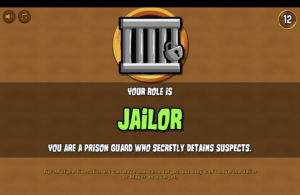
In terms of dynamics, the ways to get information are very varied. Players must collect many small clues and decide how and when to use their powers. Sometimes you must bluff and pretend to be another role. Other times you wait for the right moment to share what you know. In my first round as Jailor, someone else claimed they were the Jailor before I could speak. I knew they were bluffing, but I cannot defend myself and was sentenced to death.

From an aesthetic view, the many roles and interactions create strong story moments. Each night action or death message can become a “classic moment.” For example, a Spy who looks like a normal Villager might suddenly say, “I found out you are the Bodyguard.” This also makes the game more challenging. Players must spot tiny clues in chat, defend themselves if they come under suspicion, and choose the right time to expose others. This mix of tension and surprise makes the deduction very engaging.

Outdated Core Gameplay, Uncontrolled Complexity
However, Town of Salem has clear drawbacks. The large number of roles and complex skills make it hard for new players to learn and decide well. Even though the extra roles give more strategy options, they also raise the learning cost. Many first‐time players feel confused and cannot really join the guessing game. By contrast, Among Us uses a simple mode with no special roles first, so newcomers can learn the basic flow before trying the more complex version. This makes it easier for new players to start.
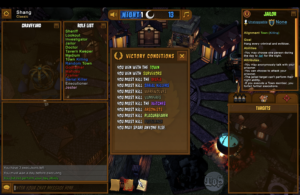
For example, in my first game as Jailor there were ten different roles at once, each with its own night power and rules. I had to read all the descriptions carefully, but before I could finish, the game forced me to pick someone to jail. I chose at random, which ruined my experience and might have upset the other player. Also, although Town of Salem adds many roles, it still uses the same day‐night cycle and public voting of Mafia/Werewolf, so its core loop did not really change.
What We Can Learn from It
Town of Salem shows a good way to keep experienced players from getting bored, but its high complexity makes it too hard for beginners and limits its use as a social game. Our Rumors game aims to balance new‐player friendliness with strategic depth. We focus on simple love/hate statements and give each player only a few chances to confirm a statement. There is no elimination, the information format is the same for everyone, and the pace runs in a straight line. This helps all players stay involved and enjoy the challenge of rebuilding the full relationship network.