


“Two roads diverged in a wood, and I— I took the one less traveled by, And that has made all the difference.” —
Game link
Play the game first: https://jenliyin.itch.io/the-road-not-taken
Overview
Growing up, I felt the constant pull between what I wanted and what others expected of me. The “safe path” was well-defined: a stable job, family pride, and an easy answer when people asked about my future. But a part of me kept looking at the other route—a riskier one, without guarantees or familiar benchmarks, but closer to who I really was.
In developing this game, I realized that this tension isn’t just my story. When Katrina played, she looked up and said, “This is Stanford.” It hit me that many people around me feel the same push and pull, especially in places where success is almost scripted. We’re surrounded by clear models of what achievement “should” look like, and we’re all familiar with the pressure to fit into that mold. But in that pressure, we lose sight of our own voice and the paths we might actually want.
This game is about that conflict. It’s a chance for players to face decisions shaped by real-life pressures and personal dreams, making choices they might not usually consider. My goal was to create a future where players can step back and weigh what they value most—an opportunity to explore who they are, outside the noise of expectations.
Reflection & Learning
The development of this game provided valuable insights across multiple areas of interactive storytelling and player engagement. I’ll break down my reflections and learnings into four key areas: Crafting Tension, Effective Word Choice, Player-Centered Design, and Narrative Structure & Flow.
1. Crafting Tension
One of the most significant aspects I learned was the importance of creating tension throughout the narrative. Tension isn’t just about dramatic decisions; it’s about making every choice feel meaningful and charged with potential consequences. The structure of a game relies on this constant undercurrent of tension to keep players engaged, especially when dealing with internal conflicts and life choices.
- Building Anticipation: Early feedback from players indicated that the opening segments lacked immediacy, which diluted the sense of anticipation. By shortening the introductory passages and introducing the core decision (safe vs. risky path) earlier, I was able to engage players right from the start, setting up an initial layer of tension.
- Pacing & Release: I realized that tension isn’t about maintaining a high-stakes tone throughout but about carefully pacing it to create a balance. By incorporating lighter moments, as suggested by Sam and Jason, I allowed players moments of reflection and relaxation, which helped the more intense choices stand out. This tension-release cycle was crucial for maintaining long-term engagement and making key decisions feel impactful.
- Decision-Making Tension: I learned that tension is best built by creating choices that feel challenging but necessary. With each decision point, particularly in the risky path, players felt the weight of their choices. By crafting the narrative to reflect potential future consequences subtly, I maintained tension without overwhelming players, making every click meaningful.
2. Literary Quality
Word choice was another area where I grew significantly. Interactive fiction is unique because it relies on concise, evocative language to convey complex emotions and thoughts. My goal was to ensure that each passage not only advanced the story but also resonated with players on a personal level.
- Clarity vs. Ambiguity: Initially, some passages were too ambiguous, leading to player confusion. Edwin’s feedback highlighted the need for clearer prompts and descriptions to help players navigate choices. I learned to balance clarity and subtlety in my wording, ensuring players understood the stakes of each decision while leaving room for personal interpretation.
- Evocative Language: The emotional weight of the game’s premise—balancing security against personal dreams—required thoughtful, evocative language. Feedback from Kristina and Shi underscored the power of carefully chosen words in shaping player engagement. As a result, I refined inner monologues and flashbacks, focusing on literary elements that conveyed both internal conflict and aspiration.
- Personal Resonance: To make the narrative relatable, I incorporated language that reflected common experiences, such as societal pressure and self-doubt. Using words that echoed familiar conversations and inner thoughts made the protagonist’s journey more accessible, allowing players to see parts of their own lives in the narrative.
3. Player-Centered Design
Through each playtest and iteration, I learned the importance of player-centered design, where feedback directly informs game development. Each playtest revealed specific insights that shaped the narrative, choice prompts, and even the structure of the endings.
- Iterative Adjustments Based on Feedback: Each player’s experience provided unique perspectives on pacing, choice clarity, and emotional engagement. For instance, Jason’s feedback on the initial passages being too lengthy led me to condense the introduction, immediately drawing players into the core decision. With each version, the game became more accessible and engaging, directly improving based on specific player feedback.
- Distinct Endings for Personalized Experiences: Feedback from Amy highlighted the need for distinct endings to make each choice feel consequential. Creating varied endings for the safe and risky paths allowed players to experience a story that felt unique to their choices, enhancing the personal resonance of the game. The result was a game that could be replayed with different outcomes, encouraging exploration of alternate paths.
- Choice Accessibility and Visual Cues: Edwin and Shi’s feedback on choice accessibility led me to add color-coded text, helping players distinguish safe versus risky choices at a glance. This visual cue not only made the game more intuitive but also reinforced the impact of each decision, making the narrative more accessible for all players.
4. Narrative Structure & Flow
The final area of learning was in narrative structure and flow. A well-structured narrative in interactive fiction is crucial for maintaining immersion, especially when the story includes branching paths. I learned that managing transitions and balancing the rhythm of the story can make or break the player experience.
- Smooth Transitions: Kristina’s feedback emphasized the need for smoother transitions between reflective moments and present-time choices. To address this, I added connecting passages that bridged flashbacks with current decisions, allowing the narrative to flow more naturally. These transitions helped ground the player in the protagonist’s journey, keeping the emotional arc consistent across different paths.
- Pacing Adjustments: Each playtest underscored the importance of pacing in maintaining engagement. With longer passages broken down into smaller clickable segments, as suggested by Sam and Jason, players could process each thought without feeling overwhelmed. This allowed players to feel a natural progression, creating a rhythm that kept them engaged.
- Balance Between Choices and Reflection: The game required a balance between interactive choices and reflective moments. Initially, reflective passages felt like pauses, disrupting the game’s pace. By reworking these reflections as shorter, clickable moments with clear stakes, I learned to blend introspection with progression, creating a seamless narrative experience.
History of Versions & Iterations
This project evolved from simple branching choices into a full-fledged dystopian narrative where players confront societal pressures and explore the consequences of their choices. As the game developed, storytelling elements like character depth, setting detail, and pacing became essential to creating an immersive, thought-provoking experience. Inspired by story-driven games like Oxenfree and Gone Home, later versions prioritized these elements to enhance emotional impact and engagement.
Version 1: Initial Paper Prototype
The initial paper prototype established a basic structure, offering players a choice between a “safe” and “risky” life path. This version primarily focused on the mechanics of branching narratives rather than detailed storytelling, using individual cards to present each choice. The introductory passages outlined societal expectations and hinted at the protagonist’s internal conflict but lacked a fully developed setting or complex character motivations. This version served as a foundation to explore basic themes but indicated the need for a richer story world and more detailed character perspectives in future iterations.
Version 2: Enhanced Paper Prototype with Flashbacks
The second paper prototype introduced flashbacks, creating moments where players could glimpse into the protagonist’s past influences. Flashbacks on separate cards revealed dialogues with family and friends, hinting at the societal pressures that shaped the protagonist’s mindset. This version deepened character motivation and explored the roots of the protagonist’s conflict between personal desires and external expectations. However, with the limited space on cards, there was little room to develop a vivid setting or establish a clear sense of the world around the character. These limitations led to the decision to transition to Twine, where more immersive, detailed storytelling could be achieved.
Version 3: Transition to Digital Format in Twine
Transitioning to Twine, the game’s narrative was expanded, allowing for smoother integration of flashbacks and more room to build character depth. The introduction was shortened to heighten player engagement, quickly presenting the central dilemma. Twine’s digital format enabled deeper immersion, allowing players to click through past memories and inner thoughts fluidly, setting the stage for more sophisticated storytelling. Color-coded choices added visual cues to distinguish between paths, making the impact of each decision clearer. This version began establishing a tone that would resonate with players, inspired by the emotional storytelling found in games like Creatures Such as We, emphasizing introspection and personal choice.
Version 4: Enhanced Tone and Worldbuilding
With feedback focused on emotional engagement, Version 4 introduced humor and lighter moments into the protagonist’s inner monologue, providing much-needed relief in an otherwise intense narrative. Setting descriptions were also expanded to build a stronger world around the protagonist, hinting at a society where conventional success was idealized while unconventional paths were discouraged. Inspired by dystopian themes in Hunger Games and Mad Max, the worldbuilding began to emphasize consequences of conformity versus independence, grounding players in a world that felt familiar yet restrictive. Flashbacks were enriched to showcase varied perspectives, giving players glimpses into the protagonist’s relationships and the stakes tied to each choice.
Version 5: Expanded Endings and Dystopian Consequences
Version 5 focused on crafting distinct endings that reflected the dystopian consequences of each path, influenced by the player’s choices. The endings were designed to depict different forms of success and fulfillment—or lack thereof—depending on the path chosen. Here, storytelling took center stage, with each conclusion providing insight into the long-term impact of choosing stability over personal aspiration, or vice versa. Inspired by 80 Days’ resource management mechanics, the game subtly incorporated decisions that affected not only the protagonist’s fate but also hinted at broader societal effects. These endings offered players a powerful reflection on their journey, reinforcing the game’s dystopian themes.
Version 6: Smoother Narrative Flow with Interconnected Pathways
Building on feedback about the need for flexibility in choices, this version introduced smoother transitions and interconnected pathways between the safe and risky paths. To deepen immersion, transition passages connected flashbacks, reflective moments, and the protagonist’s current decisions, maintaining emotional continuity. This version also introduced world-specific terms and phrases that grounded players in a recognizable yet unsettling setting, adding to the dystopian atmosphere. Inspired by the pacing and branching narratives of Oxenfree, players could now reconsider their choices midway, transitioning between paths to explore the fluidity of the protagonist’s journey and the repercussions of each decision within this restrictive society.
Version 7: Final Polished Revision with Advanced Narrative Techniques
The final version integrated all storytelling improvements, applying advanced narrative techniques to enhance player immersion. Each ending now provided not only a personal resolution but also a commentary on the world’s dystopian elements, reflecting on how individual choices can shape society as a whole. Setting descriptions became more vivid, highlighting the oppressive atmosphere subtly influenced by the protagonist’s path. Pacing was carefully adjusted to balance reflective moments with storytelling, creating a rhythm that allowed players to engage deeply with the character’s choices and the world around them. Inspired by Gone Home’s environmental storytelling, the protagonist’s inner thoughts and setting details worked in harmony, drawing players into a story that felt both personal and universally relevant.
This final version marked the culmination of all narrative elements, offering an interactive experience where players could explore life-defining choices in a dystopian setting that mirrored their real-world struggles with societal expectations. By integrating character depth, worldbuilding, and pacing, the game delivered a reflective, immersive journey that resonated on multiple levels.
Photos/Video Clips of Game Testing
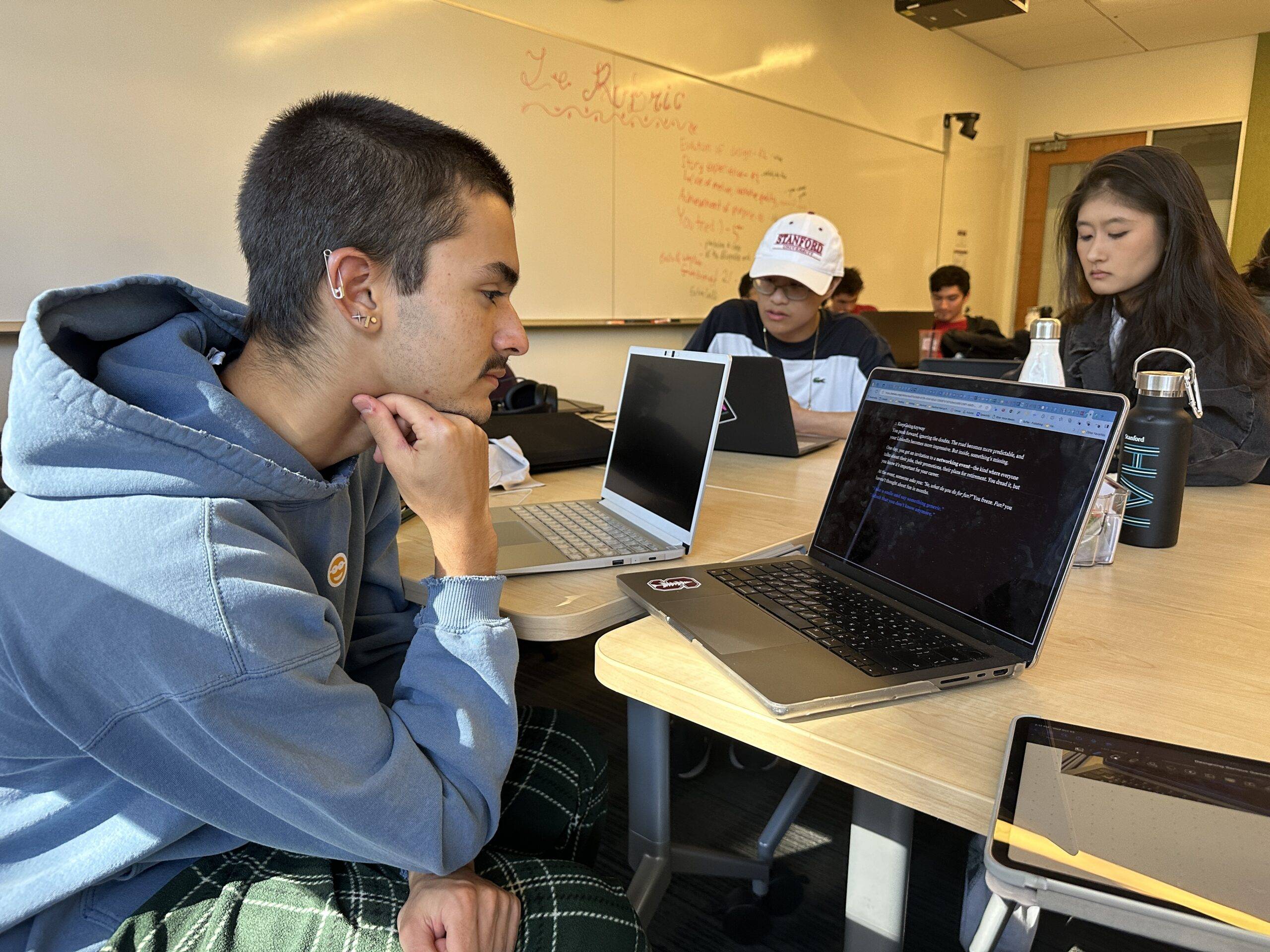
Initially, players noted that while the game’s premise was intriguing, the introduction felt lengthy, impacting engagement. This led to adjustments that condensed the introduction, bringing players more quickly to the central choices, which increased initial involvement and heightened interest in the protagonist’s journey.
As the game progressed, feedback centered on the storytelling quality and choice clarity. Several players appreciated the emotional depth added through flashbacks and inner monologues, yet they suggested breaking down text-heavy passages into shorter, more interactive segments. The inclusion of humor and relatable dialogue, inspired by casual conversations, was another direct result of player feedback; it added balance to the introspective tone, making the protagonist’s voice feel more authentic and grounded. Additionally, players highlighted the importance of distinct endings, encouraging me to develop unique outcomes based on the paths chosen, which enhanced replayability and gave each choice more weight.
Overall, the playtests revealed the need for smoother transitions, stronger character development, and dynamic choice options that allowed players to explore alternative paths. Each round of feedback guided targeted improvements in narrative flow, character motivation, and thematic resonance, ultimately resulting in a more immersive experience. By listening to player insights, the game evolved from a straightforward decision-based narrative into a nuanced, story-driven exploration of societal expectations, self-doubt, and personal growth.


Future Considerations & Next Steps
Reflecting on this project, I’ve identified several areas for further improvement and ideas for future iterations. Each of these ideas builds on the lessons learned from playtesting and feedback.
1. Enhanced Tension in Pacing
In future projects, I’ll look to incorporate even more finely tuned pacing that integrates suspense with gradual release. Building on what I learned about tension, I could experiment with more dynamic branching paths, where minor choices compound into larger consequences, maintaining player engagement through layered tension.
2. Richer Literary Elements
Further refinement of word choice and internal monologue would deepen player immersion. Future projects could include more interactive flashbacks or personalized narration that adapts to prior player choices, making each playthrough feel uniquely personal. This would expand on what I learned about resonant language, letting players feel even more connected to the protagonist.
3. Expanded Visual Cues and Accessibility
Adding subtle visual elements, such as background colors or icons, could enhance the story’s accessibility and add a layer of aesthetic appeal. Based on feedback about choice clarity, future games could incorporate a range of visual cues, from highlighting key terms to using subtle animations to emphasize emotional shifts.
4. Diversified Endings with Reflective Epilogues
To create even more meaningful outcomes, future games could include a “reflective epilogue” where players see the long-term effects of their choices. By expanding on the varied endings model, I could give players an even more personalized experience, allowing them to see the protagonist’s life years after their decisions, making each ending feel like a full-circle conclusion.

I loved the sense of bliss when you choose the path less traveled! I really liked the peacefulness of getting to chat with a stranger. The “expected” road was very stressful, even though we might expect it to be the less stressful route. I thought that was a really interesting lesson to learn.
And I’d love to experience higher stakes and have more to lose if I choose the road less traveled! When I started, I felt I had nothing to lose, so I chose the unexpected path right off the bat. I think it would be interesting to feel that risk, that sense of how much I could lose if things went wrong!