Nox is a mystery escape room game created by Everbyte and released in 2019. The target audience is teens and adults and it is a single player game in which the player explores a mansion, by looking at objects, uncovering the narrative, and solving puzzles. It uses point and click to create brain-teasing puzzles in an escape room-style.
I found Nox to be extremely engaging – it was hard to put down the game. I argue that by using a diverse set of puzzles and by effectively weaving the puzzles into the narrative, Nox facilitates narrative and challenge as kinds of fun.
Variety of Puzzles
Both the types of puzzles and the difficulty level varies throughout the game, successfully maintaing the challenge aesthetic. The designers incorporated object puzzles with code puzzles with classic puzzles.
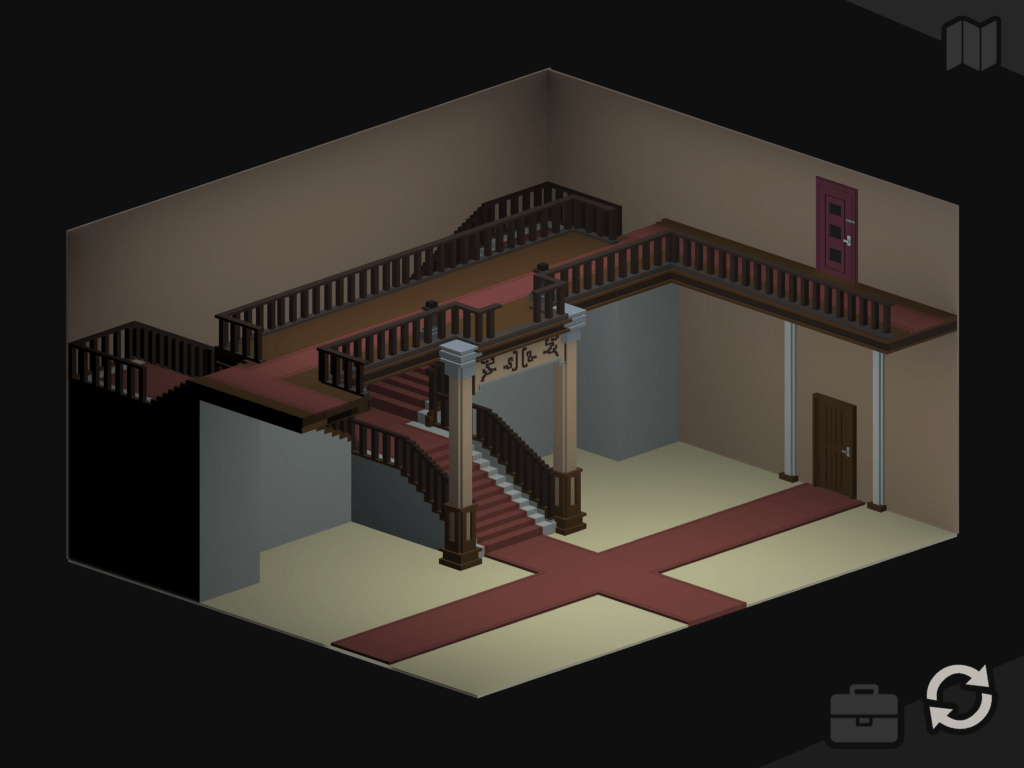
For example, the player is required to use an ax to break part of a staircase and push a glass statue through (see broken rail on top hallway). Some doors require codes (top door) while others require keys (bottom door); one door had a missing knob and another was covered in wood that the player had to hammer through. Nox takes several hours to complete, and by incorporating different kinds of puzzles, the game does not feel repetitive or boring.
By incorporating different types of puzzles, Nox is appealing to a wide audience – other puzzle types include beating a video game level, decoding numbers using math, finding letters throughout the house, ordering bottles of wine according to color, etc. Anyone can find a puzzle that they like in Nox. See more examples below.
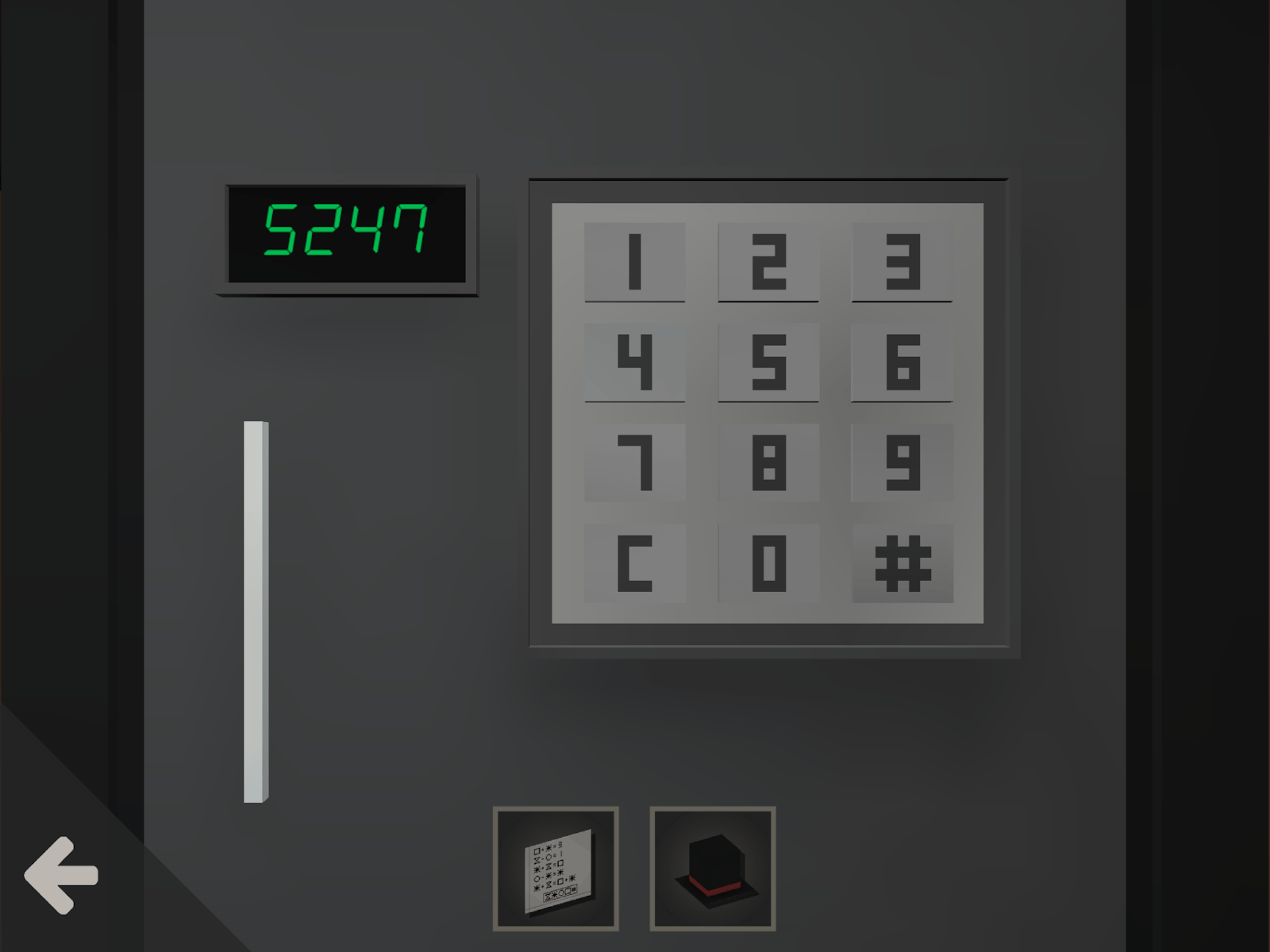
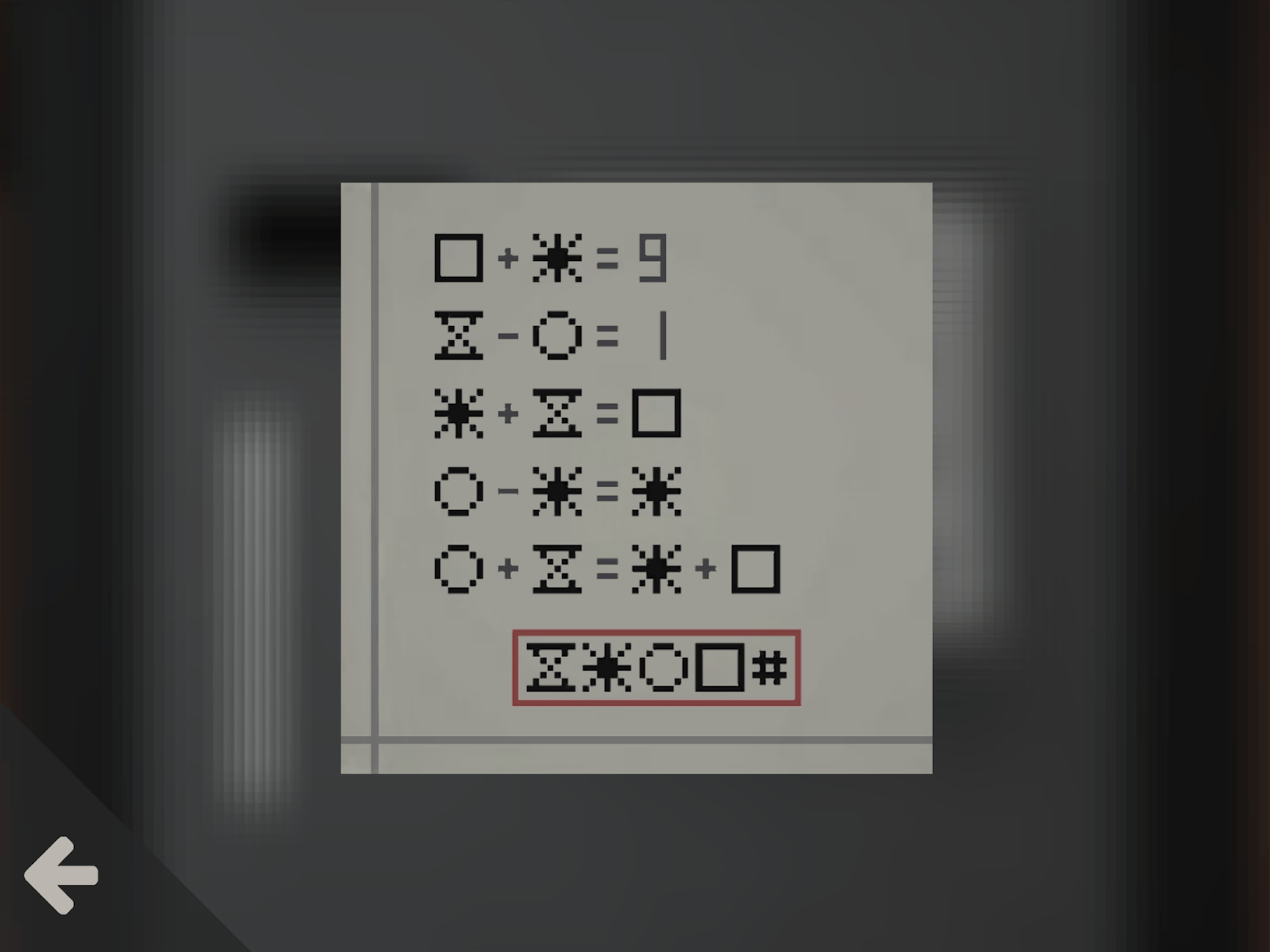
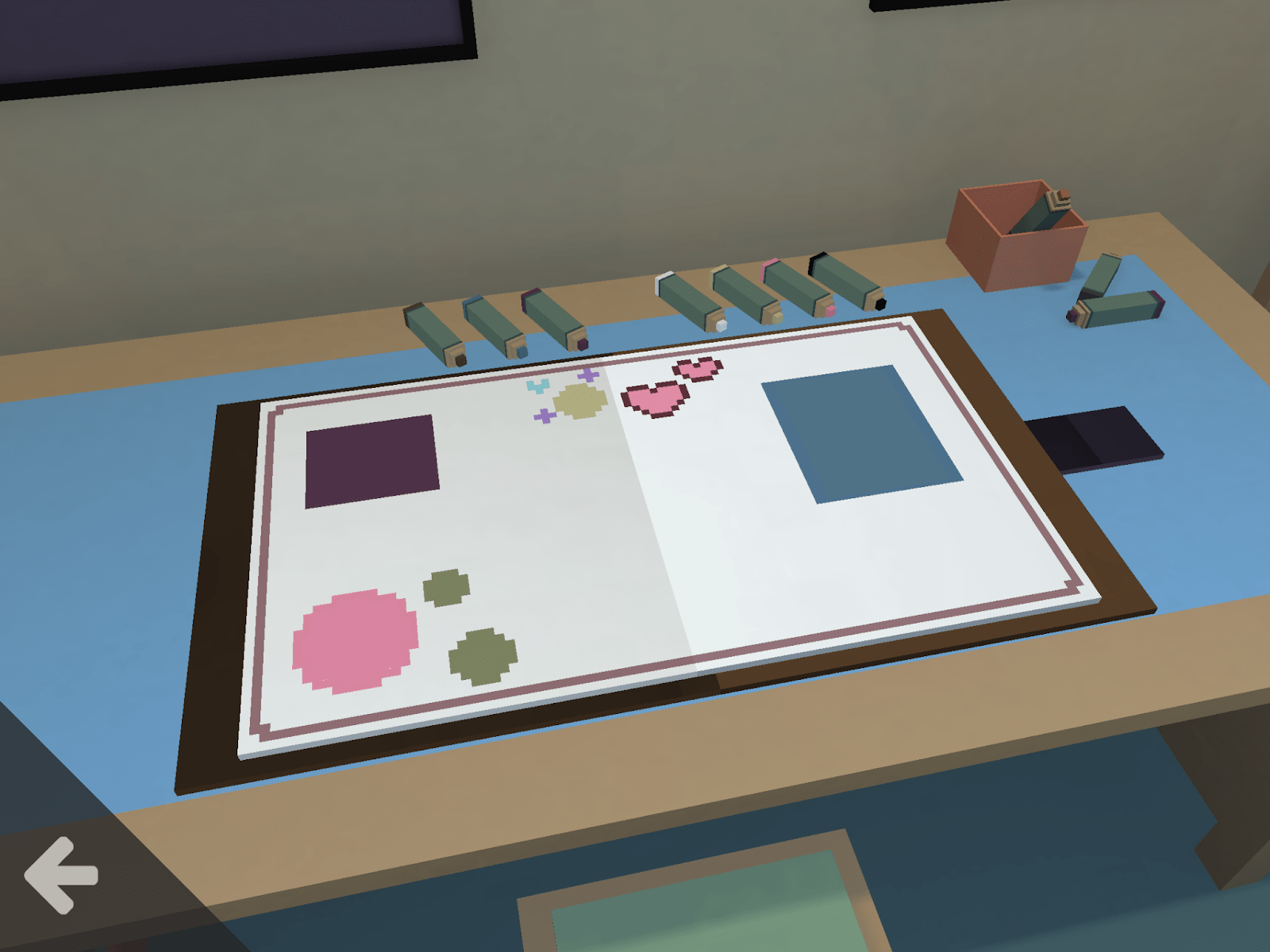

The puzzles are well-balanced in terms of difficulty. In each room, there are about 4-8 objects or parts of the room to explore, so players don’t feel overwhelmed by choices yet they feel a sense of agency. Moreover, the designers developed a hint system with unlimited hints for each challenge. The first hint always says “Your next task is located in ___ room” and further hints give more detailed instructions.
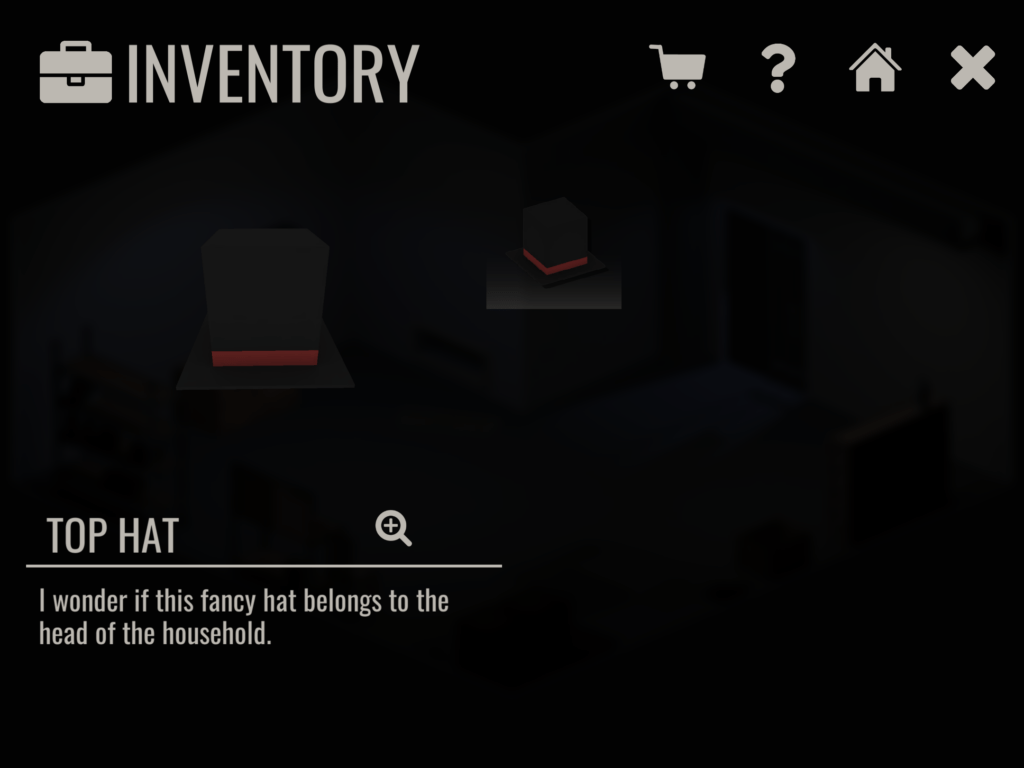
The player’s main resource – their inventory – comes with descriptions that provide insights with how it may be used or what the character thinks of it (example to left). This is another way that the designers incorporated hints, reducing the difficulty of complex puzzles. This design choice also allowed them to give the character more emotion, propelling the narrative.
All items in the inventory are single use, which makes puzzles more balanced by giving the player fewer choices. This diverges from real life – hammers and flashlights that could normally be used repeatedly disappear after use. However, this intentional decision makes the game more straightforward and inventory management takes up less space in the player’s mind.
Puzzles and Narrative
The puzzles and the narrative complement each other because of the use of commentary from the player and the sense of urgency to escape the mansion generated by the eerie mood.
The player constantly provides comments – through text on screen – on objects and the situation, even when the player hits a dead end. For example, the pantry is a dead end so the character says “I don’t feel hungry at the moment” – these comments help the mansion feel more alive. This commentary also helps the player get to know the character they are playing, which is part of the mystery. For example, the player sees cigarettes and says “I don’t smoke,” they see creepy art and wonder who would decorate that way, they say when things look familiar, and they acknowledge when they feel scared. By understanding the character, the player becomes more compelled to complete puzzles and solve the mystery.
Additionally, the entire game is painted in an eerie light. The first room is a locked cell and the character seems to have no memories; no further background is given. The premise itself is creepy enough, but the narrative unfolds in a way that builds suspense and urgency to leave the mansion. For instance, one puzzle – to move three chairs to the dining room table – results in a giant chandelier falling on the table, making the character believe someone purposely tried to harm them. One of the last rooms contains TVs with security footage of the house, and the character assumes somoene has been watching them. By saving creepier puzzles for the end and by creating puzzles that cause objects to move, the player is increasingly unsettled by the situation.
Design Decisions and Critiques
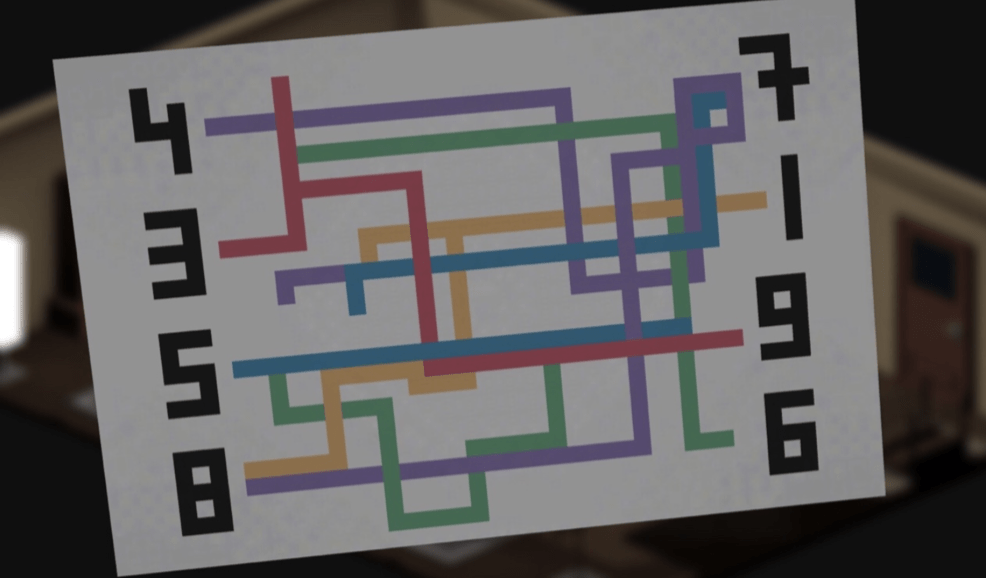
There were a few puzzles that were not designed well. For instance, this puzzle contains the answer to a 3-digit combo lock that is yellow. The solution is the numbers connected by the purple line, but a simple fix would be to make the relevant line yellow like the lock.
Additionally, the final puzzle involved finding tiny letters hidden in three different rooms, and that was not well balanced – it was annoying to retrace steps for something so missable.
I would also be curious to experiment with time in this game. The game builds suspense and a sense of urgency to leave the mansion, so a timer seems to fit with this premise. However, the final plot twist is that the whole game is the character’s past trauma, so there is actually no time pressure. Moreover, the designers were very lenient with the hints – hint use was not tracked at all. The decisions to use unlimited hints and no timer suggest that designers want players to carefully explore the environment and take in all details without focusing on urgency, despite urgency being portrayed throughout the environment. This makes sense, though, as the entire game is beautifully and carefully designed.