Skip to content
The Mechanics of Magic

The Mechanics of Magic

Game Design Writings by Students at Stanford taking 247G and 377G

  • Library
    • CS247G Community Game Design Resources
    • Game Design Resources
    • Graphic Design for Game Designers
    • Graphic Design Resources
    • Chapter 11 from Game Balance
  • Read Write Play
    • Hollow Knight: RWP 4 2023
    • Mystic Messenger: RWP 6 2023
    • Undertale: RWP 3 2023
    • What Remains of Edith Finch: RWP 5 2023
    • Catan: RWP1 2023
    • 80 Days: RWP 2 2023
  • 247G Syllabus
    • The Formal Elements of Game Design
    • Design for Play | Week One | Lecture A
    • Design for Play | Week One | Lecture B
    • Design for Play | Week Two | Lecture A
    • Design for Play | Week Two | Lecture B
    • Design for Play | Week Three | Lecture A
    • Design for Play | Week Three | Lecture B
    • Design For Play | Week Four | Section A
    • Design For Play | Week Four | Section B
    • Design for Play | Week Five | Class A
    • Design for Play | Week 5 | Class B
    • Design for Play | Week 6 | Class A (no class)
    • Design for Play | Week 6 | Class B
    • Design for Play | Week 7 | Class A
    • Design for Play | Week 7 | Class B
    • Design for Play | Week 8 | Class A
    • Design for Play | Week 8 | Lecture B
  • Serious Play Study Group Overview
    • Study Group Week by Week Breakdown
      • Formal Elements of Games
      • Final Reflection Essay
    • [Optional Material] What is fun?
    • Project 1: Those Who Play, Teach
      • READING Visual Design of Board Games
      • Pitch Your Teaching Game
      • Sketchnote: Playtesting Boardgames
      • Sketchnote: Erin Hoffman // Wind, Not Sand: Mapping Dynamic Emotion Across a Product Landscape
      • SketchNote: MDAO
      • Critical Play: Write up your game of FLUXX
      • [Optional Material] Playtesting
      • OPTIONAL Board Game Usability
    • P2: The Future We Deserve
      • Critical Play: A Mechanic and a Story to Tell
      • Interactive Fiction: Tiny Playable Prototype
      • Introducing Interactive Fiction
      • Map and Premise
      • Critical Play: Story AND Storytelling games
      • Essay or Sketchnote: Rise of the Video Game Zinesters
      • Sketchnote: Art of game design- Story
      • [Optional Material] Emergence and Progression
      • Essay or Sketchnote: Rise of the Video Game Zinesters
      • Project 2 Reflection Essay
      • Share what you Learned: Writing Excuses Podcast
      • Values at Play & P2 Peer Grading
    • P3: The Game of Unexpected Consequences
      • P3 Concept Doc
      • Playable prototype
      • Working With System Dynamics (mindmap the reading, apply it to your game)
      • Mapping Systems
      • Sketchnote/Response for Rules & Tutorials
      • Project 3 Check-in
      • Project 3 Reflection Essay
    • P4: Refine a game
      • Sketchnote/Response for Playtesting with Strangers
      • Read: Mechanic is the Magic
  • On Sketchnotes
  • Printing at Stanford

Category: Critical Play

Critical Play: Bluffing, Judging and Getting Vulnerable – Skribbl.io

April 17, 2022

The game I chose today is Skribble.io, and it is made by @ticedev. The game is available in browser. I think its target audience…

Among Us Critique

April 16, 2022

Among Us is a social deduction game released in June 2018 and developed by Innersloth studios. It’s primarily a mobile game, but there is…

Visual Design of Games

April 16, 2022

Exercises: Game: Transmission Why the graphic design is good: Size: readable font and symbols without it being overwhelming. Contrast: the white on dark (but…

Critical Play

April 16, 2022

Overview Our team recently changed our game to include an aspect of pop-culture knowledge and, specifically knowledge about celebrities. To see how other games…

Critical Play: Competitive Analysis

April 16, 2022

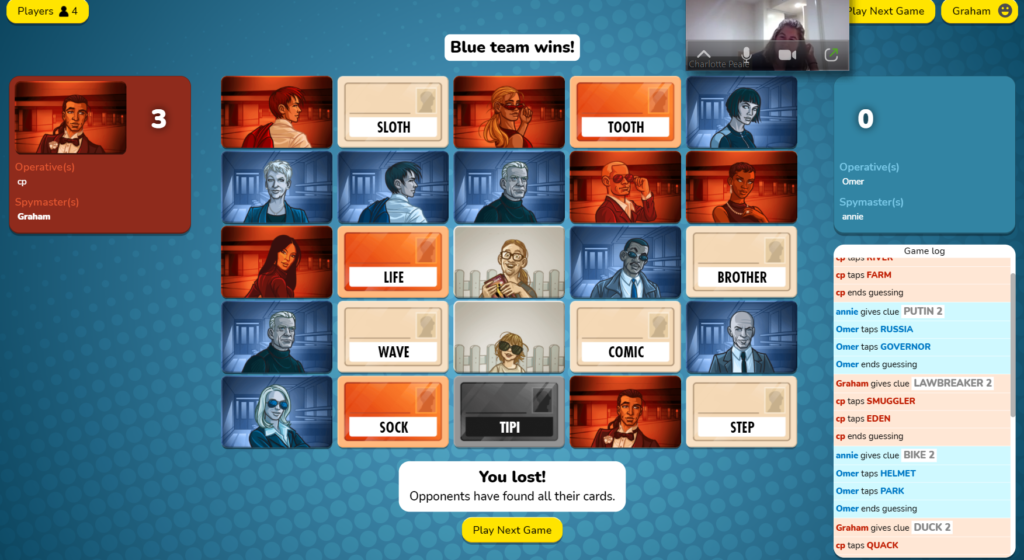
I chose to play and analyze Codenames. Our game is very similar to Codenames, except we use faces instead of words for the “agents.”…

Critical Play: Bluffing, Judging, and Getting Vulnerable (skribbl.io) – Tristan Wang

April 15, 2022

Introduction For my critical play, I played skribbl.io with some friends. Skribbl.io is an online Pictionary-like judging game. Players take turns drawing a prompt…

Critical Play: Competitive Analysis

April 15, 2022

Skribblio is centered around players drawing and guessing various drawing prompts. To begin, one player will pick one out of three prompts automatically generated…

cards against humanity

Rachel Naidich Critical Play: Competitive Analysis

April 15, 2022

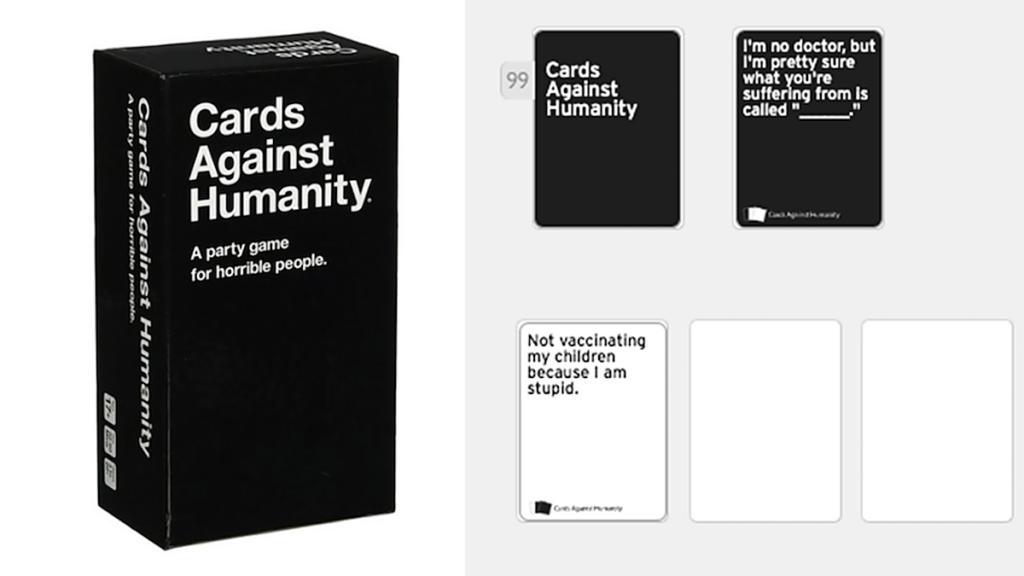
Cards Against Humanity Cards Against Humanity is a social game with a theme of adult humor. At the beginning of each round, players draw…

Critical Play: Competitive Analysis — Alex Tsai

April 15, 2022

The game I selected is capture the flag. It is an analog game played at any location with ample outdoor space. The theme of…

Critical Play: Truth Be Told

April 15, 2022

Truth be Told is a “party game” that has similar mechanics to Never Have I Ever, Most Likely To, and my team’s game: Truth’s…

Critical Play- Truth or Dare

April 15, 2022

Truth or Dare is a common social, get-to-know-you oriented party game that doesn’t require any equipment (usually) and can be played for groups of…

Critical Play: Competitive Analysis

April 14, 2022

For this week’s critical play, I played Fake Artists in New York, a hidden role drawing game designed by Jun Sasaki and published on…

Critical Play: Competitive Analysis

April 14, 2022

Hi! For today’s critical play I chose to play and write about We’re Not Really Strangers! The theme of the game is to get…

Competitive Analysis: Fibbage — Nadin

April 14, 2022

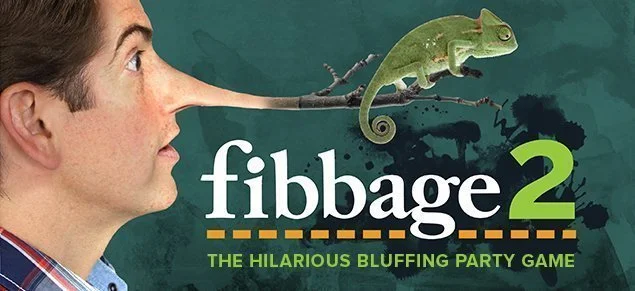
For my competitive analysis, I chose to play Fibbage (or more specifically, its sequel Fibbage 2) because it has bluffing as a core mechanic,…

Critical Play: Competitive Analysis – What Do You Meme

April 14, 2022

For my competitive analysis critical play, I played “Make it Meme,” an online version of the popular analog game “What Do You Meme” which…

Competitive Analysis – Codenames

April 14, 2022

I chose Codenames because it is a well-liked social game featuring team-competition as the player structure and hidden information that must be shared within…

Critical Game Play: Phrase Frenzy

April 14, 2022

Phrase Frenzy The theme of Phrase Frenzy is a mix between hot potato and team-based guessing games like Pictionary, Heads-Up, and Charades. Phrase Frenzy…

Critical Play – Competitive Analysis of Throw Throw Burrito

April 14, 2022

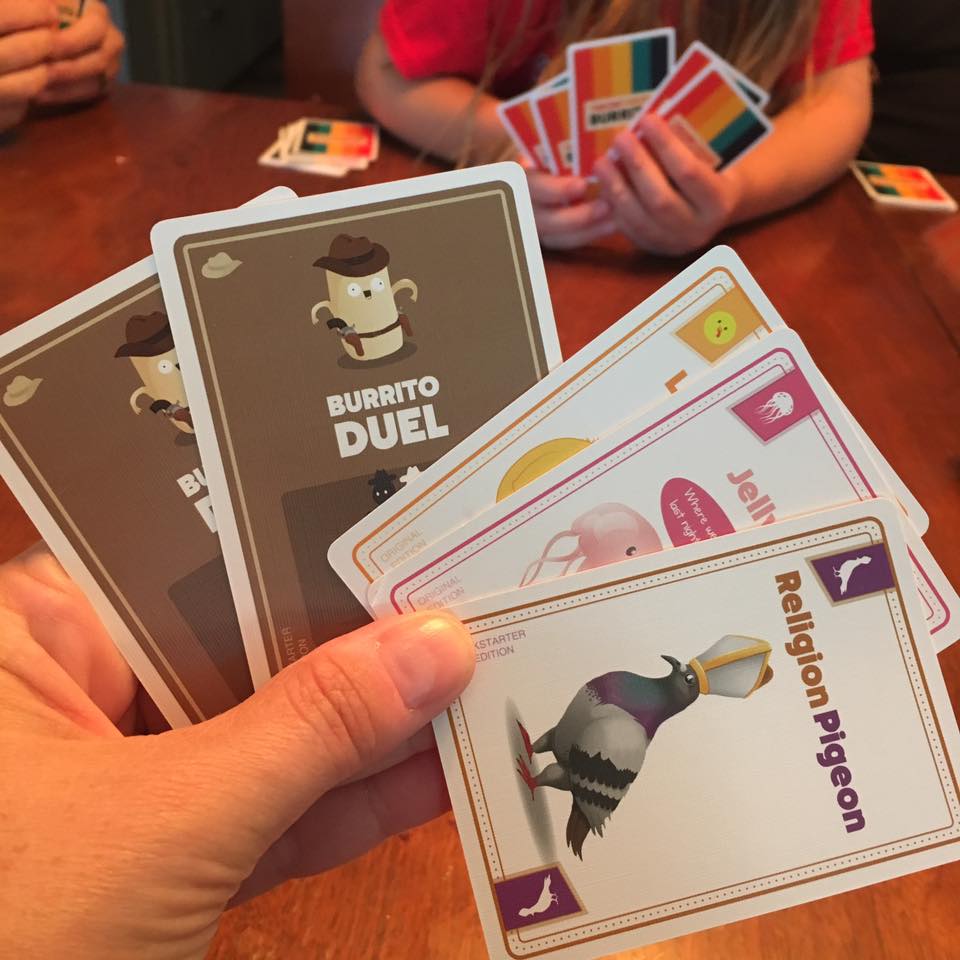
Throw Throw Burrito a social dodgeball card game created by Brian Spence and published by Exploding Kittens. It is social, frantic and physical. Players…

Critical Play: Most Likely To

April 14, 2022

Since half of our game is based on truth-or-dare, I played a social game called Most Likely To with a group of 8 friends….

Critical Play: Competitive Analysis (Fakin’ It)

April 14, 2022

For this assignment, I played “Fakin’ It” by Jackbox Games purchased on Steam. “Fakin it is a unilateral competition game where players’ objective is…

Posts pagination

Previous 1 … 58 59 60 … 69 Next

Welcome to the Stanford HCI Game Design Blog.

Currently this blog holds two formal classes being taught by Christina Wodtke as well as Independent Study Work. In winter of 2022, cs377g was cancelled because of covid-19 uncertainty, and became a study group. You can follow along by looking at the SGSG syllabus and weekly break down.

CS 247G: Design for Play(SYMSYS 195G)

A project-based course that builds on the introduction to design in CS147 by focusing on advanced methods and tools for research, prototyping, and user interface design. Studio based format with intensive coaching and iteration to prepare students for tackling real world design problems. This course takes place entirely in studios; please plan on attending every studio to take this class. The focus of CS247g is an introduction to theory and practice of the design of games. We will make digital and paper games, do rapid iteration and run user research studies appropriate to game design. This class has multiple short projects, allowing us to cover a variety of genres, from narrative to pure strategy. Prerequisites: 147 or equivalent background.

CS 377G: Designing Serious Games

Over the last few years we have seen the rise of "serious games" to promote understanding of complex social and ecological challenges, and to create passion for solving them. This project-based course provides an introduction to game design principals while applying them to games that teach. Run as a hands-on studio class, students will design and prototype games for social change and civic engagement. We will learn the fundamentals of games design via lecture and extensive reading in order to make effective games to explore issues facing society today. The course culminates in an end-of- quarter open house to showcase our games. Prerequisite: CS147 or equivalent. 247G recommended, but not required.
SGSG: Serious Games Study Group

  • Library
    • CS247G Community Game Design Resources
    • Game Design Resources
    • Graphic Design for Game Designers
    • Graphic Design Resources
    • Chapter 11 from Game Balance
  • Read Write Play
    • Hollow Knight: RWP 4 2023
    • Mystic Messenger: RWP 6 2023
    • Undertale: RWP 3 2023
    • What Remains of Edith Finch: RWP 5 2023
    • Catan: RWP1 2023
    • 80 Days: RWP 2 2023
  • 247G Syllabus
    • The Formal Elements of Game Design
    • Design for Play | Week One | Lecture A
    • Design for Play | Week One | Lecture B
    • Design for Play | Week Two | Lecture A
    • Design for Play | Week Two | Lecture B
    • Design for Play | Week Three | Lecture A
    • Design for Play | Week Three | Lecture B
    • Design For Play | Week Four | Section A
    • Design For Play | Week Four | Section B
    • Design for Play | Week Five | Class A
    • Design for Play | Week 5 | Class B
    • Design for Play | Week 6 | Class A (no class)
    • Design for Play | Week 6 | Class B
    • Design for Play | Week 7 | Class A
    • Design for Play | Week 7 | Class B
    • Design for Play | Week 8 | Class A
    • Design for Play | Week 8 | Lecture B
  • Serious Play Study Group Overview
    • Study Group Week by Week Breakdown
      • Formal Elements of Games
      • Final Reflection Essay
    • [Optional Material] What is fun?
    • Project 1: Those Who Play, Teach
      • READING Visual Design of Board Games
      • Pitch Your Teaching Game
      • Sketchnote: Playtesting Boardgames
      • Sketchnote: Erin Hoffman // Wind, Not Sand: Mapping Dynamic Emotion Across a Product Landscape
      • SketchNote: MDAO
      • Critical Play: Write up your game of FLUXX
      • [Optional Material] Playtesting
      • OPTIONAL Board Game Usability
    • P2: The Future We Deserve
      • Critical Play: A Mechanic and a Story to Tell
      • Interactive Fiction: Tiny Playable Prototype
      • Introducing Interactive Fiction
      • Map and Premise
      • Critical Play: Story AND Storytelling games
      • Essay or Sketchnote: Rise of the Video Game Zinesters
      • Sketchnote: Art of game design- Story
      • [Optional Material] Emergence and Progression
      • Essay or Sketchnote: Rise of the Video Game Zinesters
      • Project 2 Reflection Essay
      • Share what you Learned: Writing Excuses Podcast
      • Values at Play & P2 Peer Grading
    • P3: The Game of Unexpected Consequences
      • P3 Concept Doc
      • Playable prototype
      • Working With System Dynamics (mindmap the reading, apply it to your game)
      • Mapping Systems
      • Sketchnote/Response for Rules & Tutorials
      • Project 3 Check-in
      • Project 3 Reflection Essay
    • P4: Refine a game
      • Sketchnote/Response for Playtesting with Strangers
      • Read: Mechanic is the Magic
  • On Sketchnotes
  • Printing at Stanford

Archives

  • April 2026
  • March 2026
  • December 2025
  • November 2025
  • October 2025
  • September 2025
  • June 2025
  • May 2025
  • April 2025
  • February 2025
  • December 2024
  • November 2024
  • October 2024
  • September 2024
  • June 2024
  • May 2024
  • April 2024
  • December 2023
  • November 2023
  • October 2023
  • September 2023
  • August 2023
  • June 2023
  • May 2023
  • April 2023
  • March 2023
  • February 2023
  • January 2023
  • December 2022
  • September 2022
  • August 2022
  • July 2022
  • June 2022
  • May 2022
  • April 2022
  • March 2022
  • February 2022
  • January 2022
  • June 2021
  • May 2021
  • April 2021
  • September 2020
  • February 2017

Recent Posts

  • Mind Map: Sarah
  • mindmap – jay
  • Protected: introduction – jay :)
  • Introducing Me (Reyna)
  • Mind Map – Graham

Recent Comments

  • EvvrryyDDY2 on Critical Play: BABBDI
  • Male Monitor – Seminar Group 2 on Through the Looking Glass: Gendered Gazes in Video Games 
  • brysigg on Conclave: A Prayer Simulator — P2
  • brysigg on P2: The Empathy Machine – Angela Mao
  • brysigg on P2: The Empathy Machine

Categories

  • P2: The Empathy Machine
  • Featured
  • Project One
  • milestone
  • P2: The Future We Deserve
  • mindmap
  • P1: Social Games
  • CS247G
  • Assignments
  • P1: those who play, teach
  • Lectures
  • P2: Games In Space
  • Critical Play
  • P3: The Game of Unexpected Consequences
  • Project Two
  • Project Four REFINE
  • P4: Refine a Game
  • Sketchnotes
  • Project Two: The Future We Deserve
  • From the Instructor
  • Project Three: The Game of Unexpected Consequences
  • ReadWritePlay
  • 377G: Serious Games
  • SGSG

Meta

  • Register
  • Log in
  • Entries feed
  • Comments feed
  • WordPress.org

Meta

  • Register
  • Log in
  • Entries feed
  • Comments feed
  • WordPress.org
Copyright The Mechanics of Magic. All rights reserved. | Theme by SuperbThemes