

Part 1: Game Name and authors
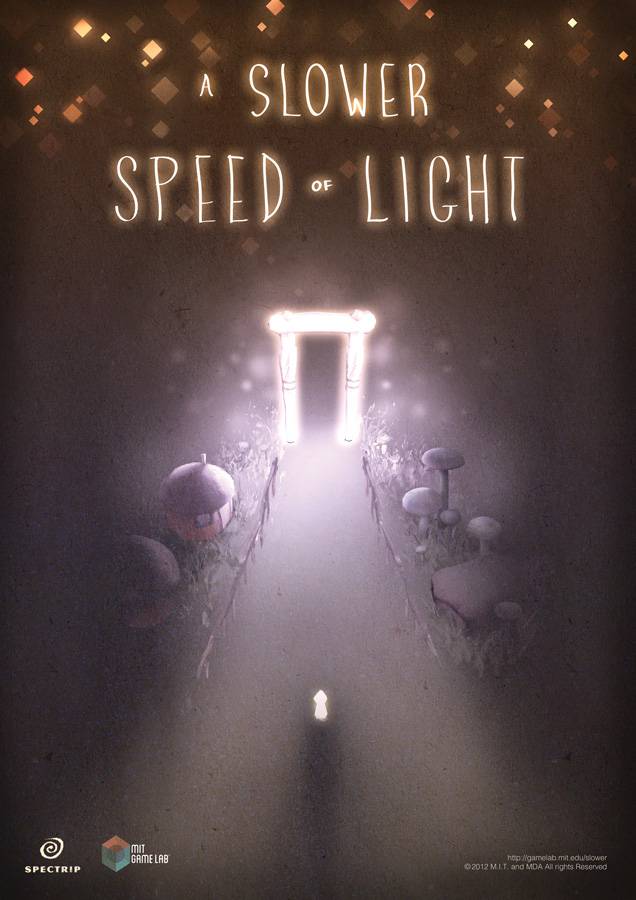
A Slower Speed of Light is a first-person game by MIT Game Lab. Its creators are Gerd Kortemeyer, Philip Tan, Ryan Cheu, Ebae Kim, Zach Sherin, Sonny Sidhu, and Abe Stein.
Part 2: Game Introduction
Players explore a 3D world and collect orbs. Each orb lowers the speed of light. Eventually, walking brings players close to light speed. The goal is to make special relativity (an really abstract idea to most people) easier to daily life experience (walking and collecting in this game).
Part 3: What kinds of fun it uses?
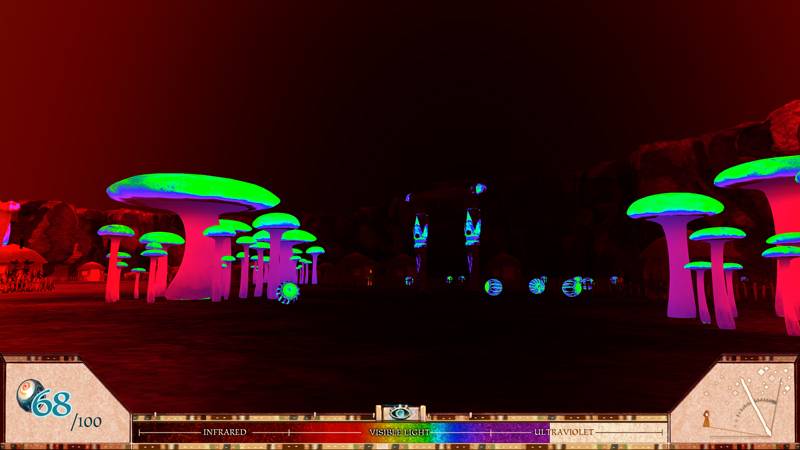
Sensation was the strongest type of fun for me. As I moved, colors and brightness changed, and familiar spaces looked strange. These effects were more than decoration. They responded to my actions and became stronger as I collected more orbs. Moving around felt rewarding because I could see its effects. The game turned something invisible into something I could explore through sight.
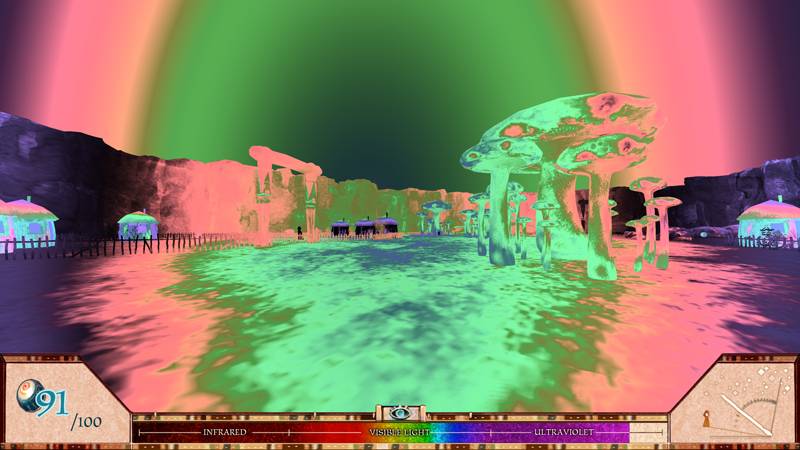
Fantasy also supported the experience. The setting made a world with slower light feel more believable within the game. I did not need to question why collecting an orb would changed physics.
Discovery kept the collection task interesting. Even when I revisited a place, it could look different as the speed of light dropped. I wanted to see what would change next.
Challenge increased along with these changes. The world became harder to read, which made the remaining orbs harder to find. However, I was also becoming more familiar with the controls and the map. For me, this created a balance. The task stayed simple, but completing it required more attention. The growing difficulty came from the same system that supported the learning goal.
Part 4: the MDAO framework
MDAO helps explain why these parts fit together. The mechanics include keyboard movement, orb collection, and the rule that collecting each orb reduces light speed. These rules then create dynamics such as searching, exploring, and adjusting movement as visibility changes. Those behaviors support the aesthetics of sensation, fantasy, challenge, and discovery. They also support the outcome, which is building an intuitive sense of how motion near light speed affects what people see. The learning happens through the activity itself, which is pretty natural along the experience.
Part 5: My favorite part and my least favorite part
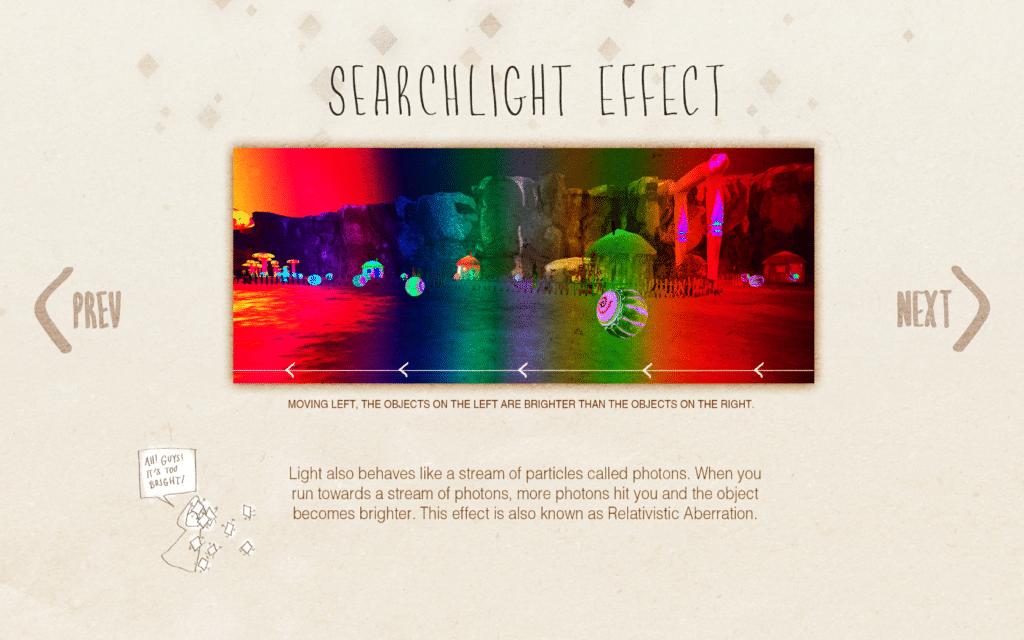
My favorite part came after the game ended. A few slides explained the science behind the effects I had just experienced. If these explanations came first, I might have lost interest. After playing, I had specific moments to connect them to. This made the ideas easier to understand and remember. I moved from noticing the effects to understanding why they happened. Through interacting with the system, I had already started to recognize patterns. The slides helped me connect those patterns to physics. This could also help me make sense of related ideas in real life.
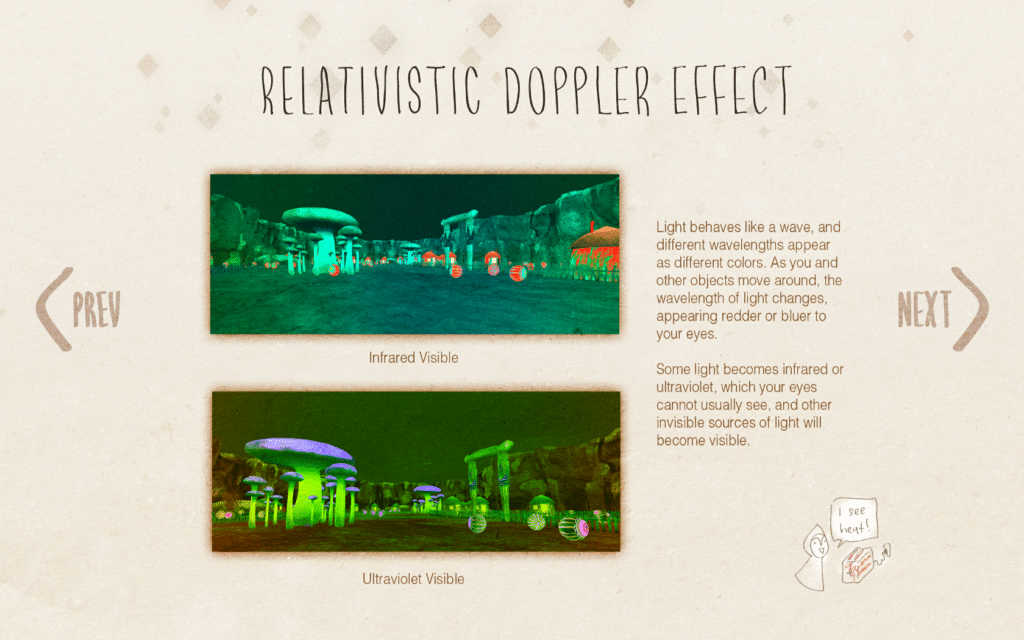
My least favorite part was the movement. There was too much inertia, which made it hard to stay on course. It felt more like driving a car than walking. This made collecting orbs frustrating and took away from the experience. The visual effects were impressive, and seeing them grow stronger felt really rewarding. However, they also made me dizzy a lot. The same effects that made the game exciting also made it harder to enjoy.
From my experience, the game clearly succeeded in making relativity easier to understand. Still, good controls and player comfort matter too. Movement should respond in ways players expect, and the visuals should be exciting without causing too much dizziness. More playtesting could help the team improve both. These changes would make it easier for players to stay engaged and benefit from the learning experience.
