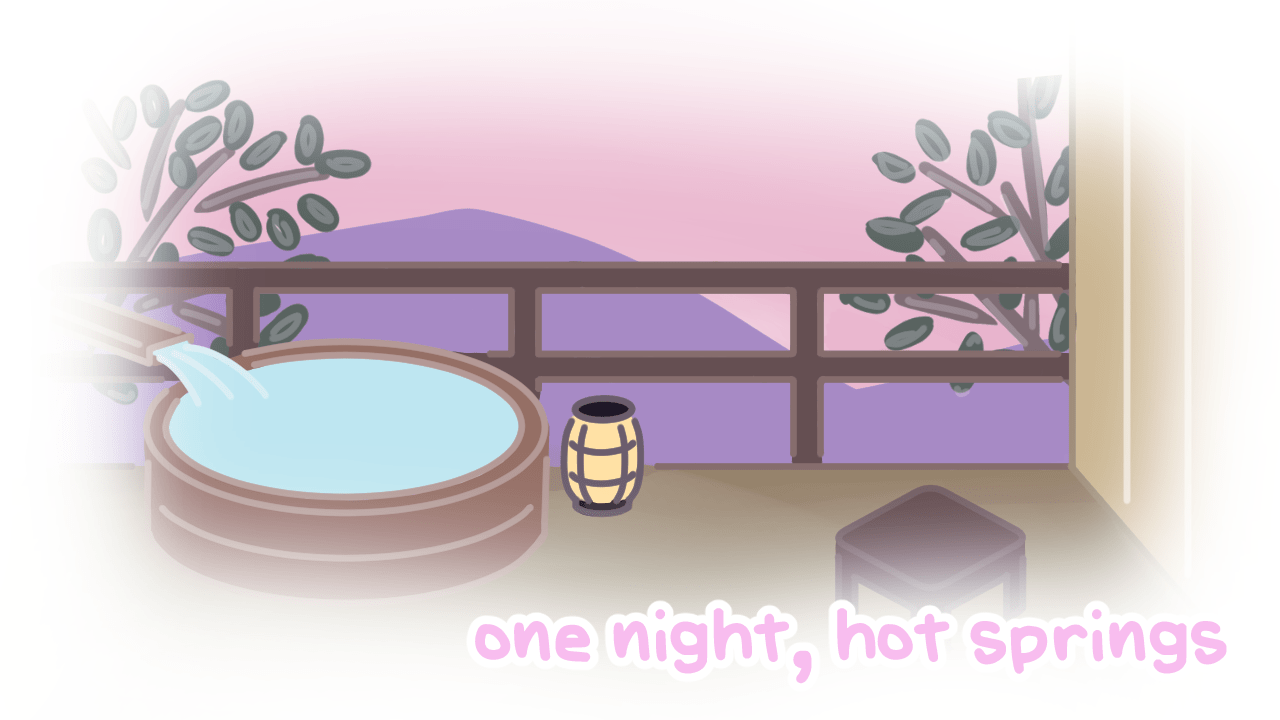
one night, hot springs (ONHS) is a digital visual novel game (available on Steam, Google Play, etc.); it was released in 2018, and designed/developed/published by an independent creator, npckc. After having completed the game to one possible ending, I would say this game is for people needing… a simulator experience with difficult social situations. It is a game made for people who want to feel good about their choices, who want to know what will happen if they come out of their shell a little bit, to see how other people will react to them. It is truly a beautiful narrative, and it made me feel a little better about myself as well.
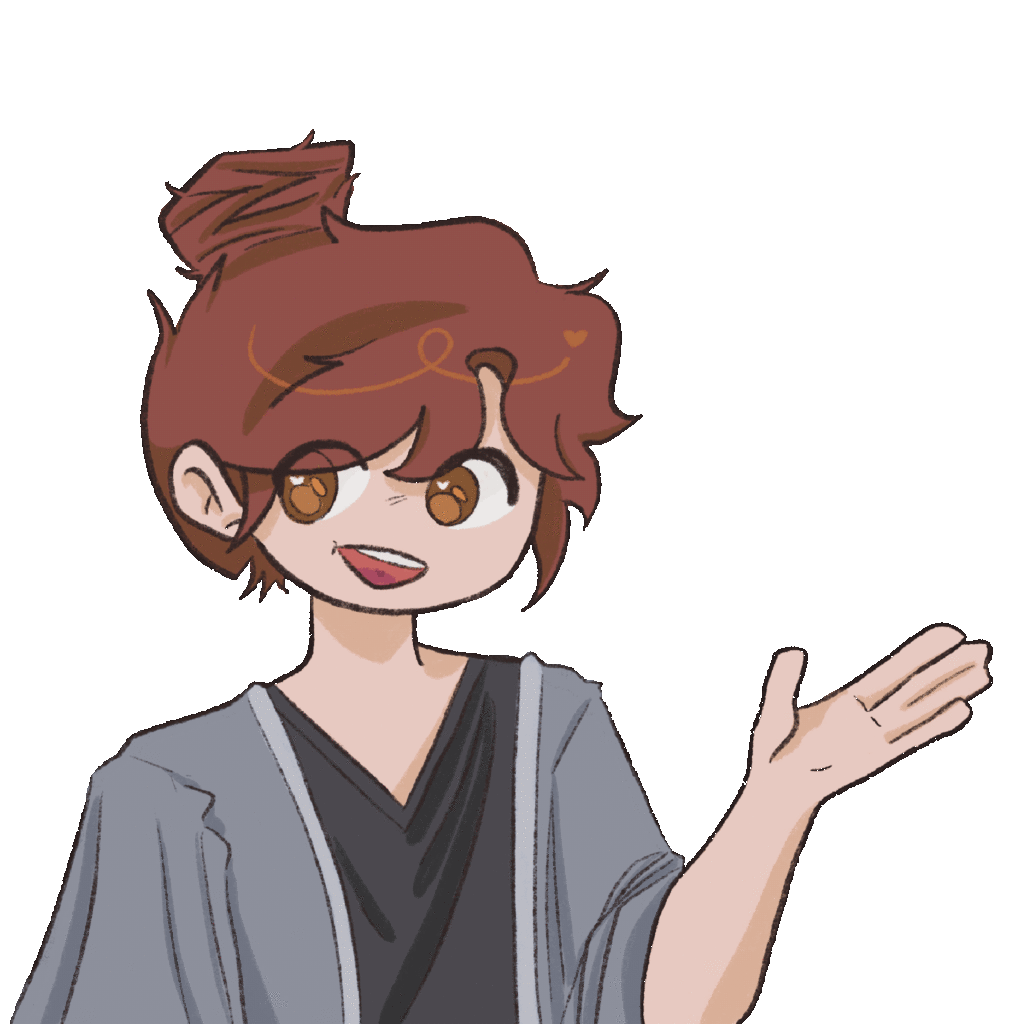
ONHS follows the story of main character Haru, a trans 19-year-old who visits a hot spring to celebrate her childhood best friend Manami’s 20th birthday. She also makes the acquaintance of Manami’s high school friend Erika, who (in the path of the story I chose) encouraged Haru to open herself up to experiences she had barred herself from, due to her gender identity. While I cannot say I relate directly to the experiences of trans individuals, I know what it is like to feel uncomfortable or that I don’t belong in spaces, so this game was therapeutic for me.
one night, hot springs is a game that embodies the supportive feminist perspective and atmosphere that other games should strive to create, through agency, visual design choices, and narrative structure.
It’s been a while since I played a game for a critical play that I actually liked, so I’m glad this is my last one and it ends on a positive note. The game is without a doubt an Enacting Narrative game, with elements of Discovery and Expression as well. The Expression part is key here – as a person who has trouble asserting themselves in social situations, feeling comfortable with confrontation, or even advocating for themselves, ONHS gave me a chance to try being assertive and more secure with my past experiences through the mechanism of choosing responses and having agency over the story progression. 
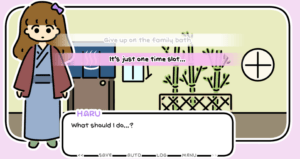
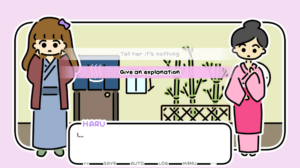
This is the agency that Shira Chess was referring to in Chapter 4 – mechanisms that give the player a sense of control. It’s the freedom to express oneself in a way that allows the player to feel comfortable with their choices. One might argue that the built in binary responses are a bit restrictive for a game that deals with complex emotions of self-identity; however, I find that perhaps simplifying these emotions to two choices can sometimes bring a better sense of clarity, to the game and the player.
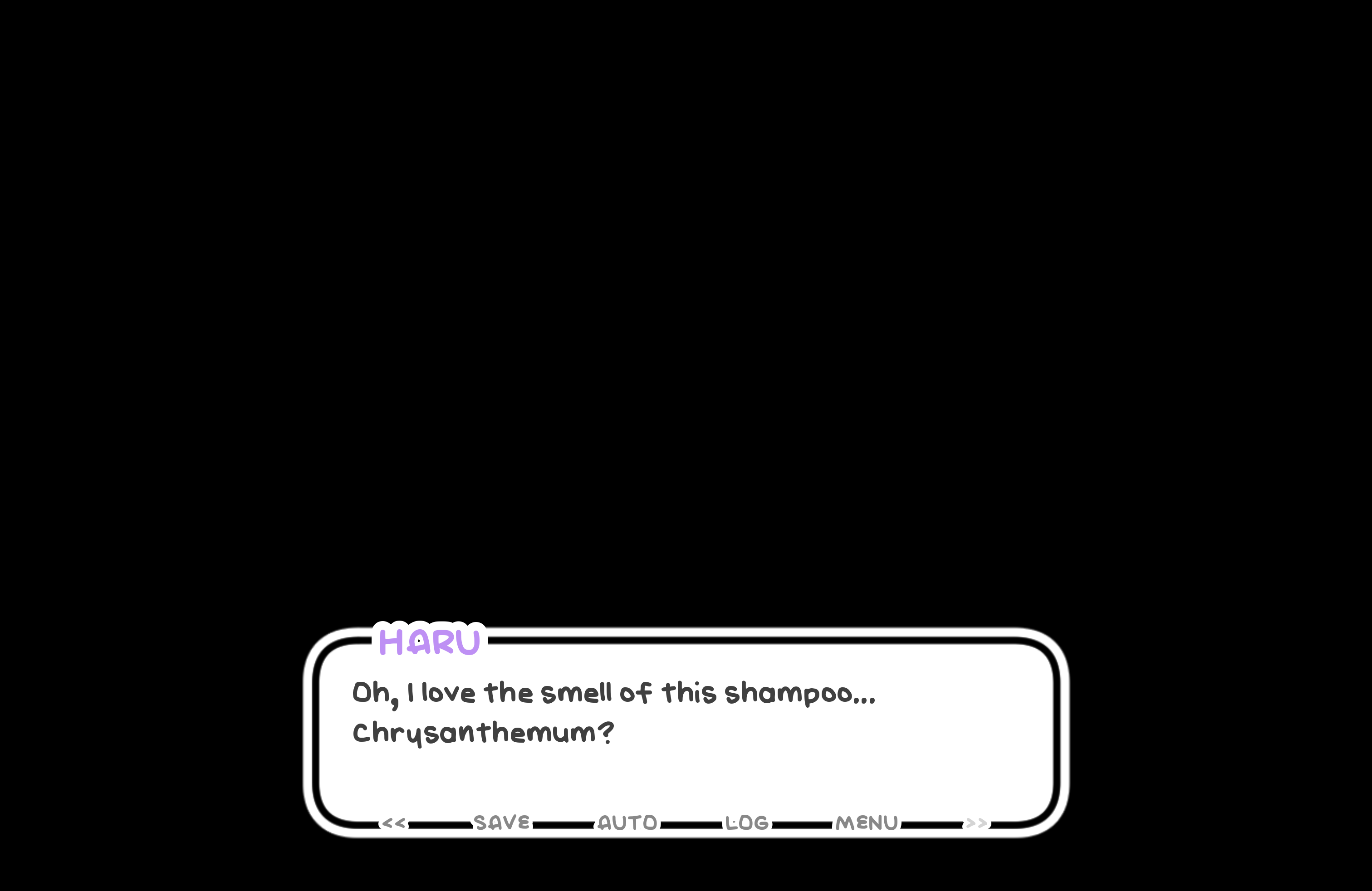
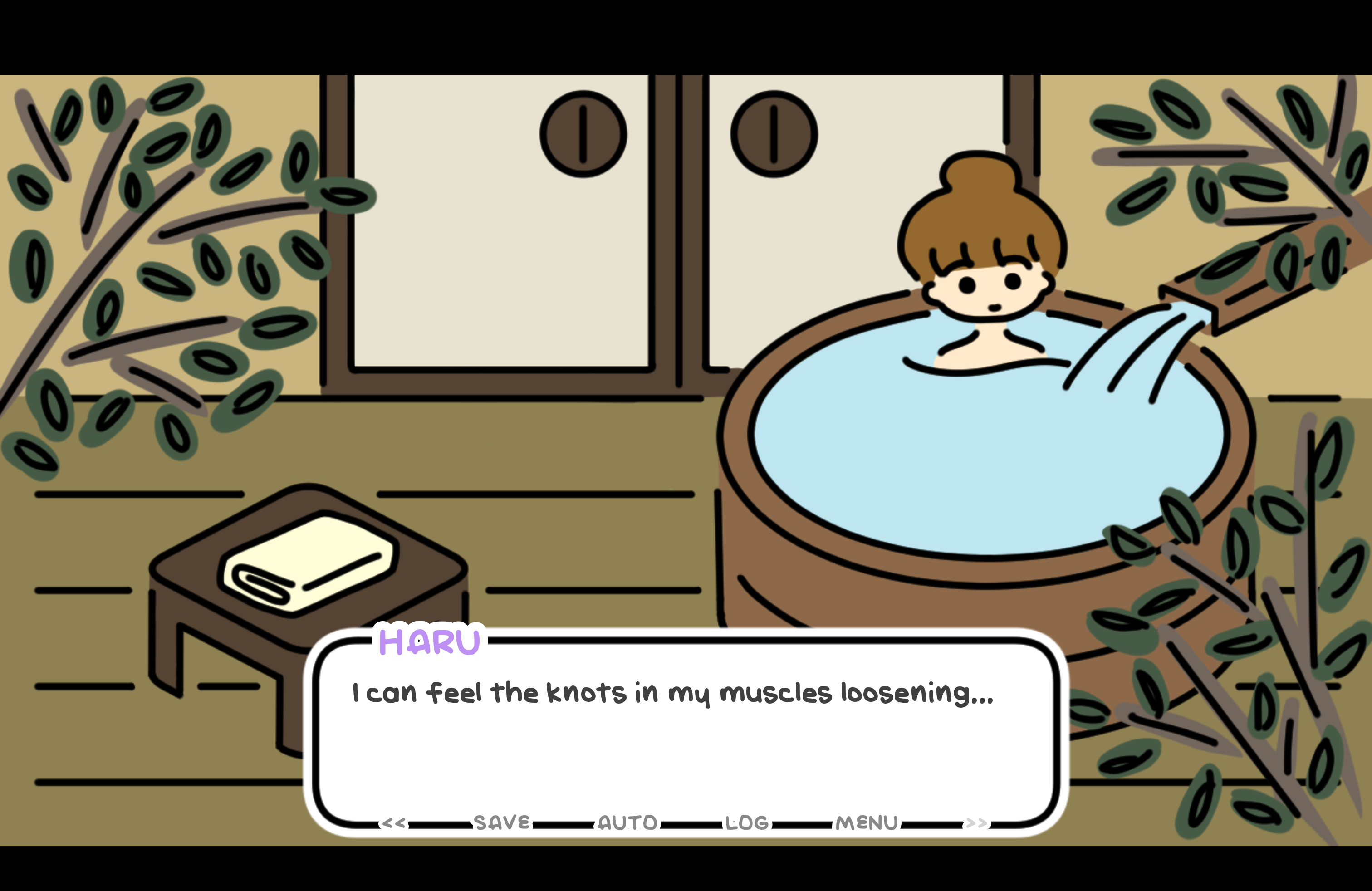
Everything about this game has been designed in a minimalist and simplistic style. On a surface level, the artwork is clean lines, the dialogue is usually one phrase to one sentence at a time, and scenes are structured with as little noise as possible (they really followed George Fan’s principles of no noise and unobtrusive messaging). On a deeper level, there are many choices that help purify the space created by the game, making it clean and free from the messiness of the “male gaze”.
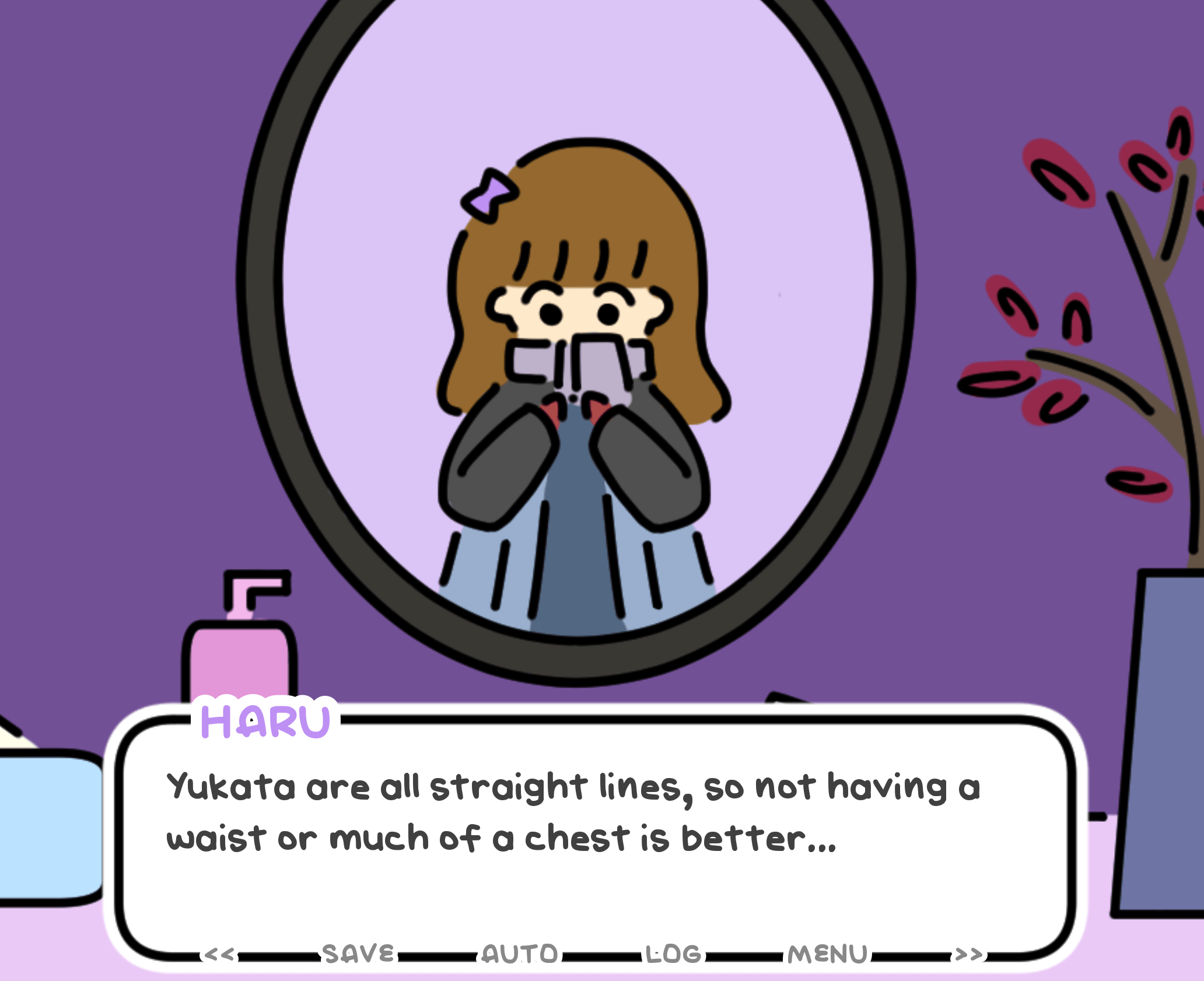
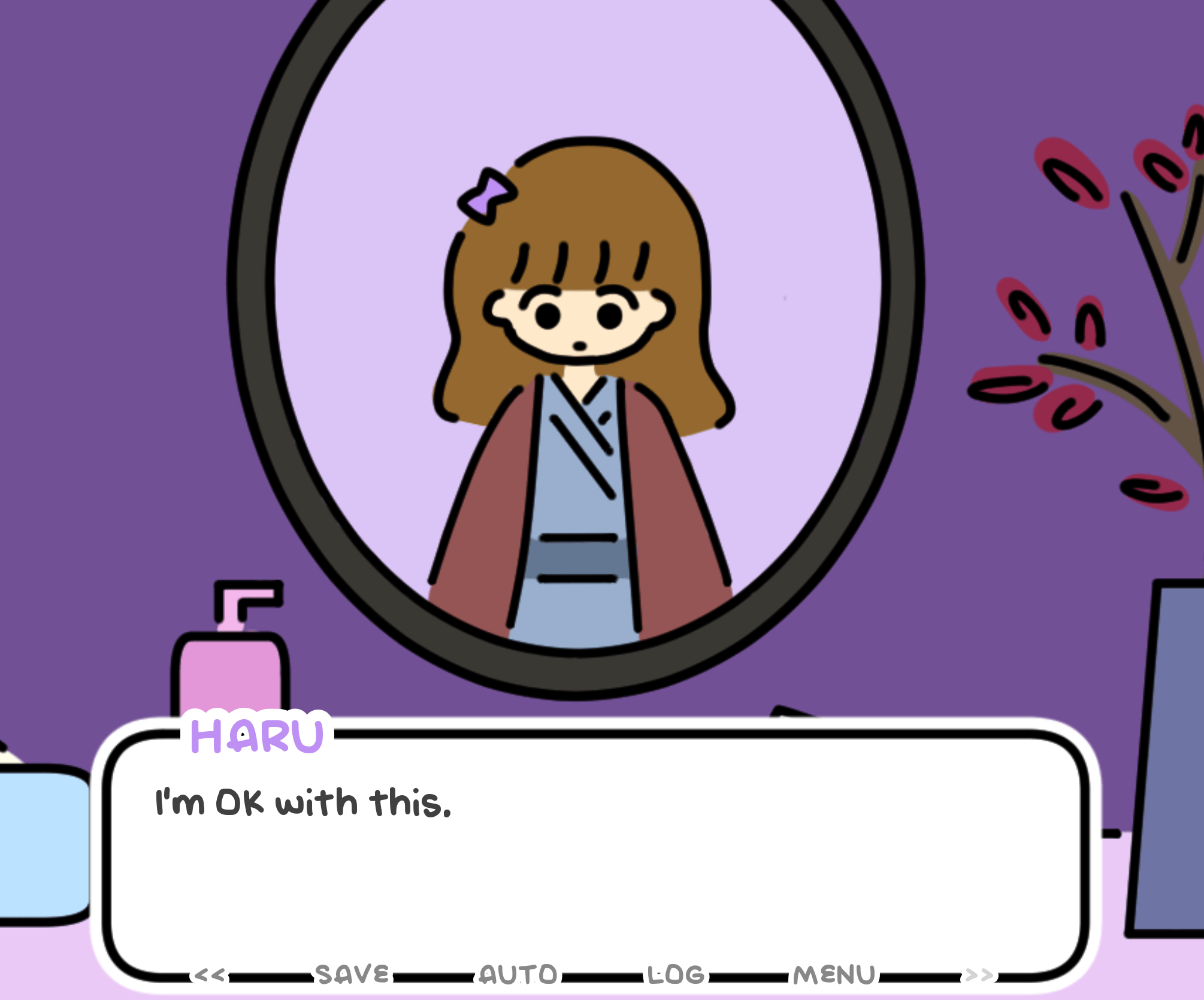
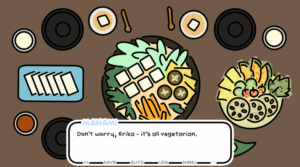
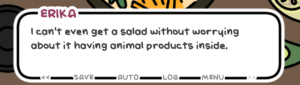
Last, but certainly not least, ONHS offers a forum for the simulation and incorporation of multiple perspectives that have feminist appeal. Haru’s own story of being a transgender individual is just one; seeing the other side of that narrative in the hot spring staff member is another. Erika, with her high school experience and labelling herself as a “delinquent” and being a vegetarian. As a vegetarian myself, I was personally very pleased to see recognition of that in first a Japanese game and second an acknowledgement of the nuances of being wary of food that might be marketed or presented as vegetarian but is not truly.
There are a number of paths that opened in this one outcome of the game, and each one is addressed with grace.
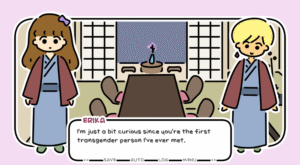

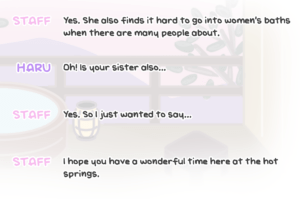
Feminism flows along the lines and sentiment that everyone feels like an outsider (unless they conform to the ideal), until they find people who can understand and accept them for who they choose to be. Taking a feminist stance means being willing to understand without understanding, and making a space for people to feel heard and safe – even if you might not agree with their life choices.
ONHS has been designed to allow the player to control how they respond to social situations that would be uncomfortable in real life, and rewards them for stepping out of their comfort zone.
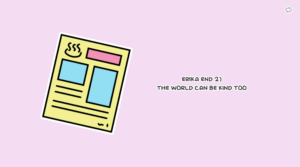
It brings to light the personal turmoils of a perspective that perhaps many people have never considered. It offers an example for demonstrating kindness to others with differing backgrounds, and it provides players who relate to any of these perspectives a vote of confidence that there are people who are open to being kind. As the last screen says, “The world can be kind too”.