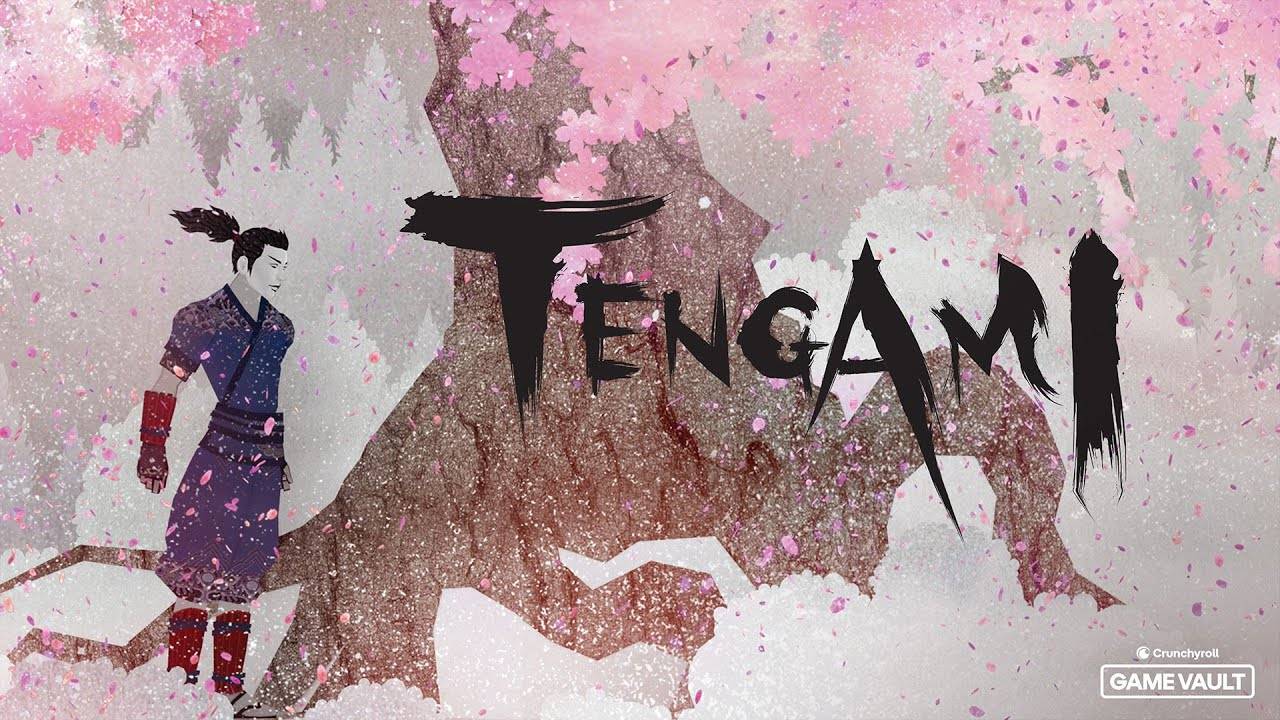
Tengami is developed by Nyamyam and is available on Steam. It is best suited for players who want a meditative puzzle experience and don’t mind sparse narrative or slow pacing.
Most puzzle games borrow generic interactions and enhance them through different themes. You click, you drag, you rotate, and the world reskins those gestures. Tengami collapses that gap and the world is like a pop-up book, and you solve puzzles by doing what you can physically do to paper: folding, sliding, unfolding.
Tengami is a paper-craft adventure puzzle game set in an ancient Japan made entirely of pop-up book pages. You play a lone samurai wanderer searching for the lost petals of a cherry blossom tree. There is no combat, no inventory, no dialogue. The designers stripped interaction down to folding.
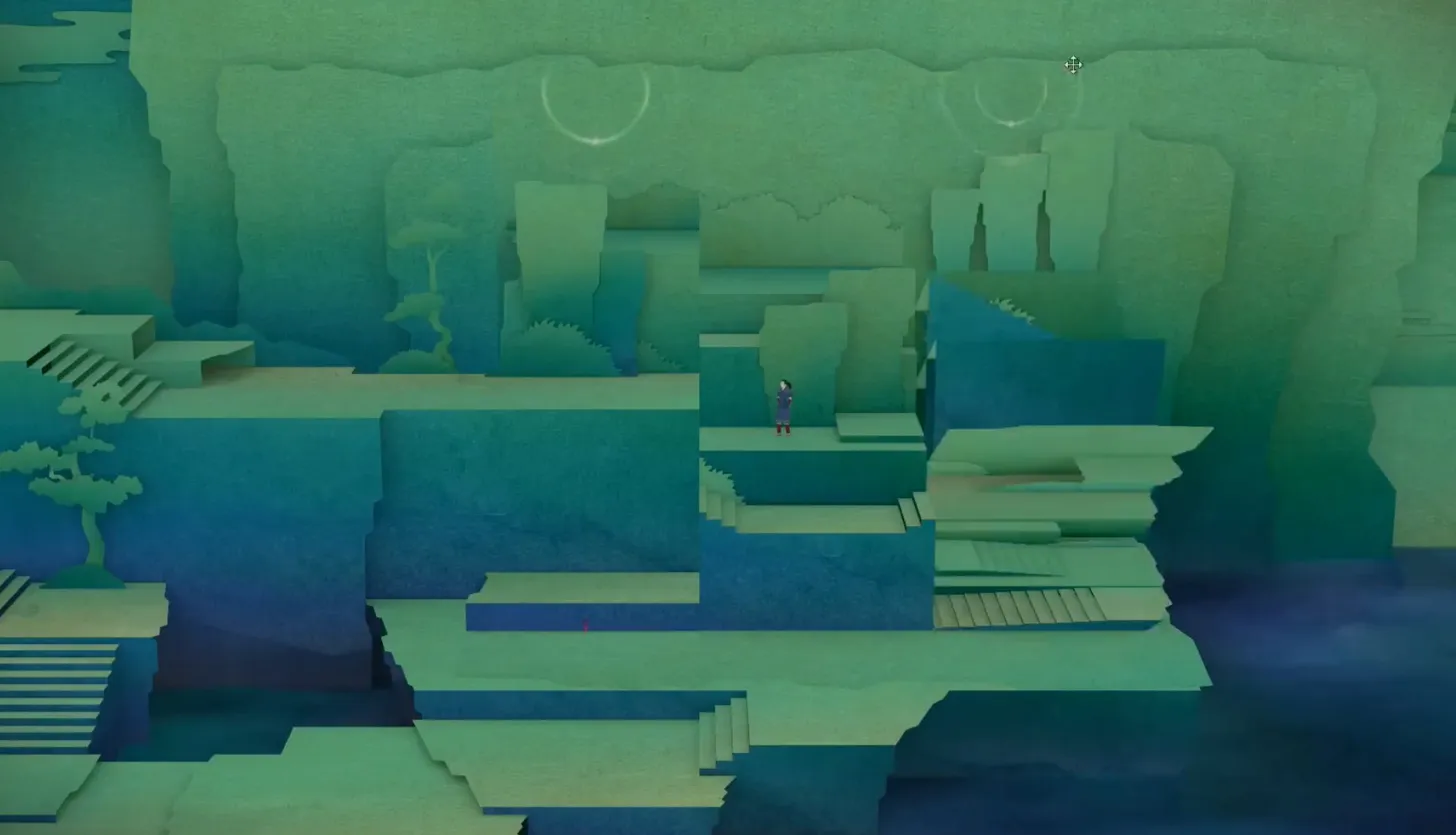
The game’s strongest design choice is that the mechanic and the medium are physically identical. To cross a river, you fold a bridge into the page. To enter a house, you fold open the wall and let the inside unfold. To climb a cliff, you fold the geometry of the cliff itself (see below – mid-fold of the green mountains, the player figure standing on a narrow ledge as the path is being shaped).
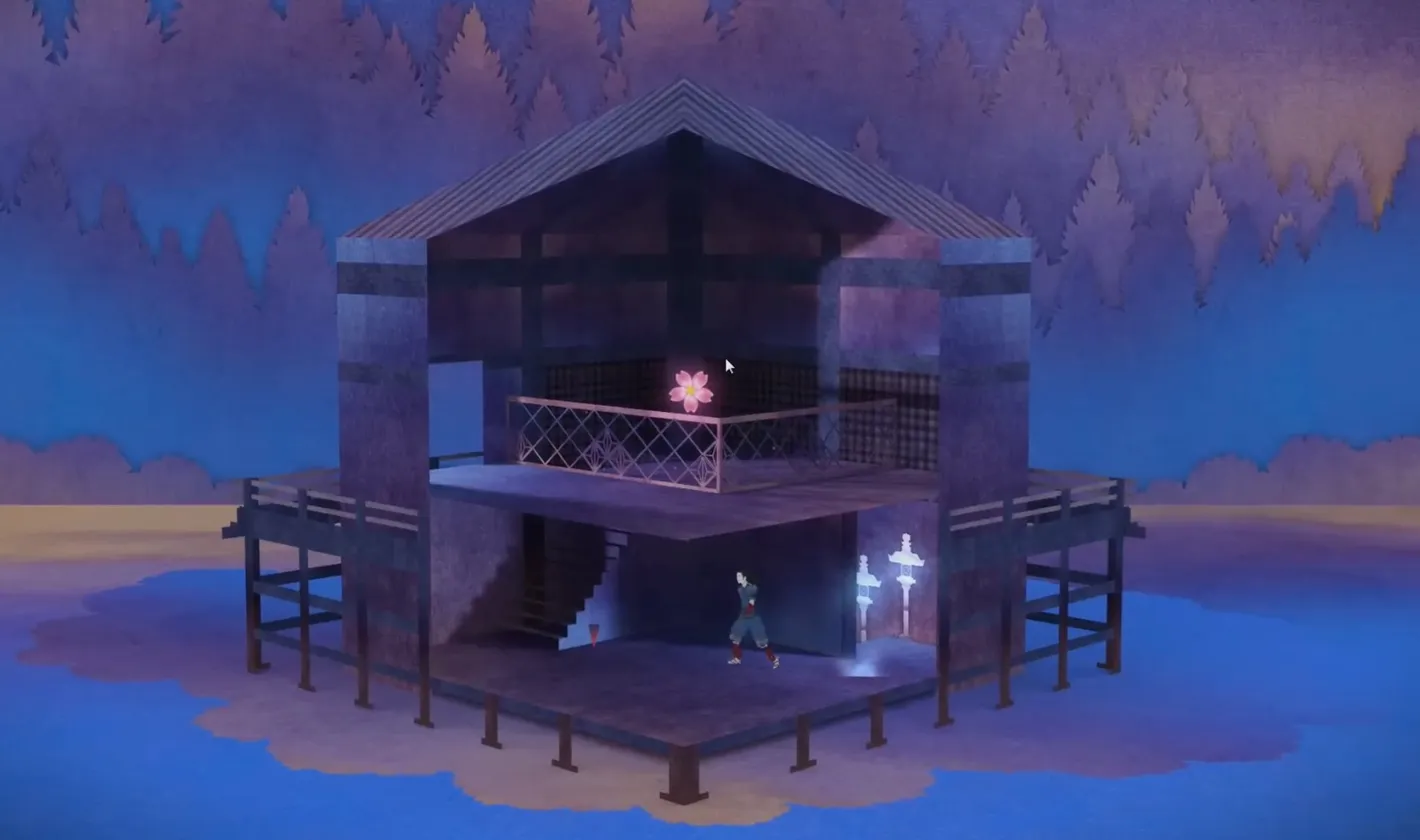
Walking toward a problem in Tengami is not a setup for a puzzle. The walking and the puzzle are the same gesture. This produces a dynamic the game returns to constantly: ritual. When you arrive at an obstacle, you careful look through the seams and creases in the paper, and you fold. The mechanic generates dynamics of slow attention and small ceremonies, and from those dynamics the game produces aesthetics of sensation and discovery rather than challenge. I made me feel inhabited rather than illustrated in a way. The house is not a backdrop you walk into, it is a page that has folded open to let you in (see image below).
When comparing this games to other games that are in the same genre: Monument Valley uses a similar visual minimalism but its mechanic, rotating impossible architecture, sits separately from the world it presents. Gorogoa is page-based but you drag panels around, an interaction borrowed from comics rather than from the medium itself like Tengami. The Room offers physical satisfaction, but its gestures are generic on a fixed object. Tengami’s mechanic-as-medium is different, where you are not manipulating a paper world, but you are doing what paper does.
The formal elements reinforce this. The game is single-player with no fail state, no timer, no inventory, and no ruleset. You learn what is foldable by paying attention to creases and edges. This satisfies Elumir’s rule that a puzzle should be self-validating. When a fold is correct, the world reshapes and you move forward. When it is wrong, nothing happens. For example, the bridge exists because a fold made it exist, walking across it is the solution of the puzzle, not really a reward for solving it.

Scott Kim writes that a puzzle is fun and has a right answer. Tengami’s right answers are usually a single fold, and the cognitive work is recognizing where to fold rather than reasoning through a problem like your typical puzzles. Bates calls the solution moment the “V-8 response,” when a player hits their forehead and says “of course.” Tengami’s V-8s does not really have that moment (at least in my play test). The reveal is visual rather than logical.
In Crawford’s hierarchy, this places parts of Tengami closer to a toy than a puzzle. You enjoy folding the paper because folding is pleasant, not because you have outsmarted the designer. There is a difference between a puzzle that earns its solution and a puzzle that ceremonially performs one which in this case, Tengami performs it. A few of Tengami’s later sequences would benefit from layered mechanics like maybe adding a constraint, like a fold that only works once a previous fold is undone or folds that require previous folds and builds on each. This could force planning rather than perception. This would also preserve the medium-as-mechanic identity while raising the cognitive ceiling, which I wish there was a little more of. The final fold restores the petals, and the V-8 response Bates describes this as visual rather than logical, you see the answer bloom rather than deducing it.
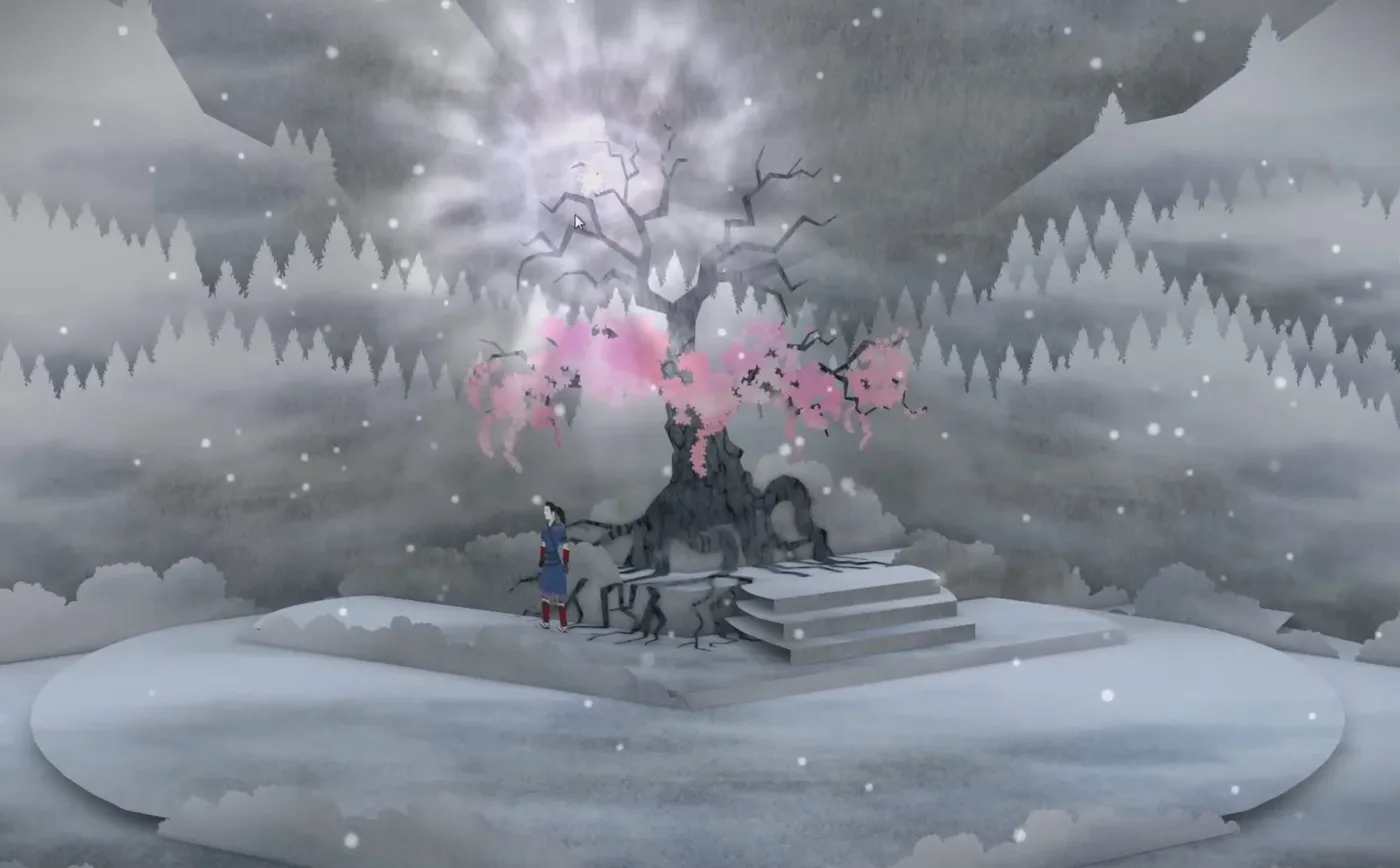
The game’s relationship to its cultural setting is what stood out to me when picking a game to play test this week. Tengami draws on Japanese aesthetics such as, torii gates, tatami floors, koi, cherry blossoms, and paper cranes. The puzzles does not require knowledge of Japanese culture to solve, which means the knowledge “inside the box” is mostly for the visual. The game is intentional in its folds, but notice that the meditative reading of these aesthetics is like a stylization, and not a neutral representation. The game also excludes players who just want to jump into it through scaffolded onboarding, or tutorials. Tengami trusts you to wander and notice. That trust is part of the experience, but it locks out players who feel ambiguity is frustrating rather than peaceful.
Players who want crunchy logic puzzles or a strong narrative will not enjoy Tengami. If you are able to sit with a puzzle where the answer is recognition rather than deduction, it is one of the more singular puzzle games in the genre. You will keep wanting to fold things long after the game is over.