

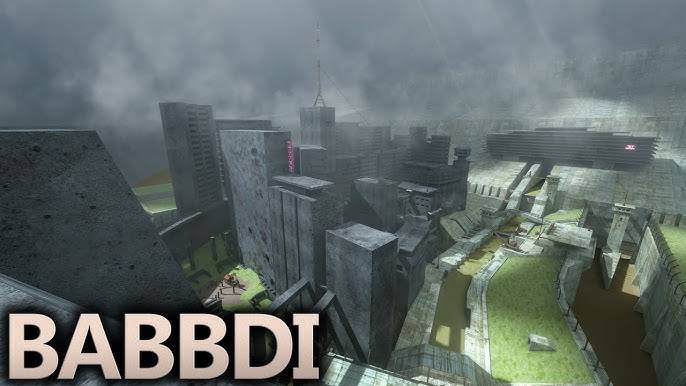
I played the game Babbdi, made by brothers Sirius and Leonard Lemaitre, meant for people aged 16+. It is a single-player game (1 player maximum and minimum), so I played this game by myself (1 player) on Steam. The audience is people who enjoy eerie indie aesthetics and exploration. Overall, Babbdi shows how minimal structure and exploration can create unique experiences around discovery, contrasting with the structure of violent games.
While playing Babbdi, I experienced different emotions, ranging from excitement to frustration. I was excited when I started the game, as shown in my encounter with Ivano. This is because I had a fun time listening to different NPCs (like Ivano) and exploring the rooms they were in, thinking, “I wonder what is in here.” Additionally, I smiled and yelled “yay I got one!” when I collected one of the secret objects. I also enjoyed getting the elevator to work, thinking “I wonder what is new here and what I can find.” Overall, the feeling of exploration was initially exciting.
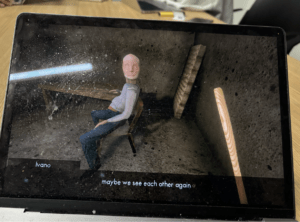
I was initially intrigued by NPCs like Ivano, hanging on their every word. I also loved their aesthetic as the red eyes were cool.
However, over time, I got more frustrated. This is because I kept going into the same room and thinking “have I been here before?” Beyond this, I would end up in corners and dark corridors, thinking “I am literally clicking every command I know but can’t get out.” Additionally, I didn’t understand how to get more secret objects, and felt frustrated when I didn’t understand the reason why I am collecting them.
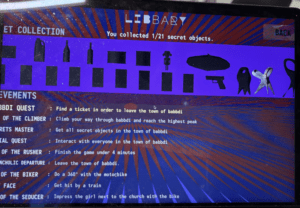
Here, secret objects are being collected and achievements are displayed. However, there’s no evidence as to HOW objects link to achievements.
The game’s minimal structure explains the feelings of excitement and frustration felt. Specifically, the core mechanic of the game is walking and exploring, with minimal interaction beyond talking to NPCs. This leads to multiple dynamics like wandering through repetitive spaces and getting lost. This produces a variety of aesthetics like discovery, as you explore areas and feel excitement if you discover new rooms or frustration if you go back to old rooms. The game also leads to sensation as players travel through strange, dark corridors. The formal elements also reinforce these feelings as Babbdi is a single player game with no rules or objectives. This makes navigating an already disoriented world more challenging.
Compared to other walking simulators, Babbdi is distinct in its total removal of narrative structure. Games like Stanley Parable use a strong narrator and humor to guide interpretation while Gone Home uses environmental clues. Babbdi relies purely on exploration by the player. However, this does not mean that disorientation has to reach the point of rage-quitting (yes, I did do this). For example, adding more subtle landmarks, lighting, or visual variation can help players orient themselves without explicitly telling the player what to do. Additionally, as users discover more places or find secret objects, they can unlock shortcuts to new objects and rooms. These changes strengthen discovery as people feel that exploration is meaningful rather than random while still keeping the game’s ambiguity.
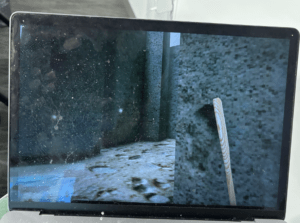
I spent 10 minutes stuck in a repetitive maze, mashing keys to escape. A few subtle visual cues would have saved me from being stuck.
Additionally, I got annoyed when I saw that all the NPCs repeated the same phrase “we will get out of babbdi.” It would be more interesting if the NPCs change what they say over time based on how many secret objects are collected, what room the player visits, and how close they are to completing their journey. This would allow NPCs to have distinct personalities and perspectives. It also adds progression as NPCs seem like dynamic systems instead of just objects. People also have more resources to interpret the world since the information said by NPCs is more valuable to the player’s understanding. As a result, narrative will be improved as players witness development and variation instead of repetitive dialogue. Additionally, sensation will be improved as players feel more engaged over time.
In class, we played the violent shooter Krunker.io, which centers on shooting, eliminating opponents, and fast-paced rewards. These mechanics fulfill a need for dominance and power. As a result, I felt a high sense of achievement, thinking, “I’m really getting this game now.” Through its violence, Krunker demands quick reactions and constant engagement toward clear goals. In contrast, Babbdi replaces violence with an eerie, horror-like atmosphere. I was actually surprised when I picked up a bat and realized it did nothing to the NPCs. Instead of aggression, Babbdi focuses on sensation and information. Specifically, it uses sound and environment to spark curiosity and unease. While Krunker is about the “rush” of action, Babbdi is about the mystery of exploring a disorienting world, making me wonder why everything felt so “mysterious and spooky.”
The main difference between Krunker and Babbdi is “doing” versus “experiencing.” In violent games, the magic circle is clearly defined by rules and external conflict with enemies. In Babbdi, that circle is ambiguous. Specifically, the conflict is internal as players struggle to find meaning in an unstructured world. While adding enemies would provide clearer goals and reduce the frustration of being lost, it would ultimately compromise Babbdi’s uniqueness. It would increase challenge and achievement, making the game more engaging for those who want structure. However, by shifting focus toward action, Babbdi would lose the isolation and ambiguity that make its wandering narrative and discovery so unique.
Overall, Babbdi shows that games do not need advanced mechanics or violence to create meaningful experiences, as simple mechanics like walking can lead to exploration, enjoyment, and frustration.
