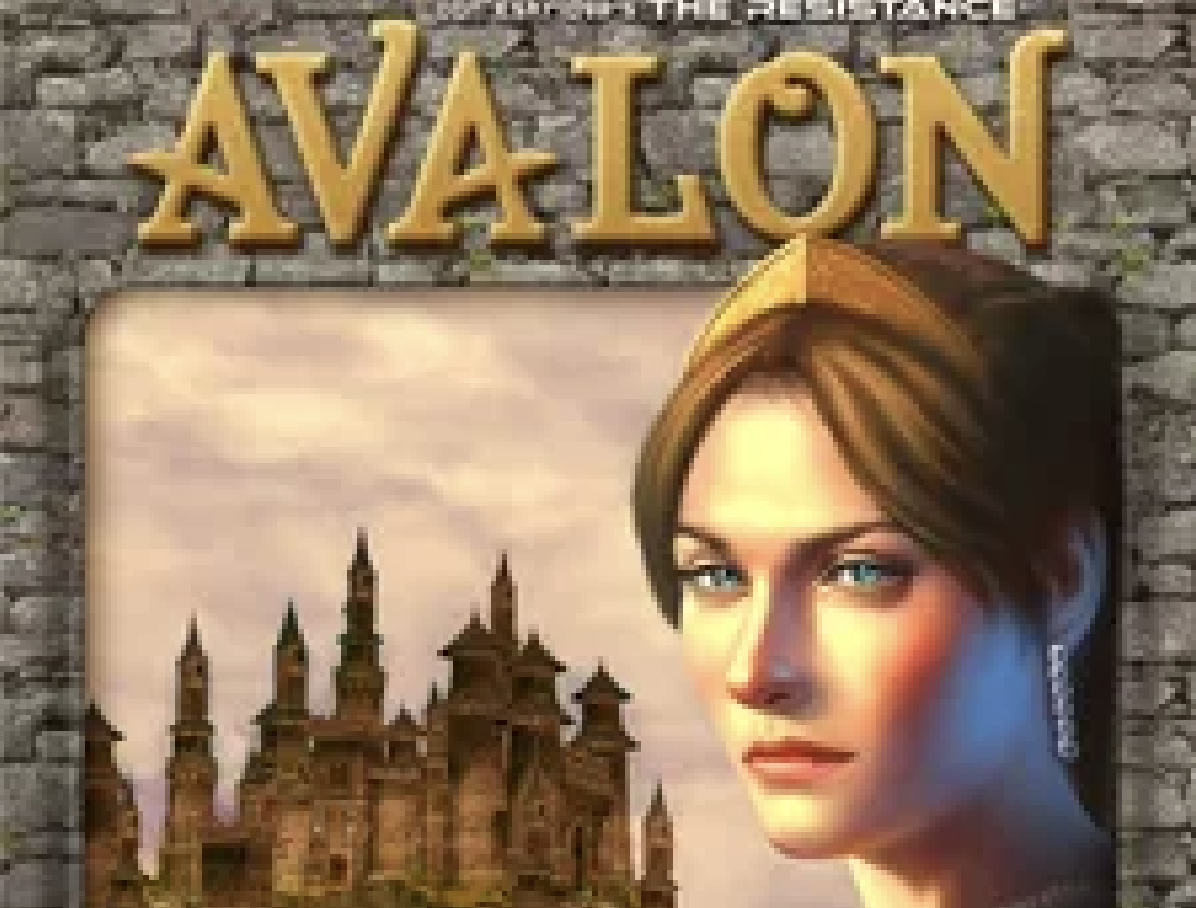
The Resistance: Avalon, originally released in 2012, is a social deduction board game designed by Don Eskridge and published by 18 publishers, including Indie Boards & Cards, Board Game VN, and Broadway Toys LTD. Suggested for 5-10 players ages 13 and up, this game was designed for strategy lovers but is simple enough for anyone to enjoy. In Avalon, players attempt to complete quests while hidden enemies attempt to sabotage them, with only a small subset of players having access to reliable information about others’ roles. My team is creating The Golden Ark, a game designed for solvers who love piecing together uncertain information. The mammals, similarly to Avalon, aim to complete two of three boat rides, using similar nomination and voting mechanics, while the reptiles attempt to sabotage two of the three rides. While Avalon and The Golden Ark share similar social deduction mechanics, they diverge in how they distribute information. This difference fundamentally changes player engagement; Avalon centralizes knowledge and creates passive players, whereas The Golden Ark distributes information-gathering tools, producing more balanced participation and agency.
Both games target achievers in the Bartle Taxonomy, players who value strategic mastery and problem-solving. They have some similar mechanics (nominations, voting, and unanimity conditions in quest form, all of which reveal information) that produce similar aesthetics: fellowship, challenge, and discovery. They are both information-gathering games (where information asymmetry is crucial to balanced gameplay), the player interaction patterns are team competitions, and the objective for the good team is a solution. However, it is the forms of information asymmetry in the games that differ; while leading to some similar aesthetics, they are designed to produce different dynamics.
Avalon always has at least two players without a specific role, giving alignment information to only two good players, Merlin and Percival. The evil team knows their teammates and thus all player alignments (besides the role of Merlin). Players cannot take individual actions to gain information, only gathering it through voting and quest results. These role mechanics create an information asymmetry favoring the evil team. Conversely, in The Golden Ark, all players have roles that either impact information certainty, other players’ actions, or the result of a boat ride. As well, every player has the ability to investigate another player’s identities (though they are shown two possible role cards, further sowing uncertainty). While the reptile team begins knowing who their teammates are, they must discover the identity of some mammal players to win. The mammal team begins knowing nothing but are allowed many procedures to gain more information on the alignments of other players. This form of asymmetry is more balanced because both teams must actively generate information rather than rely on initial role assignments.
My first time playing Avalon, I, as Percival, was able to use the little information I got at the beginning of the game to find the solution, but I fully steered the conversation. Evil players had little ability to challenge me, a dynamic caused by the lack of information-gathering mechanics. In the second game, Maya, as Percival, made incorrect assumptions that led her to overwhelm the conversation and upset Sabrina (though they were on the same team). Here is a photo of Sabrina and Maya arguing, taken right before Sabrina became visibly upset:
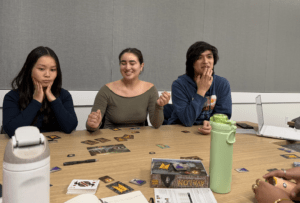
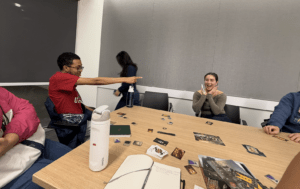
In this moment, Sabrina’s frustration reflects how incorrect but confident information can dominate group dynamics, illustrating how Avalon’s mechanics amplify social pressure rather than informed reasoning. Jeffrey was a Loyal Servant of Arthur. His chief complaint was that, as a role-less player, he has no reliable information or actions to take and must rely entirely on guesswork. This dynamic, where one or two players dominate the conversation, is a direct result of the mechanics that create a team information asymmetry, causing players to become disengaged from the game. The most exciting part of our game was the evil team’s deliberation on who Merlin was. The evil team’s starting knowledge limits their need for active deduction. They are simply trying to stay hidden. Successfully figuring out Merlin fulfilled my achievement and information needs. Here is a photo of our discovery of Merlin, which was one of the few moments in the game where players experienced positive emotions:
The mechanics of The Golden Ark, specifically each player having their own roles and abilities, as well as each player’s ability to investigate for more information, were designed with the intention of producing equal player interaction dynamics, where each player can make individual actions but must eventually make alliances to find a solution to the game. This fulfills the information and affiliation needs of all players on the mammal team. Likewise, the reptile members can also fulfill their information needs because of the role mechanics; there are multiple roles that must be found out by the reptile players to succeed. This dynamic, where reptile players also engage in information-gathering actions and possibly making alliances with mammal players, is a direct result of the information asymmetry being balanced by The Golden Ark’s mechanics. We designed these mechanics to address common critiques of Avalon, particularly how many players become disengaged. The dynamics highlights a key MDA distinction: Avalon’s mechanics (fixed hidden roles) produce dynamics of information bottlenecking, leading to aesthetics of frustration and dependency, whereas The Golden Ark’s mechanics produce dynamics of active investigation, leading to aesthetics of agency and discovery.
Ultimately, the key difference between Avalon and The Golden Ark lies in how each game distributes information. In Avalon, the mechanics primarily satisfy dominance and cognizance for a small subset of players, while leaving most players unable to meaningfully pursue understanding. In contrast, The Golden Ark distributes opportunities to satisfy cognizance and autonomy across all players, allowing each participant to actively reduce uncertainty.